
The Crimson Harvest: Aral’s Jujube Country and Its Sweet Autumn
大漠日照足,枣红一片天 Dàmò rìzhào zú, zǎohóng yīpiàn tiān – The desert sun gives its full measure; the jujubes redden a whole sky of orchards
正文:阿拉尔红枣 Ālā’ěr Hóngzǎo Aral red dates are the crop that turned the Tarim’s northern rim into one long orchard – jujube trees planted in ranks across the reclamation farms of 阿拉尔市 Ālā’ěr Shì Aral City, their fruit hanging hard and green through summer, then flushing to deep crimson as the desert autumn arrives with its cold nights and merciless light. The region grows the two famous kinds: the wrinkle-skinned huizao, small and honey-dense, and the plump junzao, big as a thumb tip and built for fresh eating – and between them they have made “Aral” a byword on the dried-fruit shelves of the whole country.
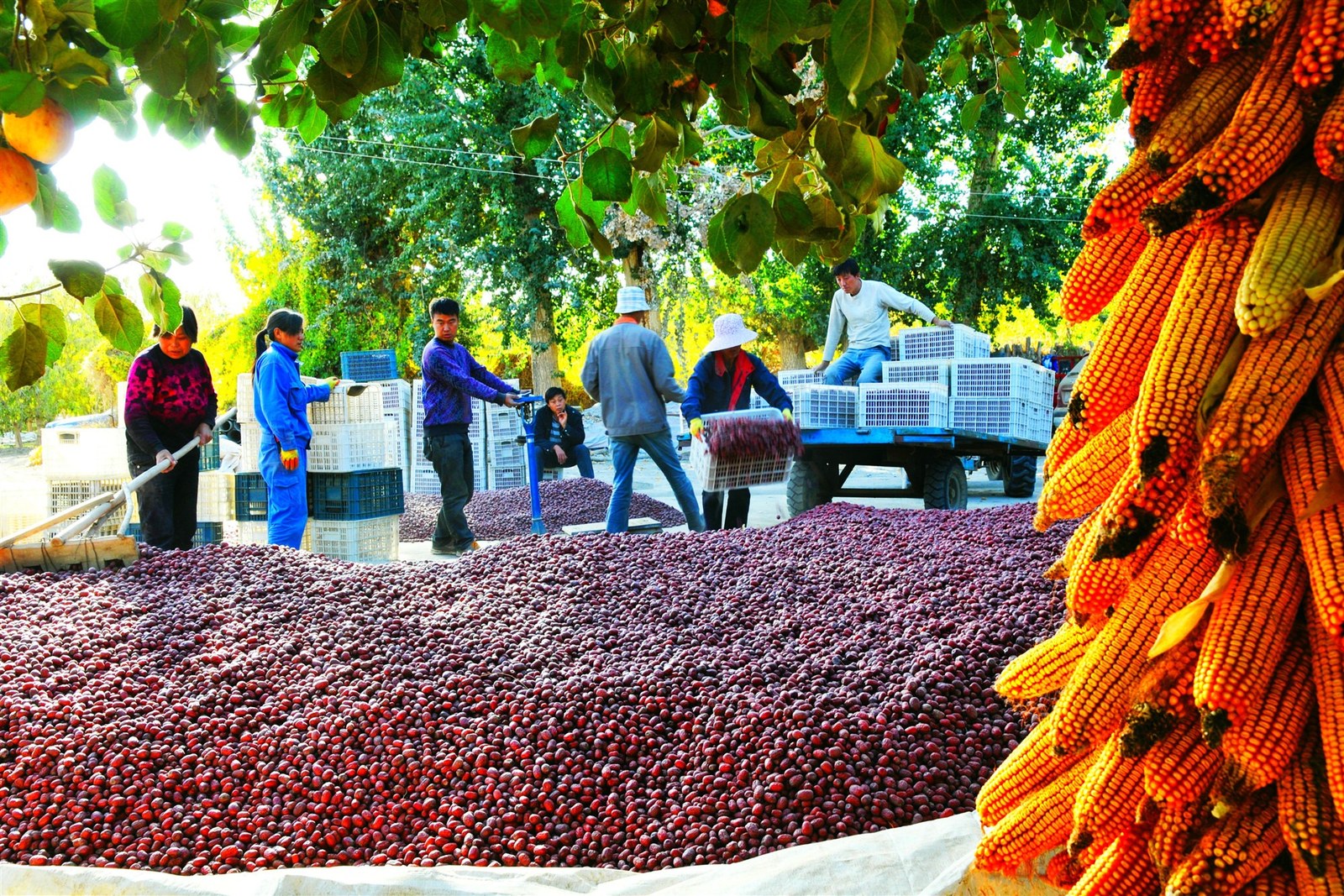
The reason is written in the climate. Rainfall is almost a rumour here; the trees drink canal water and sunshine; and the enormous diurnal swing – furnace days, cool nights – piles sugar into the fruit while the dry air keeps disease off the crop. The farms hang nets under the rows in October and shake the trees; the ground fills with a red tide; and the drying yards around the farms turn into carpets of crimson, raked into windrows with the corn and the chaff, the year’s whole harvest visible from the orchard roads in one sweep.
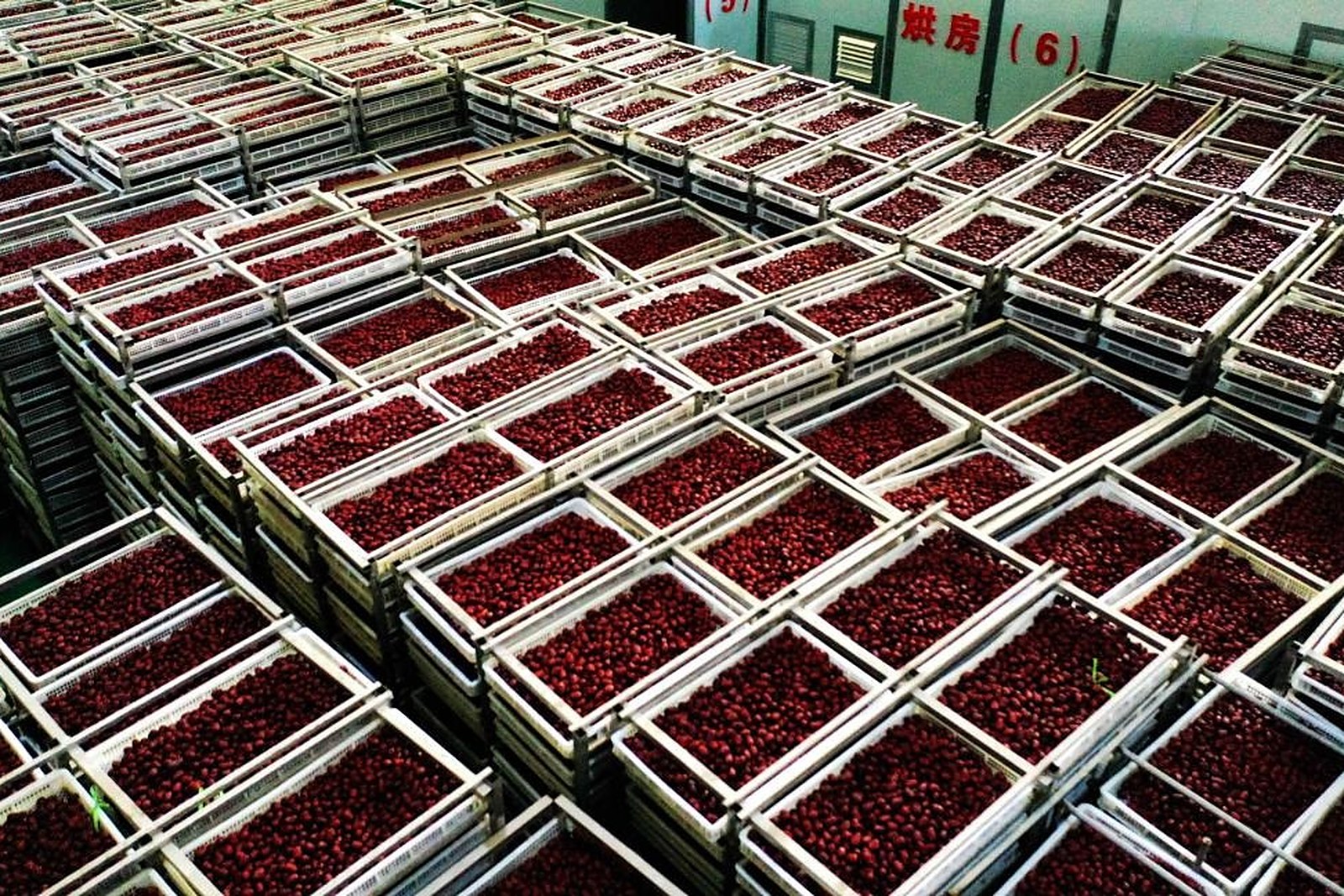
The calendar is worth travelling for. Late September the first fresh junzao hit the farm stalls, crisp as apples and sold by the kilo from the orchard gate; October is shake-and-dry month, with the racks and yards at full colour and the air smelling of hay and honey; by November the dried huizao are packed and the year ships out. Any of the three months earns a visit, but the shaking weeks are the spectacle – whole families on the rows, tarps of red, the wash of grain trucks coming down the orchard lanes.
Beyond the dates, the same 阿拉尔市 Ālā’ěr Shì Aral City holds other flavors: 塔河烤鱼 Tǎ Hé Kǎoyú Tarim river roasted fish, 大盘鸡 Dàpán Jī Big Plate Chicken, 手抓饭 Shǒuzhuāfàn lamb pilaf, and 馕坑肉 Nángkēng Ròu naan-pit roasted lamb – four more doors into the same 阿拉尔市 Ālā’ěr Shì Aral City. With the dates settled, our Aral travel map fills the day.
The eating culture runs wider than the snack bag. Fresh junzao appear in fruit platters at every gathering through autumn; dried huizao simmer in the porridges and sweet soups that local kitchens prescribe for winter; date vinegar and date wine stand in the farm-shop ranges; and the tea stalls keep a pot of dried dates and goji on the stove all season. Bring a box home and the customs declaration is the simplest of any souvenir – dried fruit travels, keeps and gifts without complaint.
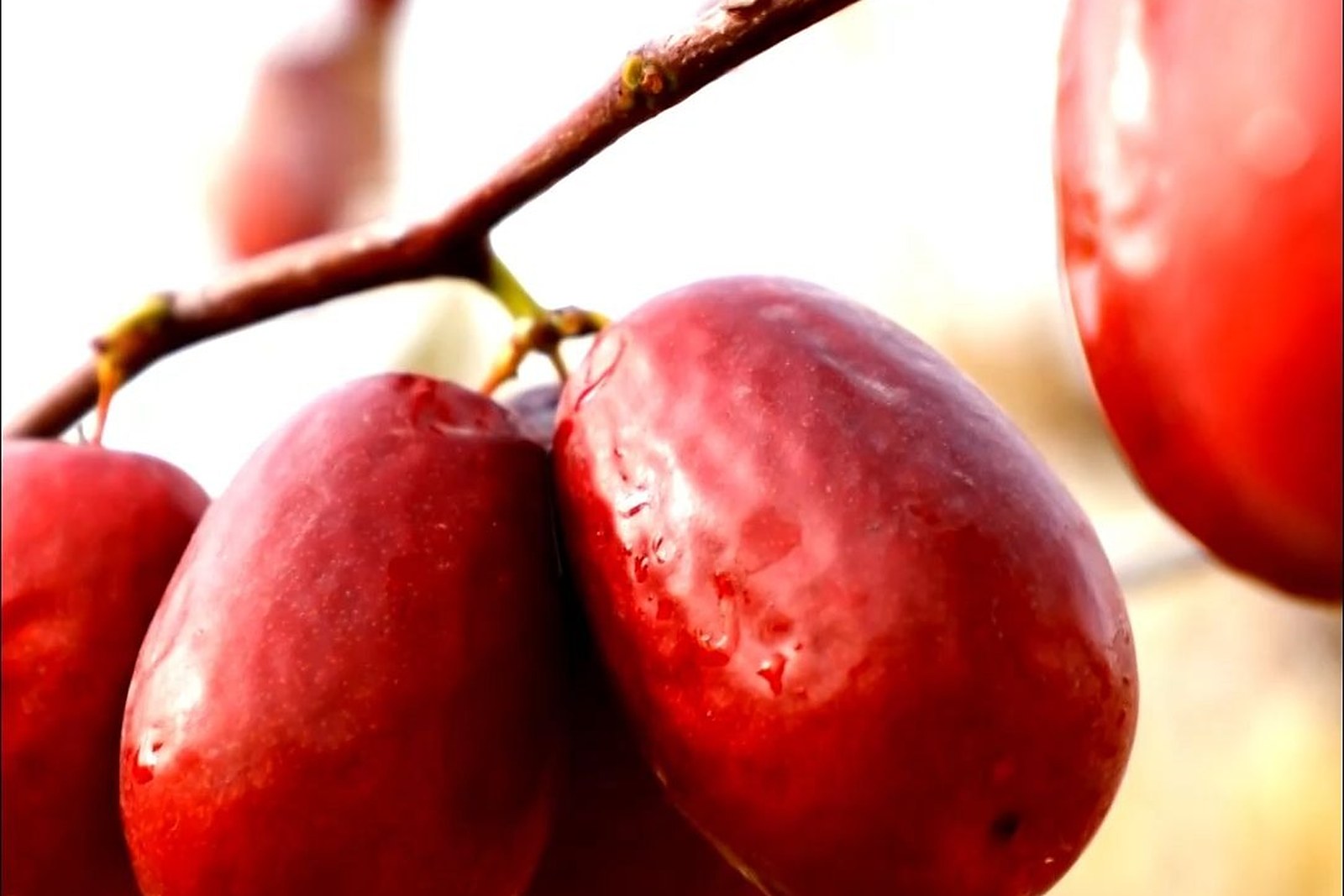
Buy like a local and the distinctions matter. The farm direct shops around the co-op yards sell by grade – the top huizao by heft and wrinkle-depth, tested by the seller’s practiced squeeze; the fresh junzao by crunch, cut open at the counter to show the green-heart pit. Supermarket bags cost less and taste of less; the farm gate is the pilgrimage, and in season the growers will walk you the rows themselves, shaking a branch so you catch the falling red.
Practicalities first. Farm stalls and co-op shops open from September through the packing season; prices climb with grade, and the top grades sell out by courier more than by counter, so buy in person early. Vacuum-packed kilos ride home best; fresh dates last a week in the fridge – eat those first.
Widen the frame and the dates are Aral’s harvest signature: the memorial explains the farms, the university breeds the science, and the orchards show the result – an economy you can taste straight from the branch, red as the flags over the gate.
And that is the lasting impression: sweetness as a form of geography. Desert sun, glacier water and cold nights, folded into a fruit the size of a thumb – the Tarim’s whole argument, edible, portable and very hard to eat just one of.
Words and Names
What the Locals Know
flowcloud would say Aral’s red dates are the desert’s own confectionery: glacier water and furnace sun folded into a crimson skin, October shaking the trees like a festival, and the year’s sweetness packed by the kilo – the souvenir that tastes like the place it came from. All checked November 2026.
Where to find it: The orchard stalls and co-op direct shops line Aral’s farm roads from September to November, with the shake-and-dry spectacle in October; buy vacuum-packed huizao by grade at the farm gate and eat the fresh junzao first – crisp, cold and straight off the branch. All checked November 2026.