
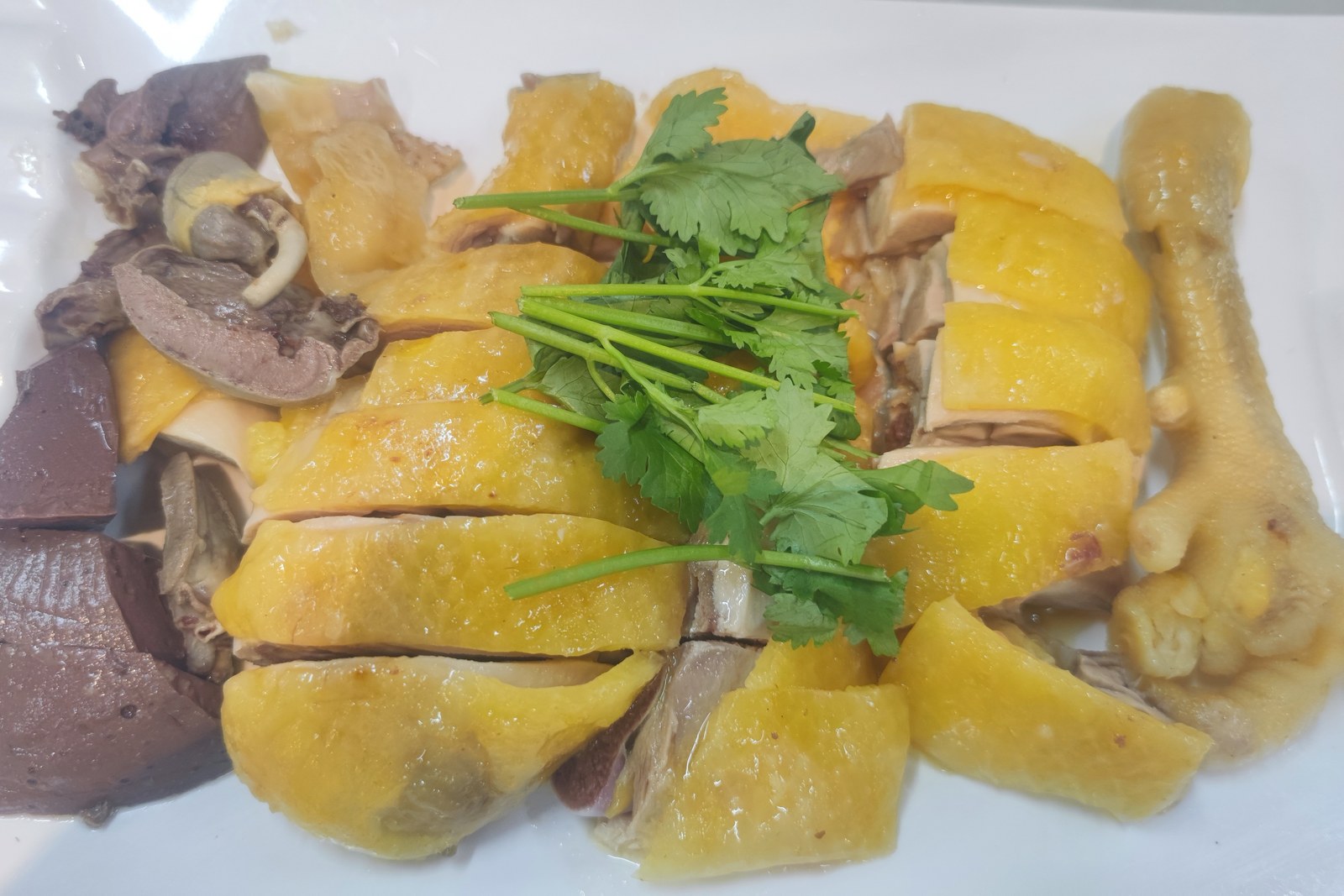
安铺鸡饭 Ānpù jī fàn is the chicken rice of 安铺镇 Ānpù zhèn in 廉江市 Liánjiāng shì, an old river port at the mouth of the 九洲江 Jiǔzhōu jiāng on the western coast of the 雷州半岛 Léizhōu bàndǎo, and the two halves of the name carry equal weight. The chicken is the 湛江 white-cut bird: a whole local chicken poached in water with ginger and spring onion, then pulled out and plunged into iced water so that the skin tightens and comes up pale gold and faintly gelatinous. The 饭 fàn, the rice, is not a side dish but the second subject of the plate. It is cooked in the stock the bird came out of, with a spoon of the chicken fat skimmed off the top and a little garlic, over a wood fire, until every grain is separate and smells of the chicken it was cooked with.
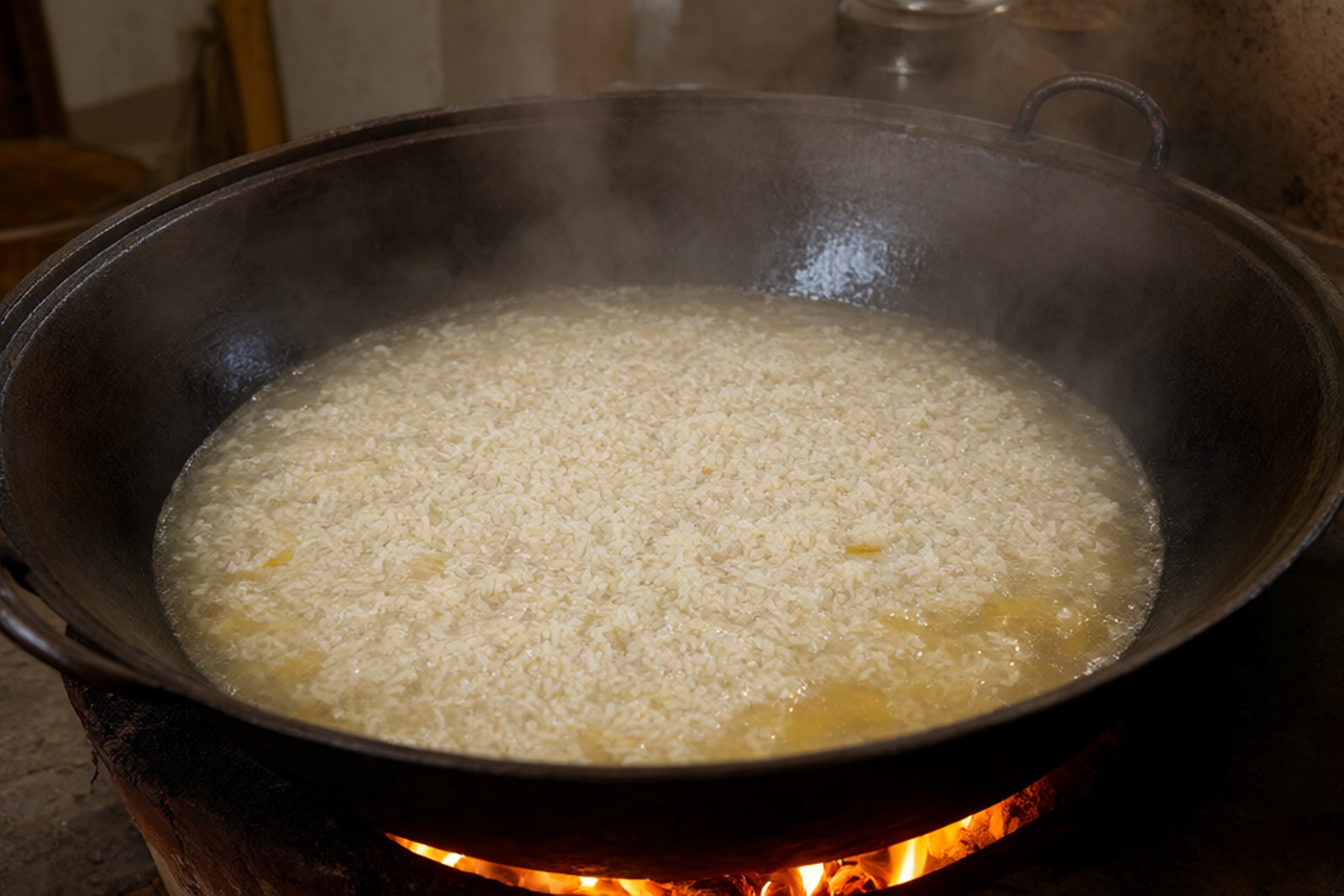
安铺 is one of the four great old towns of Guangdong, and the chicken rice is a product of what the town was. A port at the point where a river coming down out of Guangxi meets the 北部湾 Běibù Wān, the Gulf of Tonkin, with money in it, a daily market and a population used to buying well, produced a cooking that assumes a good bird and does very little to it. The old streets are 骑楼 qí lóu, the arcaded shophouses of the southern coast, and a few hundred metres of them still run down towards the water, with the 文阁 Wén gé, the old scholar’s tower, standing above the river. The town’s other foods come out of the same market: the 安铺年糕 Ānpù nián gāo, the steamed rice cake wrapped in a leaf and kept for the New Year, and the 安铺粉 Ānpù fěn, a thin fresh rice noodle eaten with soy and sesame.
The bird is 湛江鸡 Zhànjiāng jī, the local three-yellow chicken, so called for yellow legs, yellow beak and yellow skin, a slow breed left to run and taking three or four months to make weight. It is the reason the poaching water needs nothing in it but ginger and salt, and the reason the dish cannot be reproduced with a supermarket bird. The rice is cooked in that same water with the fat from its surface, and some kitchens go further and toast the raw grains in the chicken fat first, before the stock goes in, which is what gives them their shine and their faint savour of the bird. It is served with the chicken carved over the rice or beside it, a bowl of the poaching broth on the side, and a dip of 沙姜 shā jiāng, the small aromatic ginger of the south, pounded with garlic and salt and loosened with hot peanut oil and a little light soy.
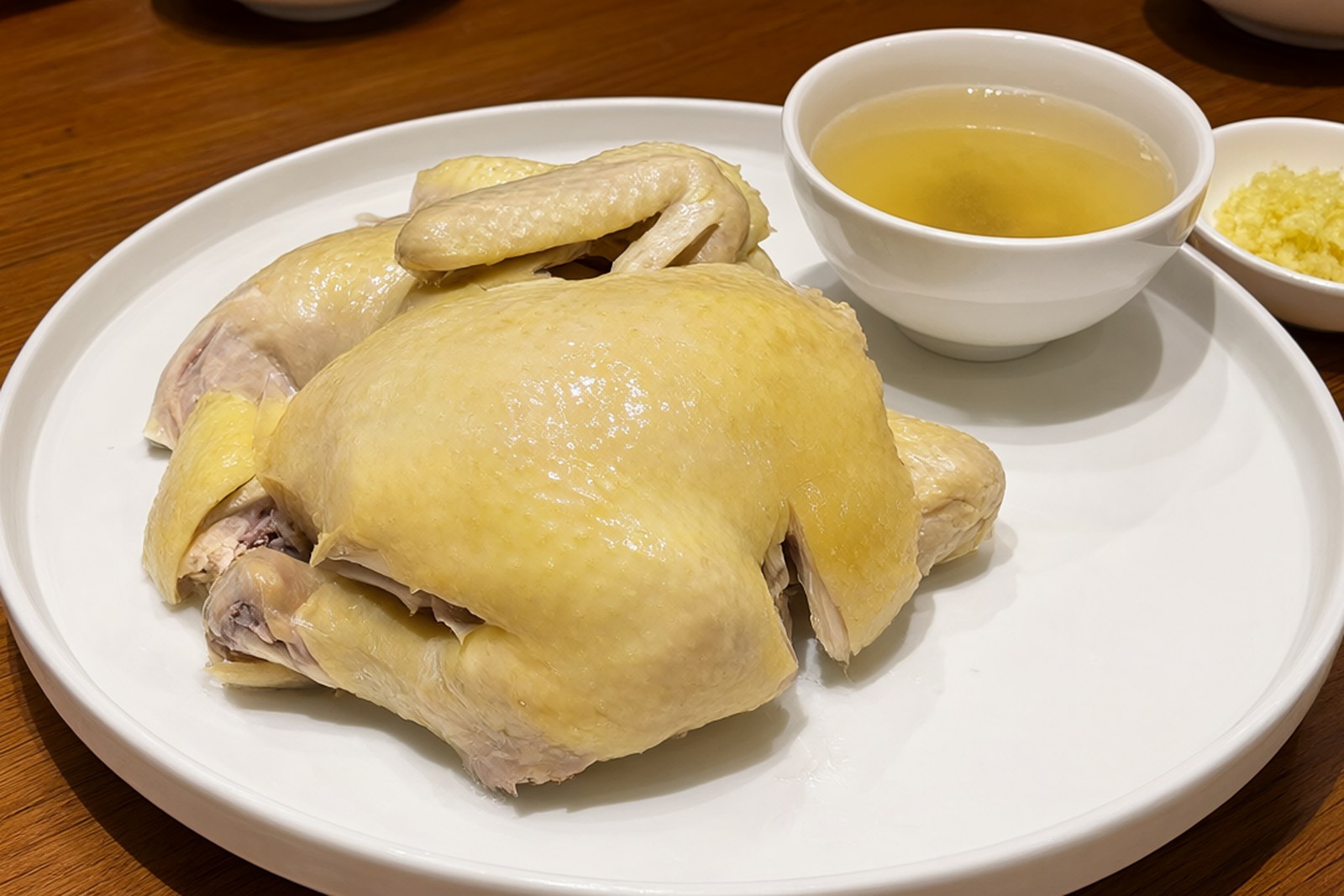
The way to eat it is to take a piece of chicken, dip it in the 沙姜, then a spoon of the rice, then a sip of the broth, and go round again; the broth on its own is thin and the dish is built on the alternation. A single plate of 鸡饭 is fifteen to twenty-five yuan, half a bird with two bowls of rice ninety to a hundred and fifty, and the town’s restaurants cluster around the old market and the 骑楼 streets by the river, with a few of them open from early morning, because the town eats chicken rice for breakfast as readily as for dinner. 廉江 is also the county of the 红橙 hóng chéng, the red-fleshed orange that every stall on the road in sells in winter, and of 杨桃 yáng táo, carambola; a plate of chicken rice in the morning and a bag of oranges for the drive inland is the correct way to leave.
Words and Names
安铺 Ānpù is the old town and 鸡饭 jī fàn the rice cooked in the chicken stock. 湛江鸡 Zhànjiāng jī is the local three-yellow breed, 白切鸡 bái qiē jī the white-cut method of poaching and chilling it, and 沙姜 shā jiāng the small southern ginger pounded for the dip. 九洲江 Jiǔzhōu jiāng is the river the town stands on and 北部湾 Běibù Wān the Gulf of Tonkin it faces. 骑楼 qí lóu are the arcaded shophouses, 文阁 Wén gé the old tower above the river, 红橙 hóng chéng the red orange of 廉江 and 年糕 nián gāo the leaf-wrapped New Year rice cake of the town.
What the Locals Know
Ask for 鸡油饭 jī yóu fàn if you want the rice made with the fat rather than only the stock, and ask for the 沙姜 to come separately so you can taste the bird before you dress it. Look at the skin: properly iced after poaching it is tight, pale and faintly translucent, and a bird whose skin has gone flabby has been left standing in the pot. Order the half bird rather than the plate if there are two of you, because the point of a white-cut chicken is the pieces nearest the bone, and take the broth, which is free and better than anything else on the table. In the morning the same restaurant will serve the rice with a bowl of congee and no chicken at all, which is how the town eats it on a weekday.
flowcloud would say that a port town which takes a bird it trusts, boils it in nothing but water, and then puts the broth into the rice so that the whole plate tastes of the same chicken, is simply refusing to waste the one thing it has and calling that a cuisine.
Where to find it: the chicken rice restaurants of 安铺镇 in 廉江市, clustered around the old market and the 骑楼 streets by the 九洲江, most of them open from about six in the morning until late. A plate of 鸡饭 is ¥15 to ¥25, half a bird with two bowls of rice ¥90 to ¥150, and a whole bird to take away ¥120 to ¥220. 廉江 is about an hour north-west of 湛江市 on the expressway and has 廉江站 Liánjiāng zhàn on the 深湛 high-speed line, with 安铺 another thirty minutes south-west of the county town by road.