
Apo Zongzi: The Grannies of North Street Wrapping and Boiling Zongzi to Order, Big Pork and Salted-Egg-Yolk Bundles in Reed-Leaf Green and the Queue-Fire Ritual of Zhujiajiao in Qingpu District, Shanghai
阿婆手裹青粽叶,北大街头糯香浓。Āpó shǒu guǒ qīng zòngyè, běidà jiē tóu nuò xiāng nóng – The grannies’ hands wrap the green reed leaves; along North Street the glutinous fragrance thickens.
阿婆粽 āpó zòngzi apo zongzi is the granny-wrapped zongzi trade of 朱家角古镇 Zhūjiājiǎo Gǔzhèn Zhujiajiao Ancient Town in 青浦区 Qīngpǔ Qū Qingpu District, Shanghai – the water town on the district’s eastern canal reach, where the shopfronts of 北大街 Běidà Jiē North Street keep the town’s most photogenic food job: grandmothers seated at the counter, folding 糯米 nuòmǐ glutinous rice and 酱肉 jiàngròu soy-marinated pork into 粽叶 zòngyè reed leaves, tying the bundle and dropping it into the pot in front of you. The register is the counter-side one: 大肉粽 dàròuzòng big pork zongzi wrapped and boiled 现包现煮 xiàn bāo xiàn zhǔ to order, the 蛋黄粽 dànhuángzòng salted-egg-yolk version splitting at the table into gold-centred rice, the leaf’s green scent riding the steam out of the doorway – the name 阿婆 āpó granny doing the branding no signboard could, the hands doing the proof (worth confirming the details – which counter runs which granny’s wrapping and which pots boil through which hours turns over as old-town trades do, and the specific doors are best confirmed on the street rather than recited). The clientele is the day-trip tide plus the town’s own breakfast loop, who buy by the string and carry them home. The blunt definition: the water town where the grannies are the shop sign – the taste of Qingpu eaten one leaf-wrapped, steam-hot bundle at a time.
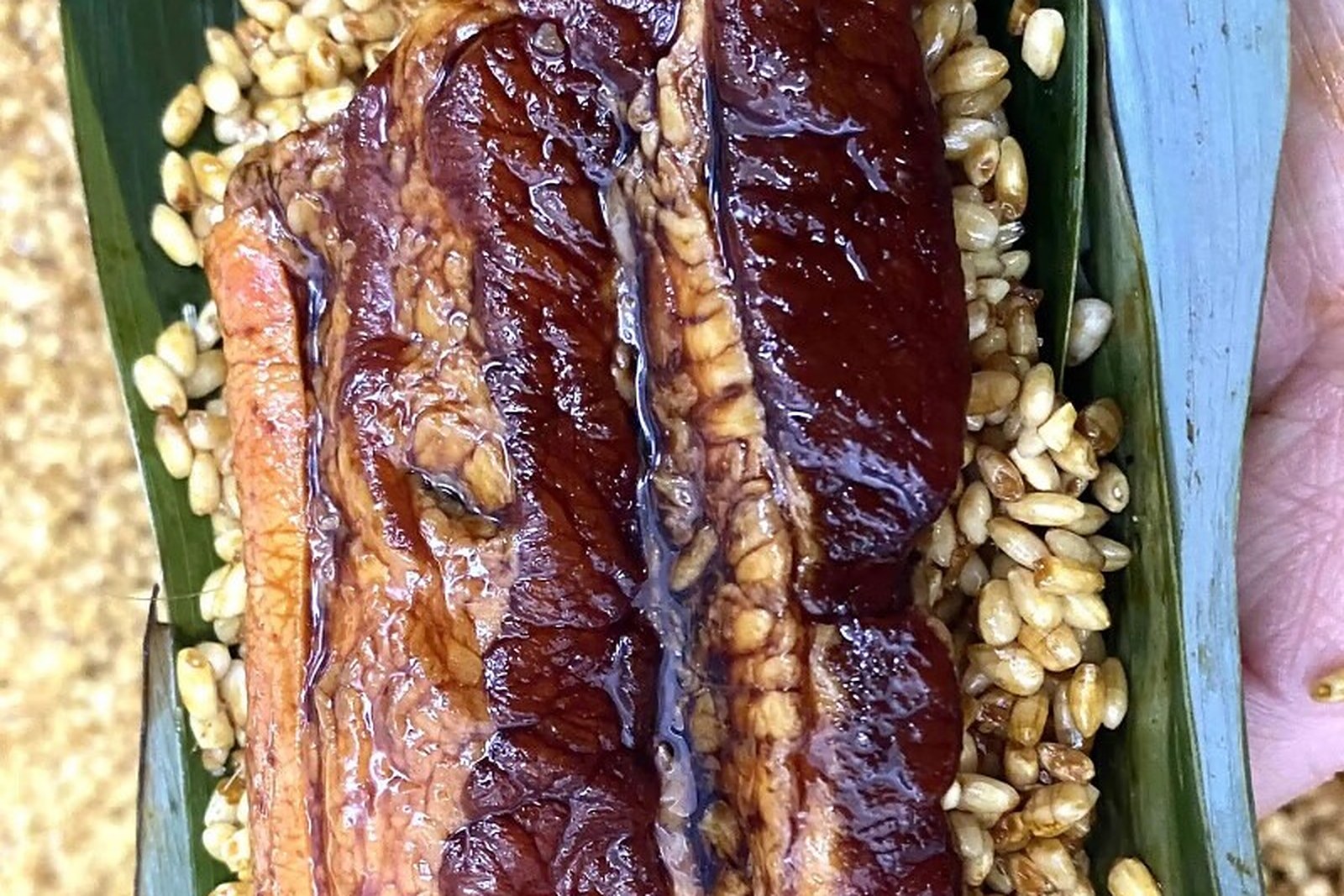
Call it honestly: counter-side snack money on a boiling clock. Getting there is one door: 朱家角古镇 Zhūjiājiǎo Gǔzhèn Zhujiajiao Ancient Town is reached by 地铁17号线 Dìtiě 17 hào xiàn Metro Line 17 to 朱家角站 Zhūjiājiǎo Zhàn Zhujiajiao station, then a ten-minute walk south to the 放生桥 Fàngshēng Qiáo Fangsheng Bridge gates, where the 北大街 Běidà Jiē North Street zongzi windows line the lane (worth confirming the details for the old-town entry policy, which keeps the lanes free while the garden sights ticket separately). One zongzi at the counter prices at street-snack money, a string of five for the ride home at street-snack-to-souvenir money, a canal-side table with the old town’s other tables at casual-neighbourhood money – though exact figures are worth confirming the details on rather than quoting, the counters being small and repriced by the visitor season. The crowds run to the weekend tide: Saturdays and Sundays pack North Street and the photo queue at the wrapping counters runs longer than the buying queue, weekday middays hand the lane to the residents, and a weekday late morning, when the pots boil fresh and the grannies wrap at ease, is the eater’s own hour (worth confirming the details for individual counters’ hours, which follow the boiling pots more than any posted sign).
The honest star is the wrapping itself, graded bundle by bundle. What gets oversold is the “granny’s secret recipe” framing: guides sell a lost family craft where every bundle carries an inherited formula, and a first-timer may meet an ordinary snack counter of rice buckets, leaf bundles and boiling pots – which is not the disappointment but the point. What repays the effort is grading the zongzi the way the town does: a bundle judged by whether it was tied in front of you rather than lifted from a holding pot, the rice judged by whether the leaf’s green scent reads through the steam, the pork judged by whether the soy marinade travelled the whole grain. The test costs nothing: buy one bundle before you buy the string, unwrap it at the counter and watch whether the rice parts glossy without glue, and buy where the wrapping hands work in the window rather than where the pre-wrapped pyramids stack – a trade that has folded the same leaf for generations grades its pots daily, and the queue of locals buying by the string is the certificate (worth confirming the details – the counters migrate with the leases, and today’s plainest window may be next season’s remembered one).
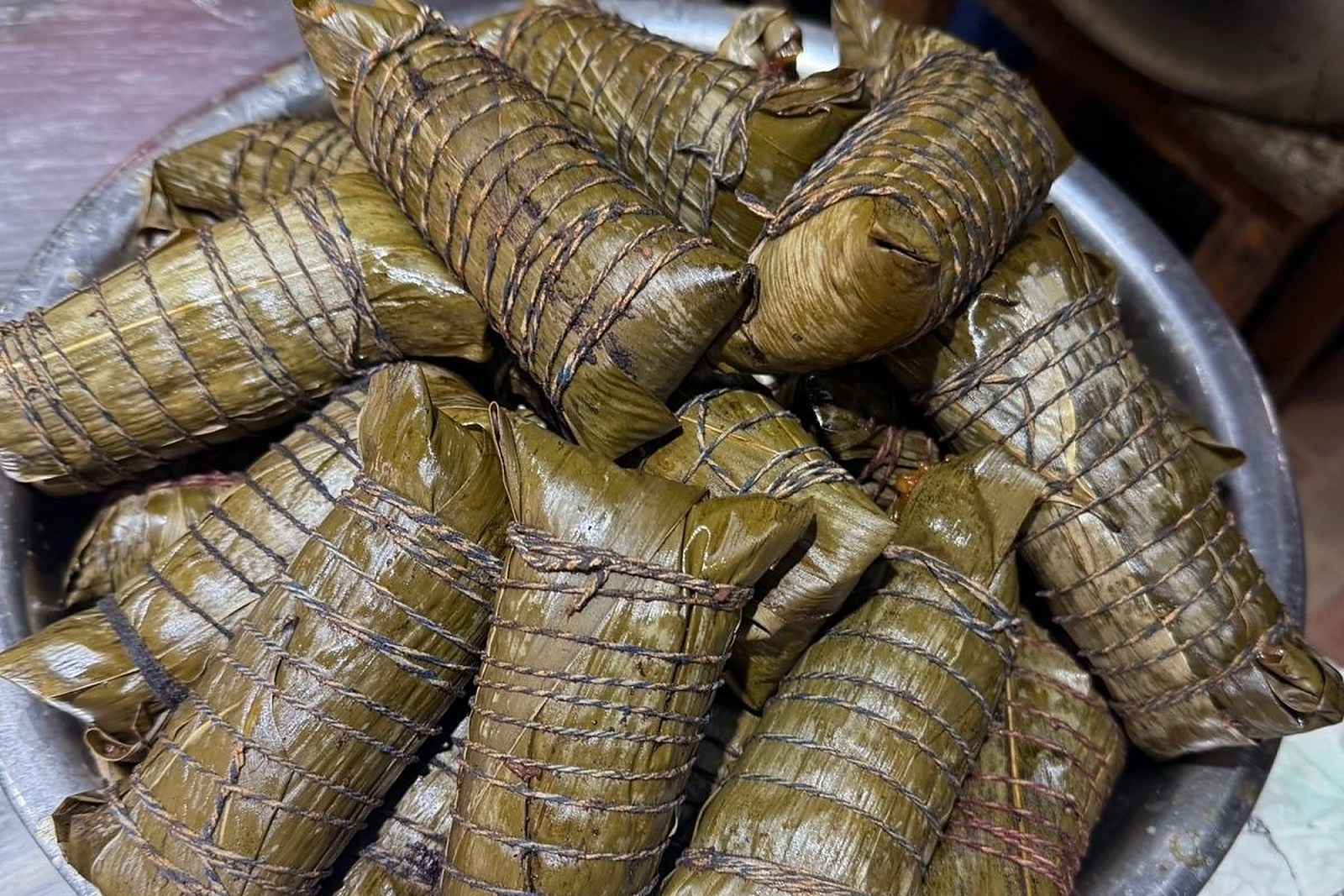
The lane’s deepest habit is the two-pot arithmetic itself: the big pork pot and the yolk pot boiling side by side, the first for the ride home and the second for the table – a pairing the counters keep without printing it as a menu, the yolk version selling out first whenever the weekday trade runs light. Time it right – a weekday late morning, the pots boiling fresh – and the bundle explains the town better than any plaque: the canal brought the glutinous rice, and the grannies keep it wrapped (worth confirming the details – which counters still wrap on site through the off-season today, the trade thickening on weekends and thinning to the residents’ breakfast loop between).
The rest of this Qingpu list keeps other tables: the reed-leaf-bound braise of 朱家角扎肉 Zhūjiājiǎo zhāròu Zhujiajiao zharou waits in the glass tanks of this same 北大街 Běidà Jiē North Street, the clear-water crabs of 淀山湖大闸蟹 Diànshānhú dàzháxiè Dianshan Lake hairy crab steam along the lake’s east shore in autumn, the sifted squares of 青浦焋糕 Qīngpǔ zhuànggāo Qingpu zhuanggao steam through the district’s old market towns, and the pale-gold tumble of 银鱼炒蛋 yínyú chǎodàn silverfish scrambled eggs lands on the lakeside tables – one district, four more tables, all inside 青浦区 Qīngpǔ Qū Qingpu District; and when the zongzi morning needs a night by the canal or a broader route, the stay-and-street notes for the old town pick up where the bundles leave off.
Words and Names
What the Locals Know
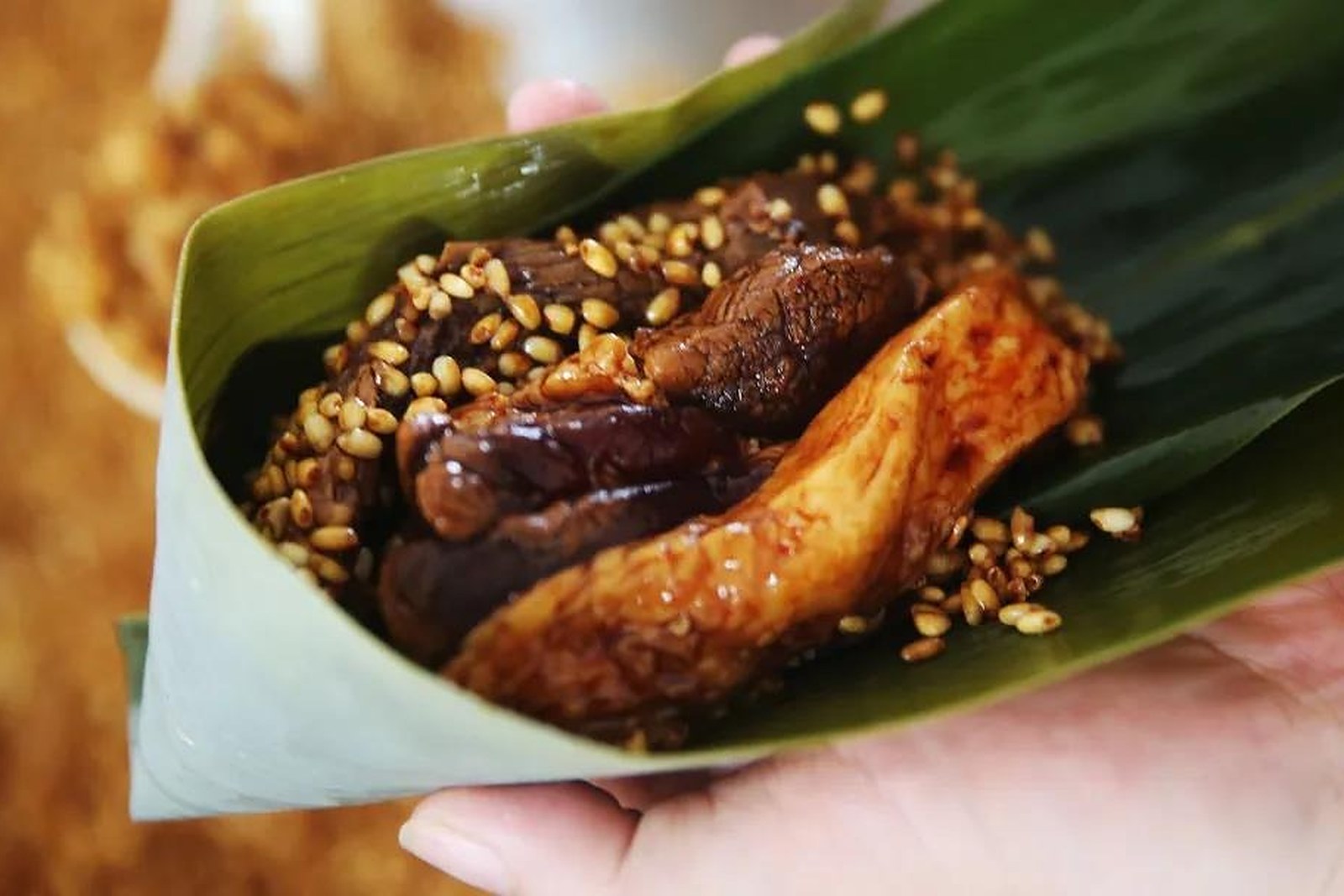
flowcloud would say that the 阿婆粽 āpó zòngzi is the granny-wrapped zongzi and the counter-side ritual of Zhujiajiao Ancient Town, Qingpu District, Shanghai – a 现包现煮 xiàn bāo xiàn zhǔ wrapped-and-boiled discipline where the 大肉粽 dàròuzòng big pork bundles and the 蛋黄粽 dànhuángzòng salted-yolk versions answer the 粽叶 zòngyè green scent and the wrapping hands of 北大街 Běidà Jiē North Street – and that the honest move is to buy one bundle unwrapped at the counter before you buy the string, watch the hands tie it, and let the locals’ string-buying queue cast the vote, because the canal brought the glutinous rice and the grannies keep it wrapped. All checked October 2026.
Where to find it: 青浦区 Qīngpǔ Qū Qingpu District, Shanghai – the wrapping-counter belt of 阿婆粽 āpó zòngzi along 北大街 Běidà Jiē North Street in 朱家角古镇 Zhūjiājiǎo Gǔzhèn Zhujiajiao Ancient Town, where the 阿婆 āpó grannies keep the 大肉粽 dàròuzòng big pork and 蛋黄粽 dànhuángzòng salted-yolk bundles 现包现煮 xiàn bāo xiàn zhǔ wrapped and boiled to order, reached by 地铁17号线 Dìtiě 17 hào xiàn Metro Line 17 to 朱家角站 Zhūjiājiǎo Zhàn Zhujiajiao station and the ten-minute walk to the 放生桥 Fàngshēng Qiáo Fangsheng Bridge gates (worth confirming the details for the old-town entry policy and which counter runs which granny’s wrapping today, old-town doors turning over as old towns do), where the trade keeps the boiling clock – weekend middays the photo-and-buying tide, weekday middays the residents’ loop, weekday late morning the eater’s own; street-snack to souvenir-string money, so call it worth confirming the details rather than a fixed number, and let the locals’ string-buying queue cast the vote. Apo zongzi is the grannies of North Street wrapping and boiling zongzi to order, big pork and salted-egg-yolk bundles in reed-leaf green and the queue-fire ritual of Zhujiajiao in Qingpu District, Shanghai – the taste of 青浦区 Qīngpǔ Qū Qingpu District eaten one leaf-wrapped, steam-hot bundle at a time. All checked October 2026.