
The Banquet in Eight Bowls: Badawan
八碗围坐话桑麻,粗瓷盛尽津门味 Bā wǎn wéi zuò huà sāngmá, cūcí chéng jìn Jīnmén wèi – Eight bowls ring the table as the talk turns homeward; coarse porcelain holds every flavor of the old port
八大碗 bādàwǎn The Eight Great Bowls are 天津市南开区 Tiānjīn Shì Nánkāi Qū Nankai District’s banquet in its plainest clothes – a fixed lineup of eight large bowls, each one a whole dish, served together on the table the way wedding feasts and New Year dinners have run in Tianjin for two centuries. The bowls counted differently by household and season – 粗八大碗 cū bādàwǎn the coarse eight for working tables, 细八大碗 xì bādàwǎn the refined eight for the celebrations that mattered – but the grammar never changed: braises, stews and steamed dishes, one bowl each, abundance you can count.
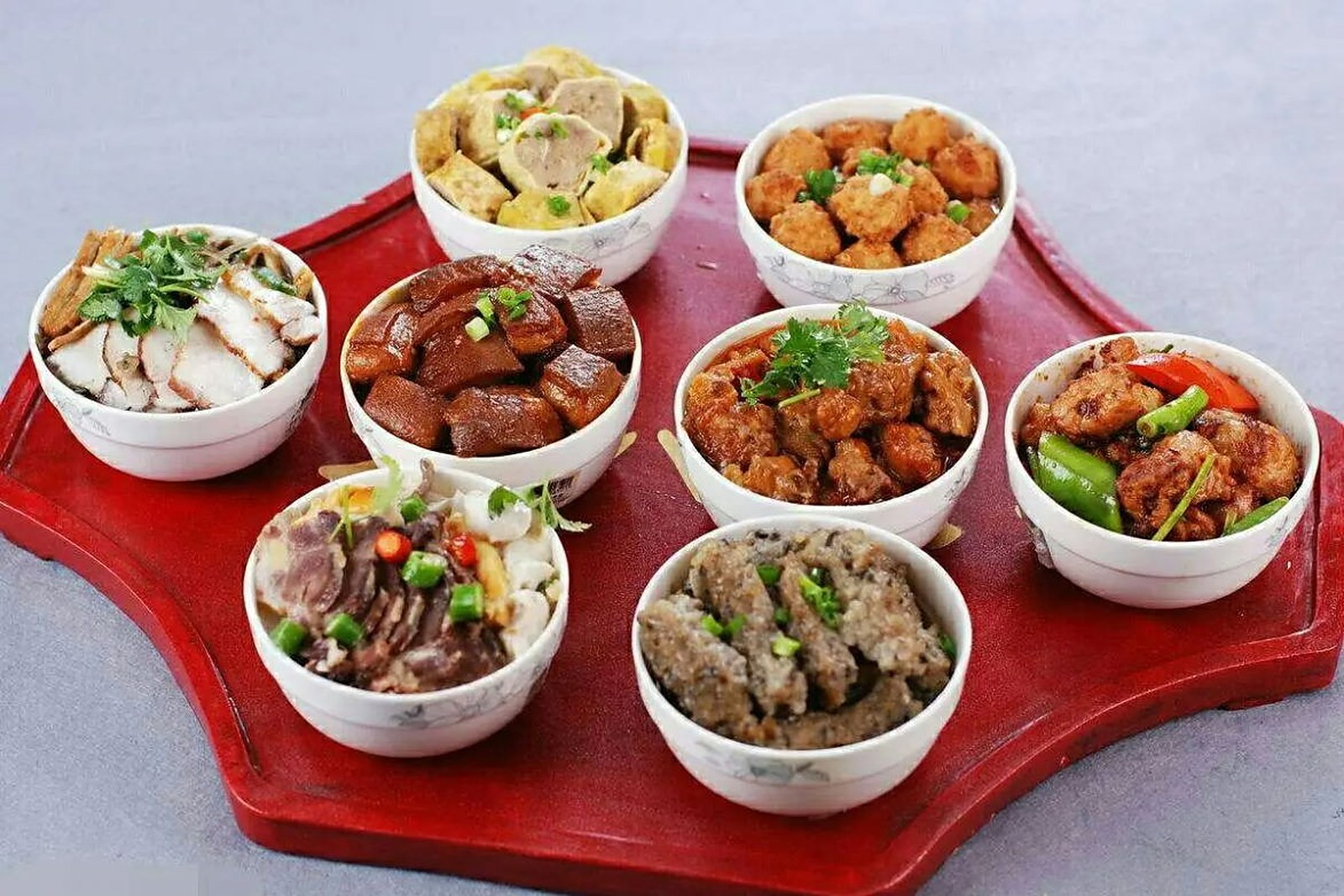
The lineup runs on kitchen craft rather than luxury. 炒青虾仁 chǎo qīng xiārén the river-shrimp stir-fry, 烩虾仁 huì xiārén the shrimp stew, braised pork and meatballs, chicken-and-duck compositions, fish courses, and the steamed puddings and vegetable bowls that balance the table – every bowl cooked to order, stacked and sent out so the eight land together and the steam rises as one.
The tradition is the reasoning. Tianjin grew rich on salt and grain, and its banquet culture built a table that showed wealth without showing off: no plated single portions, just bowls for the middle of the table, shared, refilled, and judged by the pork. The old restaurants of the Chinese city kept the canon, and the farm tables of the surrounding plain kept the coarse version – the same eight ideas at two price points.
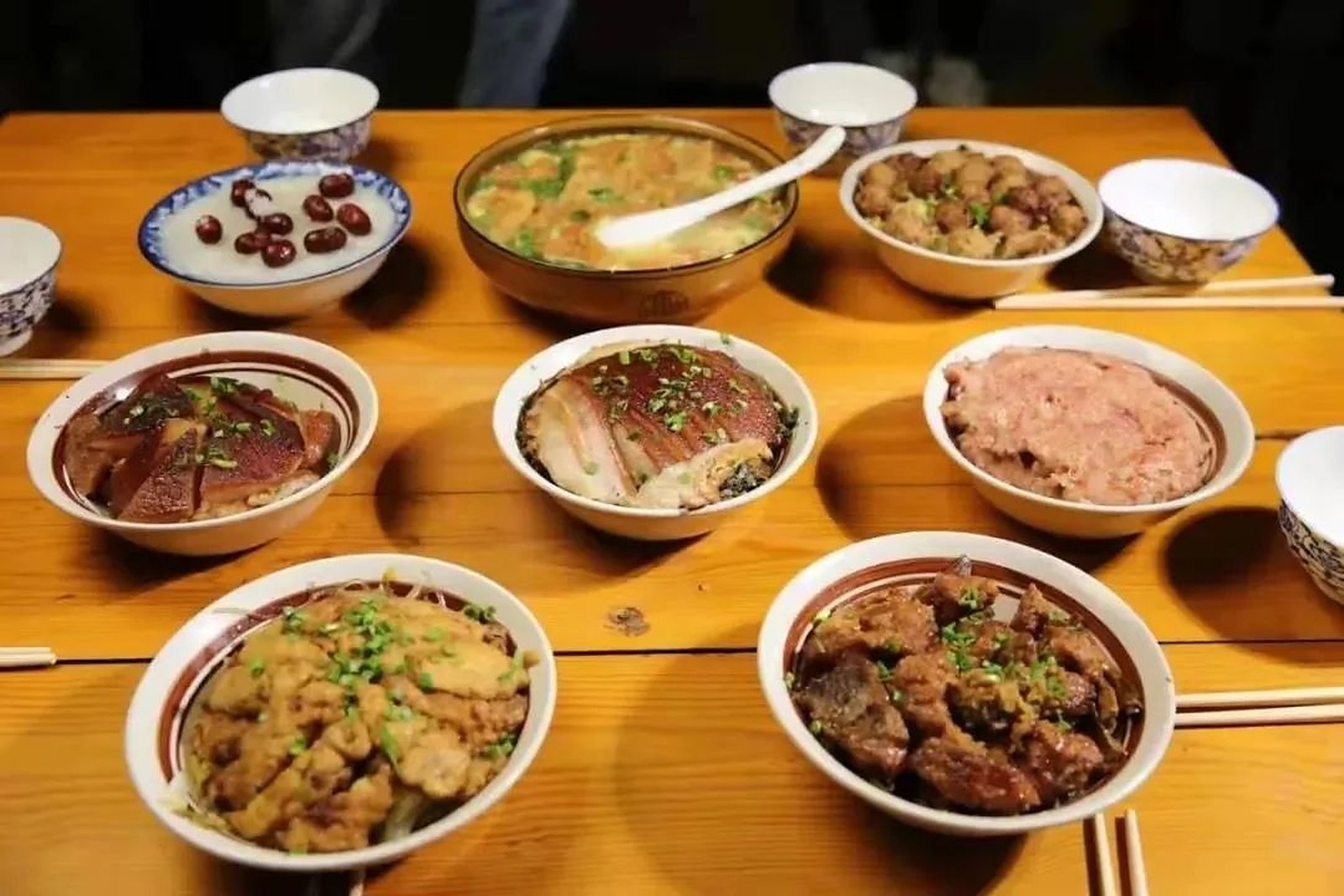
Order it as a group event – the eight bowls want four to six eaters and a pot of tea – and work the table in rounds: the braises first while they are hot, the shrimp bowl early, the steamed and sweet bowls late. Restaurants around the Drum Tower quarter and the old-city rows keep versions at every scale, from two-bowl tastings to the full spread.
The same district holds more flavors worth chasing: 黑蒜子牛肉 hēisuànzi niúròu the black-garlic beef, 水爆肚 shuǐbàodǔ the water-blanched tripe, 贴饽饽熬小鱼 tiē bōbo áo xiǎoyú the cornbread-and-fish pot, or 官烧目鱼 guānshāo mùyú the official-style squid – four more doors into the same Nankai District table.
Words and Names
八大碗 bādàwǎn the Eight Great Bowls banquet; 粗八大碗 cū bādàwǎn the coarse, working-table set; 细八大碗 xì bādàwǎn the refined celebration set; 蒸碗 zhēngwǎn the steamed bowls of the lineup; 席面 xímiàn the banquet spread itself.
What the Locals Know
Ask whether the house cooks the bowls to order or steams from the day’s batch – to-order is the point of the dish. Locals count the pork bowl as the house’s report card, save the sweet bowl for last, and always order rice: the braising liquor is the hidden ninth bowl. All checked November 2026.
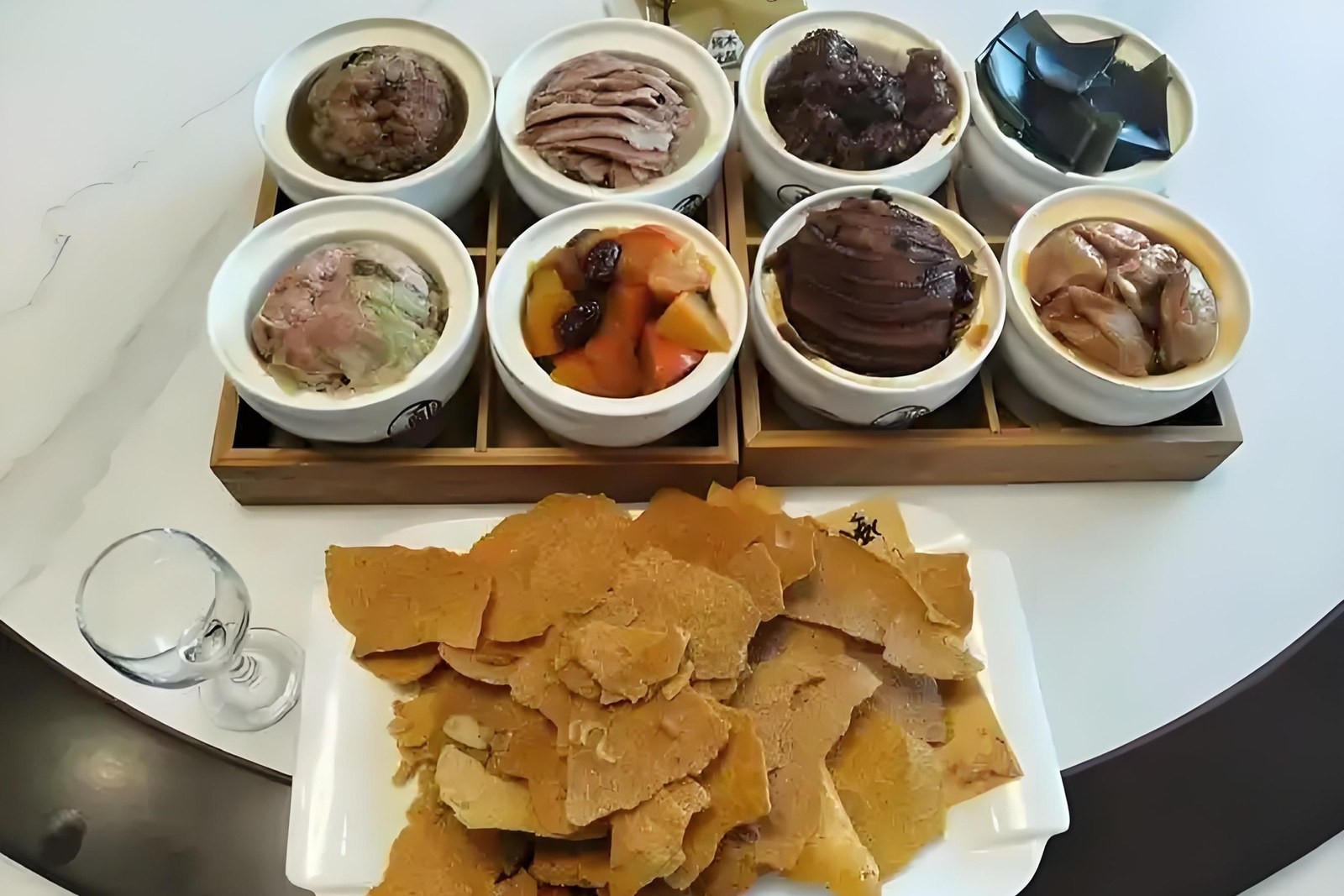
flowcloud would say the Eight Great Bowls are Tianjin’s arithmetic of welcome: eight dishes, one table, and a count that has never once come up short.
Where to find it: The banquet houses around 天津鼓楼 Tiānjīn Gǔlóu the Drum Tower and the traditional restaurants of the old-city rows serve the bowl lineups – full eight-bowl sets run on reservation, and smaller houses offer the coarse set daily. All checked November 2026.