
Baijiao Sea Bass, the Fish That Made a District’s Name
白蕉海鲈 Báijiāo hǎilú, which 珠海市 Zhūhǎi Shì Zhuhai renders in English as Baijiao sea bass, is a fish that is farmed rather than caught, and it carries the first geographical-indication protection the city ever won for anything it grows. Zhuhai is a prefecture-level city in Guangdong Province, on the western bank of the Pearl River estuary, and the only mainland Chinese city connected by land to both Hong Kong, China and Macao, China. Its western district of 斗门区 Dòumén Qū Doumen sits where the 西江 Xījiāng, the West River, breaks into the channels that carry fresh water down to the sea, and it is in that shallow brackish country, in ponds cut into the flats, that the fish is raised. In 2009 the name Baijiao sea bass became a nationally protected geographical-indication product, the first such protection in Zhuhai and the first in Guangdong’s aquaculture sector, and the fish has been a certified brand ever since.
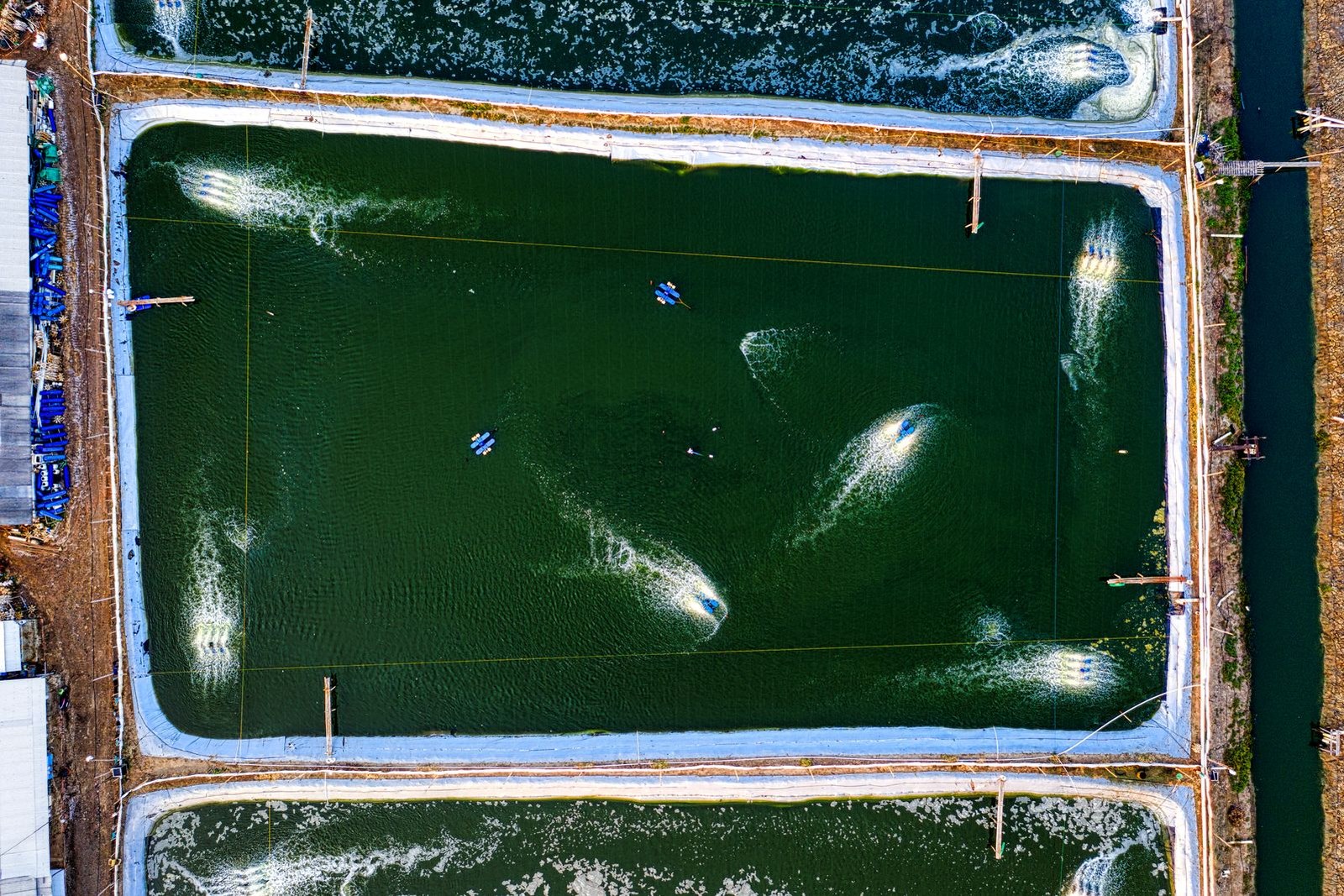
Why the fish became Baijiao’s is a question of water. 白蕉镇 Báijiāo Zhèn Baijiao Town lies between the 磨刀门 Módāomén Modao Gate and the 鸡啼门 Jītímén Jitimen, two of the channels the West River cuts to the sea, and the town is a web of ditches, sluices and rectangular ponds laid over an alluvial plain. Where the river’s fresh water meets the tide the salinity swings through the day and through the year, the silt keeps the water fertile, and the climate stays warm enough that the fish barely stops feeding; growers here say the same thing in plainer words, that the water is neither fresh nor salt and that this is exactly what the fish wants. The town is known in the trade as the Home of Chinese Sea Bass and was named among the first batch of national agricultural-industry strong towns. The species is 花鲈 huālú, the Japanese or Chinese sea bass, Lateolabrax maculatus, which a reader outside China will simply call a sea bass. Doumen District now holds one geographical-indication protected product, this fish, and one geographical-indication certification mark, for 斗门荔枝 Dòumén lìzhī Doumen lychee; the two are different instruments in Chinese law and are not interchangeable.
The institutional weight behind the fish has grown since. In December 2023 the Baijiao sea bass national geographical-indication protection demonstration zone was approved for development, on a three-year build; it is the fifth such national zone in Guangdong and the only one in the province for an aquaculture product, and it covers the whole of Doumen District rather than one town. Approval to build is not a result, and the record at the time of writing reaches only the zone’s mid-term review, so the zone is not described here as finished or as having passed anything. The district’s figures for the fish, as of the end of 2025, are a farming area of about 42,500 mu, an annual output of about 160,000 tonnes, a value chain worth 18.6 billion yuan and more than 50,000 people working along it. That is the only set used here. On the fish’s share of the national crop the sources divide, and the two are given as they stand: the district puts the output at more than 60 per cent of the country’s total, while a Jinwan District government account and state media have put it at about half, and no average of the two is printed here.
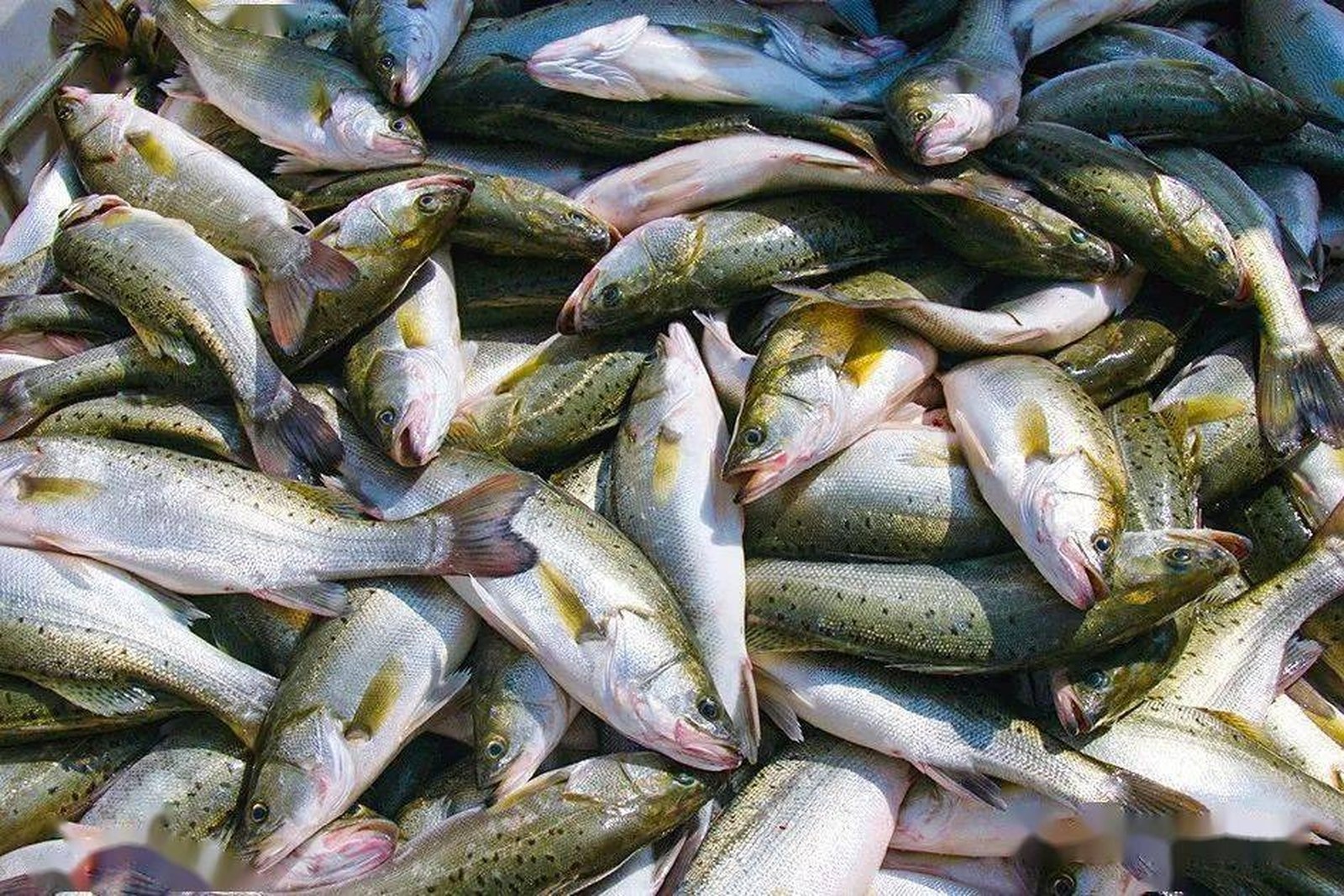
Most of the fish leaves Doumen as food rather than as live stock, and the chain that moves it is the district’s pride. The city counts more than 70 enterprises along the sea-bass processing line, with a local processing rate of 35 per cent; deep processing alone runs to about 11,400 tonnes a year and 1.244 billion yuan in sales, and the products reach Japan, the Republic of Korea, Europe and the Americas and are sold on mainstream Chinese e-commerce platforms including JD. Of the fish that leave the ponds, more than 70 per cent go north as ice-fresh, about 10 per cent are sold live in the city and its neighbours, and roughly 20 per cent are processed. The weak link for decades was the seed. In February 2025 the first 3 million fry from locally developed brood stock were delivered to growers, breaking a dependence on outside seed that had lasted more than 30 years, with a local fry survival rate above 90 per cent.
The fish’s other life is as a gift. On 28 December 2022 Doumen began hosting the first China New Year Fish Expo, organised by the Guangdong Provincial Department of Agriculture and Rural Affairs with the city, and it was there that the year-fish economy was first argued: 年鱼 nián yú, the New Year fish, borrowing the old wish that there be surplus every year, and turned into a whole fish for the reunion dinner, a boxed present, and a line of ready-to-cook dishes sold under a logo the district calls 国鲈 Guó Lú. A single livestream makes the point. On 4 September 2025 a fresh-food channel sold 65,000 orders of Baijiao sea bass in one day, about 6.5 million yuan. The Guangdong agriculture department’s figures, relayed by a provincial magazine at the second expo, put sea-bass prices more than 50 per cent above the same period in earlier years and farm households’ per-capita net income up 22.9 per cent, and they record that since November 2022 more than 400 companies across the country have put over a thousand New Year-fish products on sale, worth more than 10 billion yuan. What separates this page from the river-fish pages on the site is the direction of the whole story. Qingyuan’s Beijiang river fish, written up elsewhere here, is wild catch from a river, eaten plainly by the water; Baijiao sea bass is a pond-grown fish turned into a protected name, a district’s industry and a New Year gift. The supports Zhuhai holds on the food map are the brackish estuarine fishery at the western mouth of the Pearl River, the two national geographical indications the city carries, this fish and the yellowfin seabream of Jinwan District, the deep-sea marine ranches of the Wanshan Archipelago, and the port-side eating life next to Macao, China; this page is the first of them.
Words and Names
白蕉海鲈 Báijiāo hǎilú is the protected name, taken from 白蕉镇 Báijiāo Zhèn Baijiao Town in 斗门区 Dòumén Qū Doumen District, which sits between the 磨刀门 Módāomén Modao Gate and the 鸡啼门 Jītímén Jitimen where the 西江 Xījiāng West River reaches the sea. 年鱼 nián yú is the New Year fish, 国鲈 Guó Lú the district’s logo-name for the branded fish, and 中国年鱼博览会 Zhōngguó Niányú Bólǎnhuì the China New Year Fish Expo, first held in Doumen in December 2022. A geographical-indication protected product, a geographical-indication certification mark, a provincial famous trademark and a registered mark of origin are four different instruments, and this column keeps them apart. The site’s Beijiang river-fish page keeps its wild river catch; this page keeps the pond, the certified name and the gift box.
What the Locals Know
Buying the fish is easy once you know which form you want. Live sea bass is sold in the city’s wet markets and to restaurants; ice-fresh whole fish go north by the truckload; and the boxed New Year fish and the ready-to-cook lines, a pickled-mustard-green fish soup, a grilled fish, a whole festive fish, are sold online through the Zhuhai Fishing Capital store and the usual platforms. The district publishes no retail price for the fish or for its gift boxes, so none is printed here, and the prices that appear online on a 2026-10 snapshot move with the season and with the seller. Do not expect to buy at a pond side; the growers sell through co-operatives, processors and platforms rather than at the water’s edge.
A day that makes sense of the page follows the fish from the water to the table. There is no visitor centre at the ponds and no public tour of the processing lines, so the honest way to meet the fish is to eat it twice: a steamed whole sea bass in a Doumen restaurant, ginger and spring onion under hot oil, which is how the fish is best judged, and, if the season allows, a New Year fish box to carry home. The expo and the year-fish push belong to the weeks before the lunar New Year, and the fry release the district counts as its seed breakthrough belongs to February. What the record refuses is stated plainly: no retail price, no export volume or value behind the phrase about foreign markets, no completed status for the demonstration zone, and no ranking of the fish as the largest or the best in the world, since the only figures in play are shares of the national output, and those are given above with their sources.
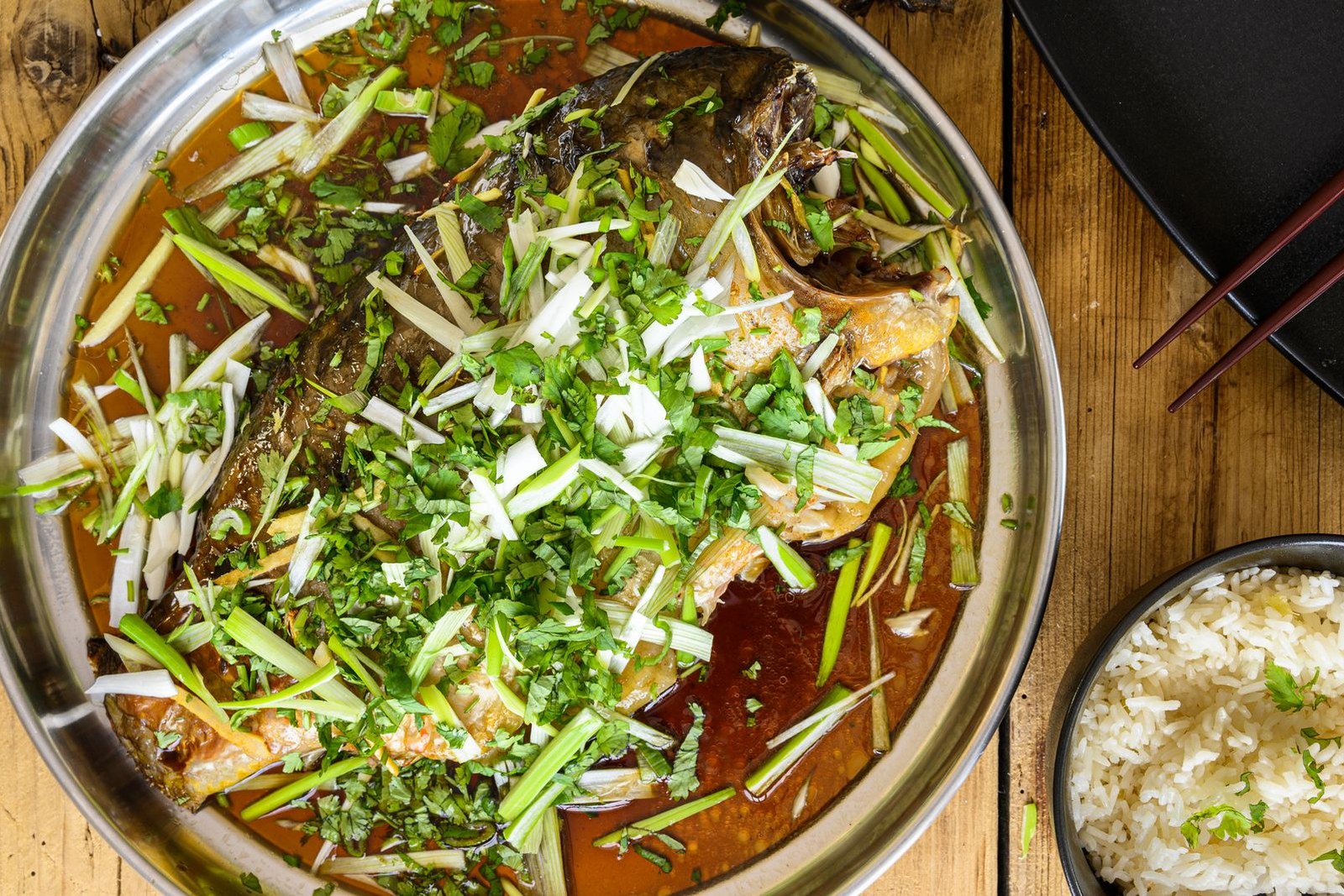
flowcloud would say that the Baijiao sea bass is a pond-grown fish from the brackish channels of Doumen District, protected as a national geographical-indication product since 2009 and the first such product in Zhuhai, farmed across about 42,500 mu for some 160,000 tonnes and an 18.6 billion yuan value chain at the end of 2025, under a demonstration-zone programme approved in December 2023 and a year-fish economy launched at the first China New Year Fish Expo in Doumen in December 2022.
Where to find it: live and ice-fresh 白蕉海鲈 Báijiāo hǎilú in the markets and restaurants of 斗门区 Dòumén Qū Doumen District and across 珠海市 Zhūhǎi Shì Zhuhai, Guangdong Province, and the boxed New Year fish and ready-to-cook lines through the Zhuhai Fishing Capital online store and mainstream e-commerce platforms; the fish is farmed in ponds between the Modao Gate and the Jitimen, no official retail price is published for it or its gift boxes and prices move with the season on a 2026-10 snapshot, and the geographical-indication demonstration zone approved in December 2023 is on a three-year build and is not finished.