
红鱼干 hóng yú gān, dried red fish, is the taste of 白马井 Báimǎjǐng, the fishing port on the coast of 儋州市 Dānzhōu shì, and it is one of the very few things in Hainan that the island sends away rather than keeps. The fish is 红鳍笛鲷 hóng qí dí diāo, the crimson snapper, a deep-bodied red fish of the Gulf of Tonkin; it is split down the back, salted, pressed and dried in the sun and the sea wind until it is firm and dark, and then it keeps for months. In the markets of 海口 and 广州 a good 红鱼干 is bought by the piece and hung in the kitchen to be cut at, and the west coast is where it comes from.
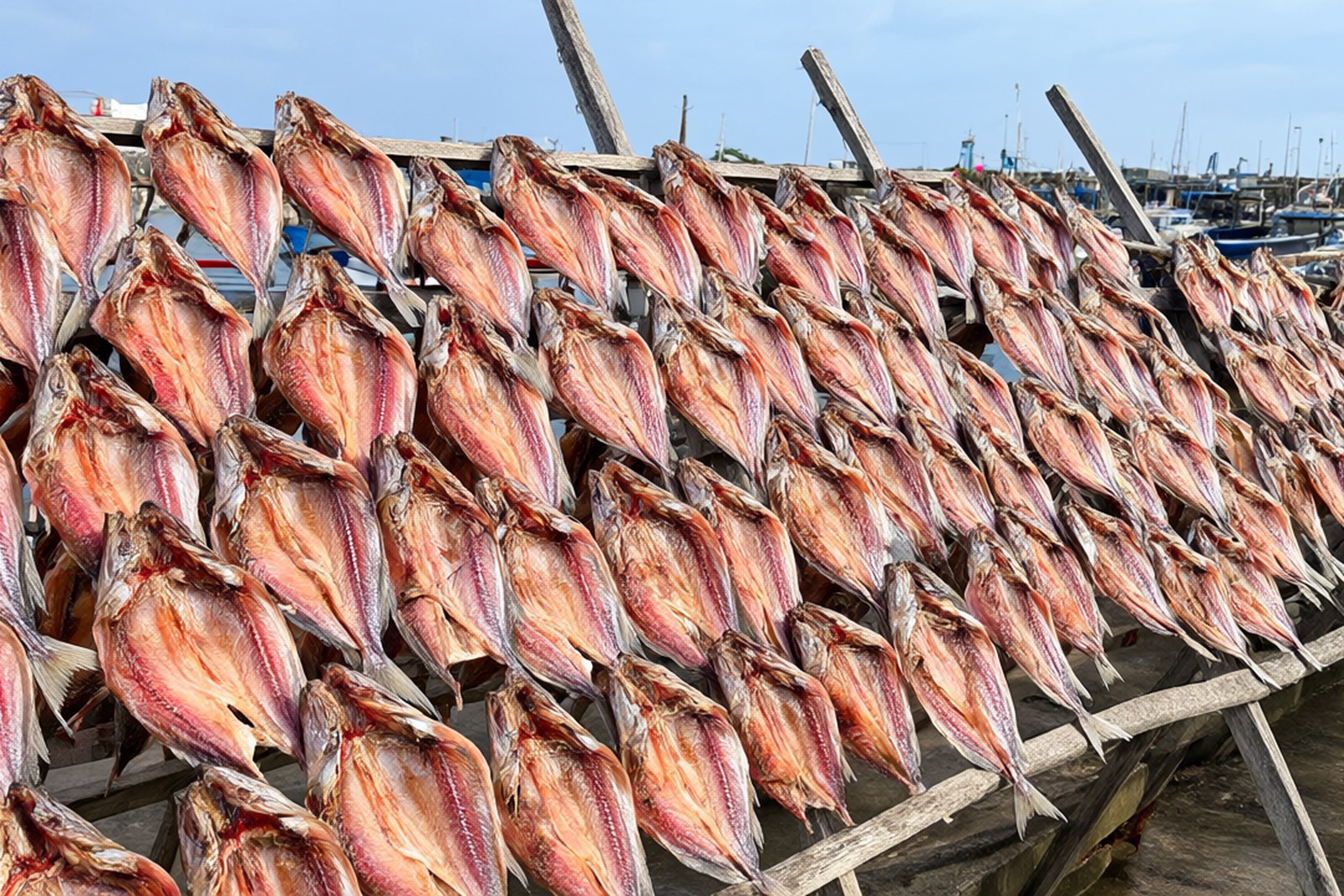
The port is why. 白马井 faces the Gulf of Tonkin and the winter fishing season brings the snapper in from the deeper water, so the town has had both the catch and the weather to cure it: strong sun, steady wind and low humidity through the cool months, which is exactly what drying a large fish needs. The trade is old and the town is built around it. Along the harbour the racks stand in rows from the quay up the street, and through December and January the whole waterfront smells of salt and fish oil. What is not dried is sold fresh the same day, and the auction at the quay starts early, well before light.
The cure is simple and unforgiving. Each fish is opened along the backbone into a single flat sheet, the guts and the gills taken out, and the body washed in seawater; it is then rubbed with coarse salt and left to draw for a night, pressed under boards with a weight so that the flesh tightens and the water runs off. In the morning it is rinsed, hung by the tail on the rack with the flesh open to the sun, and turned every few hours. Three to five days is the usual time, depending on the weather, and the skill is in knowing when to take it down: too short and it stays moist and sours, too long and it goes hard and bitter. A well-made 红鱼干 is dry to the touch, dark red at the thick end, and still slightly flexible.
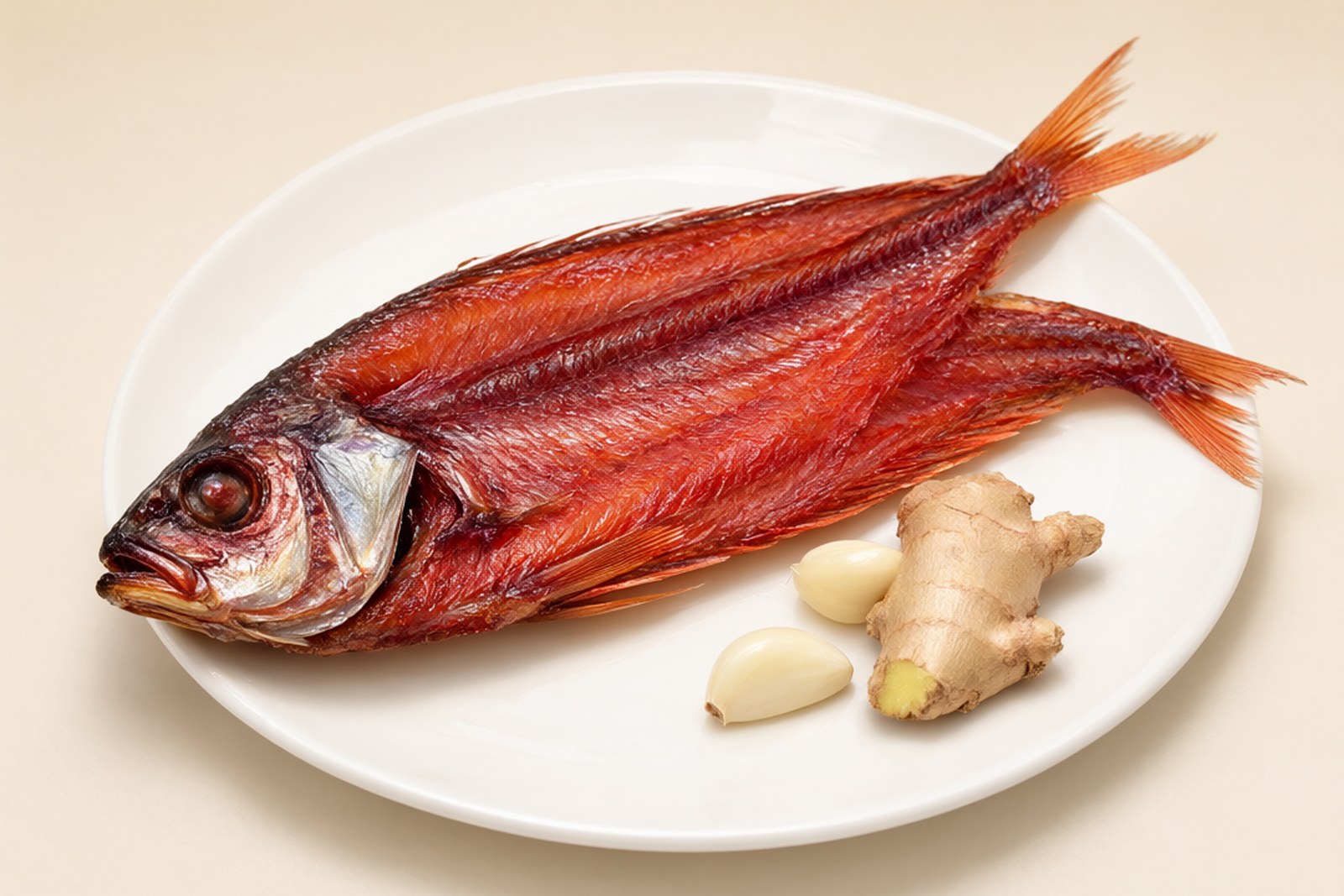
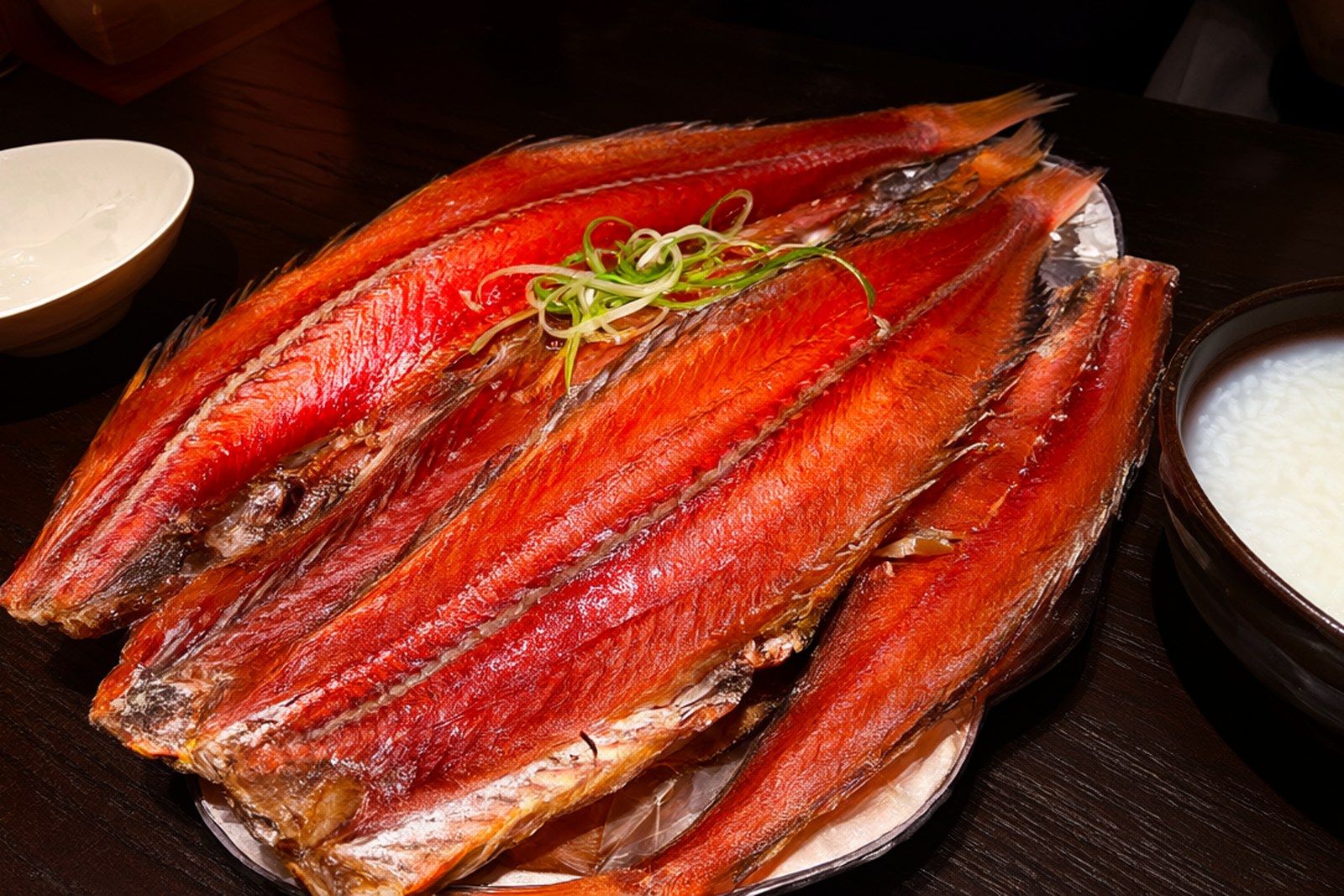
The kitchen uses it as a seasoning as much as a fish. The classic treatment is 清蒸 qīng zhēng: the fish cut into pieces, laid on a plate with 姜丝 jiāng sī, shredded ginger, and a little oil, steamed for ten minutes and finished with a spoon of hot oil over 葱花 cōng huā, spring onion. Eaten with plain rice or with 白粥 bái zhōu, rice congee, which is how the coast starts the day. A second dish, 红鱼干焖五花肉 hóng yú gān mèn wǔ huā ròu, braises pieces of the dried fish with belly pork until the salt of the fish seasons the meat, and a third, 红鱼干茄子煲 hóng yú gān qié zi bāo, does the same with aubergine in a clay pot. The salt means none of these dishes needs any added.
Words and Names
红鱼干 hóng yú gān is the dried red fish, 红 hóng red, 鱼 yú fish and 干 gān dried; the species is 红鳍笛鲷 hóng qí dí diāo, the crimson snapper. 白马井 Báimǎjǐng is the port in 儋州 Dānzhōu that the trade belongs to, and 北部湾 Běibù Wān is the Gulf of Tonkin it faces. 清蒸 qīng zhēng is steaming, 姜丝 jiāng sī shredded ginger, 白粥 bái zhōu rice congee, 五花肉 wǔ huā ròu belly pork and 茄子 qié zi aubergine.
What the Locals Know
Buy it in winter, from December to February, when the boats are landing and the racks are full, and buy from a stall that has the fish on the rack rather than in a basket, since you can then see how it was dried. Press the thick end with a thumb: it should give slightly and spring back. At home, soak or steam it rather than frying it dry, and use no salt at all in the dish, because the fish has plenty. If you are given the thick shoulder piece, take it; that is the part the family usually keeps.
flowcloud would say that a fishing town which took the one fish the winter brought, split it, salted it and hung it in the wind until it would keep for a season, and then spent the rest of the year cooking with it instead of salt, has written a whole cuisine out of a preservation method, and that the taste of a place is often just the taste of what it had to do to eat in February.
Where to find it: the drying racks along the harbour at 白马井 and the stalls of its morning fish market, both in 儋州市, and the markets of 海口, where it is sold by weight. A whole 红鱼干 is ¥60 to ¥150 depending on size, a piece for one meal ¥15 to ¥40, and 清蒸红鱼干 on a restaurant menu ¥40 to ¥80. 白马井 is about an hour by road south-west of 那大, and 儋州市 is a high-speed rail stop from 海口 in about fifty minutes.