
白沙绿茶 Báishā lǜchá, Baisha green tea, is the geographical-indication tea of 白沙黎族自治县 Báishā Lízú Zìzhìxiàn Baisha Li Autonomous County, a mountain county in central-west Hainan where the headwaters of the island’s great rivers gather and the forest cover runs past eighty per cent – and its address is the strangest in Chinese tea: the leaf grows in and around a meteorite crater, an impact ring some 700,000 years old just southeast of the county seat of 牙叉镇 Yáchā zhèn Yacha Town, widely billed as the first meteorite crater discovered in China. The paperwork is national – on 29 October 2004 the former General Administration of Quality Supervision, Inspection and Quarantine granted Baisha green tea geographical-indication protection – and the calendar behind the cup is the county’s own argument: Hainan is China’s southernmost tea region, the leaf comes in one to three months ahead of every other tea area in the country, and the county’s pages print the nickname proudly, the first early-spring tea of China.
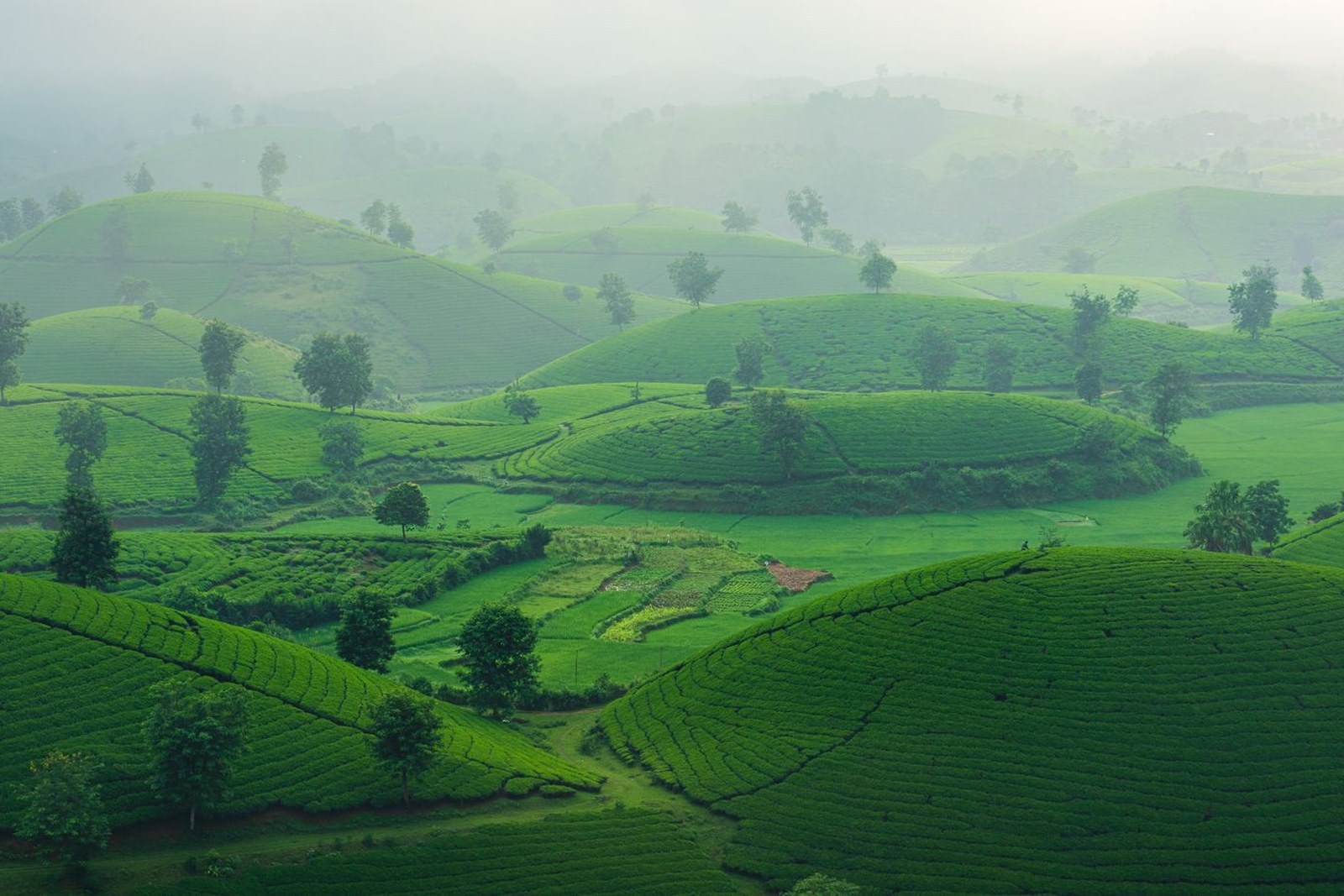
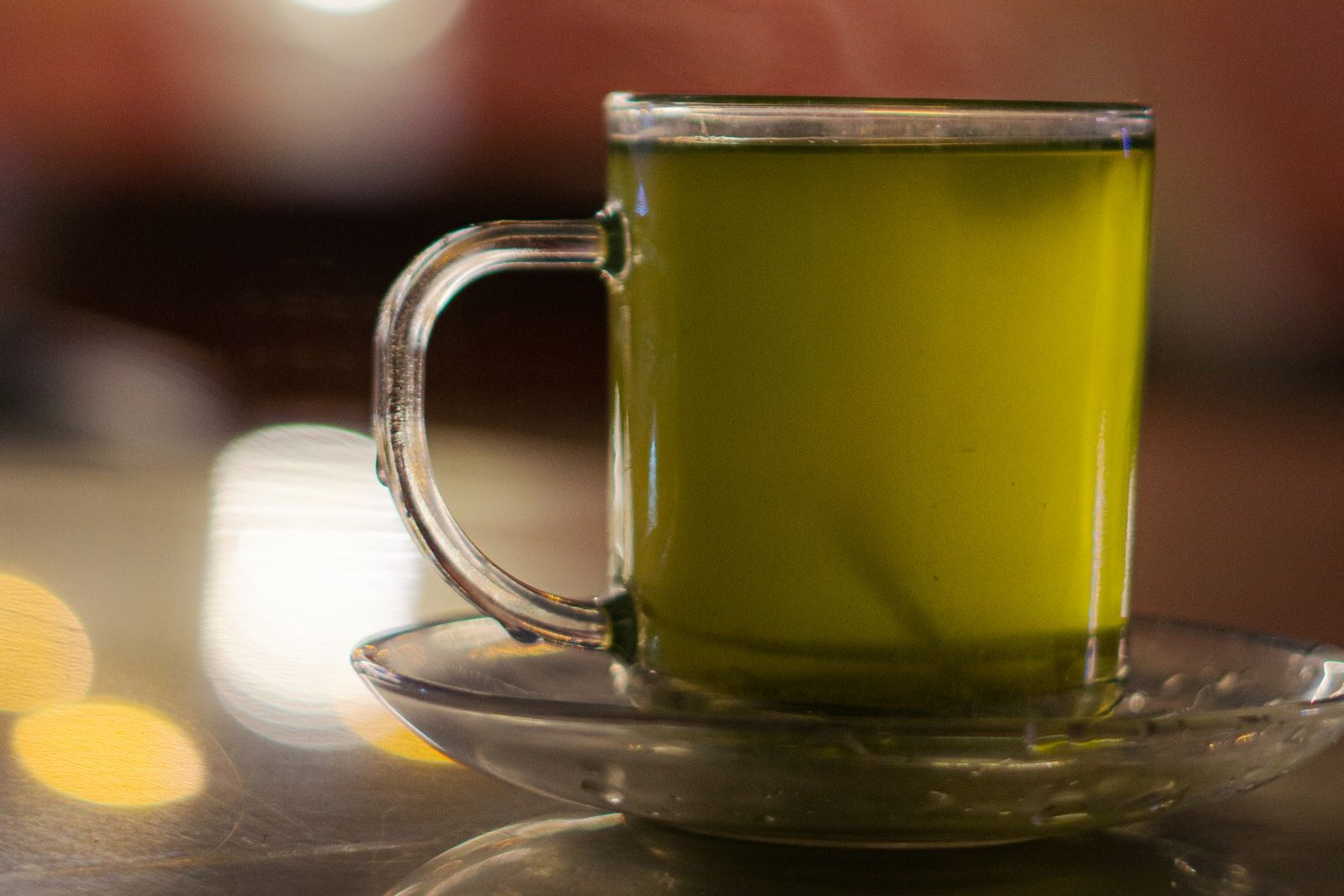
The protection has three layers, and the text keeps them on their timeline rather than flattening them into one sentence. The 2004 GI drew its protected area around the lands of the state-run Baisha Farm – that was the whole registered zone. The county’s 2019 account widened the frame: the tea grows in the basin below Yinggeling mountain, with the core sitting around the crater across the Baisha Farm and three townships, Yacha, Xishui and Yuanmen. And the plantings have since run county-wide: 7,513 mu in 2019 with 4,223 mu pickable, about 11,000 mu by 2023, and 14,100 mu by 2024/2025 – roughly a third of all Hainan’s tea land, with 3,500-odd mu under organic certification and fifteen tea firms, four of them provincial leaders. A provincial standard, DB46/31-2004, fixed the grades from top grade down through three more, issued in December 2004 and in force the following January. The varieties are the plantation list the trade pages print – Hainan and Yunnan large-leaf, Fuding white, Shuixian, oolong – and the cup the 2021 wire copy describes: tight even strands, a yellow-green liquor, and an endurance the locals quote as a rhyme, first steep mild, second steep opens, third and fourth at full strength.
The counts are annual, and all of them carry their year. 625 tonnes a year at the 2024/2025 count with an output value past 130 million yuan, more than 5,000 jobs along the chain and some 3,500 yuan of extra income a head – the People’s Daily feature’s figures; the county’s own statistical page prints 648 tonnes for 2025, and the two offices’ two counts stand side by side here rather than one replacing the other. The market sides with the name: the provincial daily’s tea page prices Baisha green tea about fifty per cent above comparable teas – a trade-press snapshot, floating like every other number in this article.
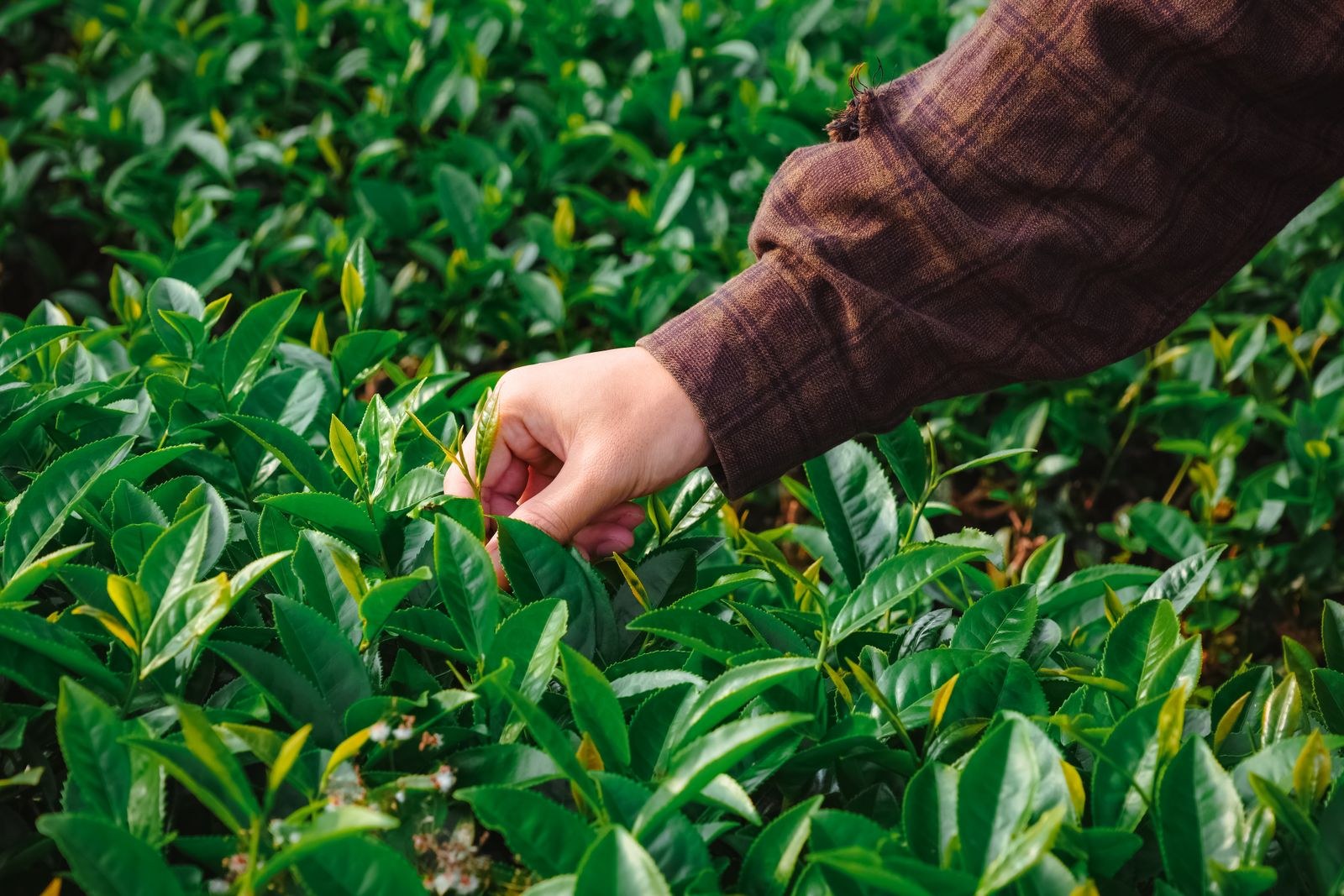
The craft runs on the same day it picks. One bud and two leaves, spread to wilt, killed green over high heat, rolled, dried until a handful of the finished leaf rustles – and the fine point the provincial daily’s craft file adds: the last pass turns the tea in a home-made octagonal tube for an hour or two of slow cold rolling that tightens the strand to its grey-green finish. Lab work cited by local sources from a 2004 inspection puts the water extract at 43.2 per cent – figures carried as citations, not re-tested here. Around the crater the growers add their own phenology: two hundred and fifteen foggy days a year by their count, buds fatter and more fragrant than the same varieties off the crater, and a bush ready to pick in two years where a transplant elsewhere waits three – farmers’ and brochure claims, printed as such. The soil story under them: meteorite samples from the crater have tested out at forty-eight minerals, and locals credit that mineral-rich ground for the cup. The chemistry is documented; the causation is not – no study proves the crater makes the flavour, and this text keeps the credit where the locals keep it, in their own mouths.
The honours chain runs long and every link is attributed. 1990, designated drink of the Asian Games in Beijing; 1991 to 2008, continuous green-food certification; 1998, gold at the national food expo; 2008, named a China Famous Agricultural Product by the agriculture ministry. Deeper back, the county annals carry the record the locals are proudest of: per the county annals, across eight green-tea competitions held in the 1980s by the Guangdong provincial reclamation authorities, Baisha green tea took first place seven times, and the leaf shipped to more than twenty countries, Britain among them – a gazetteer figure carried as a gazetteer figure, and the reason no rank of number-one-in-Hainan appears anywhere in this text: the record grants the county seven firsts in eight tries and no title beyond them. The newest paperwork is the forward-looking kind. April 2023: the Bóshā-brand tea carried Hainan’s first tea carbon label, whose own accounting puts a kilogram of the leaf at minus 9.22 kilograms of CO2-equivalent across its life – a negative footprint, printed on the label’s figures – issued alongside the province’s first local tea-standards system, 466 items of it. August 2024: the county’s first and so far largest single tea export, ten tonnes of black and large-leaf bagged tea to Nigeria worth 295,000 US dollars, cleared through Basuo customs – the province’s first shipment of its kind.
Words and Names
白沙绿茶 Báishā lǜchá is the tea; 陨石坑 yǔnshíkēng is the meteorite crater. 牙叉 Yáchā is the county seat, the town all five articles of this batch anchor to. 早春茶 zǎochūn chá is the early-spring tea, the harvest calendar’s argument for the county’s fame. DB46/31-2004 is the provincial standard and its grade ladder. 白沙牌 Báishāpái and 薄沙牌 Bóshāpái are two different brands in two different characters – the state-farm line and the carbon-label line – and the trade adds 陨坑牌 Yǔnkēngpái and 五里路 Wǔlǐlù. And the site’s other Hainan tea pages keep their own ground: the high-mountain garden teas of Wuzhishan are a different address; this one is the crater ring.
What the Locals Know
Two visits cover the story. The Wulilu tea-rhythm shared farm (五里路茶韵共享农庄) in Yacha township – founded by 符小芳 Fu Xiaofang, named for lying about five li, two and a half kilometres, from the crater’s impact point – keeps 300 mu of organic garden and has renewed European and American organic certificates every year since 2015; visitors pick and pan-fire their own leaf, and a People’s Daily reporter did exactly that on the record. The Baisha Farm’s tea expo park near the crater runs nearly a hundred mu of tasting halls and tea museum around an automated line that can process 600 tonnes of fresh leaf a year. In town, the product exhibition centre sits on Yacha Middle Road, and the evening picture the provincial wire carried back in 2016 still holds: chairs out along the streets after dark, pots shared among friends, a small county that drinks its own tea in public.
Timing is the county’s whole pitch: the earliest pluckings land while the mainland’s gardens are still dormant, so a spring visit here beats a spring visit elsewhere by weeks, and the March 3rd fair’s Baisha Liangshi tasting stands pour the county’s teas beside its foods. What the record refuses: any number-one-in-Hainan rank, which no source grants; a proven crater-makes-flavour causal link, which no study supplies; a current official retail price – the 600-yuan 150-gram tip tea in the provincial archive is a historical shelf price, not a present one; and a firm heritage listing for the making craft – a 2023 county-level listing is reported by single sources only, and is printed here as a report, not a register entry.
flowcloud would say that Baisha green tea is a crater wearing a garden – a 700,000-year-old ring of mineral ground the locals credit for a leaf that reaches the pot months before any other tea in China, seven firsts in eight tries by the annals’ count, and a carbon label that counts its footprint in minus numbers.
Where to find it: the Wulilu tea-rhythm shared farm in 牙叉镇 Yáchā zhèn Yacha Town and the tea expo park by the crater, both in 白沙黎族自治县 Baisha Li Autonomous County, Hainan – pick-and-pan-fire sessions at the farm, tasting halls at the park; the exhibition centre on Yacha Middle Road for boxed tea. Prices float and the archive’s 600-yuan tip tea is history, so buy at the counter and read the label; the crater tea-garden scenic area reportedly holds a national AA tourism grade as of 2025. Come in earliest spring, for the crop the county is named for.