
白沙油鸭 Báishā yóu yā, the oil duck of Baisha, is a cured duck – 腊鸭 là yā, what northern China calls pressed salted duck – from 白沙 Baisha, a community at Humen Town’s north-west corner where Dongguan’s water country meets three towns’ borders. The name is the trade’s own compliment: oil for the glistening white fat along the bird’s edge. The standard the sources agree on reads like a portrait: body flat, outline peach-round, the ribs set in the shape of the character 八, the tail half-round, a finger’s width of white rim, skin milky, lean meat sauce-coloured, salted to the mild side, rich without grease, the bone crisp enough to chew. Reputation holds it up: the trade’s 腊味之王, king of cured birds, and one of Dongguan’s three signature gifts beside the city sausage and Shilong’s maltose pomelo peel – a trio the municipal agriculture pages keep in print.
The paperwork: the making technique entered Dongguan’s second municipal batch in 2010 and Guangdong’s fourth provincial batch in 2012 – the craft is the listed item, and the text keeps that attribution. The origin story the histories tell is a salt-port tale: in Ming-Qing times Baisha kept a salt depot, its soldiers largely Jiangsu-Zhejiang men who knew ducks, and among the retired, curers from Nan’an in Jiangxi – today’s Dayu – whose pressed ducks were already famous; the two skills met at Baisha’s creekside duck pens. That is the legend, carried as legend; what the records document is a craft dating to the late Qing, some two hundred years of passing down, and an export trade already running by the late Qing – Hong Kong and Southeast Asia – that stayed a foreign-trade staple for a century and more. The Republic-era county gazetteer’s line is the dish’s certificate: of cured ducks, Baisha’s are the finest, the flavour not a step behind Nan’an’s.
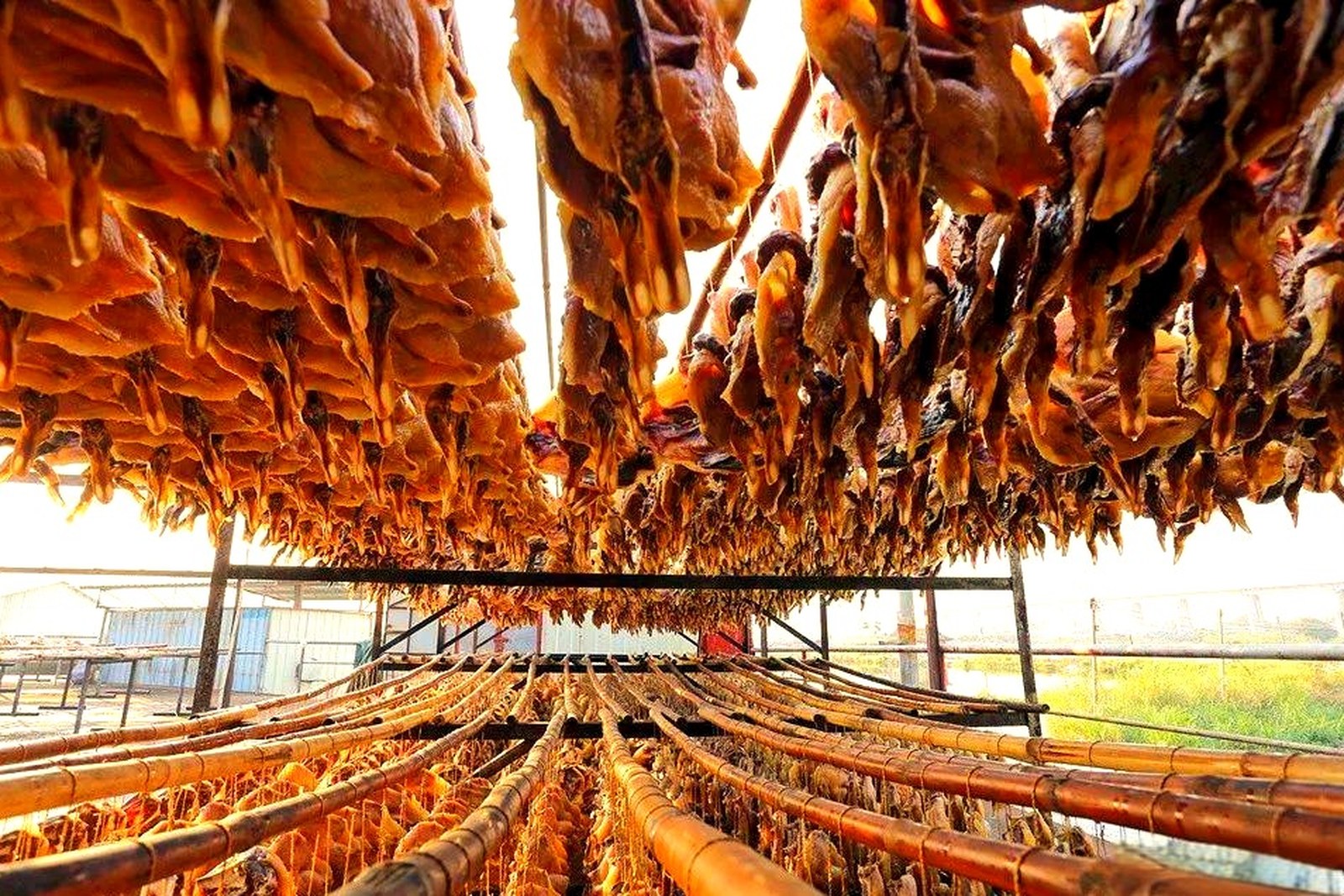
The calendar runs on the north wind: 北风起,白沙油鸭香 – when the north wind rises, the Baisha oil duck smells good. Work starts the first day of the eighth lunar month and peaks through the eleventh and twelfth. The current official account prints the line this way: white ducks fattened about eleven days by hand-feeding – the trade calls it 吹米, blowing the rice – until the flesh runs fat and sweet; coarse natural salt rubbed hard into neck, legs and breast; forty-eight hours under salt, then washed clean of the crystals in cool water; the legs bent and set by hand to give the bird its flat, peach-round shape; two days in the sun, then half a month drying in the sheds, sun and north wind doing the curing. Bird to shelf, about three weeks. Older files print different breeds and eleven and a half days of fattening; the body takes the newer account’s eleven-day line and leaves the breed unnamed, the two records disagreeing quietly rather than loudly.
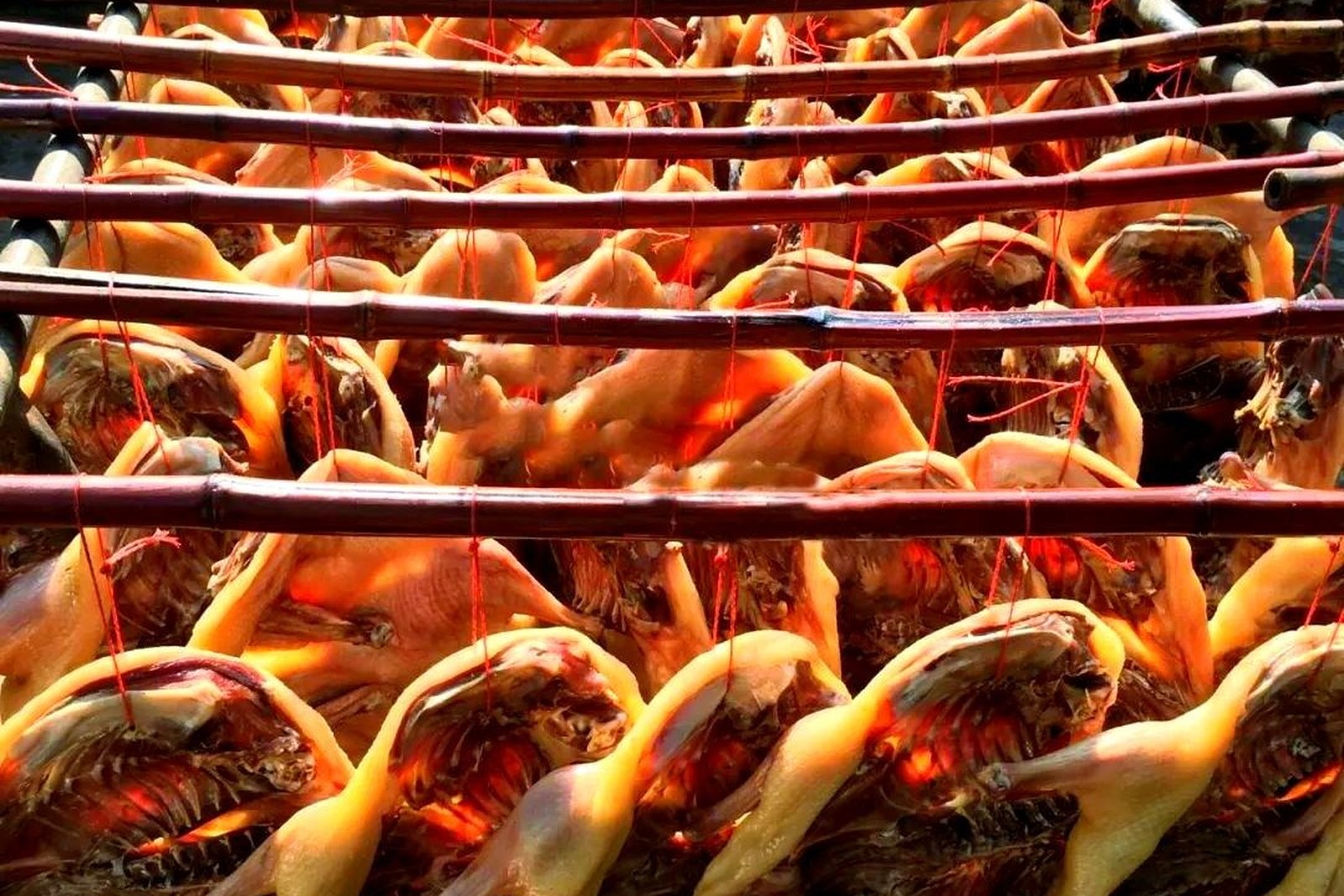
The standard of the good one comes from the fourth generation of the trade itself, 方建和 Fang Jianhe, quoted on the municipal agriculture pages: white all over is best, the neck the colour of a dried longan, a mild saltiness the real taste – a duck that is only salty is not the real thing. The trade’s money is a stopped clock. At its late-twentieth-century export peak the line earned more than ten million Hong Kong dollars a year – a historical figure the sources carry, not a present one; current output, current prices, current buyers: the record carries none, and this text prints none. What the record does carry is a succession: the Fang family now in its fourth generation by one account and its fifth by another, with representative inheritors recorded as 方咸仔 Fang Xianzai in the earlier files and Fang Jianhe in the newer ones – two names from two years’ records, the relationship between them not settled by any source, and not invented here. The newest generation sells like the newest generation does: an anime-style duck mascot for the brand, fair booths and virtual livestream hosts – heritage craft, cartoon front.
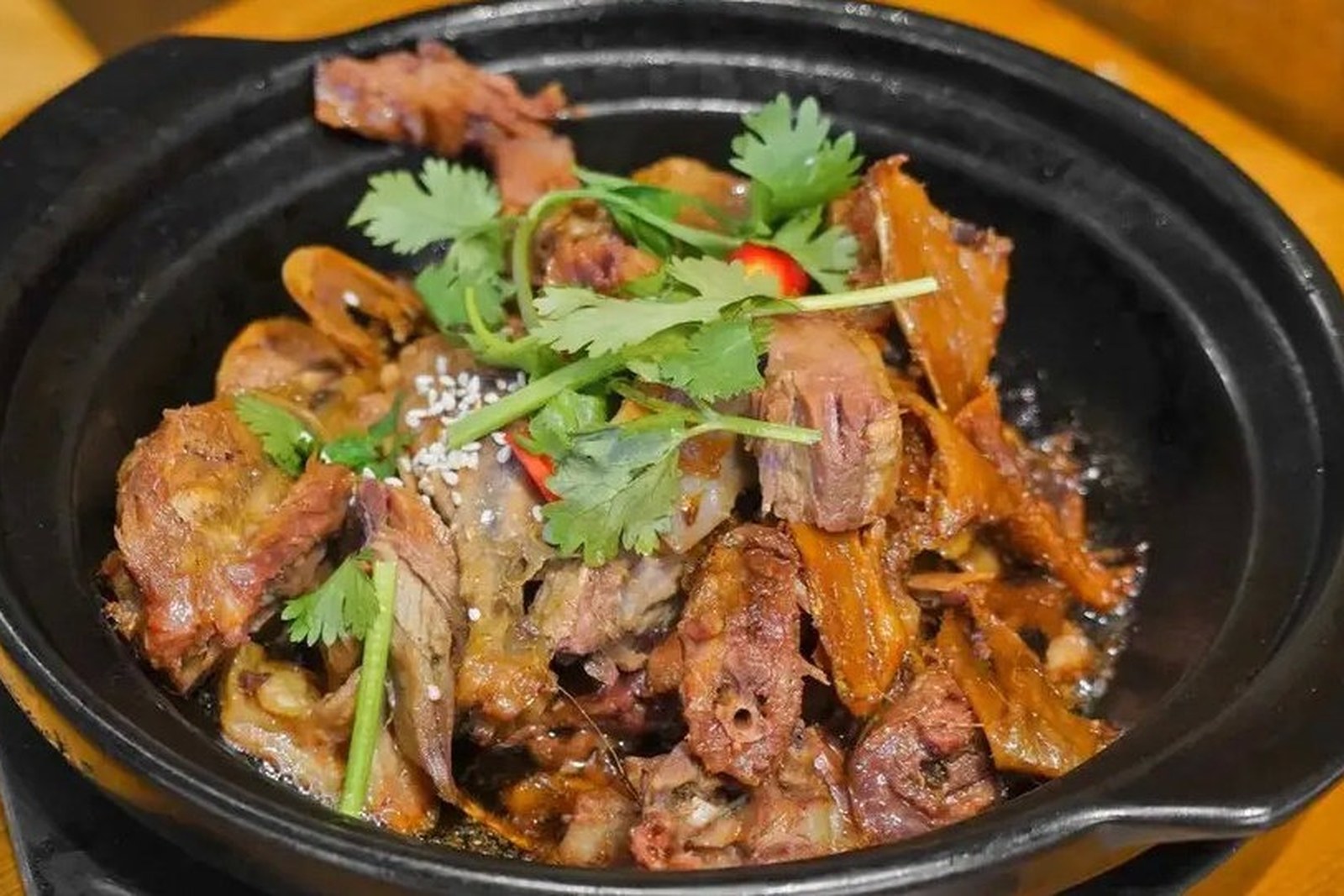
The table the duck lands on is a winter one. The town’s own signature is 白沙腊味饭, a Baisha cured-meat claypot rice – the duck, its intestines and the sausage in one pot, a regional relative of the claypot-rice format this site treats on its own page – which Humen’s restaurants roll out with the cold weather. Around it: the duck throat simmered with radish, the winter dish that runs crisp and unctuous against sweet broth; duck kidney with watercress soup; duck intestine steamed over egg; the drumstick tucked into sticky rice. Every household keeps its own curing recipe, the sources say – a taste that cannot be copied – and the season’s first birds still go to family and friends before any shop counter, the custom running underneath the commerce.
Words and Names
油鸭 yóu yā is the oil duck, so named for the white fat along its rim; 腊鸭 là yā the cured duck it is, pressed salted duck to the north. 腊味之王 is the king-of-cured-birds title the trade gives it. 吹米 chuī mǐ is blowing the rice, the eleven-day hand-fattening. 三宝 is the three-signature-gifts trio: this duck, the Dongguan sausage, Shilong’s maltose pomelo peel. 北风 is the north wind the whole trade waits for. And the site’s cured-meats page keeps its own town: Dongpi’s cured meats of Lianzhou are a separate register – Guangdong’s larder has room for both.
What the Locals Know
Timing is everything, because the duck is a season: the curing runs from the first of the eighth lunar month into the twelfth, so the visit window is roughly September into deep winter by the solar calendar, fattest and best around the eleventh and twelfth months. Buy at Baisha itself – the community’s curing workshops and family houses are the trade, no official shop list exists, and the one factory name the travel pages carry is a snapshot tip, not a recommendation. Vacuum packs travel, which is how most of the trade leaves town.
Eat it in Humen while you are there: the winter claypot rice with the duck in it appears across the town’s tables, and the duck-throat radish pot is the dish the locals order for themselves. What the sources carry for shopping is the vacuum pack, which is how most of the trade leaves town; buy where the curing happens, and the bird arrives as it left the shed.
What the record refuses: a national geographical-indication status – one local site asserts it, no official announcement backs it, and the text drops it rather than downgrading it; any current export or earnings figure, the ten-million line belonging strictly to the late twentieth century; a retail price for a whole duck, which the sources do not carry; and any kinship between the two recorded inheritor names, which no source settles.
flowcloud would say that 白沙油鸭 is a wind trade – eleven days of forced feeding, two days of sun and half a month of shed air, a bird the old gazetteer ranked first a century ago and a fourth-or-fifth generation now sells through a cartoon duck, the north wind still writing the calendar.
Where to find it: the curing workshops and family houses of 白沙 Baisha community, 虎门镇 Hǔmén zhèn Humen Town, Dongguan – season from the first of the eighth lunar month, best through the eleventh and twelfth; vacuum-packed birds travel, the winter claypot rice with cured meats is the in-town serve. No current price is printed anywhere, so ask at the counter; come with the north wind, and let the duck-throat radish pot finish the meal.