
白溪豆腐 bái xī dòu fu is the bean curd of 白溪镇 Bái xī zhèn, a river town in 新化县 Xīn huà xiàn, 娄底市 Lóu dǐ shì, and the claim made for it is a line you will hear before you have finished your first bowl: 走遍天下府,白溪好豆腐 zǒu biàn tiān xià fǔ, Bái xī hǎo dòu fu, travel every prefecture under heaven and Baixi still has the better bean curd. The town sits on the 资江 Zī jiāng, on the southern slope of 大熊山 Dà xióng shān, and has been a river port for a very long time; the county counts it among the oldest towns in the prefecture, and the local boast is that it carried the nickname 小南京 xiǎo Nán jīng, little Nanjing, in the days when the timber boats were running. What it sells is a curd that is white, tender and, unusually for something tender, almost impossible to boil to pieces – 久煮不散 jiǔ zhǔ bù sàn, it will not fall apart however long it is cooked. The travelling version of the same thing, pressed hard and smoked over rice husk, is 白溪香干 bái xī xiāng gān, and between the two of them they are why the town’s name is known beyond Hunan.
The reason given for all of it is water, and the town has one spring at the centre of its story. Local accounts put a well on 八仙街 bā xiān jiē, Eight Immortals Street, down by the river; the county’s record has 乾隆 Qián lóng, the Qianlong emperor, passing through on a tour of the south in 1751, eating the town’s bean curd, giving the well the name 金殿井 jīn diàn jǐng, the Golden Hall Well, and leaving behind the line about travelling every prefecture. Local telling adds that the water was said to carry 龙涎 lóng xián, dragon saliva, which is the customary way of saying that it tasted of nothing and of the ground at the same time. A modern reading of the same claim is a set of measurements: the water is described as carrying about 218 milligrams of dissolved solids per litre and testing weakly alkaline, which the trade argues is why the soya milk sets so readily and why the curd tastes faintly sweet rather than flat. One local account says the old well itself was drowned when the 柘溪 Zhè xī reservoir was built on the river in the 1960s and the bank was flooded, and that may well be so. What matters to the town is that the water still comes out of the same ground under the same hills, and that everyone who has ever tried to carry the recipe away has failed, which is the most useful thing a local food story can produce.
The method is old and specific. Soybeans, which the trade describes as not genetically modified and prints on every bag, are soaked in the spring water for about eight hours, long enough to swell and not long enough to lose their backbone. They are ground on a 青石磨 qīng shí mò, a green stone mill turned slowly enough that the friction does not heat the pulp, because heat carried out of a mill takes the smell of the bean away with it. The milk is boiled over a wood fire in an iron pan and stirred with a long wooden ladle scraped round the rim, and it is set not with brine but with 石膏 shí gāo, gypsum, added as a thin slurry at a ratio and a speed the cooks describe as the entire skill of the trade. What comes out is white as mutton fat and trembling like dew on a leaf, and it will sit in a boiling pot for as long as anyone cares to leave it. The pressed version is made by ladling the curd into cloths and weighting them, and then smoking the dried cakes over 谷糠 gǔ kāng, rice husk, which is what gives 白溪香干 its gold skin, its smell of woodsmoke and its ability to be carried a long way from the river. The town counts more than two hundred small workshops and a handful of factories, and the workshop men have a line about the machines: 机器磨的浆太急, a machine grinds the milk too fast and loses the soul of the bean with it.
In a 白溪 kitchen the fresh curd is mostly made into soup. 鲜豆腐汤 xiān dòu fu tāng is the plainest of the dishes and the one the town is judged on: the curd simmered in spring water with spring onion and shredded ginger until the broth goes milky, so that the bowl is white and tastes of bean and almost nothing else. 泥鳅钻豆腐 ní qiū zuān dòu fu, loach burrowing into bean curd, is the party trick – live loach and a block of cold curd in the same pot, heated slowly, so that the fish work their way in as the water warms and are cooked inside the curd, which comes out sweeter and firmer than it sounds. 鱼冻豆腐 yú dòng dòu fu, fish jelly with bean curd, is the winter dish the town eats at the new year, fresh carp cooked down with the curd and white chillies and then set cold. The county lists 白溪豆腐 among the 新化四宝 Xīn huà sì bǎo, the four treasures of Xinhua, alongside its black tea, its rice wine and its 黄精 huáng jīng, the herbal root grown on the high ground. It holds a national geographical-indication certification mark and a place on the provincial list of long-established brands, and in 2023 the town was named to the national 一村一品 yī cūn yī pǐn, one-village-one-product, demonstration list for the bean curd, which is the bureaucratic way of saying that a town of some eighty thousand people has built its name on the one thing it can make better than anybody else.
Words and Names
豆腐 dòu fu is bean curd and 白溪豆腐 puts the town’s name in front of it. 水豆腐 shuǐ dòu fu, water bean curd, is the soft fresh curd that the town’s reputation rests on, and 香干 xiāng gān, fragrant dry, is the pressed and smoked cake that travels. 石膏 shí gāo is gypsum, the coagulant used here rather than brine, and 点卤 diǎn lǔ, dropping the coagulant in, is the moment the trade says the whole craft is decided. 金殿井 jīn diàn jǐng, Golden Hall Well, is the well in the town’s story, and 八仙街 bā xiān jiē, Eight Immortals Street, is where the story puts it. 新化四宝 Xīn huà sì bǎo, the four treasures of Xinhua, is the county’s own list, on which the bean curd sits with 新化红茶, 新化水酒 and 新化黄精.
What the Locals Know
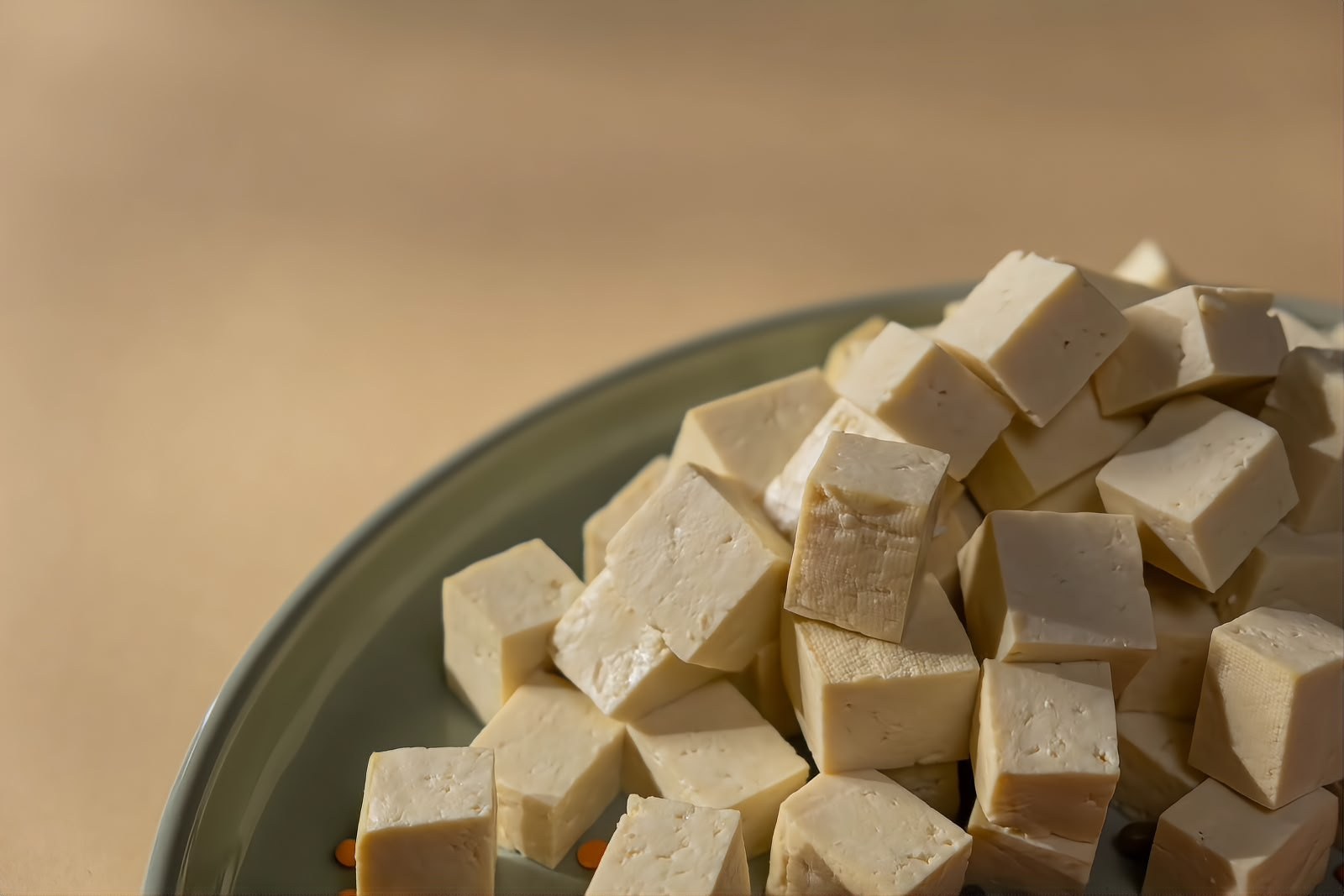
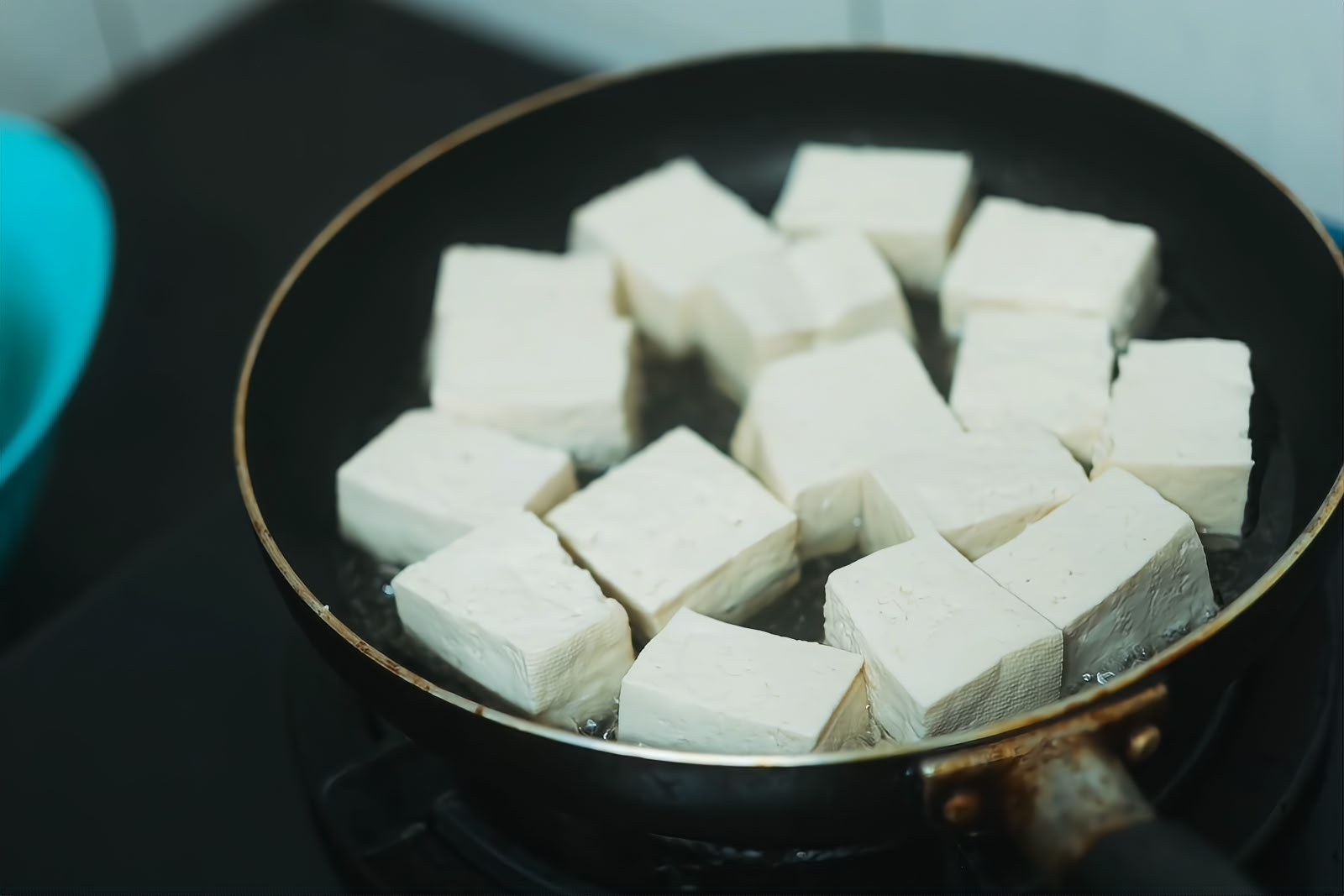
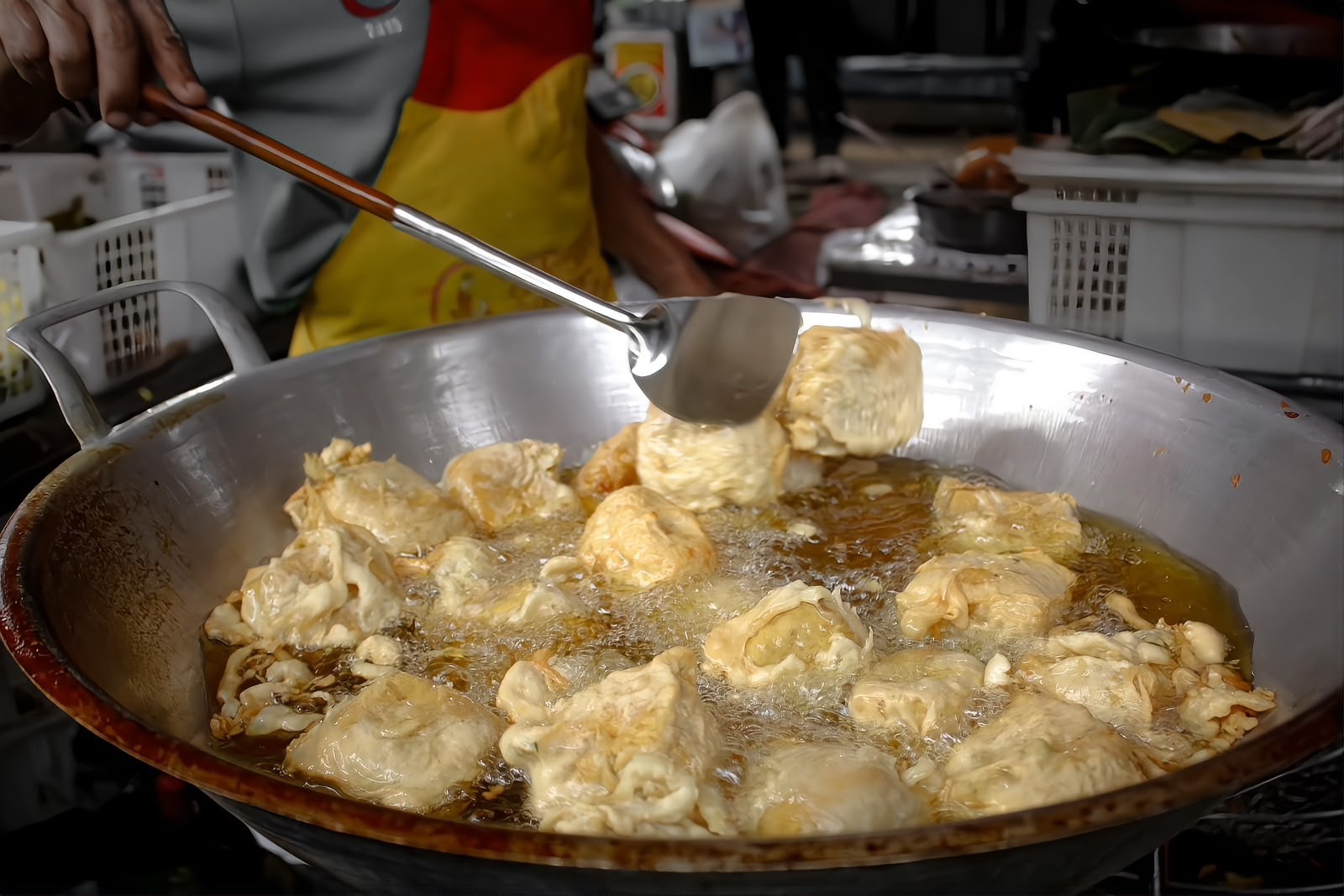
Judge fresh bean curd with your hands and your nose before you look at it. A good block of 白溪水豆腐 should be white right through with no grey patch at the centre, should give slightly under a finger and come back, and should smell of bean and water and nothing sour or plastery. If it is being fried, the point of the 久煮不散 claim shows up in the pan: a real one holds its corners and takes colour outside while staying soft within, and one made badly will slump into the oil. Cook it gently and salt the water rather than the curd, because the bean curd takes salt quickly and will weep if it is salted early. The test the county itself gives away needs a pot and twenty minutes: drop a cube in boiling water and leave it, and a block that is still whole and still tender at the end is the real thing. The pressed 香干 is the version to carry home, a dry firm cake that keeps for weeks, sliced and fried with pork belly and green chilli or eaten cold with a dipping dish of chilli and vinegar. In the town the fresh curd is bought in the morning and cooked the same day, and the shops that press it make a small amount early and are often out by nine.
flowcloud would say that the town’s real export has never been the bean curd but the water, and that since water cannot be posted, everybody who wants the one has to come and stand in line for the other.
Where to find it: the bean-curd workshops and markets of 白溪镇 in 新化县, forty kilometres north of the county town 上梅镇 Shàng méi zhèn and reached by road along the 资江 Zī jiāng; the town is on the northern edge of 娄底市, close to the 大熊山 national forest park, and the fresh curd is also sold in the markets of the county town and in 娄底 and 长沙 under the town’s name. Buy 水豆腐 in the morning if you intend to cook it that day, and buy 香干 if you intend to carry it anywhere; the pressed cakes are sold in vacuum packs and plain, and the smoke-blackened ones from the small workshops are the ones worth the trouble. Most 新化 restaurants keep both on the menu, and the plain soup, made with nothing but water, spring onion and ginger, is the dish to order if you want to know whether the shop is buying the real thing.