
Baling Crabapples: Eight Ridges, Sour-Sweet Preserves and the Old Orchard Fruit of Yanqing District, Beijing
八棱海棠枝上赤,酸甜一树晒成干。Bālèng hǎitáng zhī shàng chì, suān tián yī shù shài chéng gān – On the branch the eight-ridged crabapples turn red; sour-sweet, a whole tree dries down into stores.
八棱海棠 bālèng hǎitáng Baling crabapples are not apples and not ornament – they are, plainly put, a small flattened fruit with eight raised ribs running from stem to calyx, a thin skin, and a flesh so sour that the first bite is a test of character. The address is an old orchard belt: the village plots and hillside rows of 延庆区 Yánqìng Qū Yanqing District, Beijing, where the tree has been grown for generations as a household fruit rather than a cash crop, on the same ground that suits the district’s apples and grapes, in the county’s north and northwest (worth confirming which villages still keep bearing rows and which have let them go). The eight ridges are the diagnostic: press the fruit and you feel them as flat planes, not a smooth sphere, which is why the name stuck and why no other 海棠 hǎitáng crabapple is sold under it. The fruit ripens late in the summer and holds into autumn, and the whole of its usefulness follows from one fact – it is too sour to eat in quantity fresh, and too aromatic to leave on the tree.
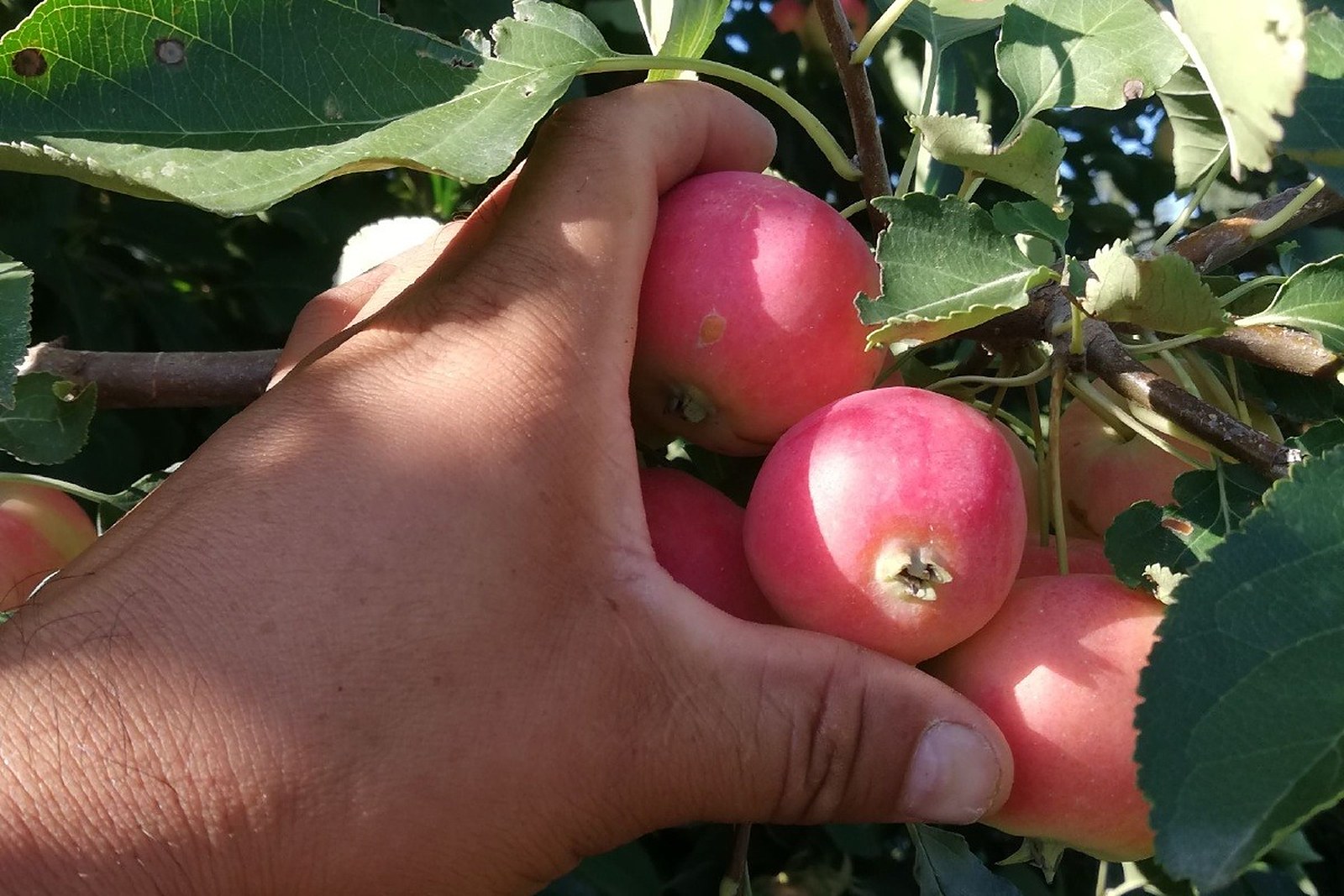
Call it honestly: this is not a snacking fruit, and anyone who buys a bag expecting a small sweet apple will be disappointed by the second bite. The flesh is firm, the juice sharp, the skin faintly astringent, and the pleasure is in the shock of it rather than in sweetness – one or two at a time, cold, is the honest dose. That is precisely why the district’s real craft lies downstream. 海棠干 hǎitáng gān dried crabapples are the keeper: the fruit is halved, cored, and dried in sun and air until the edges curl and the flesh turns leathery and amber, at which point the sourness concentrates into something chewy and long. 海棠汁 hǎitáng zhī crabapple juice, pressed and lightly sweetened, is the other standard form, and the stewed and canned versions turn up on farmhouse tables in winter. Prices shift with the season and the house – worth confirming the details – and the fresh window is short: the fruit is at its best for a few weeks and then softens, which is why the dried product, not the fresh, is what the orchards are actually selling.
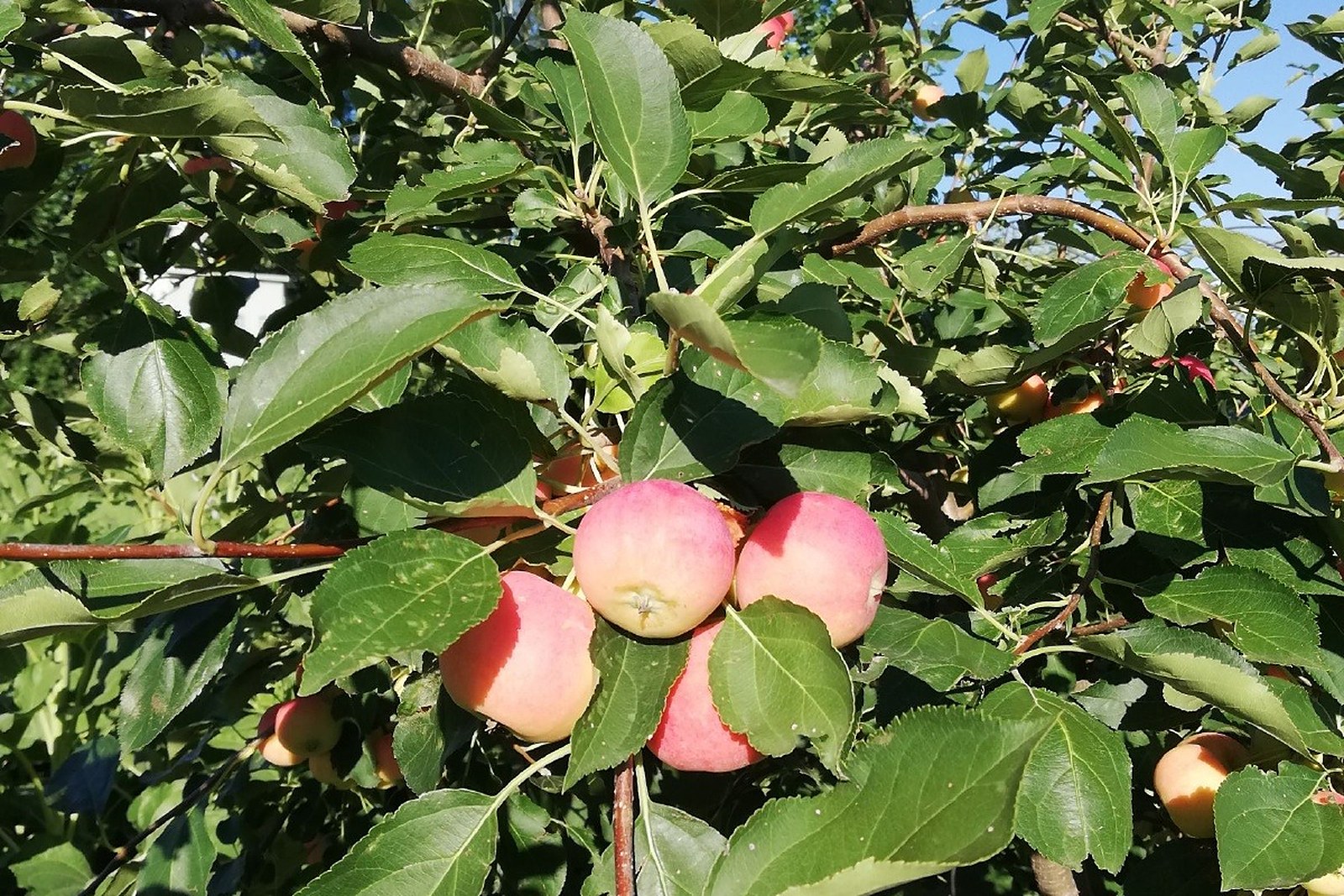
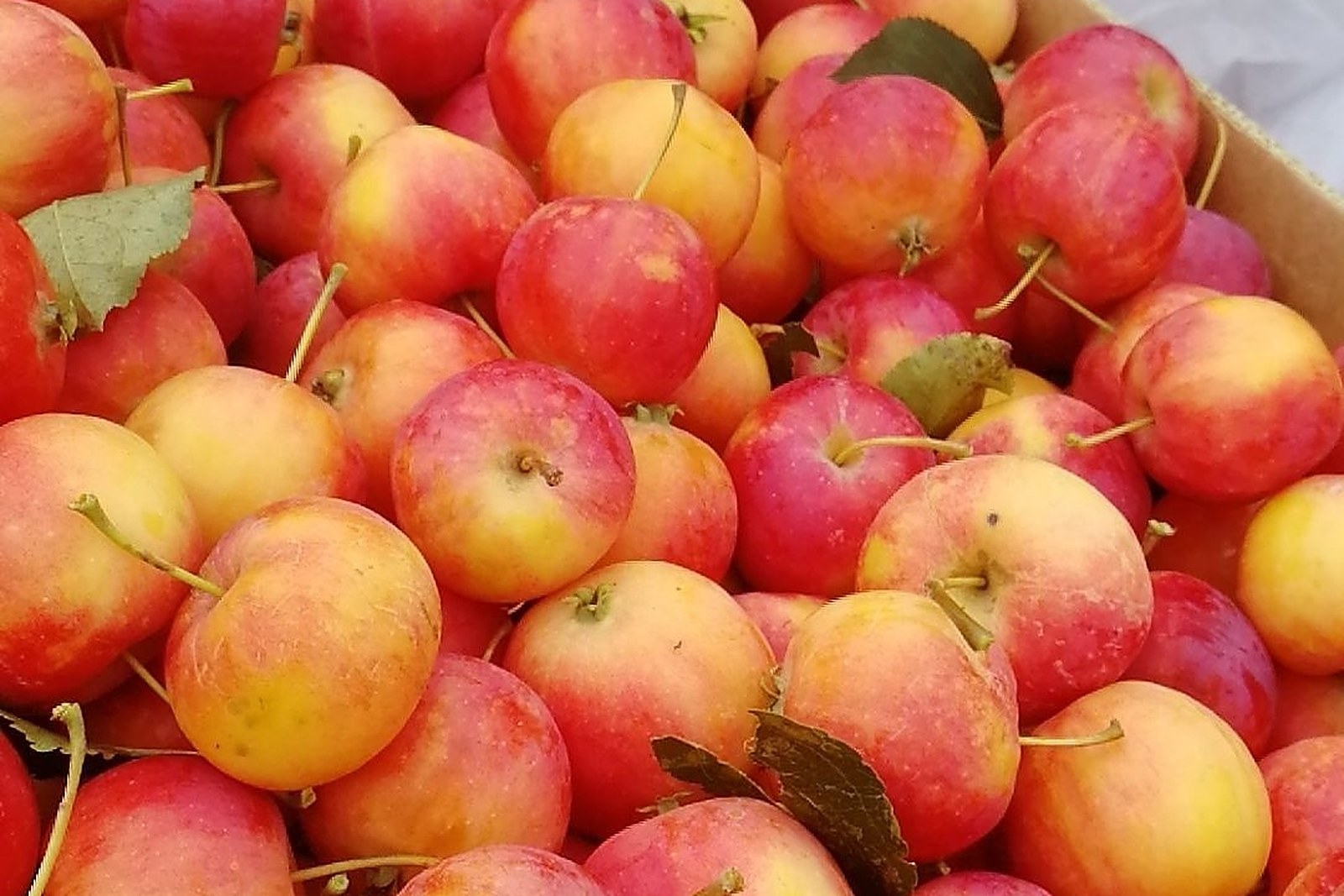
The honest star is the dried fruit, and it is under-priced in attention rather than in money. A good 海棠干 hǎitáng gān is dark amber at the edge, still supple in the middle, and tastes of the fruit plus the weather – chewed slowly it goes from sharp to round in the mouth, and it is the thing locals actually put in their pockets for a walk. The juice, served cold and slightly cloudy, is the other honest use. What gets oversold is the fresh fruit as an image: the red rounds photographed against a basket are handsome and mostly inedible at volume, and the gift boxes built around them are for carrying, not eating. The other oversell is sweetness – a stall describing 八棱海棠 bālèng hǎitáng as sweet is either selling a different fruit or has not tasted its own stock. Judge by the rib and the weight: eight clean planes and a heavy palm mean a fruit that will dry well, and a light one has already begun to give up its water in the crate.
The self-aware postscript: an aunt on a courtyard wall in early October, a enamel basin of halved fruit beside her, a knife going round each one in three strokes, the halves laid cut-side up on a bamboo tray to dry in the sun and brought in at dusk – and a child stealing the sourest half and eating it with a screwed-up face, which is the whole point. That is the honest grade: a household fruit that survives because somebody still bothers to halve it. The same 延庆区 Yánqìng Qū Yanqing District thread runs on: the breakfast ovens of 延庆火勺 Yánqìng huǒshao Yanqing huoshao are lit before dawn in the county town, the fire-basin tables of 柳沟豆腐宴 Liǔgōu dòufu yàn Liugou tofu banquet steam in the courtyards of 井庄镇 Jǐngzhuāng zhèn Jingzhuang town, the iron pots of 官厅水库鱼 Guāntīng shuǐkù yú Guanting reservoir fish simmer along the southwestern shore, and the slow pots of 松蘑炖鸡 sōngmó dùn jī Songshan mushroom chicken come off the fire in the mountain villages – one district, four more tables.
Words and Names
- 八棱海棠 bālèng hǎitáng / baling crabapple · the eight-ridged fruit the district grows - 海棠 hǎitáng / crabapple · the wider family the fruit belongs to - 海棠干 hǎitáng gān / dried crabapple · the halved, sun-cured keeper the orchards really sell - 海棠汁 hǎitáng zhī / crabapple juice · the pressed, lightly sweetened drink - 晒 shài / sun-drying · the courtyard method that concentrates the sourness - 棱 lèng / ridge, edge · the eight planes that give the fruit its name - 延庆区 Yánqìng Qū / Yanqing District · the Beijing district holding the old rows
What the Locals Know
Locals buy these by the basin for drying rather than the bag for eating. Choose fruit that is firm, heavy for its size and fully coloured on the ribbed faces – a pale one dries thin and a soft one moulds in the tray before it cures. Ask whether the 海棠干 hǎitáng gān is this year’s, and press a piece: it should bend without snapping and smell of the fruit rather than of the sack, because last season’s stock darkens and stiffens and is sold quietly beside the new. For fresh eating, buy a small quantity and eat it cold within days; taste the juice at the stall rather than buying a gift bottle, since the sweetening varies from house to house. Time it for the drying weeks, after the fruit comes off and the trays go out, usually from late summer into mid-autumn (worth confirming the dates, since the season moves with the weather). Two cautions: a box labelled with a district name may be packed from fruit bought elsewhere, and a stall with no drying trays in sight is a reseller. Prices shift with the season and the house – worth confirming the details.
flowcloud would say that the 八棱海棠 bālèng hǎitáng is the eight ridges, sour-sweet preserves and the old orchard fruit of Yanqing District, Beijing – a 晒 shài discipline where a fruit too sharp to eat by the handful cures into 海棠干 hǎitáng gān worth carrying – and that the honest move is to buy by the basin for drying, press the piece before you pay, and ask which year’s stock it is, because the tree built the acid and the tray built the sweetness. All checked October 2026.
Where to find it: Yanqing District Yánqìng Qū, Beijing – the orchard rows, courtyard drying trays and roadside stalls of the district’s northern and northwestern villages, where the fruit comes off in late summer and the 海棠干 hǎitáng gān is laid out to cure into mid-autumn (worth confirming the details – which villages still keep bearing trees, who sells at the gate and when the drying actually starts); prices shift with the season and the house – worth confirming the details. Baling crabapples are the eight ridges, sour-sweet preserves and the old orchard fruit of Yanqing District, Beijing, dry before fresh. All checked October 2026.