
Baodu: The Three-Second Water-Blanch of the Beijing Tripe Board
沸水三秒肚仁脆,麻酱一碟定输赢。Fèishuǐ sān miǎo dùrén cuì, májiàng yī dié dìng shūyíng – Three seconds in boiling water crisp the tripe core; one dish of sesame paste decides win or loss.
爆肚 bàodǔ baodu – “burst tripe” – is the flash-blanch craft of old Beijing: raw beef or mutton tripe, sorted and cut by part, is plunged into violently boiling water or broth for seconds – the timing counted in breaths, not minutes – then pulled and eaten at once, so the only cooking is a controlled shock that sets the surface, drives out rawness and leaves the tissue 脆 cuì crisp-snap rather than rubber (worth confirming the exact second-counts per cut, which masters keep by eye and nobody publishes honestly). This is 水爆 shuǐbào water-blanching, and the anatomy is the menu: the tripe is separated into named parts of different textures – 肚仁 dùrén the tripe core, the tenderest and priciest; 肚领 dùlǐng the collar or ridge, thick and meaty; 散丹 sǎndān the leaf tripe, ridged and quick; 百叶 bǎiyè the many-leaved book tripe – and knife-work matters as much as the clock, because each part is cut to a shape that blanches evenly (worth confirming the full part list and rankings, which vary between the sheep and beef schools). The dip is the verdict: a 麻酱 májiàng sesame-paste bowl loosened with the broth and sharpened with 酱豆腐 jiàngdòufu fermented bean curd, soy, vinegar, scallion and cilantro – a plate that snaps under the tooth through that sauce is the dish done, and a pale, stiff paste means the kitchen is coasting.
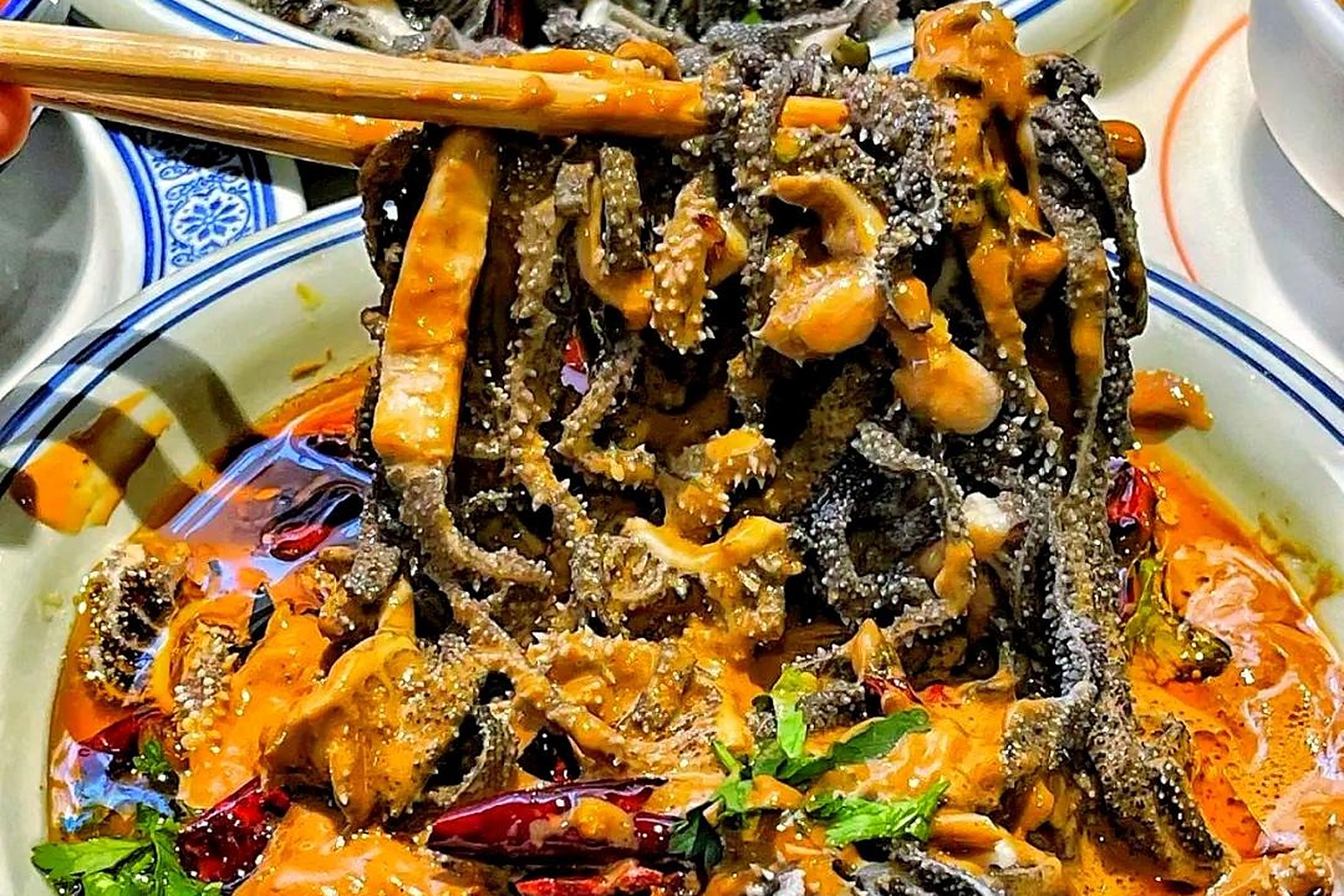
The honest grade is a knife-and-clock grade. 爆肚 bàodǔ is eaten at 老字号 lǎozìhào time-honored houses and at family counters and stall fronts, several long-settled in 东城区 Dōngchéng Qū Dongcheng District’s older quarters, and the two readings are both legitimate: an old house gives the full part list and a board hung with cuts, while a hutong stall gives two or three parts at lower prices and the same dip (worth confirming which stalls and counters currently operate). The bill is modest: plates by the part run a few tens of yuan each – call it 20-60 yuan by cut and rarity, with 肚仁 dùrén at the top of the ladder – plus a 烧饼 shāobǐng sesame cake or noodles to close (worth confirming – the famous doors charge for the name as well as the tripe). Lunch and dinner both work; the honest volume is a small sitting of three or four shared plates, dip refilled, seconds on the crisp parts. The test is on the tooth: every piece should snap cleanly, hot from the water – tripe that bends, squeaks or tastes of the rinse was blanched wrong or washed shallow, and no sesame paste can rescue it.
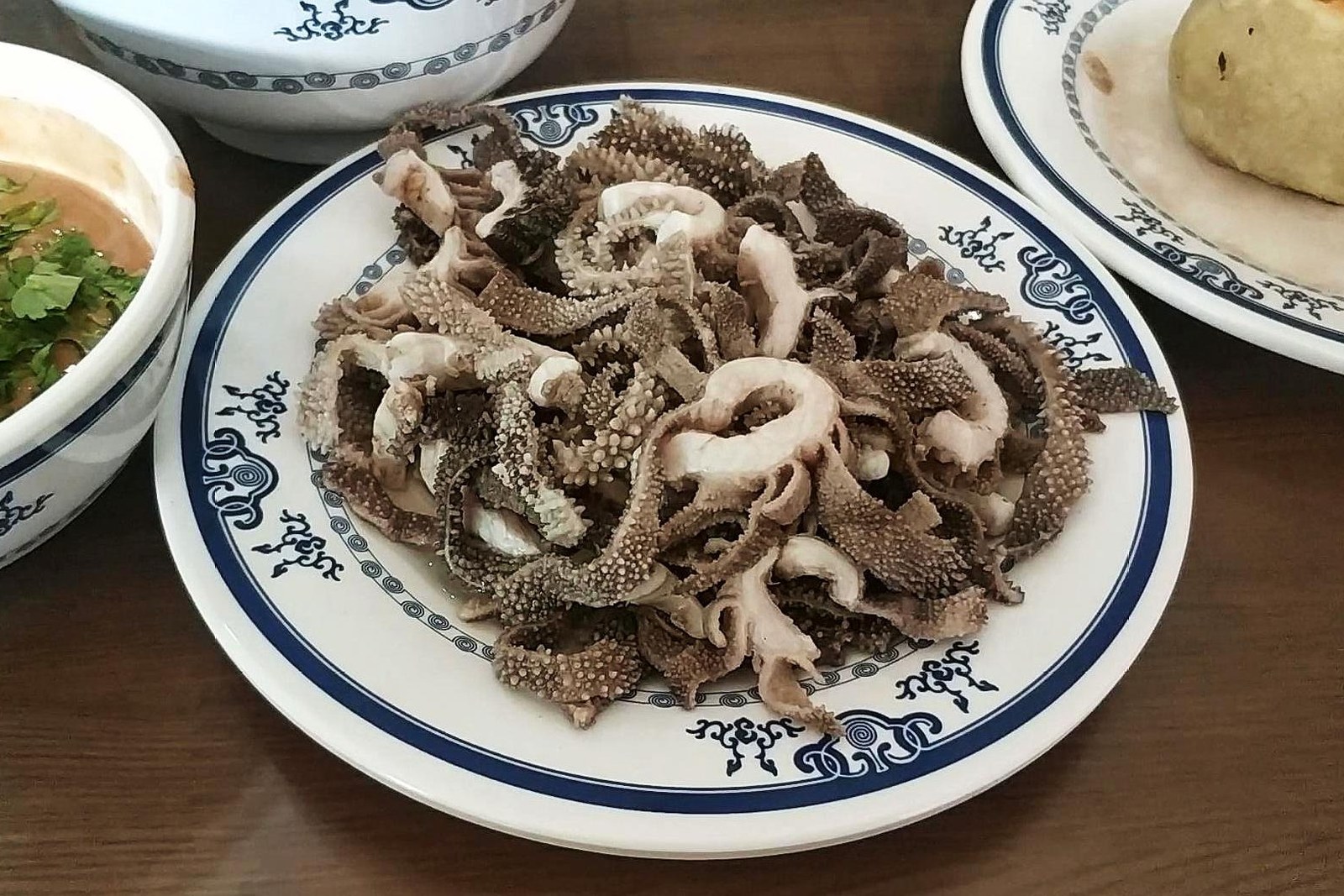
The wry truth is that 爆肚 bàodǔ is over-rated as a novelty and under-rated as a discipline: outsiders order it for the offal stunt and miss that the dish is really knife-work, clock-work and the dip – three crafts in a row with nowhere to hide a mistake. Part-ranking is the local shorthand: a table of regulars grades a house by its 肚仁 dùrén and 肚领 dùlǐng first and reads the 散丹 sǎndān second, and the sheep-versus-beef schools argue about which animal holds the standard (worth confirming the school differences before repeating them as rules). The season argues in the dish’s favor: autumn is the classic window – 贴秋膘 tiē qiūbiāo “sticking on autumn fat” is the local excuse – but a hot plate in January or a quick sitting in July both work; tripe is an all-year appetite with an autumn excuse (worth confirming whether old houses trim hours off-season).
The self-deprecating footnote: a food writer will order one of everything by part-name, brandish a phone stopwatch as if the boiling pot needed supervision, explain the 脆 cuì crisp-snap to a table already three plates deep, and then eat every piece of the 肚仁 dùrén before the dip has even been poured – which is the honest grade: 爆肚 bàodǔ is a three-second dish that the writer will spend three hours describing, and the stopwatch never once matched the cook’s wrist.
Words and Names
爆肚 Bàodǔ baodu (flash-blanched tripe) · 水爆 Shuǐbào water-blanching (the craft) · 肚仁 Dùrén tripe core (the prime cut) · 肚领 Dùlǐng tripe collar/ridge · 散丹 Sǎndān leaf tripe (omasum) · 百叶 Bǎiyè book tripe (many-leaves) · 麻酱 Májiàng sesame-paste dip · 贴秋膘 Tiē Qiūbiāo “sticking on autumn fat” · 东城区 Dōngchéng Qū Dongcheng District
What the Locals Know
- Order by part, not by plate: start at 散丹 sǎndān and earn up to 肚仁 dùrén – the part list is the menu and the hierarchy at once (worth confirming each house’s list).
- The dip is the referee: sesame paste loosened with broth, cut by fermented bean curd and vinegar – a stiff pale paste means the kitchen is coasting (worth confirming house blends).
- Judge by the snap, not a timer: tripe that snaps is right; tripe that squeaks or bends was over or under – the cook’s wrist is the only clock that matters.
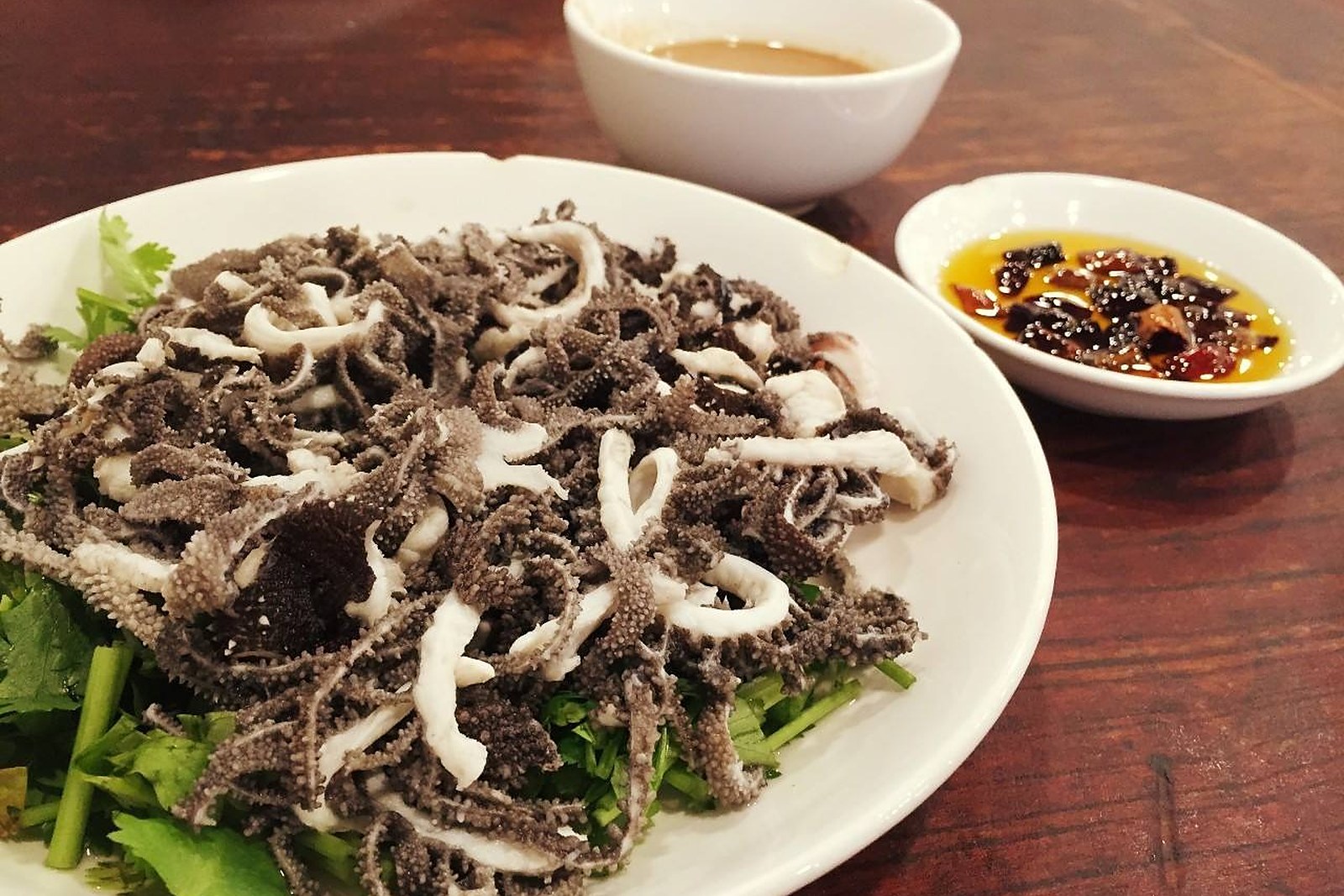
flowcloud would say that the 爆肚 bàodǔ is old Beijing’s three-second craft – tripe sorted into 肚仁 dùrén, 肚领 dùlǐng, 散丹 sǎndān and 百叶 bǎiyè, blanched in 水爆 shuǐbào fashion for seconds and eaten hot through a 麻酱 májiàng sesame dip – and that the honest move is to order by part, judge every plate by the snap, and let the dip sharpen rather than rescue, because the dish is knife-work and wrist-work, not an offal dare. All checked October 2026.
Where to find it: 老字号 lǎozìhào tripe houses and family counters in 东城区 Dōngchéng Qū Dongcheng District – plates a few tens of yuan by part, call it 20-60 yuan (worth confirming the details); order by part from 散丹 sǎndān up to 肚仁 dùrén, eat within the minute, and verify the snap before you praise the house. Baodu is the three-second water-blanch of the Beijing tripe board, wrist before recipe. All checked October 2026.