
一锅豆糊,满街晨香。Yī guō dòuhú, mǎn jiē chén xiāng – One pot of pea porridge; a whole street of morning fragrance.
稀豆粉 Xī Dòufěn “thin bean-flour porridge” is the breakfast that runs 保山 Bǎoshān Baoshan and its 腾冲 Téngchōng Tengchong mornings: a savoury porridge of 豌豆粉 wāndòu fěn pea flour – 豌豆 wāndòu white peas, soaked and stone-milled – cooked with water until it is thick enough to 挂勺 guà sháo coat the spoon yet still pour. It is eaten two ways. Either it comes in a bowl on its own, to be joined by 油条 yóutiáo fried dough broken into segments and dunked until soft, or it is ladled over a bowl of 米线 mǐxiàn rice noodles or 饵丝 ěrsī erkuai-silk so that every strand is wrapped in bean fragrance; the same pour over a 炭火 tànhuǒ charcoal-grilled 烧粑粑 shāo bāba rice cake torn into pieces is the 腾冲 Téngchōng version. The condiments do the seasoning: 辣椒油 làjiāo yóu chili oil, 花椒油 huājiāo yóu pepper oil, 蒜油 suànyóu garlic oil, 芝麻油 zhīmayóu sesame oil, a scatter of 葱花 cōnghuā scallion and 芫荽 yánsuī cilantro, 花生碎 huāshēng suì crushed peanut, and for some a spoon of 酸腌菜 suān yāncài pickled greens. A plain bowl runs 3-5 yuan, and with noodles or fried dough it stays under about 10 (worth confirming the details) – which is why it is a food of every morning rather than of restaurants. The stalls open before six, and many are sold out by ten.
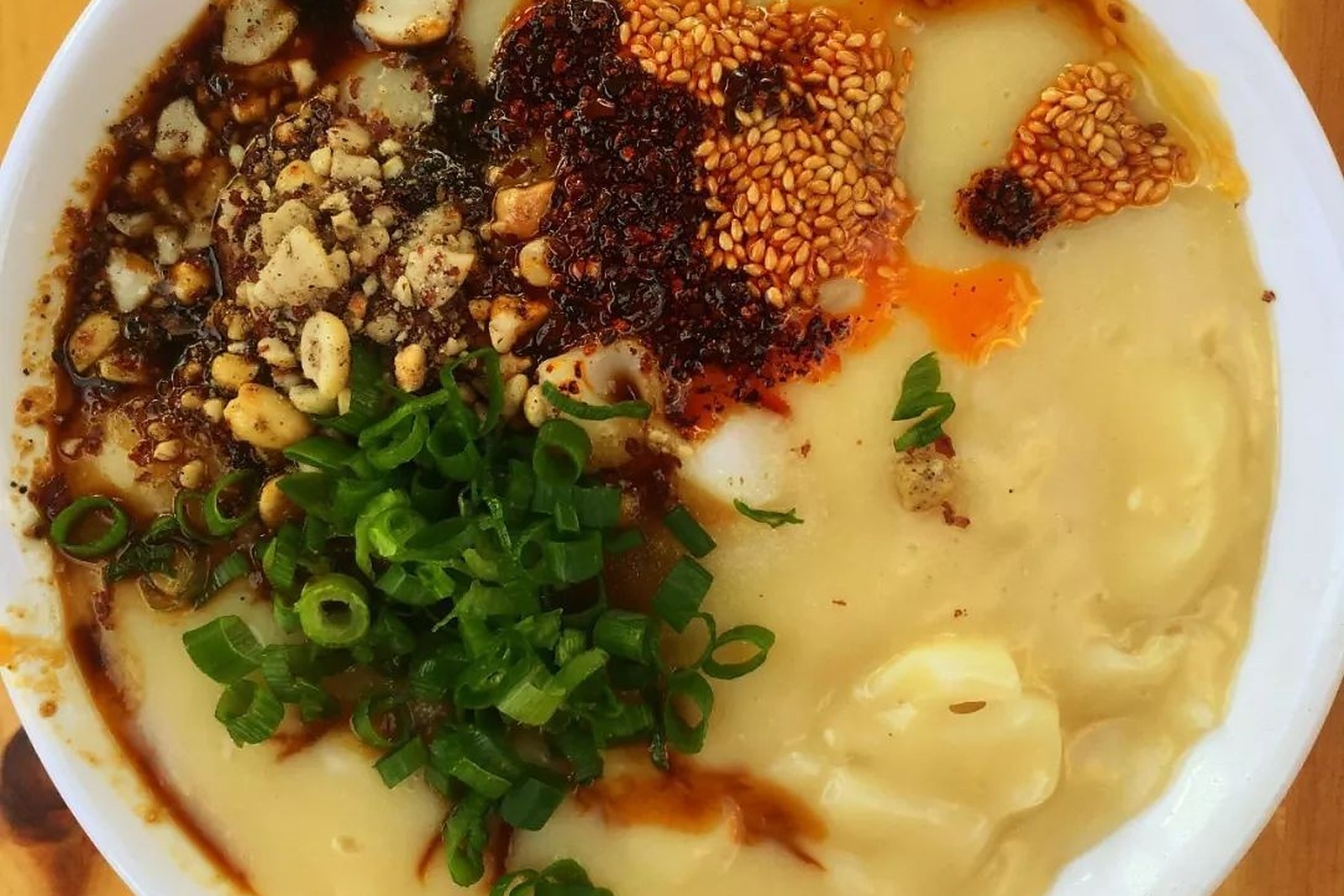
The mechanism is the slake and the stir. 豌豆粉 wāndòu fěn must first be stirred into cold water until the slurry is perfectly smooth and strained – dry powder dropped straight into boiling water lumps, and lumps are the one unforgivable fault in a 稀豆粉 Xī Dòufěn stall. The ratio is roughly one part flour to eight or ten parts water; the pot sits over 柴火 cháihuǒ a wood fire at a low simmer, and the slurry goes in a thin stream while a 木勺 mùsháo wooden spoon stirs in one direction without stopping, for eight to fifteen minutes, until the liquid turns a uniform 乳黄 rǔhuáng milky yellow, 金黄透亮 jīnhuáng tòuliàng glossy, and falls from the spoon in a sheet that holds its trail. Salt is added light, lighter than a soup, because the chili oil comes later at the table. The finished porridge is 绵密 miánmì dense and smooth as 绸缎 chóuduàn silk, carrying a plain 豆香 dòuxiāng bean fragrance with a faint sweetness at the end – and the same pea flour, cooled and set, becomes the cold 豌豆粉 wāndòu fěn jelly sliced and dressed with 醋 cù vinegar, chili oil and garlic that 施甸 Shīdiàn Shidian, under 保山 Bǎoshān, eats through the summer afternoons: one pea, two faces, hot for the winter morning and cold for the August heat.
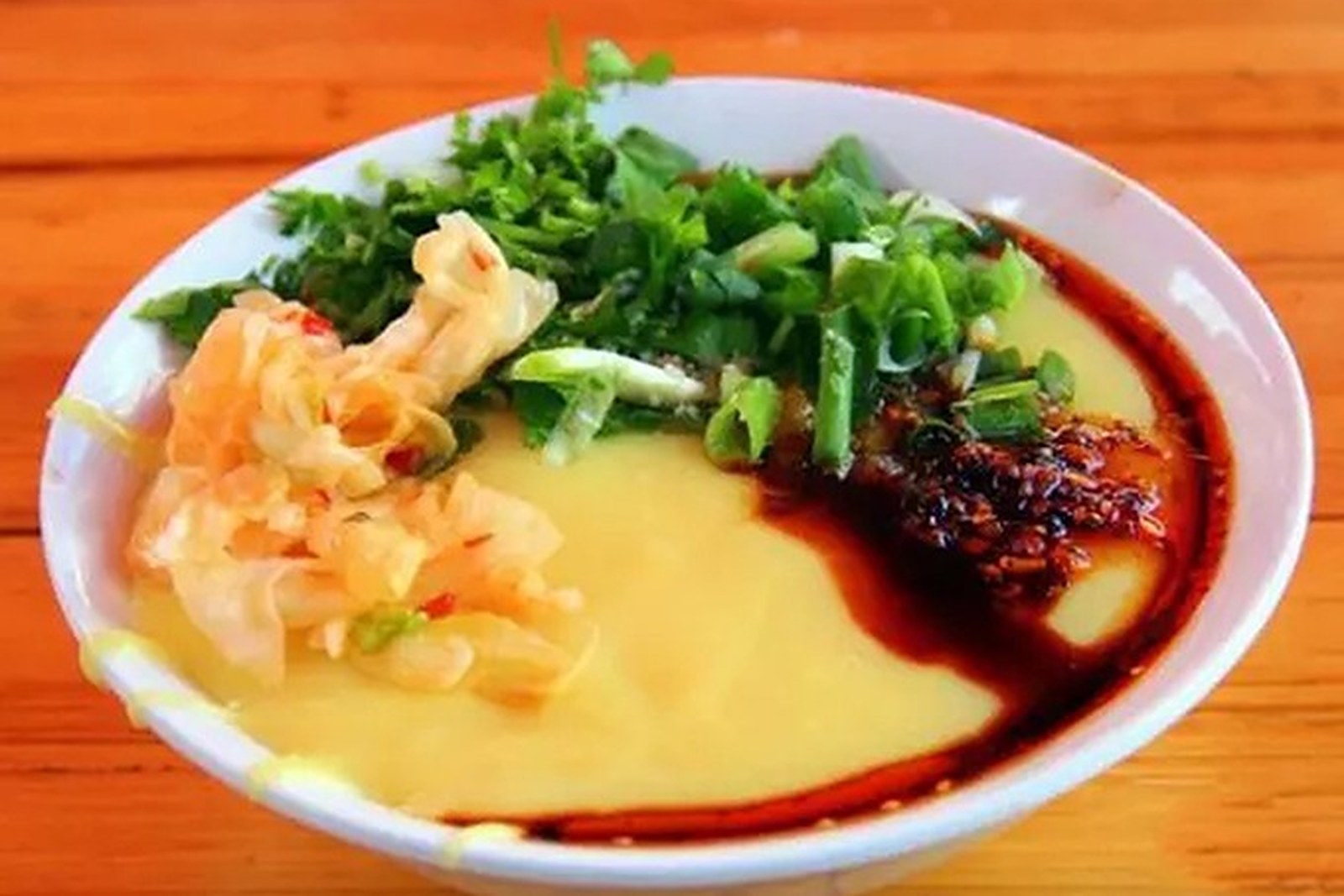
Locals eat it standing, at dawn, in about ten minutes. The move is to find a stall in the 保山 Bǎoshān old-town breakfast rows or a 腾冲 Téngchōng market lane, order 稀豆粉 Xī Dòufěn with 米线 mǐxiàn or 饵丝 ěrsī and a 现炸 xiànzhà just-fried 油条 yóutiáo, then stir the condiments through so the noodles are coated rather than swimming. Drink the first spoonful plain – that is the stall’s real examination, because a porridge that needs the chili to be interesting is a weak porridge – then dunk the dough for a few seconds, no longer: the 油条 yóutiáo should be crisp outside and soaked within. The honest tests are smoothness and colour: 细腻无渣 xìnì wú zhā smooth with no grit, and a pale yellow that comes from the pea rather than from anything added; a scorched bottom or a grey cast means a cook who stopped stirring. Newcomers are told to go light on the 花椒油 huājiāo yóu and 蒜油 suànyóu the first time, because both are stronger than they smell, and to treat the bowl as breakfast only – by mid-morning the stalls are closed and the pots are empty.
Words and Names
稀豆粉 Xī Dòufěn pea-flour porridge · 保山 Bǎoshān Baoshan · 腾冲 Téngchōng Tengchong · 施甸 Shīdiàn Shidian · 豌豆粉 Wāndòu Fěn pea flour · 豌豆 Wāndòu white pea · 米线 Mǐxiàn rice noodles · 饵丝 Ěrsī erkuai-silk · 油条 Yóutiáo fried dough · 烧粑粑 Shāo Bāba grilled rice cake · 辣椒油 Làjiāo Yóu chili oil · 花椒油 Huājiāo Yóu pepper oil · 蒜油 Suànyóu garlic oil · 芫荽 Yánsuī cilantro · 酸腌菜 Suān Yāncài pickled greens · 柴火 Cháihuǒ wood fire
What the Locals Know
The local knowledge about the porridge is the slake and the hour. The 豌豆粉 wāndòu fěn is stirred smooth in cold water before it ever meets the pot – a stall whose porridge carries lumps skipped the one step that cannot be skipped – and the cook must keep the 木勺 mùsháo moving in one direction until the pot turns 金黄透亮 jīnhuáng tòuliàng and coats the spoon, because a cook who stops stirring scorches the bottom and the whole pot reads of smoke. The second check is the first spoonful: drink it plain, before the 辣椒油 làjiāo yóu, because the pea should be the flavour and the chili should be your addition. The third is the 油条 yóutiáo – 现炸 xiànzhà that morning and dunked only briefly, so it stays crisp outside and soaked within – and the fourth is the clock: the stall sells out by mid-morning, so a 稀豆粉 Xī Dòufěn is a breakfast and nothing else. Go light on the 花椒油 huājiāo yóu and 蒜油 suànyóu the first time; both are stronger than they smell (worth confirming current stalls and prices).
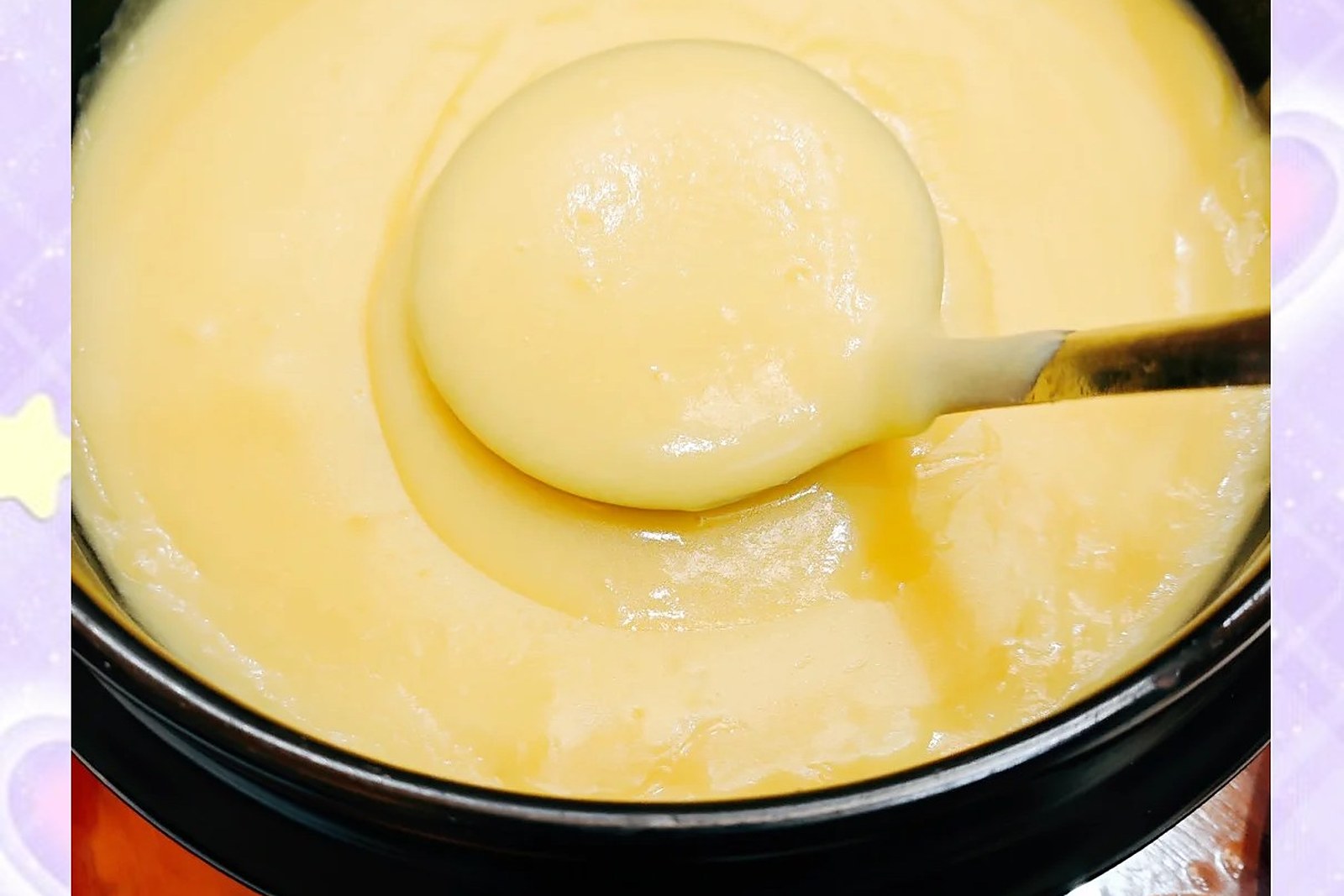
flowcloud would say that Xidoufen is one pea and a wooden spoon – 豌豆粉 wāndòu fěn slaked in cold water and stirred over a 柴火 cháihuǒ wood fire until it coats the spoon, poured over 米线 mǐxiàn or eaten with a 现炸 xiànzhà 油条 yóutiáo – and that the honest move is a stool at a 保山 Bǎoshān stall before seven, chili oil and all, because the porridge is the morning and the morning does not wait. All checked October 2026.
Where to find it: the morning stalls of the 保山 Bǎoshān old town – the 正阳南路 Zhèngyáng Nánlù breakfast rows and the market lanes of 腾冲 Téngchōng and 施甸 Shīdiàn – a plain bowl 3-5 yuan and under about 10 with noodles or 油条 yóutiáo (worth confirming the details), sold from before six until the pots empty, often by ten. All checked October 2026.