
先苦后甜,一筷知春。Xiān kǔ hòu tián, yī kuài zhī chūn – Bitterness first, sweetness after; one chopstickful knows it is spring.
棕包炒肉 Zōngbāo Chǎoròu palm-bud stir-fry is the seasonal signature of 腾冲 Téngchōng Tengchong, a dish that exists only for the few weeks of 初春 chūchūn early spring. The 棕包 zōngbāo itself is the unopened flower spike of the 棕榈 zónglǘ palm – locals also call it 小米 xiǎomǐ – formed through the winter and cut from the crown in spring by peeling away the outer 棕皮 zóngpí sheath. 腾冲 Téngchōng is known as the 棕包之乡 zōngbāo zhī xiāng “home of the palm bud”: palms elsewhere are bitter and astringent and barely edible, but Tengchong’s, grown in the 火山灰 huǒshānhuī volcanic-ash soils on the slopes of 高黎贡山 Gāolǐgòng Shān Gaoligong, are 苦中回甜 kǔ zhōng huí tián bitter that turns sweet on the finish. The dish’s other name is 姑爷菜 gūyé cài “son-in-law dish”: a prospective 女婿 nǚxu was served the bitter bud at the family table, and if he could eat it down he had proved he could 吃苦 chī kǔ endure hardship and was fit to marry the daughter – 好事多磨,先苦后甜 hǎoshì duō mó, xiān kǔ hòu tián “a good thing takes grinding; bitterness first, sweetness after.” It is also a 年夜饭 niányèfàn New-Year’s-Eve dish, the elders’ way of putting the lesson on the plate. A plate runs about 28-48 yuan in season (worth confirming the details), and the honest shape of it is a small mountain-vegetable course that eats like a proverb.
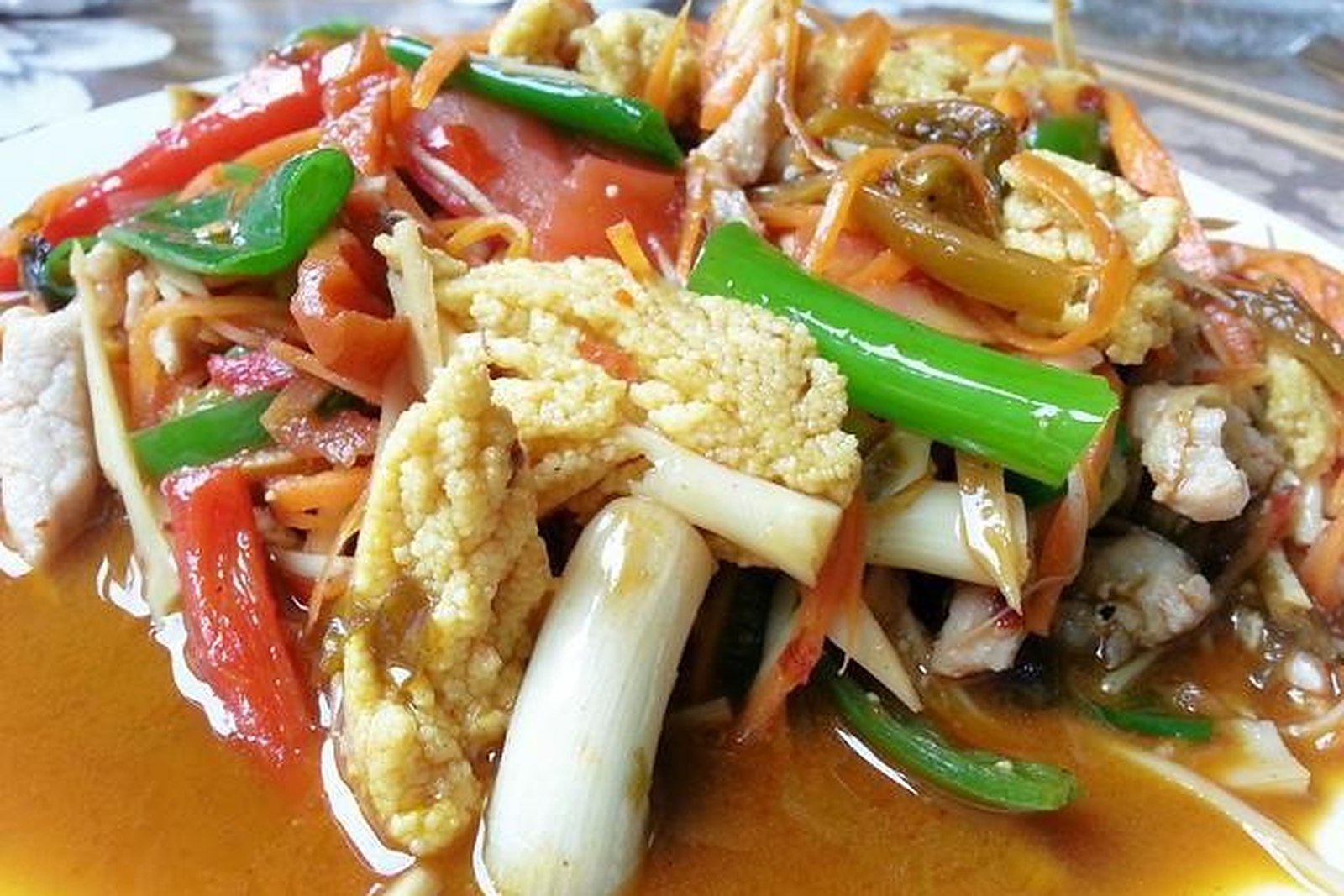
The mechanism is the soak and the high fire. The bud is peeled, washed and cut into 丝 sī shreds or small 丁 dīng cubes, then soaked in clean water to draw out the harshest 苦涩 kǔsè astringency; over-soak it and the dish loses the character that makes it 腾冲 Téngchōng’s. The fry itself is quick: 猪油 zhūyóu lard in a hot wok, 瘦肉丁 shòuròu dīng lean pork cut small – some houses use 腊肉 làròu cured pork for a deeper, winter-store savour – 胡萝卜丝 húluóbo sī carrot matchsticks, a spoon of 腊腌菜 là yāncài aged pickles, 干椒 gānjiāo dried chili, 葱 cōng scallion and 姜 jiāng ginger, tossed at high heat so the bud stays 清脆 qīngcuì crisp-tender. The plate is built to be 五味俱全 wǔwèi jùquán all five tastes at once – 酸 suān from the pickle, 甜 tián from bud and carrot, 苦 kǔ from the palm, 辣 là from the chili, 咸 xián from the salt – and the colours 红黄绿白 hóng huáng lǜ bái red, yellow, green and white. The bud is also cooked as a soup, 棕包腌菜汤 zōngbāo yāncài tāng, with 糊辣椒 hú làjiāo and ginger – sour, bitter, then sweet – and it stars in the mountain showpiece 海陆空 Hǎilùkōng “sea, land and air” with river fish and wasp larvae. The bud belongs to the wild-gathered vegetable culture of the 高黎贡山 Gāolǐgòng Shān range, shared with the 傈僳族 Lìsùzú Lisu mountain villages; the Tengchong Lisu painter 余全 Yú Quán’s 《剥棕》 Bō Zóng “Peeling the Palm” is the local emblem of the harvest.
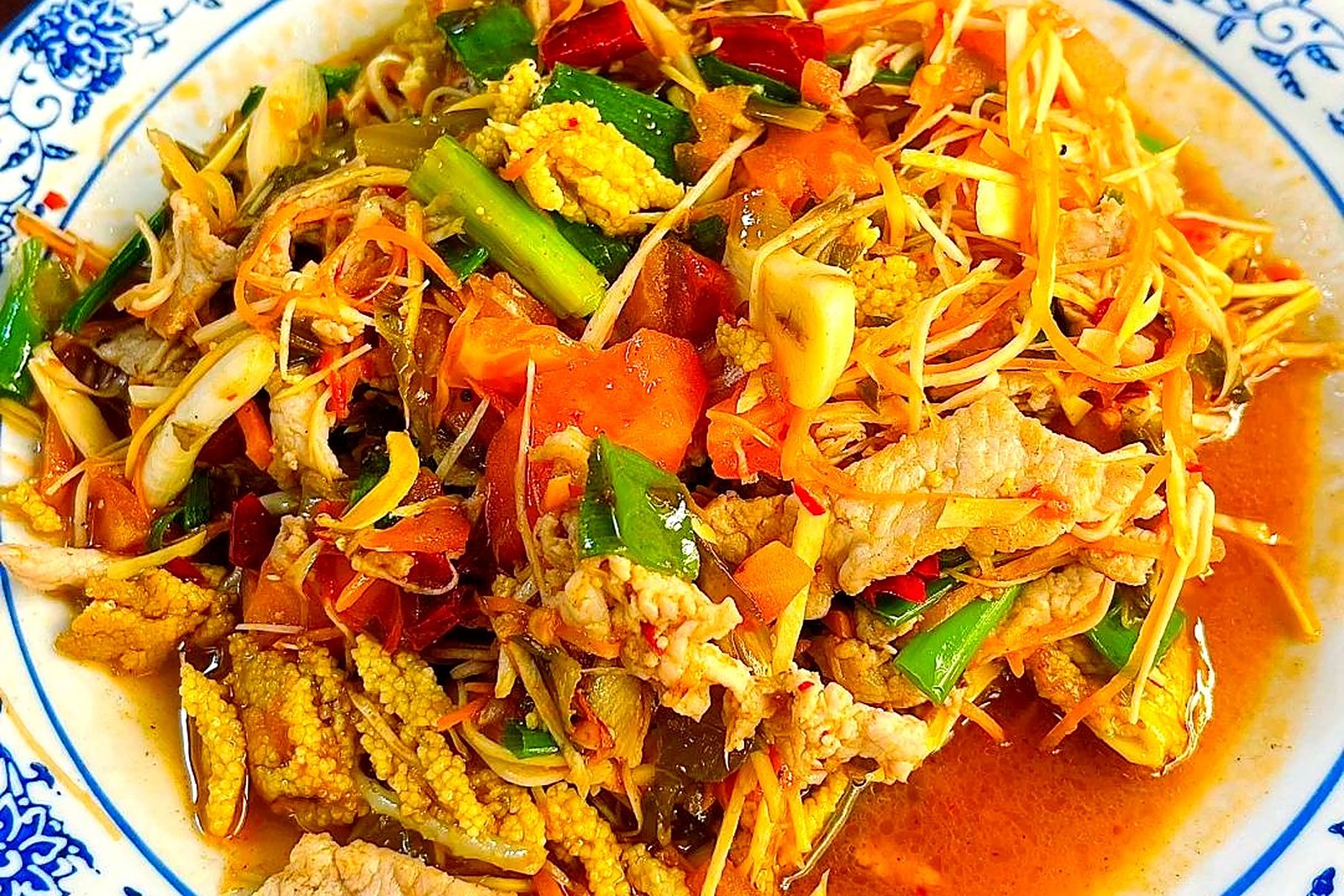
Locals eat it as a spring rite, not a habit. The move in season is to order it at a 腾冲 Téngchōng restaurant and first ask whether the bud is 本地 běndì Tengchong stock, because neighbouring counties’ palms are too bitter and coarse to eat well; the honest plate leads with the bud rather than hiding three shreds under the pork. Eat a mouthful of pork and pickle first, then the bud: the 腊腌菜 là yāncài’s sourness is the bridge between the bitter hit and the 回甘 huígān aftertaste, and locals warn newcomers that the first bite is genuinely bitter – the saying is that you understand the dish by the third bite or never will. Out of season the dish is simply absent from honest menus (worth confirming the spring window, which shifts with the year), and the bud keeps its medicinal-food reputation in local talk – 清凉 qīngliáng cooling, good against a 上火 shànghuǒ “heaty” spring body – a folk claim rather than a medical one. Spring tables also serve the bud 凉拌 liángbàn cold-dressed, but the fry with pork is the one that carries the name.
Words and Names
棕包炒肉 Zōngbāo Chǎoròu palm-bud stir-fry · 腾冲 Téngchōng Tengchong · 棕包 Zōngbāo palm bud · 棕榈 Zónglǘ the palm · 高黎贡山 Gāolǐgòng Shān Gaoligong mountains · 姑爷菜 Gūyé Cài son-in-law dish · 苦中回甜 Kǔ Zhōng Huí Tián bitter turning sweet · 回甘 Huígān sweet aftertaste · 腊腌菜 Là Yāncài aged pickles · 傈僳族 Lìsùzú the Lisu people · 海陆空 Hǎilùkōng “sea, land and air” · 谷花鱼 Gǔhuā Yú river fish · 凉拌 Liángbàn cold-dressed · 年夜饭 Niányèfàn New-Year’s-Eve dinner
What the Locals Know
The local knowledge about the dish is the season and the soak. The bud exists for a few weeks of 初春 chūchūn and no honest menu carries it out of season, so the first question at a 腾冲 Téngchōng table is whether the 棕包 zōngbāo is 本地 běndì Tengchong stock – the volcanic-ash slopes of 高黎贡山 Gāolǐgòng Shān grow the 苦中回甜 kǔ zhōng huí tián kind, while neighbouring counties’ are too bitter and coarse to eat well. The second check is the soak: the shredded bud should have been washed of its harshest 苦涩 kǔsè without being leached of its character, and a plate that is merely tender-crisp with no bitterness at all has over-soaked the point away. The third is the bridge: the 腊腌菜 là yāncài is what carries the palate from the bitter hit to the 回甘 huígān, so a stir-fry without the pickle’s sourness is half a dish. And the fourth is the rite: eat pork and pickle first, bud second, and expect the first bite to be genuinely bitter – the saying is that you understand the dish by the third bite or never will (worth confirming the spring window, which shifts with the year).
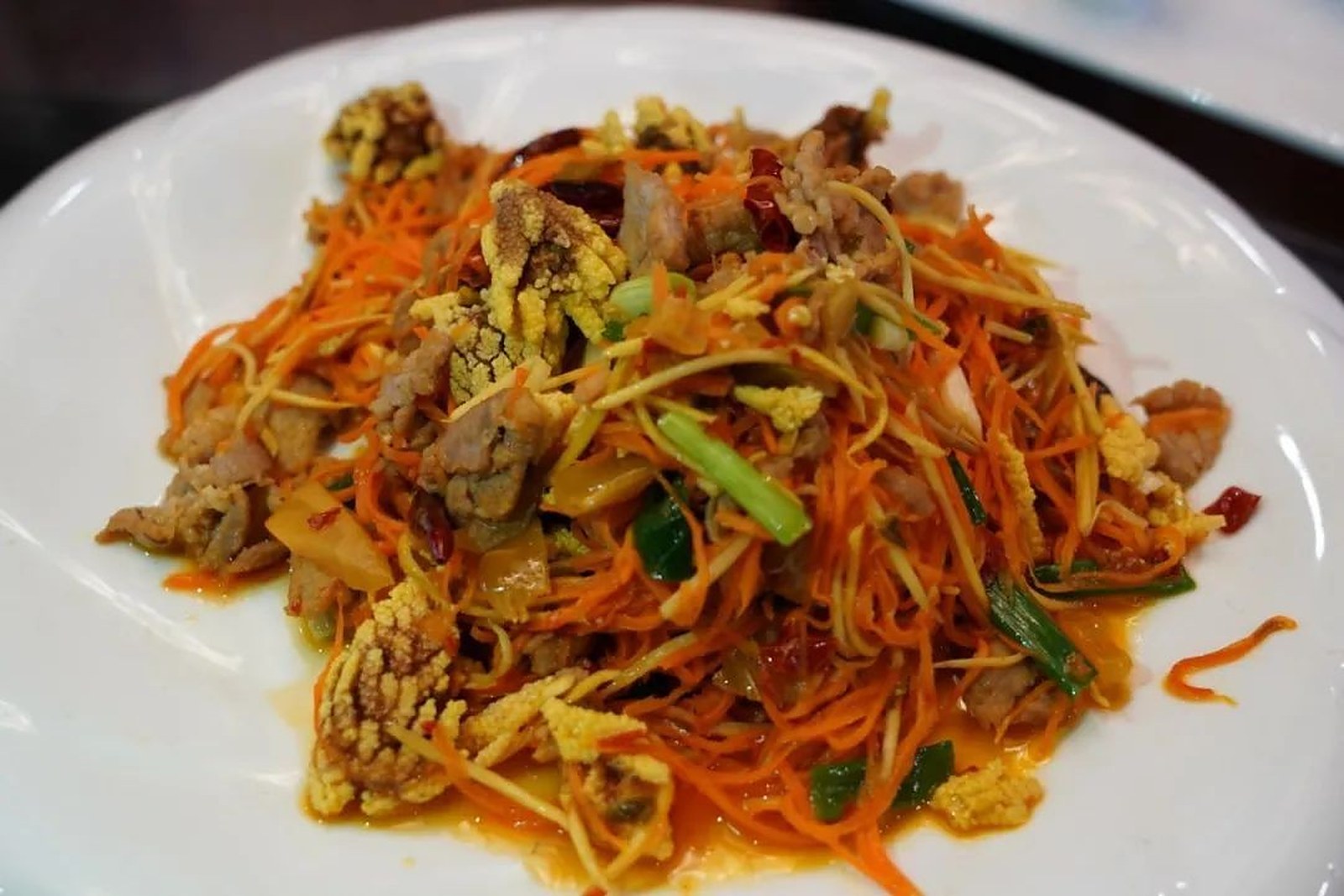
flowcloud would say that Zongbao with pork is a spring lesson on a plate – the 腾冲 Téngchōng palm bud soaked, shredded and fried with pork and 腊腌菜 là yāncài so the bitterness lands first and the 回甘 huígān follows – and that the honest move is to order it in the bud’s few weeks and let the sour pickle bridge bitter and sweet, because the dish is a proverb you can eat. All checked October 2026.
Where to find it: 腾冲 Téngchōng restaurants through the early-spring bud season – 棕包炒肉 Zōngbāo Chǎoròu runs about 28-48 yuan, the bud shredded and fried with pork, carrot and 腊腌菜 là yāncài (worth confirming price and season); the same bud goes into 棕包腌菜汤 zōngbāo yāncài tāng and the 海陆空 Hǎilùkōng showpiece. All checked October 2026.