
保亭红毛丹 Bǎotíng hóngmáodān, Baoting rambutan, is the headline fruit of 保亭黎族苗族自治县 Bǎotíng Lízú Miáozú Zìzhìxiàn Baoting Li and Miao Autonomous County, a rambutan the locals call 毛荔枝 máolìzhī, the hairy lychee, for the soft red spines over a flesh with a lychee’s texture. It is the county’s most-decorated crop, and the one food in Baoting that carries three separate geographical seals stacked on one another: a collective mark from 2016, an agricultural geographical indication from 2018, and a national GI product listing from June 2025 that was the county’s first. The county describes itself as China’s only large-scale commercial rambutan-growing county, and every superlative in this article sits behind that official billing.
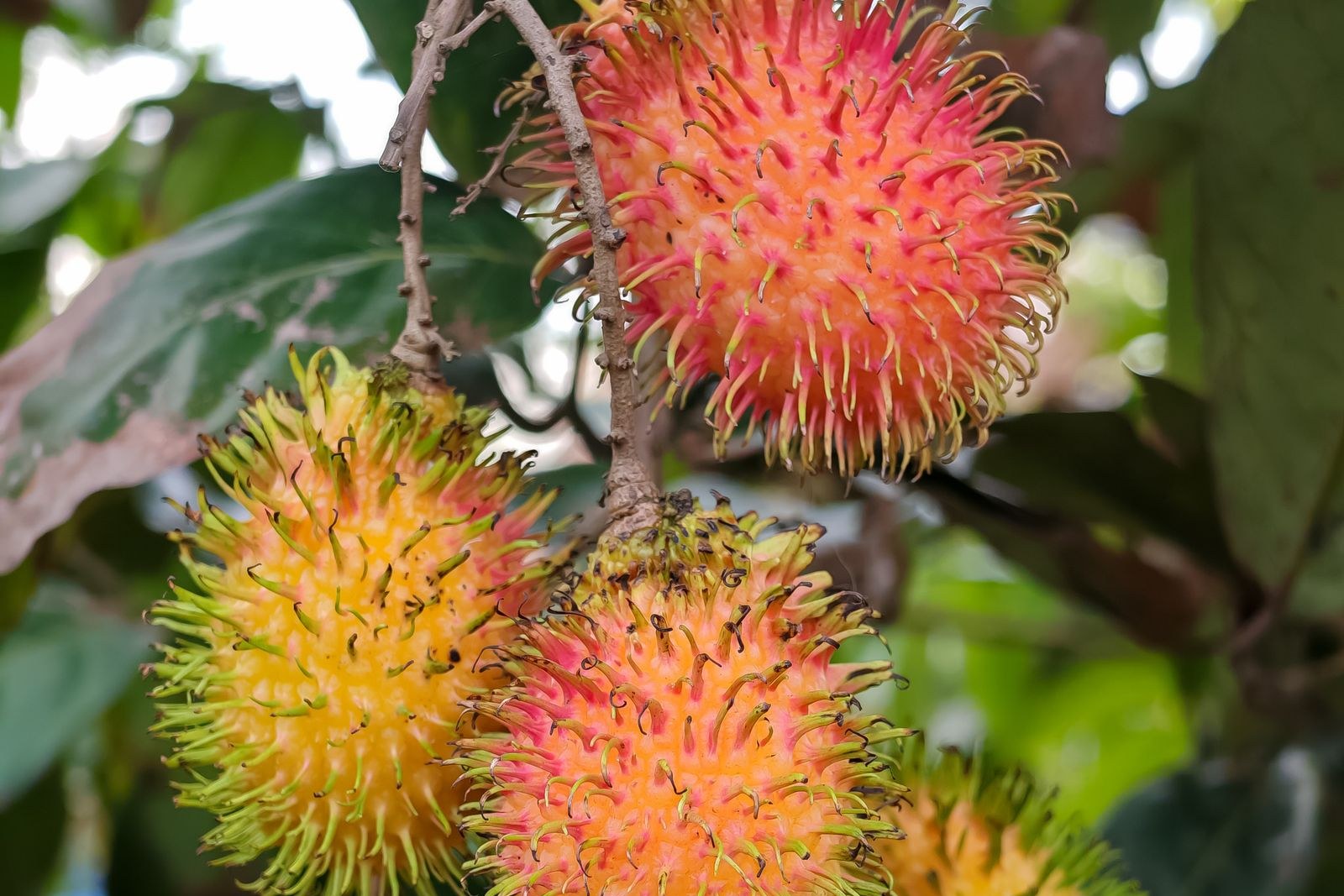
The paperwork is best read as a timeline rather than one sentence. In 2016 the former trademark office approved 保亭红毛丹 as a geographical-indication certification mark, registered to the county’s Tropical Crop Development Service Centre, Baoting’s first such mark. In 2018 the former Ministry of Agriculture granted it agricultural geographical-indication protection under the registration number AGI02350. And in June 2025 the National Intellectual Property Administration announced Baoting rambutan as a national GI protection product, in the same batch as the county’s 保亭益智, a listing the county government calls the zero breakthrough. The fruit is also named in the agriculture ministry’s premium brand cultivation plan. The seals do not replace one another; they stack, and the newest one is the strongest.
The plant came from the Malay archipelago, a cousin of the lychee in the soapberry family, and by the county’s account it arrived in the 1960s. County researchers bred and released the 保研 bǎoyán line, numbers five through seven, and 保研 7 号 Bǎoyán No. 7 is the workhorse: firm, crisp, sweet flesh on a steady high yield, promoted as the flagship while grafting replaces ageing low-yield trees. The growing window the county’s tropical-crop station chief 谢军 Xie Jun lays out is narrow: a mean annual temperature above twenty-four degrees, a coldest month that never drops below seventeen, rainfall past 1,800 millimetres, and a loose, fertile, well-drained soil rich in organic matter. Baoting sits with Wuzhishan to its north and Sanya to its south, a mountain-rainforest climate the county sums up as no frost in winter, no scorch in summer, rain enough, and a ridge to break the wind.
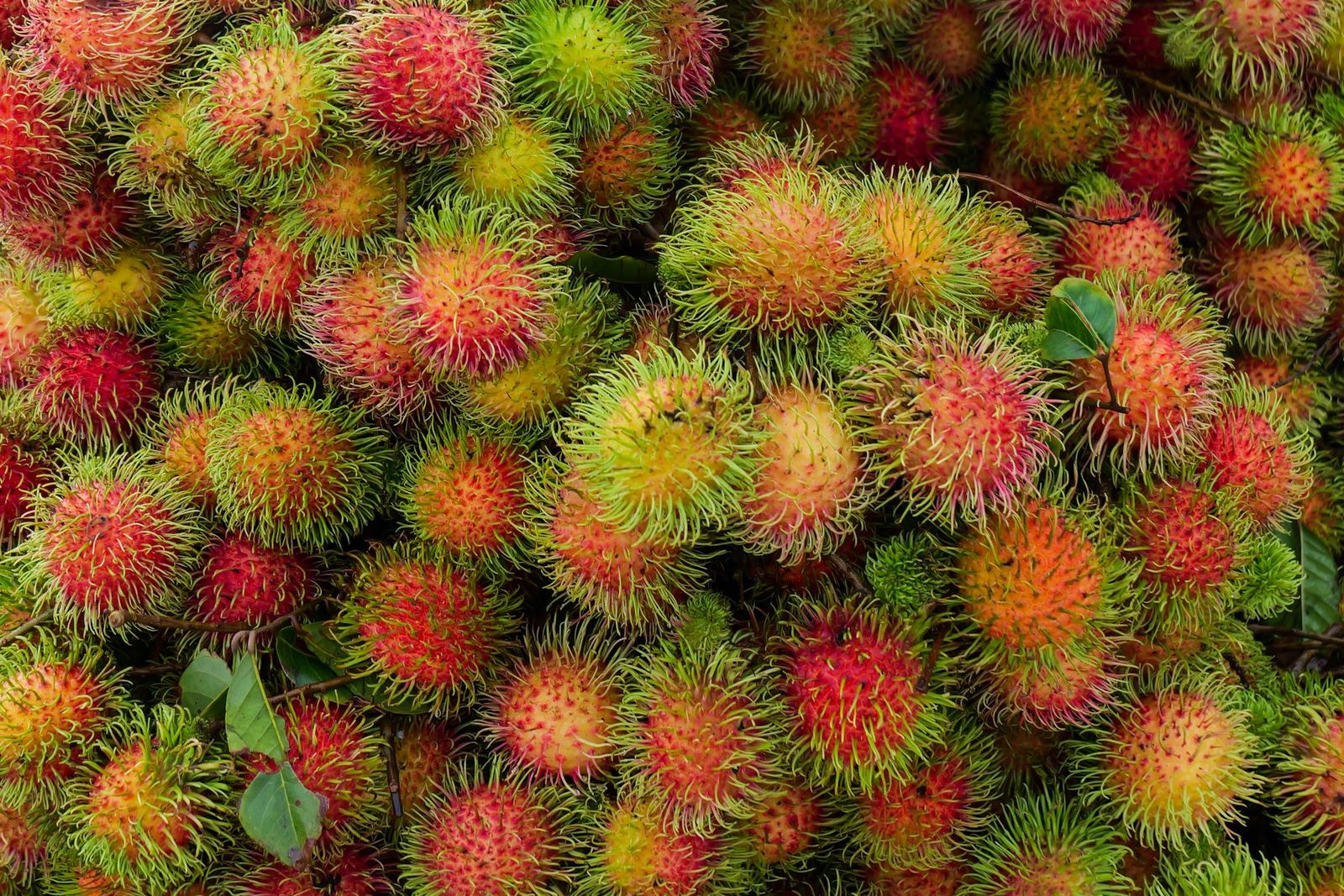
The acreage story is a rising line best kept to one year at a time. The county’s own 2025 account, the most recent, puts the orchards at about 51,000 mu with an output value past 580 million yuan and more than 6,600 farming households reached. The year before, 2024, ran 46,000 mu, roughly 31,200 tonnes and about 540 million yuan, and 2022 stood at 39,000 mu, each figure valid for its own year and not to be averaged across the run. The scarcity behind the price is worth stating plainly: a survey by the county’s rambutan science and technology academy puts Asia’s annual rambutan crop near 13.68 million tonnes, led by Indonesia, Thailand and Vietnam, with China’s share at only about 31,200 tonnes, some 0.2 per cent of the continental total, the academy’s figure carried as its own. The harvest is unusually long, opening in late June with a tree fruiting twice, and running to December, a half-year window few tropical fruits offer.
Prices are channel-specific and float with the season. The farm gate for the flagship 保研 7 号 was quoted around nine yuan a jin in 2025, retail shelves ran fifteen to twenty-five yuan a jin on recent snapshots, and gift boxes sell by the box online, three different channels with three different numbers, all as-of and none of them a tariff. Behind the fruit sits a research bench: the Hainan University Baoting research institute and the rambutan science and technology academy, opened in 2023, report a slightly acidic electrolysed-water treatment that holds the fruit’s shelf life at room temperature from three days to five and beyond, seven processed products in development from yoghurt and cans to seed oil, seed starch and a peel-extract mist, and three group standards drafted. All of that is the institute’s account. Practical advice for a traveller is simpler: the fruit keeps about three days at room temperature before it dulls and spots, and around ten days at nought to five degrees, so buy it to eat rather than to carry.
Words and Names
红毛丹 hóngmáodān is the rambutan, 毛荔枝 máolìzhī the local nickname. 保研 7 号 Bǎoyán No. 7 is the flagship cultivar. 保亭柒鲜 Bǎotíng Qīxiān, Baoting’s Seven Fresh, is the county farm-brand, and 红丹丹 Hóng Dāndān is the rambutan mascot the tourism trade sells as plush toys and fridge magnets. The GI’s full registered name is 保亭红毛丹, the exact form on the register. A related page on this site covers Hainan’s other protected fruits; this one keeps Baoting’s own three seals and its long harvest window.
What the Locals Know
The county hands the fruit to visitors two ways. The 七仙岭全球热带水果博览中心 Qixianling Global Tropical Fruit Expo Centre, built for 180 million yuan with some 450 tropical fruit cultivars under glass and in grove, displays a durian the local media calls the oldest surviving tree in China, their wording rather than a botanical finding, and sells the 红丹丹 merchandise and rambutan sweets from boba cups and rose milk jelly to salted rambutan and rambutan ice cream; tickets start around forty-four yuan on recent snapshots. Then there is the orchard itself: farm-stay eateries and festival packages run picking during the July-to-December window, and one county farm-stay kitchen, 隆滨黎苗农乐乐 Longbin Li and Miao farm-stay, is known for a rambutan-and-pork-rib soup that puts the fruit on the dinner table.
The event to plan around is the Rambutan Red-Harvest Season, staged each July for four editions and more, which the county says drew 33,000 visitors and nearly ten million yuan of spending at its 2025 running; the fair sets out fruit stalls, a product market, picking, a mascot parade and a two-day study route that ends in a long-table feast. What the record refuses: any world-class or Asia-largest claim, which the sources do not support and this text does not print; a per-mu or per-tree yield for the county as a whole, which no source gives; and any award document for the nickname rambutan home, which exists only as promotional language.
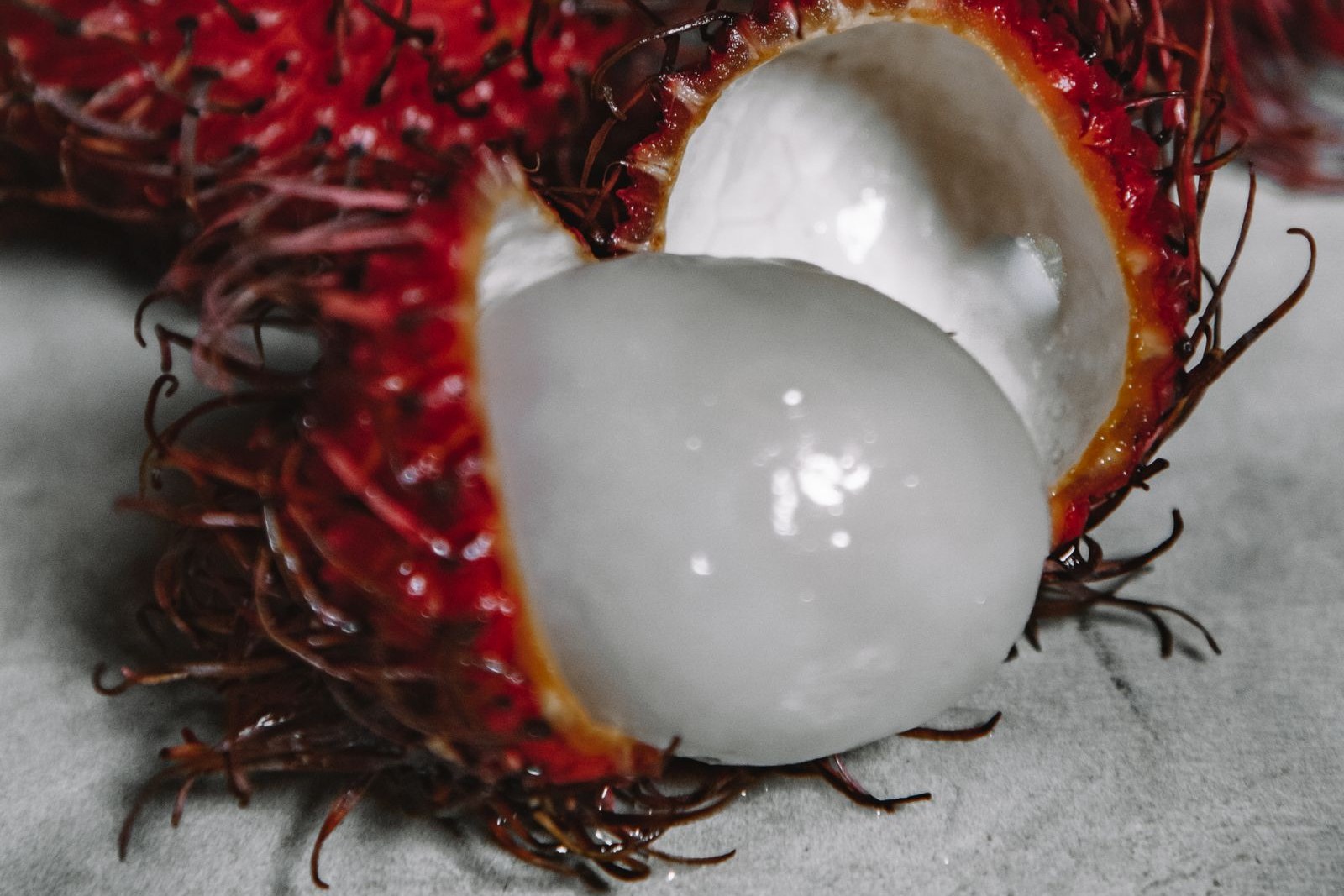
flowcloud would say that Baoting rambutan is a hairy-skinned fruit with three seals and one long season, a 2016 mark, a 2018 indication and a 2025 national listing on 51,000 mu of a county that bills itself as China’s only large-scale commercial home of the crop, picked from June to December.
Where to find it: the 七仙岭全球热带水果博览中心 Qixianling Global Tropical Fruit Expo Centre near the county tropical-crops institute, and the orchards of 加茂镇 Jiāmào zhèn Jiamao Town, in 保亭黎族苗族自治县 Baoting Li and Miao Autonomous County, Hainan; expo tickets from about 44 yuan as of 2026 snapshots, orchard picking in the July-December season through farm-stays and festival packages, and the Rambutan Red-Harvest Season each July for the fullest market. Ask the day’s price at the stall, and eat the fruit within three days.