
保亭益智 Bǎotíng yìzhì, Baoting yizhi, is the dried fruit of a ginger-family perennial that grows in the shade beneath the county’s rubber and areca palms, a southern Chinese medicine that is also a kitchen ingredient, and the second of the two foods 保亭黎族苗族自治县 Baoting Li and Miao Autonomous County had listed as national geographical-indication products in June 2025, the other being its rambutan. The plant, 益智 yìzhì, is a shy grower that wants shade, with young plants asking about sixty per cent of it and established ones thirty to fifty, which is exactly what an under-forest crop is for. Its story runs from the plantation floor to a five-star park’s banqueting menu, and the legend that trails it is a scholar’s fruit.
The certifications come in two stages and the text keeps them on a timeline. In 2018 the former Ministry of Agriculture granted Baoting yizhi agricultural geographical-indication protection, and in June 2025 the National Intellectual Property Administration confirmed it as a national GI protection product, in the same announcement that carried the county’s rambutan, the pair being the county’s first two such listings. The 2018 registration and the 2025 listing are one product’s two moments rather than two products. Before any seal, the county’s claim to the crop is ecological: an official profile counts some 148 southern-medicinal-herb species within its borders, from yizhi and amomum to agarwood and rosewood, and calls the county an important germplasm home for those herbs. Yizhi is the first of them to carry the national double certification.
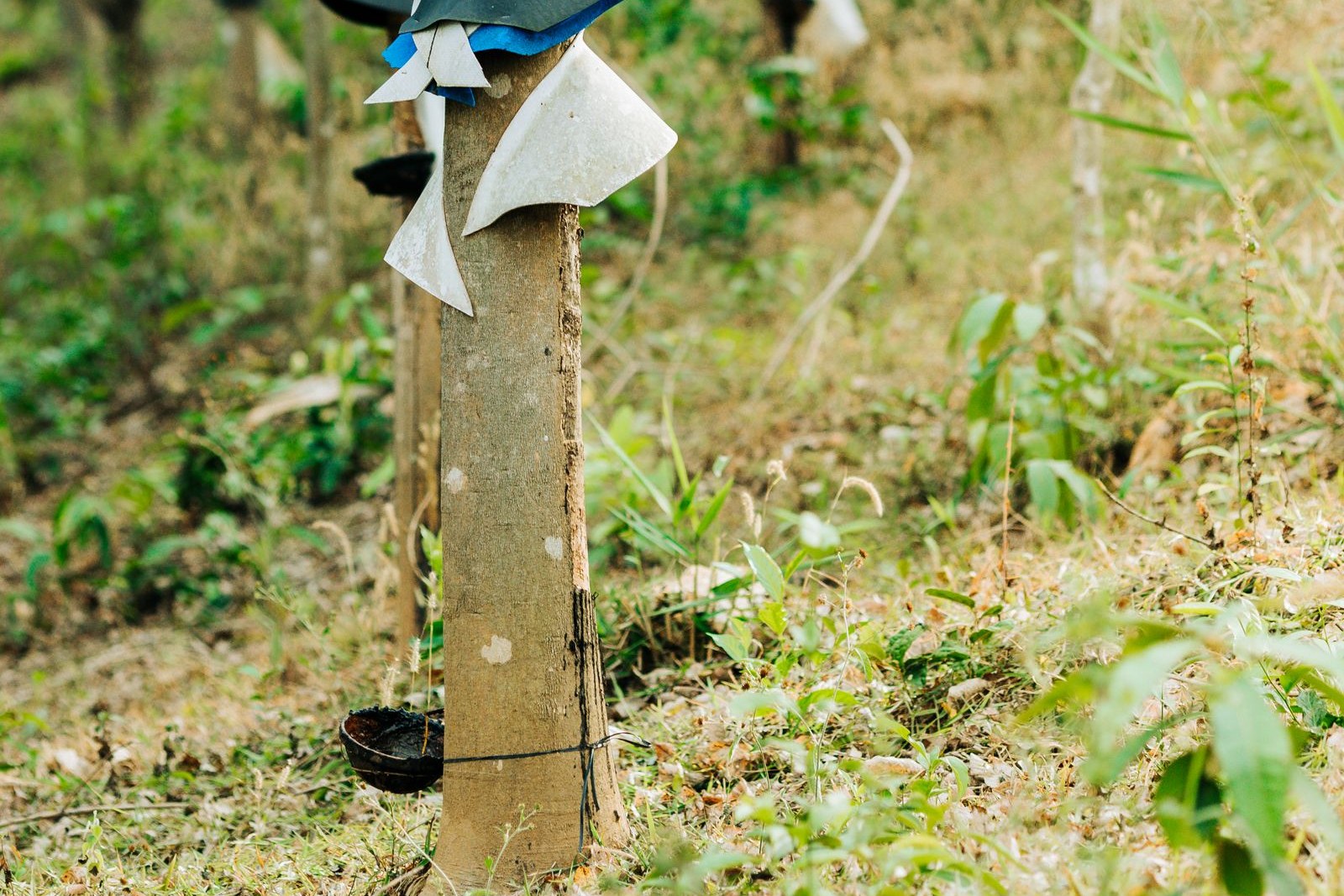
The reason the crop fits Baoting is the under-forest model, and it is the article’s real subject. Yizhi is a semi-shade plant suited to planting beneath rubber, areca and mixed woodland, and the county has the canopy for it, some 333,000 mu of rubber and nearly 100,000 mu of areca across the county, a roof that turns idle plantation floor into a second harvest. The cultivation norms the industry describes are workmanlike: plant it by a stream or in a valley or under the palms, at a spacing of 1.5 by 2 metres and 200 to 220 clumps to the mu, with first fruit after two to three years, and harvest around June, when the green peel turns yellow-brown and the fine hairs drop and the seed carries a pungent, aromatic smell, then sun-dry it or dry it at low heat. That is the quality-technical standard’s account, carried as the standard’s.
The acreage story is an older snapshot and is written with its dates because nothing newer exists. The industry profiles trace it from a growers’ cooperative in 2011 with eight households on about 200 mu, through a 2012 seedling base with a small-plant shed of forty mu and a large-plant shade house of sixty, and a county push from 2014 that spent close to ten million yuan handing 2.4 million seedlings to 2,700 households and lifted planting to nearly twelve thousand mu, followed by further rounds in 2015 and 2016. The latest figure these profiles carry is 2019, about 44,000 mu county-wide, some 8,000 of it wild and 36,000 planted. On the market side the same sources report roughly 900 tonnes of dried fruit a year, sold mainly through the herb markets of Bozhou in Anhui and Yulin in Guangxi, with top-grade dried fruit wholesale at forty-two to forty-five yuan a kilogram and a comprehensive output value around 36 million yuan, as-of 2019 and 2020 snapshots subject to herb-market swings, and there is no newer official count.
The plant is medicine and food at once, which is how it reaches a traveller. In traditional Chinese medicine the dried kernel is described as warming to the stomach and spleen and useful in tonifying the kidney and governing the vital energy, that being the medical tradition’s account rather than a finding of this text, and no efficacy is claimed here. The fruit is used in medicated cooking and its extract in medicine. The folk name is 状元果, the top-scholar fruit, and it arrives with legend attached: legend has it the kernel was taken by candidates going up to the examinations, which is where the name lives. The place to meet it on a menu is 呀诺达 Yanoda, the county’s 5A rainforest park, whose medicinal-cuisine kitchen serves 益智肚丝乳鸽, yizhi with shredded tripe and squab, the hardest single food reference in the file, reported in 2016. Around it the same kitchen sets dishes such as areca-flower pork tripe and morinda-braised farm chicken, part of a menu that runs the county’s southern medicines into the dining room.
Words and Names
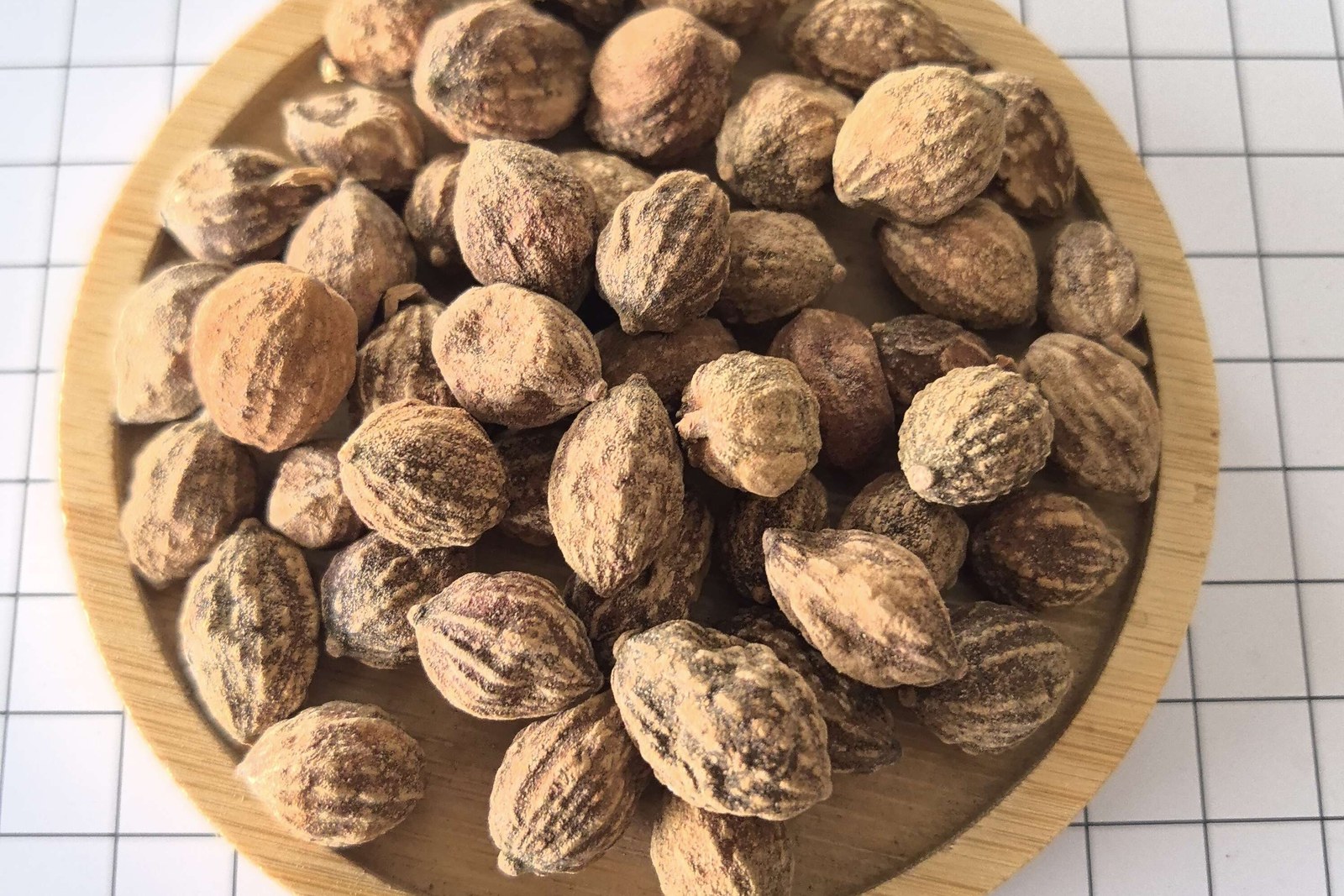
益智 yìzhì is the plant, 益智仁 yìzhì rén the dried kernel, Alpinia oxyphylla or sharpleaf galangal fruit in English. 状元果 zhuàngyuán guǒ is the folk name, the top-scholar fruit, and 状元 zhuàngyuán is the examination-topping scholar it is named for. 林下经济 línxià jīngjì, under-forest economy, is the model that puts the crop under the palms, and 南药 nányào is the southern-medicine category the county counts 148 species of. And the site’s other pages keep their own ground: the rambutan carries the 2025 listing’s other half, and the rainforest parks’ restaurants are where the medicine turns into dinner.
What the Locals Know
The county is where the crop is grown; the table is where a visitor meets it. In 三道镇 Sāndào zhèn Sandao Town, the 呀诺达 Yanoda rainforest park folds yizhi into its medicinal menu, and the neighbouring 槟榔谷 Binglanggu heritage park runs a Li and Miao food street and restaurant where the county’s ingredients meet the county’s cooking. The Seven Fairy hot-spring resorts may put a yizhi tea or a medicinal dish on a wellness menu, and that is written as may appear rather than as a promise, because no property is named in the sources. The under-forest landscape itself is a drive: the wooded hill country along the old central highway through Sandao, Xinzheng and Xiangshui runs past rubber and areca, and the crop grows in the shade between them, though no plantation is set up for visitors and no harvest tourism exists.
What the record refuses: any fresh official acreage or value after the 2019 and 2020 snapshots, so every figure here carries its year; a current wholesale price, which moves with the herb markets; any efficacy claim beyond the medical tradition’s own words; and any harvest visit, which the county does not offer. The dried fruit mostly leaves through the wholesale herb trade, which is why travellers meet yizhi best on a restaurant menu rather than on a market shelf.
flowcloud would say that Baoting yizhi is a medicine grown in the shade, a shy ginger-family fruit that wants the dark under the rubber and areca, certified in 2018 and listed again in 2025, and served as a banquet dish in a rainforest park with a scholar’s legend still clinging to its name.
Where to find it: the rainforest-medicine kitchens of 呀诺达 Yanoda and the Li and Miao food street at 槟榔谷 Binglanggu, in 三道镇 Sāndào zhèn Sandao Town, and the hot-spring resort wellness menus nearby, in 保亭黎族苗族自治县 Baoting Li and Miao Autonomous County, Hainan; the dish to ask for is 益智肚丝乳鸽, yizhi with tripe and squab, and the dried fruit is traded mainly through wholesale herb markets, so the menu is the surest meeting.