
The Golden Harvest of Aktao: Baren Apricots Dried Under the Pamir Sky
杏熟满村黄,晒作一秋粮 Xìng shú mǎn cūn huáng, shài zuò yī qiū liáng – When apricots ripen the village turns gold; dried, they become the autumn’s grain
The Baren apricot Bārén Xìng is the pride of Aktao county – a small, dense, intensely sweet apricot named for the township where it grows best, on fans of stony ground at the foot of the Pamir in 克孜勒苏柯尔克孜自治州 Kèzīlèsū Kē’ěrkèzī Zìzhìzhōu Kizilsu Kirghiz Autonomous Prefecture. Fresh, the fruit is orange-gold with a freckled blush and a flesh that clings just enough to the stone to make eating it a small commitment; dried, it becomes one of southern Xinjiang’s staple snacks, folded into schoolchildren’s pockets and festival gift boxes from Kashgar to Urumqi.
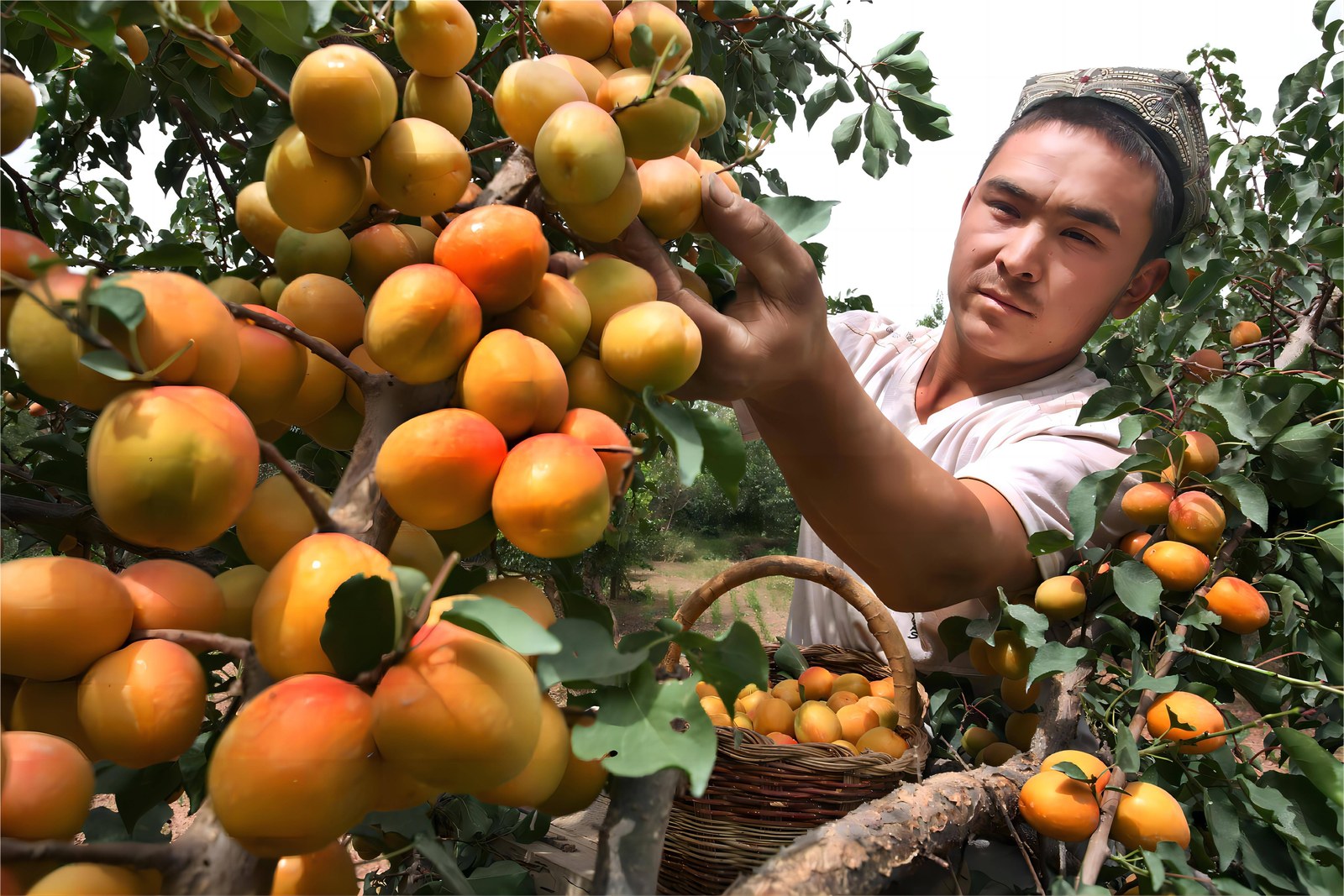
Harvest turns July into the county’s golden month. Villages around Baren township empty into their orchards at dawn – ladders against every tree, baskets filling, the fragrance carrying across the fence lines – and by midday the drying racks are out: long wire frames where halved apricots lie skin-down in rows, turning in the mountain sun. The drying is pure and unassisted: no sulphur, no sugar added, just altitude sun and dry air for a week or ten days until the fruit collapses into a leathery amber coin that keeps a full year. Walk a village lane at harvest and the ground itself looks gilded.
Beyond the drying racks, the same 克孜勒苏柯尔克孜自治州 Kèzīlèsū Kē’ěrkèzī Zìzhìzhōu Kizilsu Kirghiz Autonomous Prefecture holds other flavors: 阿图什无花果 Ātúshí Wúhuāguǒ Atush fig, 柯尔克孜纳仁 Kē’ěrkèzī Nàrén Kyrgyz naren, 马奶酒 Mǎnǎijiǔ kumis, and 乌恰牦牛 Wūqià Máoniú Wuqia yak – four more doors into the same 克孜勒苏柯尔克孜自治州 Kèzīlèsū Kē’ěrkèzī Zìzhìzhōu Kizilsu Kirghiz Autonomous Prefecture. With the apricot settled, our Kizilsu travel map fills the day.
The fresh fruit deserves its own defence before the dried version monopolises the story. A tree-ripe Baren apricot eaten under the tree is a different food from anything shipped: the flesh gives like custard, the sweetness sits just this side of honey, and the faint tartness at the skin keeps it from cloying. Locals grade fruit by how the skin parts from the flesh – the best apricots peel clean at a pinch – and the street price for a basin in peak week is so low that visitors double-take. Orchards sell to passers-by at the gate in July, no appointment needed.
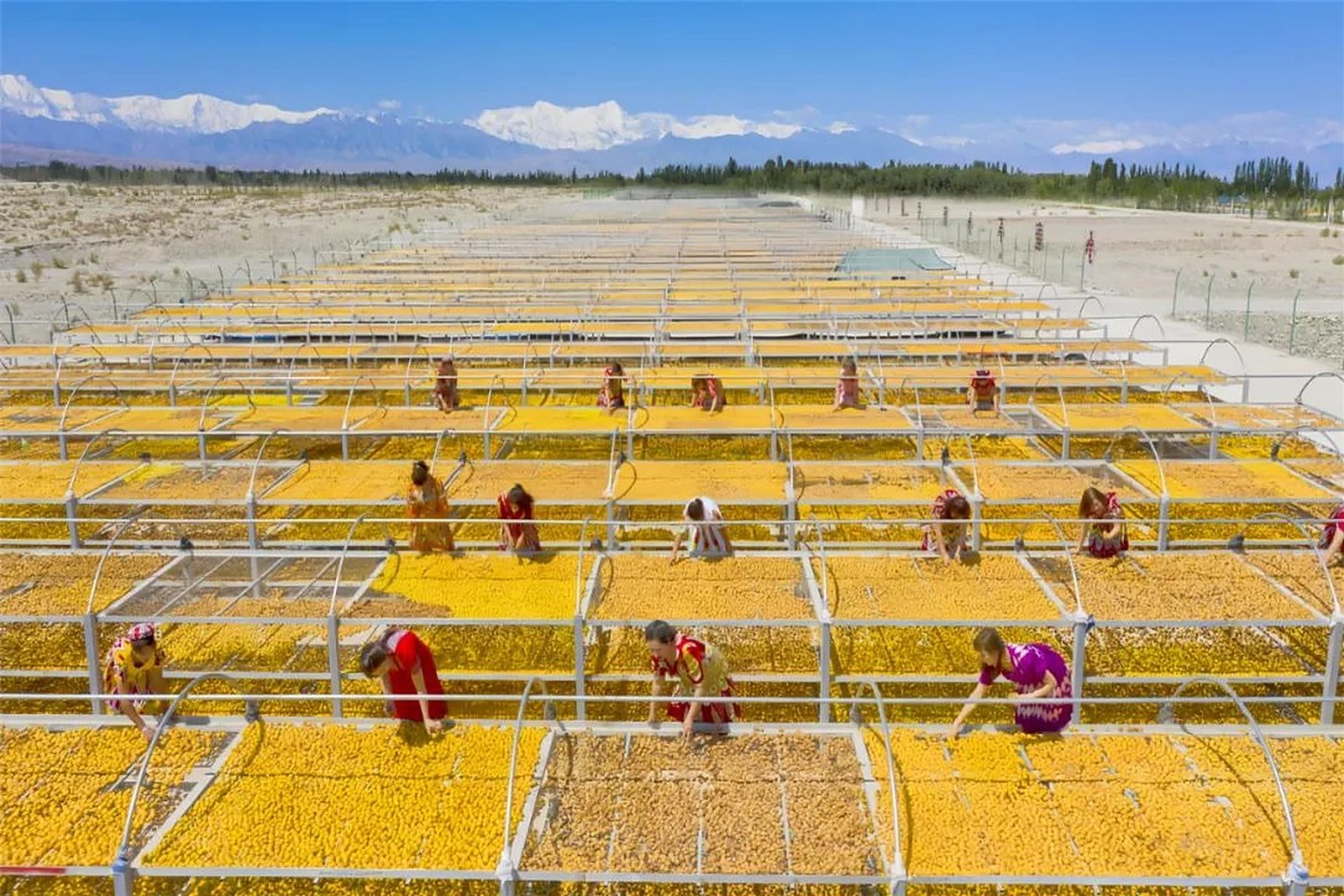
The dried trade is the county’s economics lesson. Aktao’s cooperatives now grade, vacuum-pack and brand the dried fruit, and the geographic-indication label has lifted farmgate prices enough that young people return to orchard work instead of leaving for Kashgar’s construction sites. Buy in the county-town market and you taste the difference branding makes: cooperative trays hold uniform, unbroken fruit; grandmother stalls sell the same sun in irregular, sweeter-for-it pieces. Both are honest; the choice is between souvenir and truth.
Kitchen uses go beyond snacking. Households stew dried apricots with rice for pilaf sweetness, simmer them into winter compotes, and boil them with tea in the coldest months – a throat-soother as much as a treat. The kernels, cracked from the stones, feed the region’s almond trade in a good year. Every part of the harvest has a destination, which is why a Baren apricot farmer wastes nothing and why the village racks keep doubling.
For travellers the practical window is late July through August: fresh fruit at the orchard gates, drying racks in every courtyard, and the mountain light at its most photogenic behind them. Bring small bills, accept the offered taste, and buy the irregular dried pieces from the household stalls – they carry the harvest’s real flavour, and the story that goes with it.
Words and Names
What the Locals Know
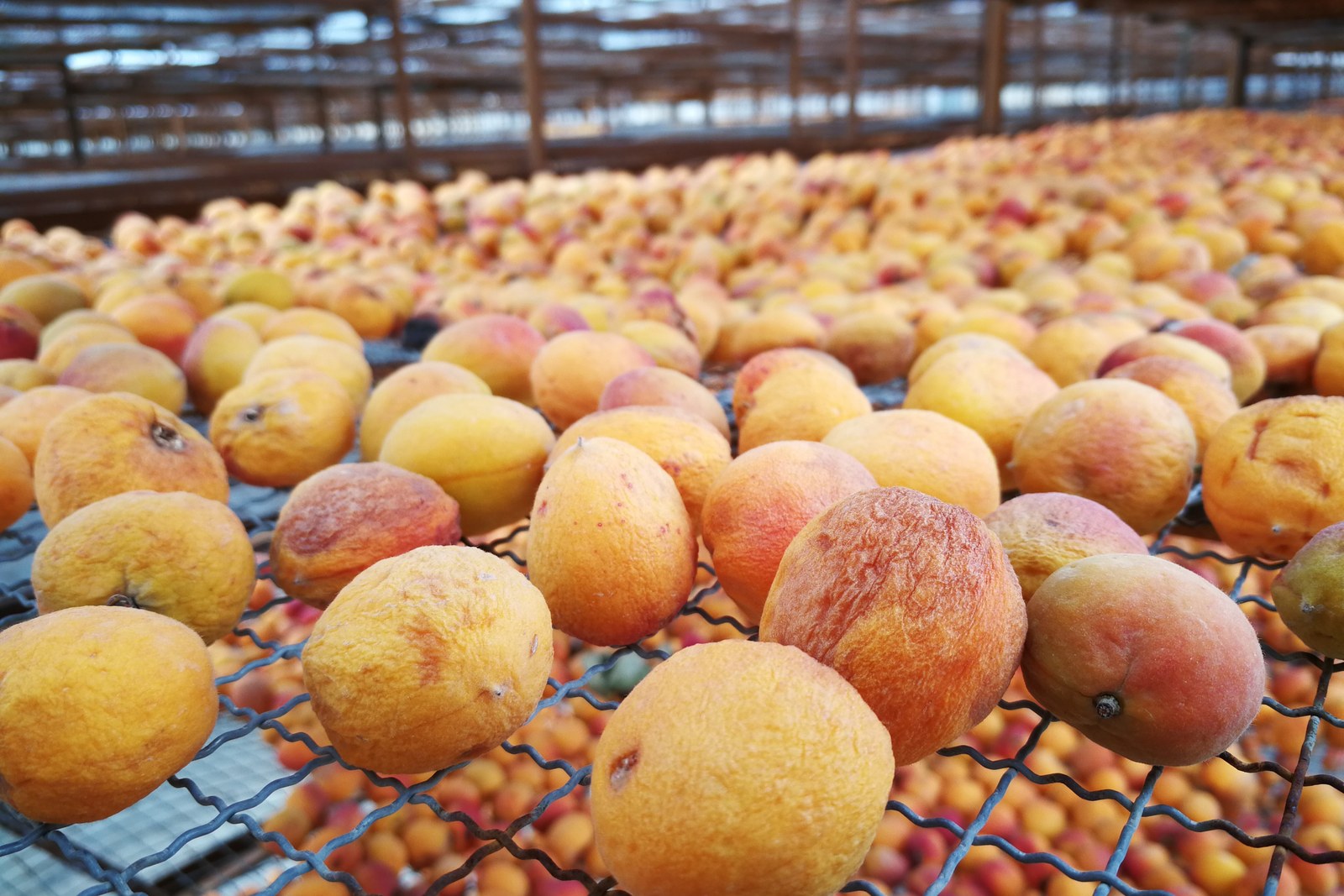
flowcloud would say the Baren apricot is Aktao’s compounding interest: one week of gold in July, dried into a year of sweetness, the Pamir’s sunlight banked in leather-amber coins that travel farther than any traveller. All checked November 2026.
Where to find it: Aktao county town’s market and the orchard gates around Baren township in harvest season; choose dried fruit dried amber rather than brown, still flexible, with no sugar crust – cooperatives sell branded packs, household stalls sell the ungraded truth. All checked November 2026.