
北渡鱼 Běidù Yú, the Beidu fish of Qijiang, is the single dish the district is known for across Chongqing and the head bowl of the municipal Yuyi 360 Bowls (渝味360碗) selection named in 2024. It was born at the old Beidu ferry crossing (北渡渡口) on the Qijiang River (綦河), where boatmen and travellers once waited for a crossing and cooks worked the river’s own live fish over open flame. The idea is simple and generous: one fish, cooked several ways at one sitting, so a table tastes the same creature bright, sour and sweet across a single meal. Qijiang (綦江区) sits in the southern hills of Chongqing where the river bends through the town, and the fish is the dish locals name first when a visitor asks what to eat. It is a meal built around freshness and around the broth left at the end, into which vegetables go once the fish is gone, so nothing of the pot is wasted.
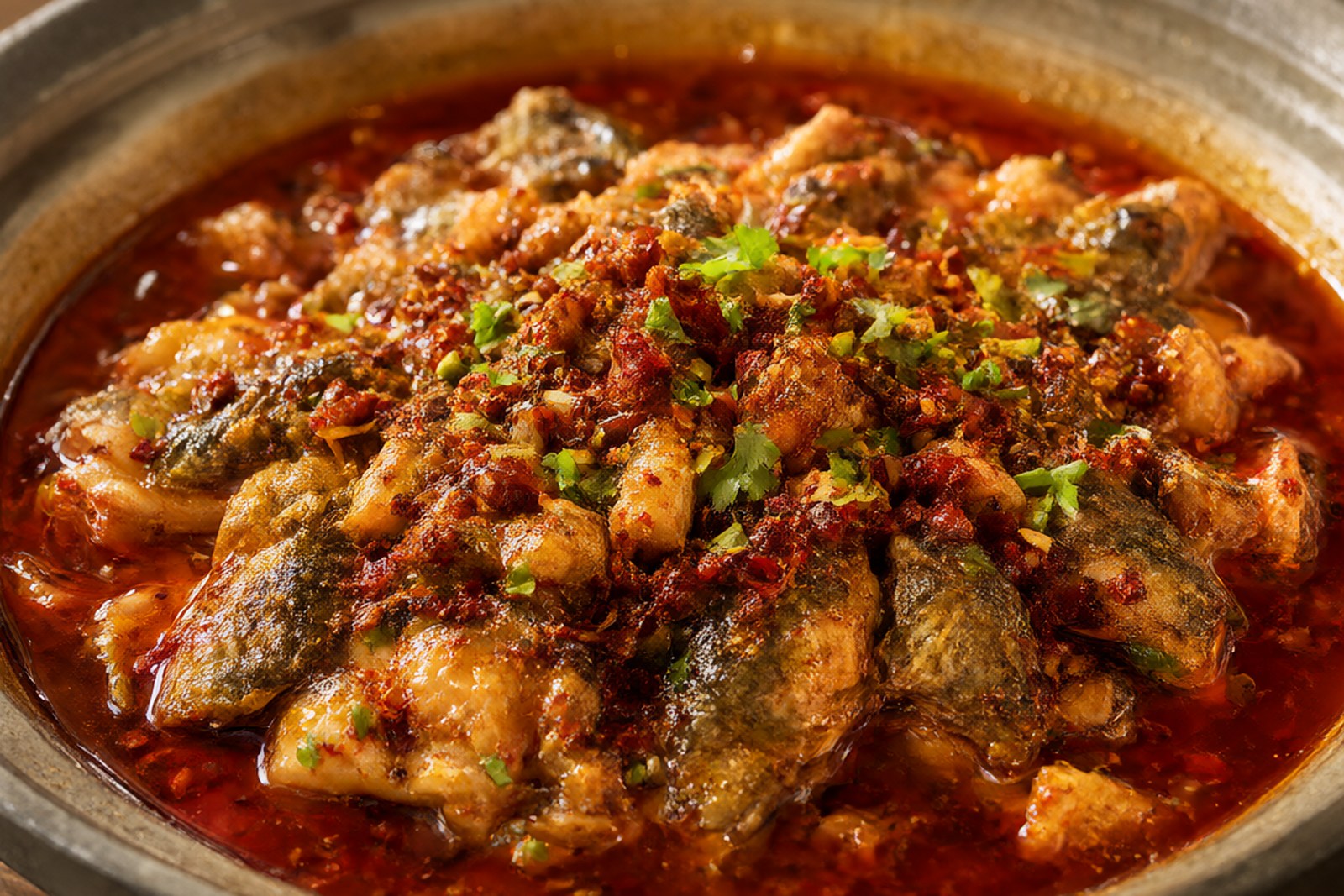
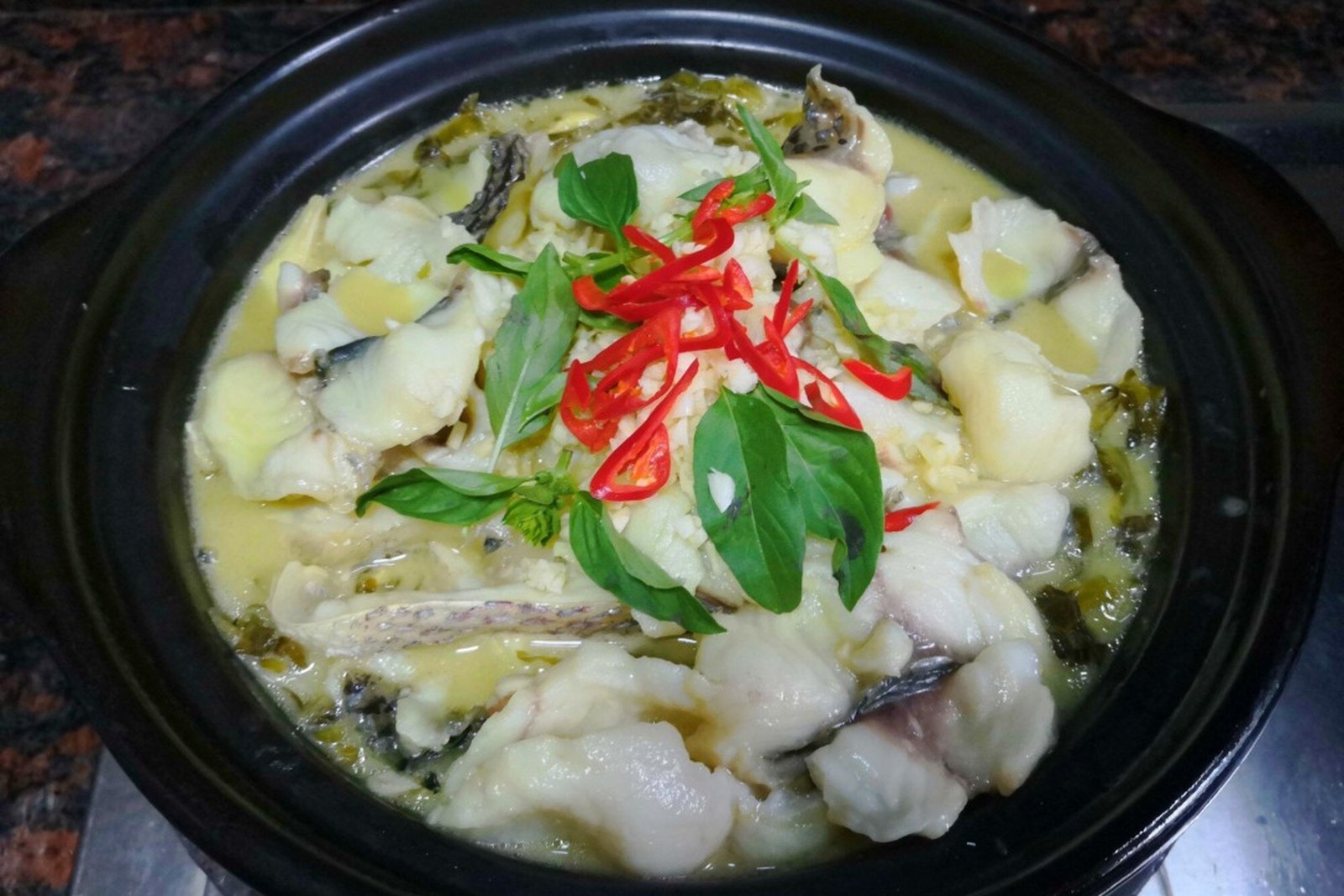
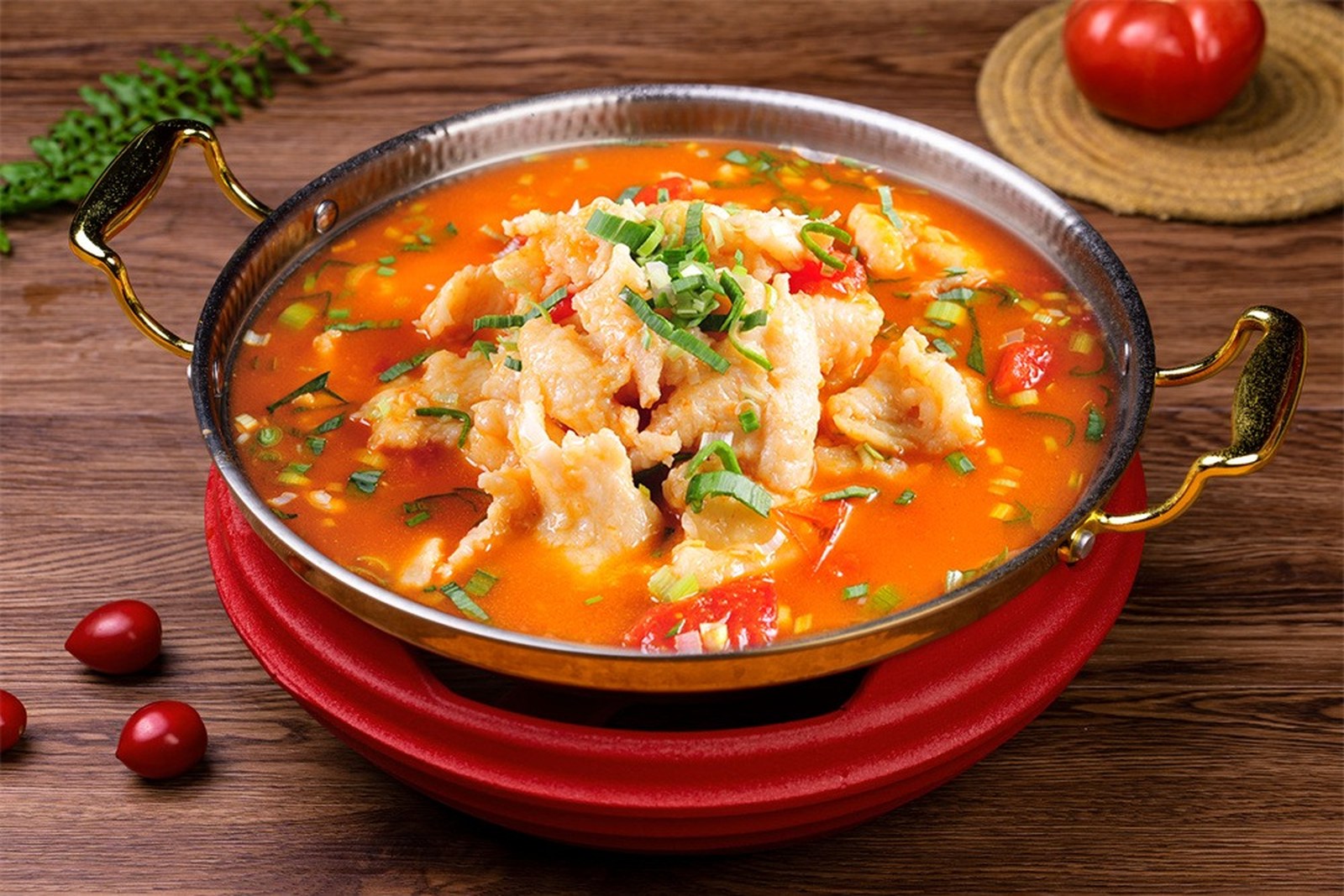
The cooking turns on live fish killed to order, so the flesh is firm and clean rather than muddy. The best known version is 麻辣鱼 málà yú, the mala fish, a bright red bowl that is numbing from Sichuan peppercorn yet balanced so it does not dry the mouth or bury the fish in heat; the oil carries the aroma, the fillets stay tender, and the broth underneath is meant for what comes later. A second common version is 酸菜鱼 suāncài yú, the pickled-cabbage fish, sour and refreshing with a clear, light tang that makes the white flesh taste cleaner and brighter, a good counterpoint to the mala for a table that wants both fires. A third is 番茄鱼 fānqié yú, the tomato fish, sweet and mild in a clear broth that children and anyone shy of chilli will happily eat, its colour soft and its finish gentle. The three sit well together because they are the same fish read three ways.
What makes the meal linger is the ending. After the fillets are eaten the cook adds vegetables to the remaining broth, often leafy greens or tofu, and they take up the flavour the fish left behind, so the last bowl is as prized as the first. Diners in Qijiang treat this as the point rather than an afterthought, and a plate of fish without the broth finish feels incomplete. Because the dish began at a ferry, it carries a working-river honesty: quick, hot, shared, and built from what the river gave that day. The Yuyi 360 Bowls listing placed it at the top of the district’s contribution to Chongqing’s table, which is less a prize than a recognition of something locals already knew, that a ferry crossing once fed the whole town’s idea of a good fish.
The fish rewards a slow table. Order the mala and the pickled-cabbage together if the group is game, add the tomato for the mild eaters, and save room for the vegetables in the broth. The meat should come off the bone cleanly and the broth should still taste of fish rather than only of spice, which is the honest test of a kitchen that respects the dish.
Words and Names
北渡鱼 Běidù Yú is the Beidu fish, Qijiang’s signature dish and the head bowl of Chongqing’s Yuyi 360 Bowls (渝味360碗) list in 2024. 北渡渡口 Běidù Dùkǒu is the old Beidu ferry crossing on the 綦河 Qìjiāng Hé Qijiang River where the dish began. 麻辣鱼 málà yú is the bright red numbing-and-hot fish, 酸菜鱼 suāncài yú the sour pickled-cabbage fish, and 番茄鱼 fānqié yú the sweet tomato fish, three ways of cooking one live fish at one meal. 綦江区 Qìjiāng Qū is Qijiang District in southern Chongqing.
What the Locals Know
The season is loose because the fish is farmed and live-killed year round, but locals say the broth-then-vegetables finish tastes best in cooler months when a hot pot sits on the table longer. Judge a kitchen by the broth: it should still read as fish, not only as chilli oil, and the fillets should be tender without falling apart. The dish tastes most itself near the old crossing and along the river in Qijiang town, where the ferry memory still shapes how it is served. One honest caveat: because it is cooked to order from live fish, a real Beidu fish is not a quick bowl, and a place that serves it pre-cooked in minutes is not keeping the tradition. No specific restaurant, address, price or founding family is stated here.
flowcloud would say that Beidu fish is Qijiang’s signature dish, live river fish cooked three ways at one meal in mala, pickled-cabbage and tomato broths, named the head bowl of Chongqing’s Yuyi 360 Bowls in 2024 and finished by adding vegetables to the leftover broth. All checked October 2026.
Where to find it: the Beidu fish is eaten across 綦江区 Qìjiāng Qū Qijiang District, Chongqing, with the strongest sense of place near the old 北渡渡口 Běidù Dùkǒu Beidu ferry crossing and along the 綦河 Qìjiāng Hé Qijiang River, and at the district’s fish restaurants and riverside eateries that cook live to order. No specific shop, address or price is invented here; the dish is a general district specialty rather than the property of one named house. All checked October 2026.