
Beijiang River Fish, the Catch of Qingyuan’s Own River
北江 Běi jiāng, the North River, is the water that runs through 清远市 Qīngyuǎn shì, coming down out of the hills of the north and cutting south towards the Pearl River, and 河鲜 hé xiān, river-fresh food, is what the city eats from it. The river is wide and green at Qingyuan, and along its banks there is a whole line of restaurants built out over the water on stilts and pontoons, where the fish and the shrimp and the snails come off the boats in the morning and go into the pot by noon. It is the city’s simplest and best meal: a fish pulled from the river, steamed with nothing much at all, and eaten looking at the water it came from.
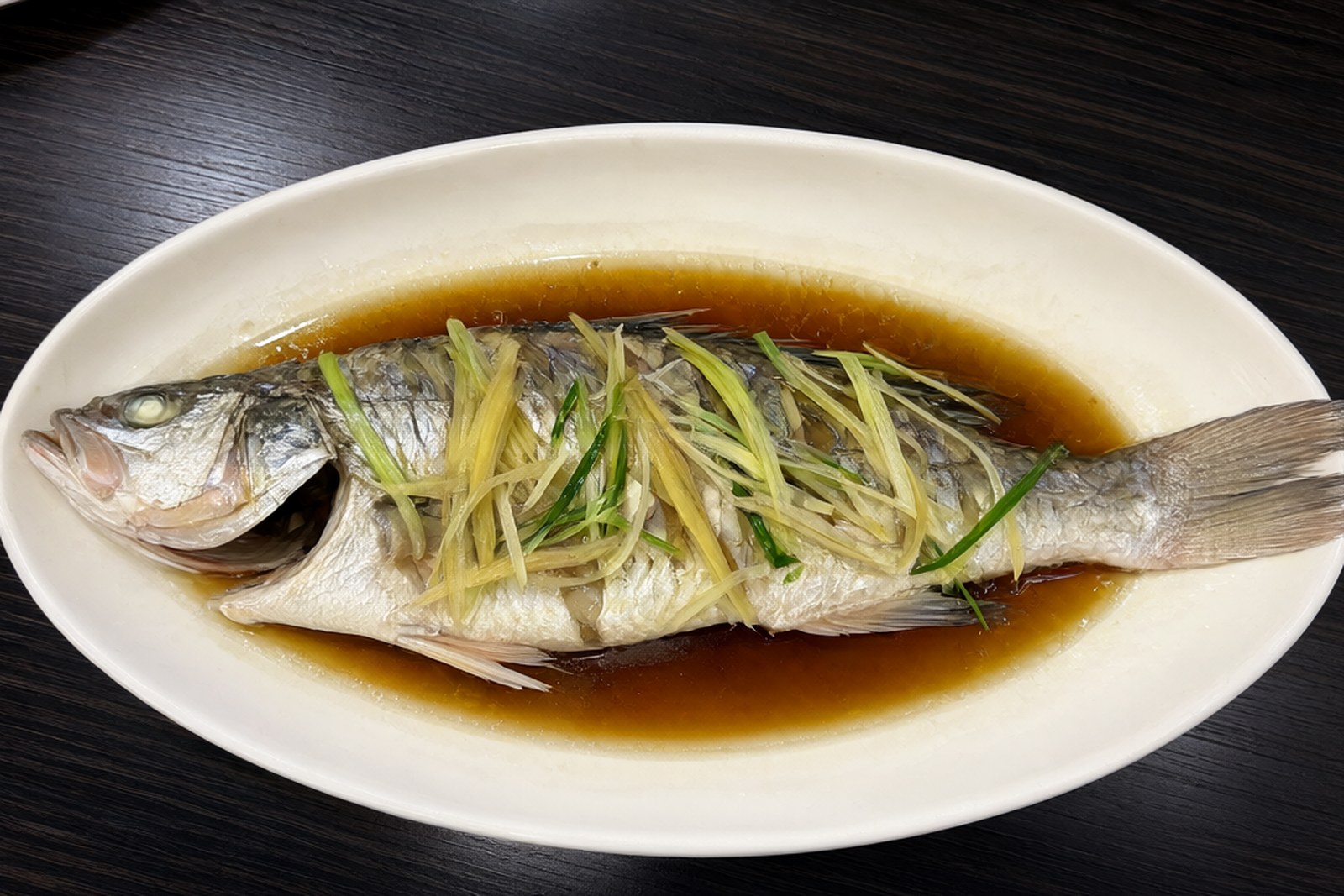
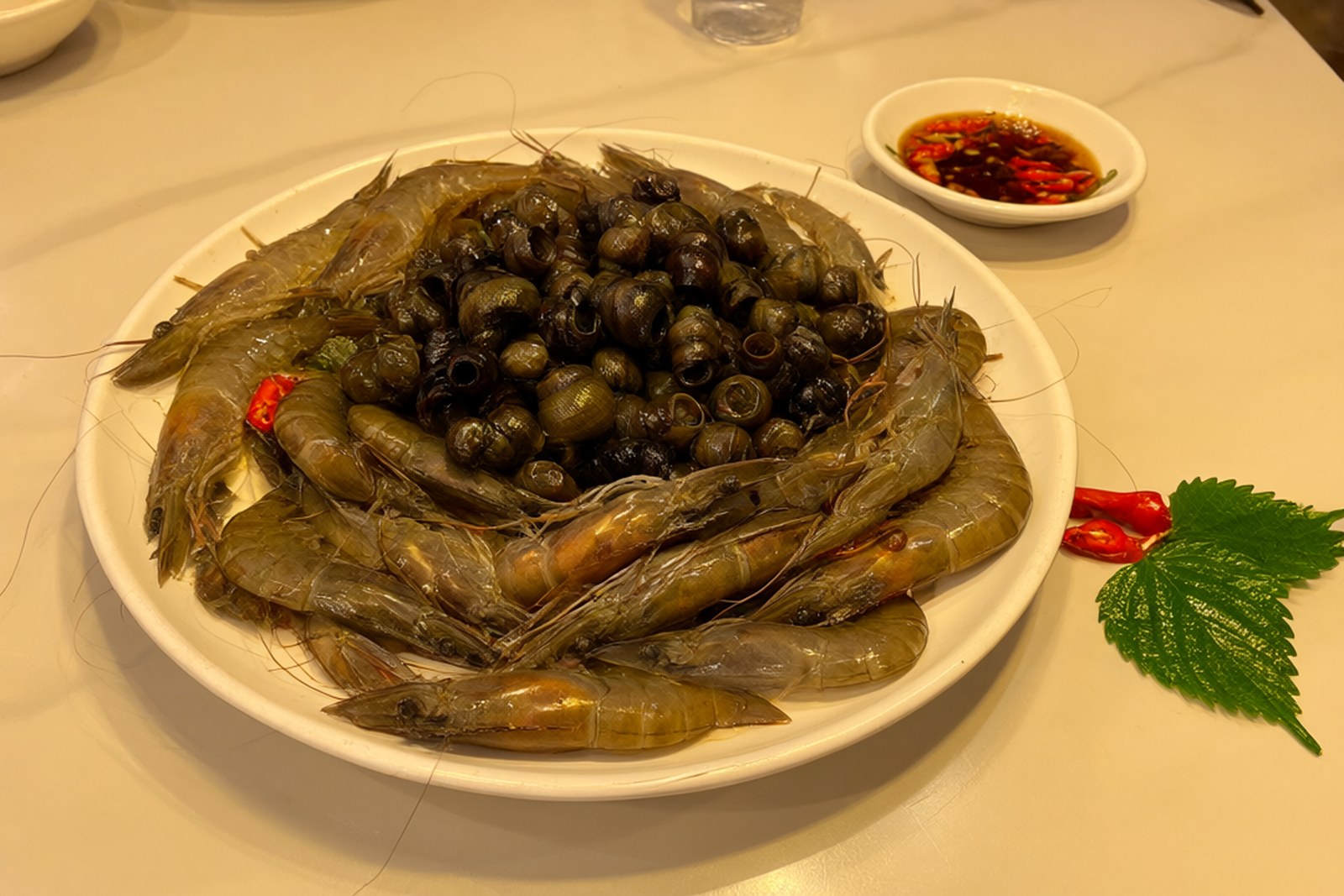
The fish are the ordinary good ones of a big southern river: 鳜鱼 guì yú, mandarin fish, 鲈鱼 lú yú, river bass, 黄骨鱼 huáng gǔ yú, the yellow catfish, 边鱼 biān yú, bream, and the small silver fish that are fried whole until they are crisp enough to eat bones and all. There are 河虾 hé xiā, river shrimp, taken with a dip of soy and vinegar, and 山坑螺 shān kēng luó, the little river snails cooked with 紫苏 zǐ sū, perilla, and chilli. Because the water moves and the fish are wild rather than pond-raised, the flesh is firm and clean and carries none of the muddiness a still-water fish can have, and the local kitchens treat that as the whole asset.
The best of it is also the plainest. A fresh 鳜鱼 or 鲈鱼 is scaled, laid on a plate over a few slices of ginger, steamed for minutes only, and then dressed with a spoonful of hot oil poured over a bed of shredded scallion and a thread of light soy; that is 清蒸 qīng zhēng, and it is the test of a fish. The 黄骨鱼 goes into a milky soup with 豆腐 dòu fu, tofu, and 香菜 xiāng cài, coriander; the smaller fish are deep-fried and eaten with the head on; and the shrimp are boiled for a moment and shelled at the table. The point of a 北江河鲜 restaurant is that nothing is frozen and nothing travels far.
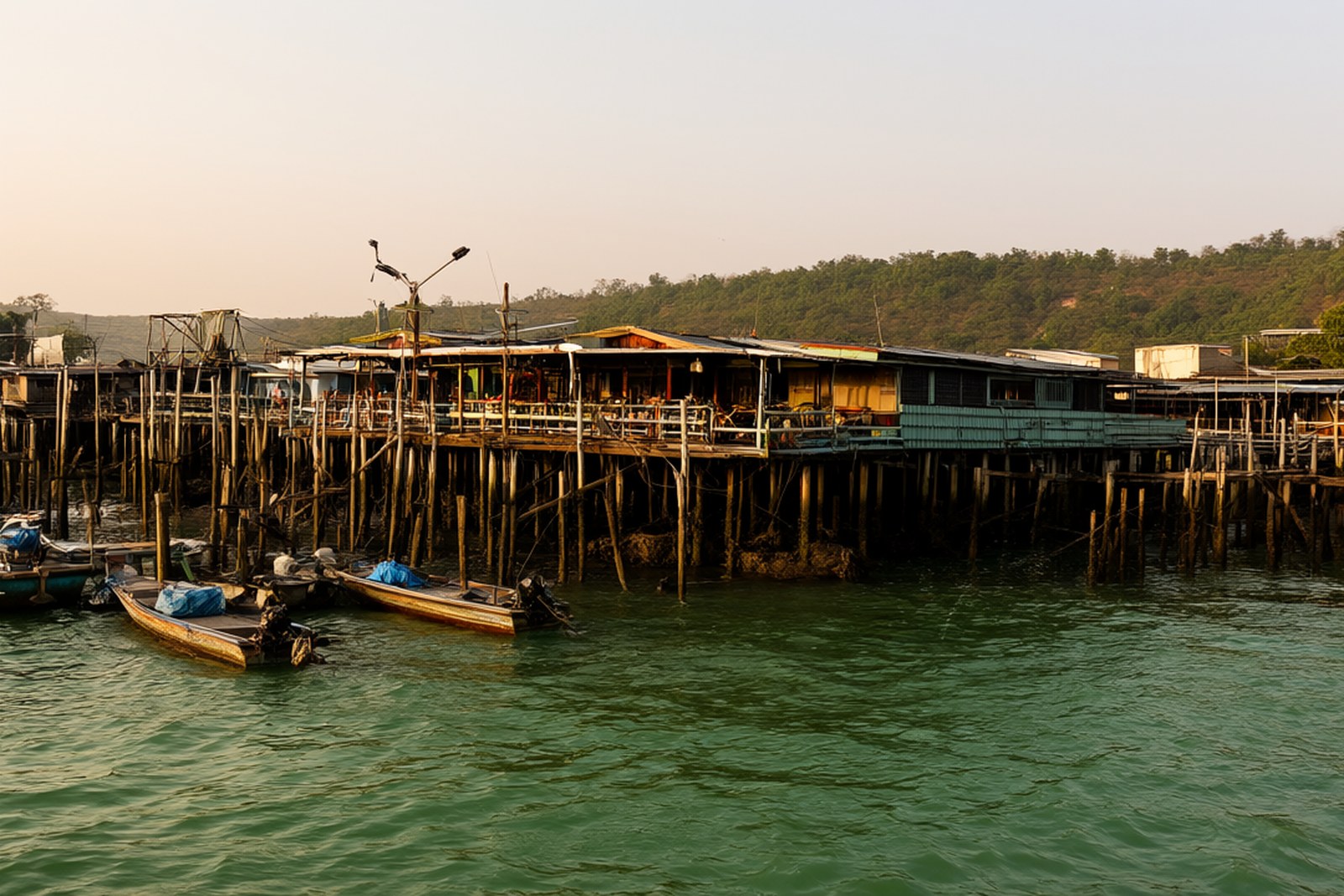
The river is also the reason the city sits where it does. 清远 grew as a river port, and the 北江 was its road before the railway and the motorway; the fishing and the river trade made the market towns along the bank, and the 河鲜 habit is the oldest thing about the local table. In the evening the riverside restaurants fill with families, the boats are lit, and the water goes dark under the hills. It is a meal that costs far less than it should and tastes of a specific river, which is the only way a river-fish meal is ever worth having.
Words and Names
北江 Běi jiāng is the North River, and 河鲜 hé xiān means river-fresh food – fish, shrimp and shellfish from moving water. 清蒸 qīng zhēng is the plain steaming that shows a fish off; 鳜鱼 guì yú is mandarin fish, 鲈鱼 lú yú river bass, 黄骨鱼 huáng gǔ yú yellow catfish and 边鱼 biān yú bream. 河虾 hé xiā are river shrimp and 山坑螺 shān kēng luó the small stream snails, cooked with 紫苏 zǐ sū, perilla. 豆腐 dòu fu is tofu, 香菜 xiāng cài coriander, and 清远市 Qīngyuǎn shì the city on the bank.
What the Locals Know
Eat river fish at a restaurant built over the water and ask what came in that morning, because the whole pleasure is freshness and a fish that has sat will taste of nothing. Order the 清蒸 first and judge the kitchen by it; a good one steams the fish to the minute and does not drown it in sauce. Take the 黄骨鱼 soup if it is on, because it is the dish the locals order for a family. Drink the local rice wine with it rather than anything cold, and ask for the 山坑螺 if you are there in the right months, since they are the snack that goes with the wait for the fish.
flowcloud would say that a city which grew up on a river and still eats from it every day, setting its tables on stilts over the water so that the fish is on the plate within hours of the net, has kept the shortest supply chain in the world and the best excuse for a slow evening.
Where to find it: the riverside 河鲜 restaurants built over the 北江 along the banks of 清远市, and the river-fish kitchens of the market towns up and down the valley. A steamed fish runs ¥60 to ¥160 depending on the species and size, river shrimp ¥40 to ¥90, and a pot of 黄骨鱼 soup ¥50 to ¥100. 清远市 is reached by high-speed rail from 广州 in about half an hour, at 清远站 Qīngyuǎn zhàn.