
A noodle half a millimetre across with a channel running down the middle of it is not a metaphor, and the difficulty is not making the strand that thin. It is keeping the channel open through eighteen named processes, about ten hours of work, and a drying stage that is the only part of the sequence a machine is allowed to do. This is 北泉银丝面 Běiquán Yīnsī Miàn, Beiquan silver-thread noodle, also written 北泉水磨手工面 Běiquán Shuǐmó Shǒugōng Miàn, Beiquan water-milled hand-made noodle, and in the trade also 北泉手工空心面 hand-made hollow noodle and 温泉面 hot-spring noodle. The technique 北泉水磨手工面制作技艺 went into Chongqing’s second municipal intangible-heritage batch in September 2009 with 肖浪 Xiào Làng Xiao Lang as the municipal representative bearer, and the name 北泉 is separately a recognised Chongqing time-honoured brand, though the sources consulted do not say which batch that recognition came in.
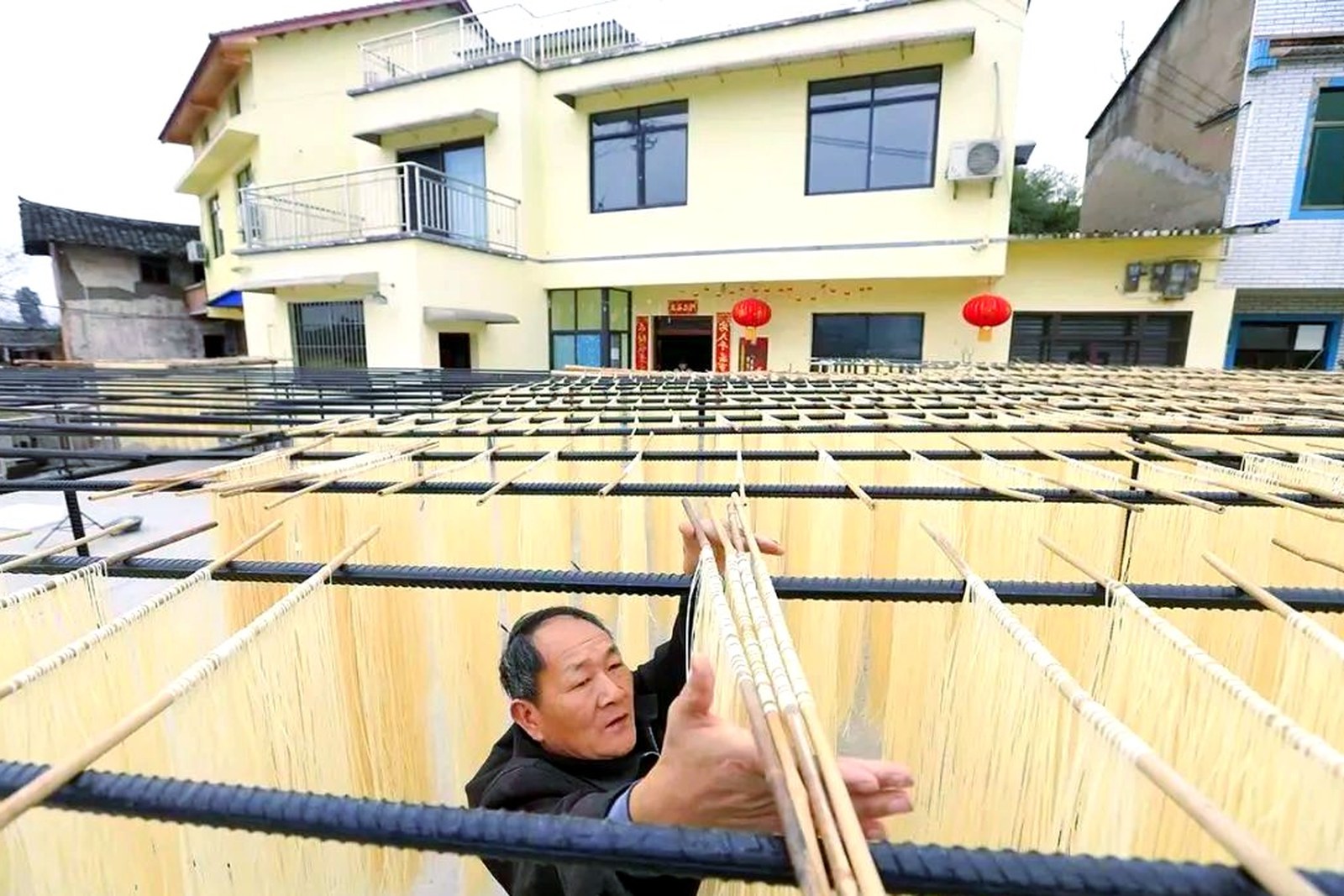
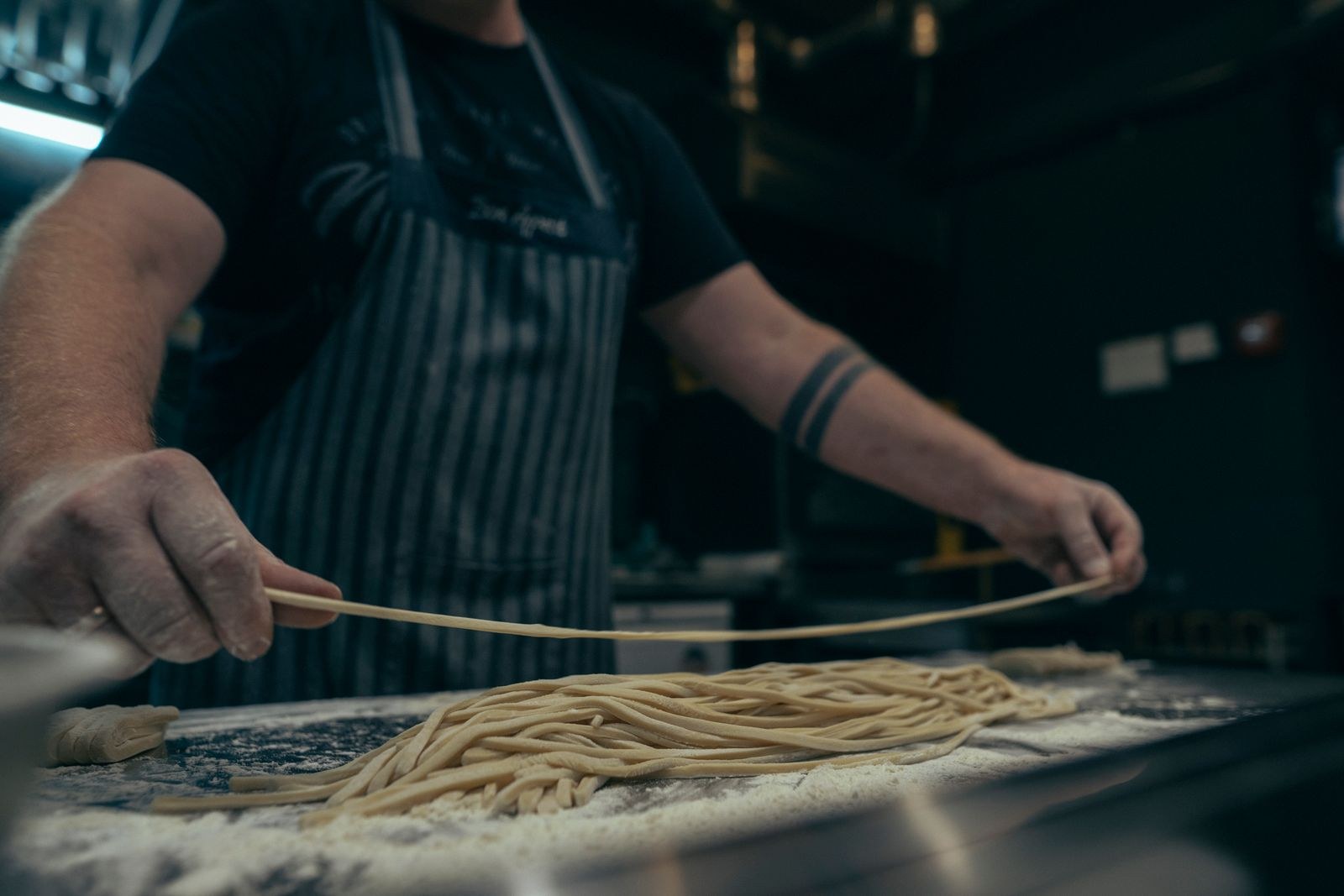
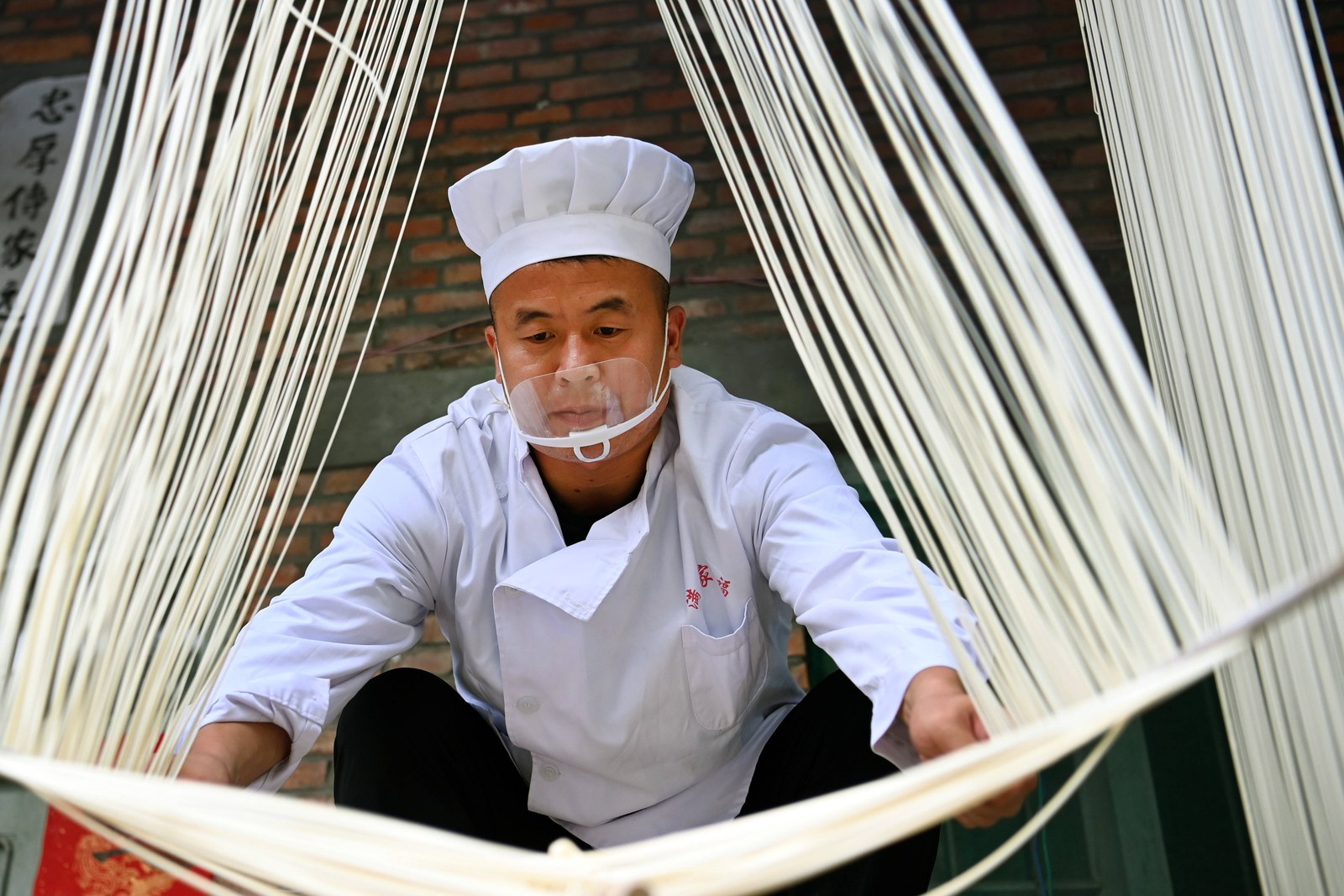
The process list is the argument, and it is longer than any noodle recipe you will meet in this city. It runs 和面 hémiàn mixing the dough, 做砣 zuòtuó portioning it, 醒面 xìngmiàn resting it, 切条 qiētiáo cutting it into strips, 接条 jiētiáo joining the strips, 刷油 shuāyóu brushing with oil, 扯环条 chěhuántiáo drawing the ring strands, 扯堆条 chěduītiáo drawing the pile strands, 下盆 xiàpén lowering into the basin, 上棍 shànggùn mounting on the pole, 扯扑 chěpū drawing and beating, 行槽 xíngcáo running the trough, 上架 shàngjià going onto the rack. Fourteen names are on the record and the batch is counted as eighteen, so four steps of the documented sequence are recorded without names in the sources a reader can check. The two that matter most for the hollow are the brushing with oil, which keeps the strands from bonding into a sheet, and the drawing-and-beating, which is where the channel is set. Everything except the drying is done by hand, and the whole run is about ten hours.
The result is stated in four claims, and they are the same four that any other Chongqing noodle is sold on, which is worth saying plainly: 面薄如纸 miàn bó rú zhǐ thin as paper, 入水即熟 rù shuǐ jí shú cooks the moment it hits water, 回锅不泥 huí guō bù ní does not turn to paste in the wok. The strand is about 0.5 mm across and hollow through its length. The cooking claim is the one that decides what you are allowed to put in the pot with it, because a noodle that turns to paste the moment starch is released cannot carry a heavy sauce: it is boiled with salt and 葱花 cōnghuā chopped scallion and nothing else, with no soy and no chilli. That is not restraint for its own sake, it is a consequence of the diameter. A bowl of this is pale, faintly sweet and entirely unseasoned-looking, and a diner who has come for red oil has come to the wrong bowl.
Where the noodle came from is given three ways and only one of them is documentation. The record used here is a 1927 account: a Fujian-born maker from Shanghang, 张本昭 Zhāng Běnzhāo, refined hand-made dried-noodle making in Beibei that year, and the 1927 date is treated as the origin. Alongside it sits a local legend that a temple monk’s dough went wrong a century earlier and the accident was the discovery, which is worth telling as a legend and not as a date. A third account, from a general Chinese encyclopedia, puts a noodle workshop at scale in the hands of a Beiwquan Temple abbot and his brother in the Tongzhi reign, a century before the documented 1927, and it stands unadjudicated next to the other two. The institutional line, on the other hand, is solid and long. The business traces to 1868 in the Guangxu reign, and it has run through a Beiquan noodle-making cooperative, a state-run Beiquan noodle factory, and the present 重庆北泉面业有限公司 Chóngqìng Běiquán Miànyè Yǒuxiàn Gōngsī, incorporated on 14 December 2009 with registered capital of one million yuan and ten staff in 2024. A Beiquan technician, 何树清 Hé Shùqīng, demonstrated hand-pulled noodle technique at Zhongnanhai in 1960.
Words and Names
北泉银丝面 Běiquán Yīnsī Miàn, silver-thread noodle, also 北泉水磨手工面 water-milled hand-made noodle, 北泉手工空心面 hand-made hollow noodle and 温泉面 hot-spring noodle; made by 重庆北泉面业有限公司, registered at No. 19 Maobeituo, Longfengqiao Subdistrict, and by the 2014 craft on record at 缙云山 Jinyun Mountain spring water with egg and sesame oil. 北泉水磨手工面制作技艺 went into Chongqing’s second municipal intangible-heritage batch in September 2009 with 肖浪 Xiao Lang as bearer. Fourteen named steps of an eighteen-step sequence – mixing, portioning, resting, cutting, joining, oiling, drawing ring strands, drawing pile strands, basining, mounting on the pole, drawing and beating, running the trough, racking – about ten hours, all by hand but the drying. Strand about 0.5 mm across and hollow; thin as paper, cooks the moment it hits water, does not turn to paste in the wok, and boiled with salt and chopped scallion only, never soy and never chilli. Origin: a 1927 documented refinement by 张本昭 of Shanghang, Fujian, with a temple-monk accident and a Tongzhi-reason abbacy workshop both circulating as lesser accounts. Lineage 1868, cooperative then state factory, company incorporated 14 December 2009; 何树清 demonstrated the technique at Zhongnanhai in 1960.
What the Locals Know
Four checks decide whether a bundle of these is worth what you paid, and the first is the one buyers are told to make before anything else: break a strand. A hand-pulled hollow noodle snaps with a clean, hollow-sounding crack at about half a millimetre, because the section is a tube rather than a solid rod, and if it bends instead of cracking the channel has collapsed and the bundle is a conventional fine noodle. Second, look at the cut ends on the bundle in the shop: the ends should be visibly open rings, and a bundle whose ends read as solid points has been cut rather than drawn. Third, cook a small piece before you commit, which is what the trade does with a new batch, because the cooking claim is a claim about time in the pot and a thicker-than-usual strand will go soft at the bottom of the bowl. Fourth, and this is the one that decides what else goes in the bowl, remember that nothing is going into the broth but salt and scallion. A buyer who adds soy at the table has misunderstood the noodle, and a cook who adds chilli has misunderstood it worse. The other thing the trade knows is the name discipline: three of these names are trade descriptions rather than the registered craft name, and the registered one is the water-milled hand-made noodle technique, listed in 2009, which is the only one of the four that is a document rather than a description.
flowcloud would say that Beiquan’s noodles are hollow and keeping them that way is a matter of eighteen named processes and about ten hours, everything done by hand except the drying – 北泉银丝面, also called 北泉水磨手工面 water-milled hand-made noodle and 北泉手工空心面 hollow noodle, entering Chongqing’s second municipal intangible-heritage batch in September 2009 with 肖浪 Xiao Lang as bearer, its strand coming out at about 0.5 mm with a channel down the middle, boiled with salt and chopped scallion and never soy and never chilli. The documented origin is a 1927 refinement by a Fujian-born maker, 张本昭 of Shanghang; the story of a temple monk’s dough gone wrong is local legend, and the institutional line runs from 1868 through a cooperative and a state factory to 重庆北泉面业有限公司, incorporated 14 December 2009 with ten staff in 2024, whose technician 何树清 demonstrated hand-pulled technique at Zhongnanhai in 1960. All checked October 2026.
Where to find it: the noodle business is at No. 19 Maobeituo, 龙凤桥街道 Lóngfèngqiáo Jiēdào Longfengqiao Subdistrict, Beibei District, and the craft is also associated with the 北温泉街道 Běiwēnquán Jiēdào Beibeiquan Subdistrict area around Beibei Hot Spring Park. The flour and spring water are the Jinyun Mountain ones, with egg and sesame oil, which is why the trade is attached to the mountain rather than to the shop. There is no published factory tour, no direct-sales channel and no retail counter information in any source consulted, so this is a company to read about rather than a shop to walk into; the dried noodle itself is the thing to look for, and in Beibei the shop counters to ask about are ordinary noodle stalls rather than an outlet. Beiquan Road is not a street number – it is the road name, and it is distinct from Beibei Hot Spring, the scenic area inside Beibeiquan Subdistrict, which is a different thing four kilometres away. Longfengqiao is on the north side of the Jialing and outside the central-city metro network. No price is published for the noodle in any source consulted.