
Tea in the Wok: Biluochun Shrimp from Suzhou
东山茶芽入玉盘,虾仁白处带春香 Dōngshān cháyá rù yùpán, xiārén bái chù dài chūnxiāng – Dongshan tea buds meet the jade plate; where the shrimp turns white, spring fragrance follows
正文:碧螺虾仁 Bìluó Xiārén Biluochun shrimp is Suzhou’s quietest signature dish – river shrimp stir-fried with the tiny early-spring buds of Biluochun green tea from the Dongshan hills above Taihu Lake. There is no sauce to speak of: a whisper of egg white, a quick pass through warm oil, and the tea’s grassy perfume doing the seasoning. It is the dish that proves how restrained Suzhou cooking can be.
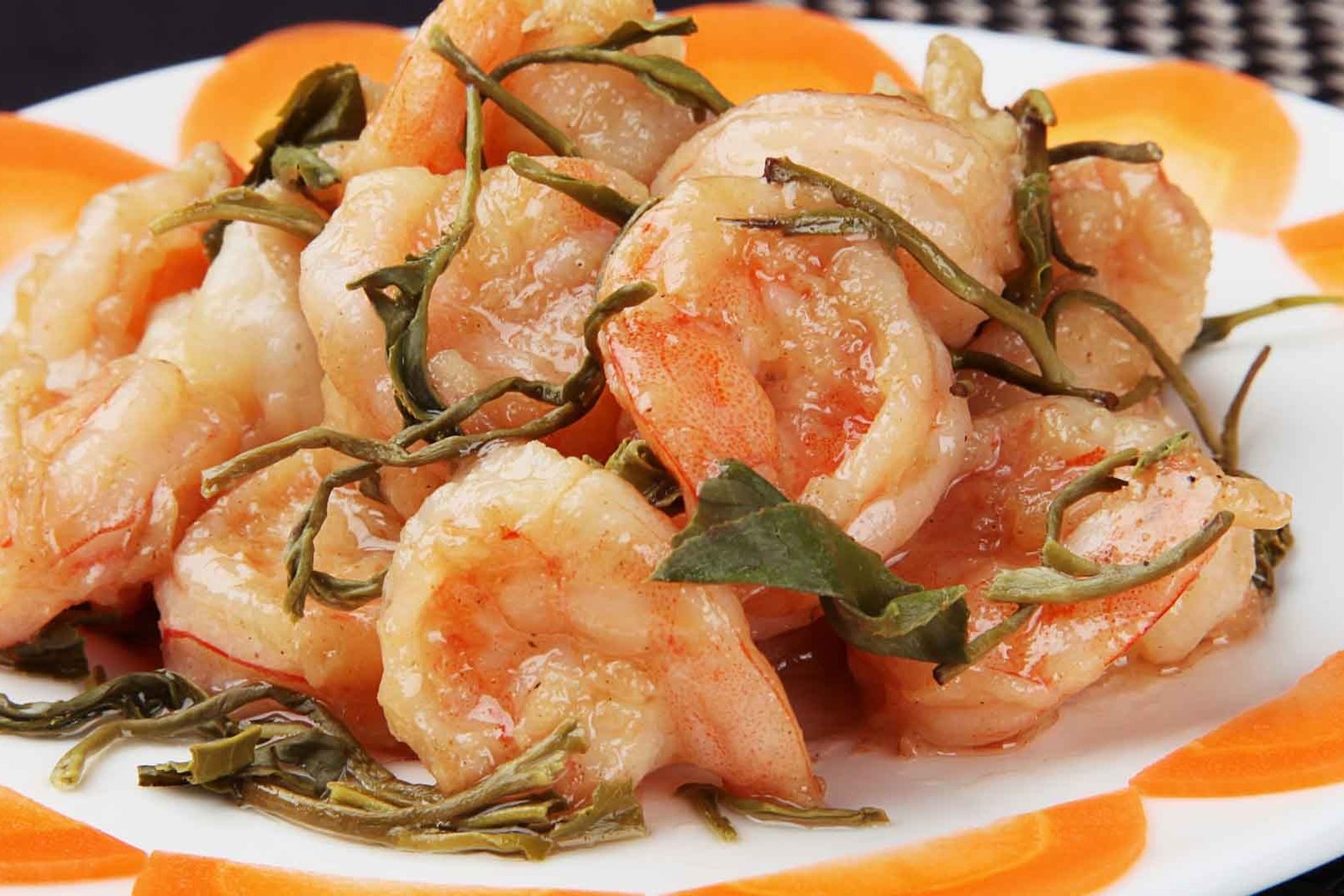
The plate looks almost unfinished – pale shrimp, a scatter of dark green tea leaves, nothing glossy. That pallor is deliberate: the shrimp are cooked just to opacity so the sweetness stays, and the tea is added at the end to keep its aroma from turning bitter.
Texture carries the dish. Proper river shrimp snap rather than mush, and the tea buds give a faint tannic edge that cuts the richness of oil. It arrives as part of a banquet sequence, usually between the heavier braises and the soup – a palate reset disguised as a course.
Spring is the real season, when the first Biluochun pick hits the market; outside it, restaurants use dried leaves and the perfume dims. Order it in a traditional Suzhou menu rather than a tourist set, and expect a small plate priced above its size.
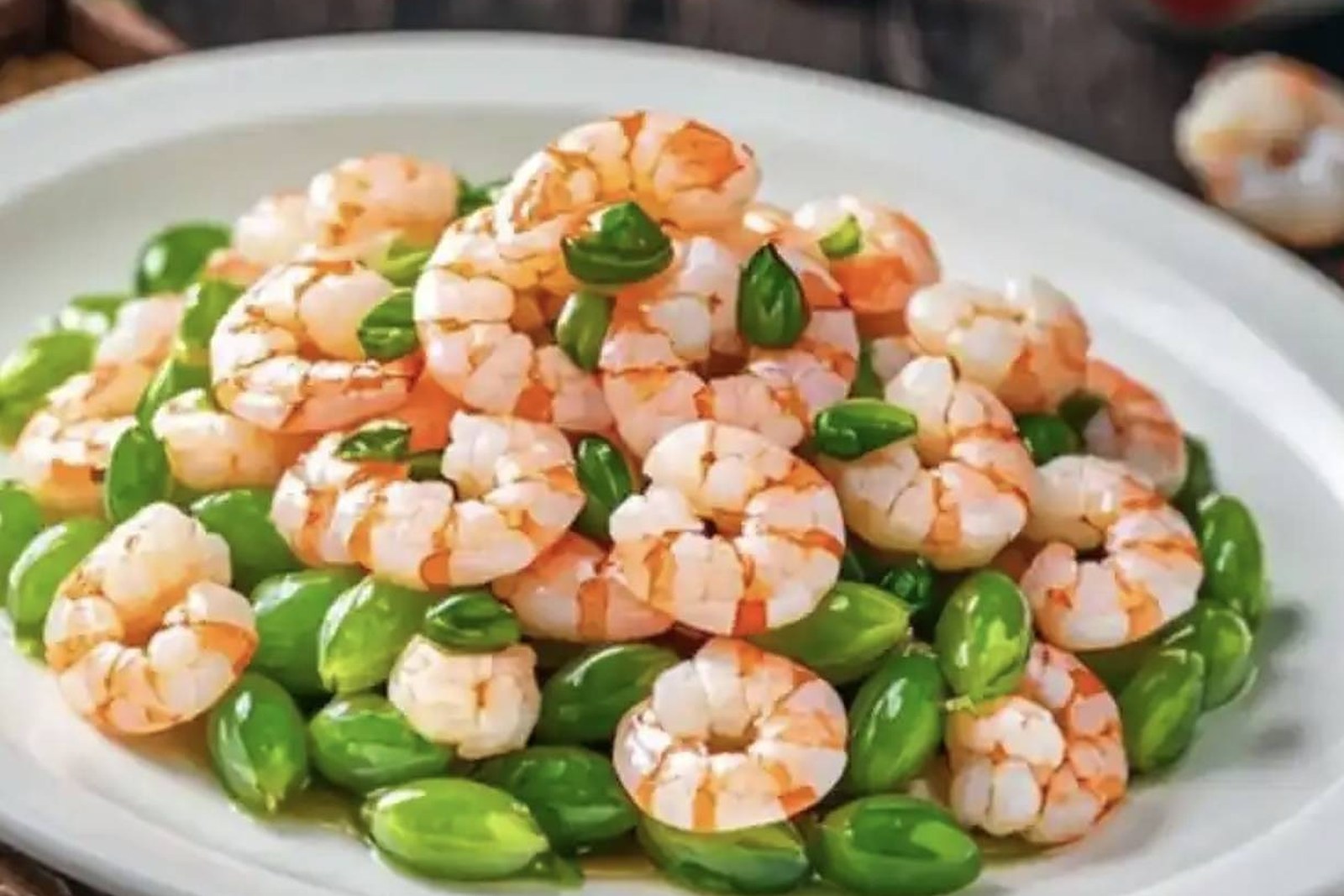
Biluochun is one of China’s finest green teas, grown among the fruit trees of Dongshan and Xishan above Taihu Lake; the buds that go into this dish are the earliest pick of the year, which is why restaurants treat it as a spring course and price a small plate accordingly.
The same district holds more flavors worth chasing: 松鼠桂鱼 Sōngshǔ Guìyú the squirrel fish, 苏式汤面 Sūshì Tāngmiàn the Suzhou noodles, 鲜肉月饼 Xiānròu Yuèbǐng the fresh meat mooncakes, or 桂花糖粥 Guìhuā Tángzhōu the osmanthus congee – four more doors into the same 苏州市 Sūzhōu Shì Suzhou City table.
Words and Names
What the Locals Know
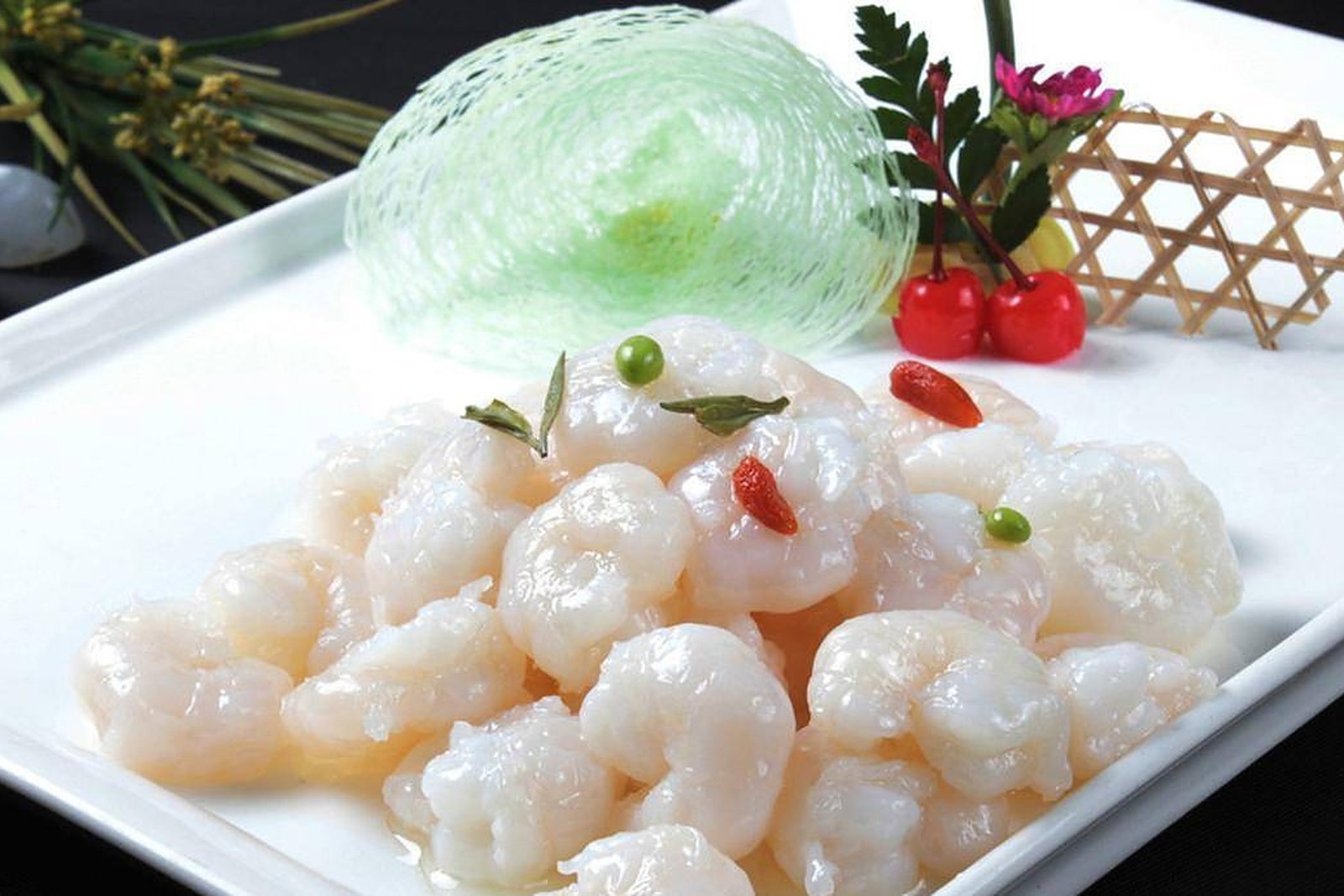
flowcloud would say the tea shrimp is a dish with nothing to hide behind: no sauce, no chilli, just spring leaves and a wok hot enough to make restraint taste like a decision. All checked November 2026.
Where to find it: Biluochun shrimp appears on the menus of traditional Suzhou restaurants, best in the early-spring tea season – order it as a small course within a banquet, and ask whether fresh tea buds are being used. All checked November 2026.