
Boat Congee
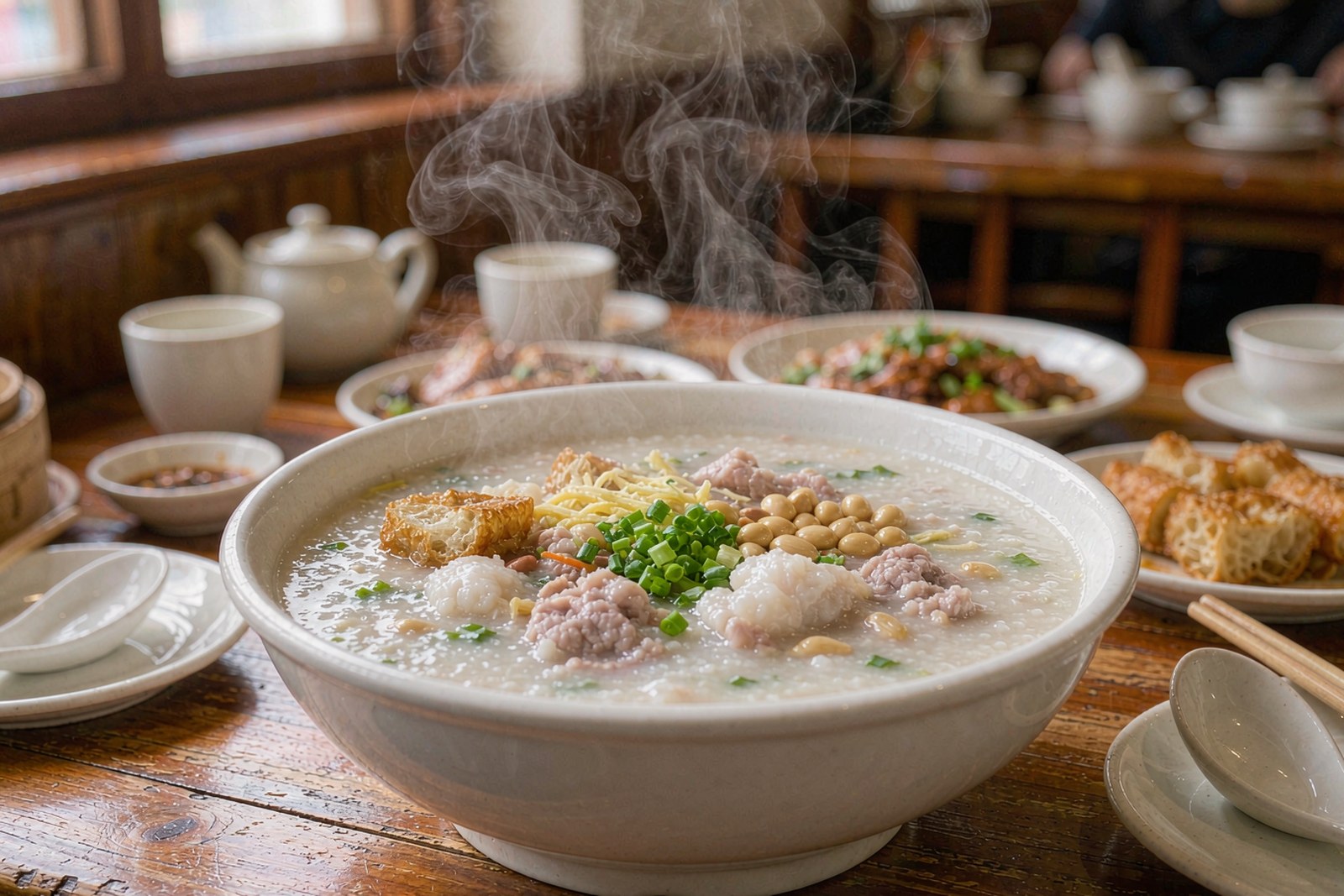
The bowl was so thick the spoon stood up in it, and a fog of scallion and sesame rose as the vendor scattered the last toppings. I tasted it and the rice had dissolved into pure cream, carrying bits of fish, peanut, and fried noodle that cracked against the softness. Sitting by the water in Guangzhou I finally got the name: this was 艇仔粥 tǐngzǎizhōu, the congee born on a boat.
艇仔粥 tǐngzǎizhōu means “boat-child congee,” from 艇 tǐng a small skiff and 仔 zǎi “little,” the boats that once plied the Pearl River and 荔枝湾 Lìzhīwān (Lychee Bay) selling rice porridge to other boat people and late strollers. The dish grew in the 民国 Mínguó (Republican era) among the 疍家 Dànjiā river communities of Guangzhou. It matters in Guangdong because congee is the province’s comfort baseline, and 艇仔粥 is its most generous version, a floating pantry of whatever was fresh on the water that day.
The Craft
The base is 米 mǐ rice boiled for a long time with a little 碱 jiǎn (alkali) or 马蹄粉 mǎtí fěn (water-chestnut starch) until it breaks down into a smooth, clinging 绵 mián (“silky”) gruel. Good congee is never watery; it should coat the back of a spoon. The cook keeps a pot of plain 白粥 báizhōu base and builds each bowl to order.
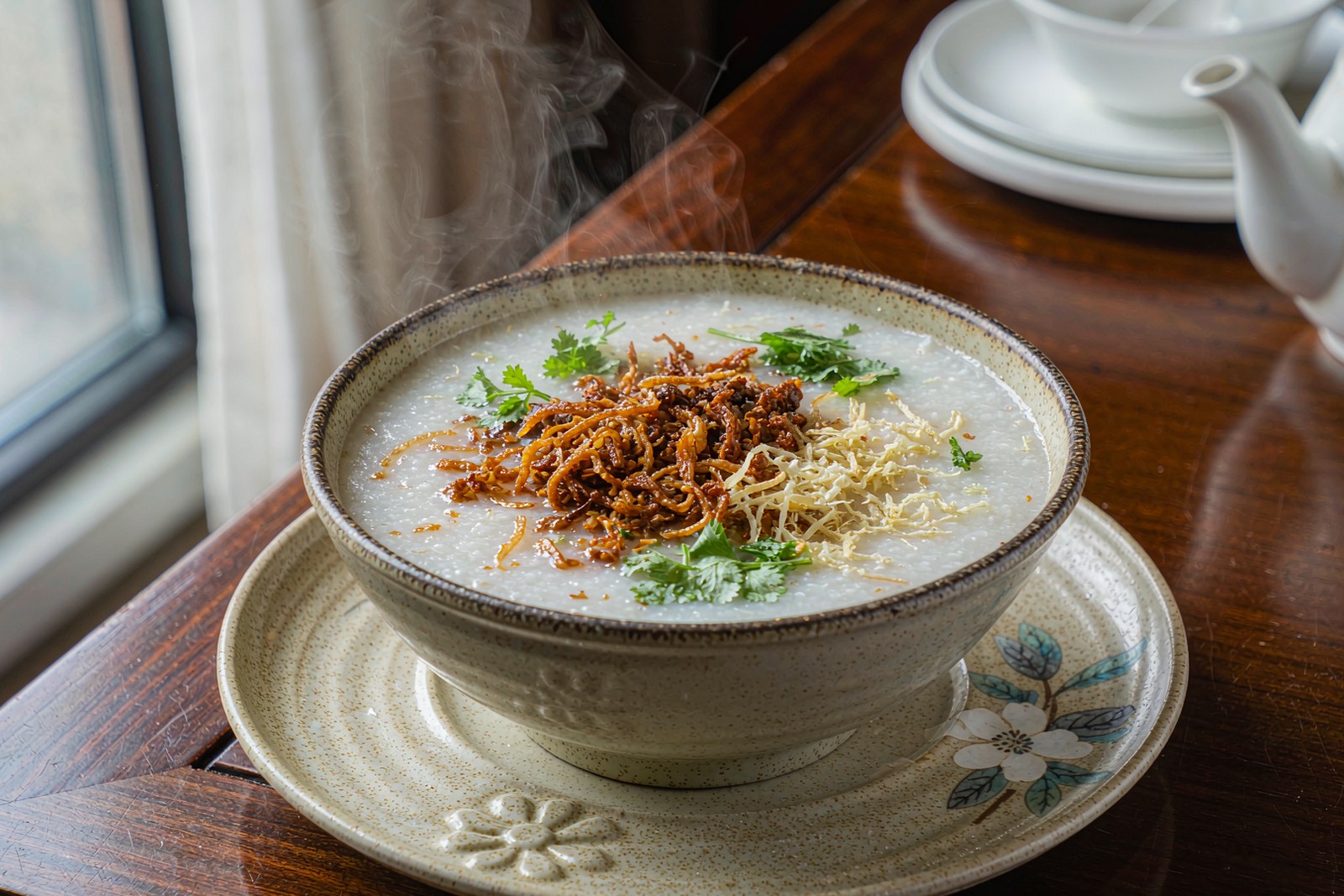
The toppings are scattered on top, not cooked in: 鱼片 yúpiàn sliced fish, 虾仁 xiārén shrimp, 鱿鱼 yóuyú squid, 叉烧 chāshāo, 油条 yóutiáo fried dough, 花生 huāshēng peanuts, 腐竹 fǔzhú tofu skin, 葱花 cōnghuā scallion, and 姜丝 jiāngsī ginger threads. A 艇仔粥 is defined by this scatter, a little of many things, finished with 炸面 zhámiàn crispy noodles and a drop of 麻油 máyóu sesame oil. The heat of the congee wilts the toppings just enough.
How to Eat It
Eat it hot with a spoon, stirring the toppings through so every bite mixes crunch and cream. Add a little 白胡椒 báihújiāo white pepper or 酱油 jiàngyóu if you like, but lightly. In Guangzhou the dish belongs to 荔枝湾 Lìzhīwān and the old water towns; outside the city you will meet 及第粥 jídìzhōu (organ-meat congee) and 皮蛋瘦肉粥 pídàn shòuròu zhōu (century-egg pork congee), but 艇仔粥 stays the showy, many-topping one. A true bowl is judged by how 绵 mián the rice is.
Words and Names
艇仔粥 is 艇 tǐng “skiff,” 仔 zǎi “small,” and 粥 zhōu “congee,” spoken teng5 zai2 zuk1. The character 粥 zhōu is the same word for rice porridge across China, but Cantonese 靓粥 leng3 zuk1 must be 绵 mián (silky). The 仔 zǎi here is the affectionate “little,” the same ending as 煲仔饭 bāozǐfàn. The floating origin shows in 艇 tǐng, a word you will also see on old 西关 Xīguān postcards of the river.
What the Locals Know
Stir before the first bite the toppings sink, mix them into the cream.
It should coat the spoon watery 粥 zhōu is a failed congee, walk away.
Add 油条 yóutiáo the fried dough softens but the 炸面 zhámiàn stays crunch.
Go to 荔枝湾 Lìzhīwān the water-town version is the authentic one.
White pepper, not soy a pinch of 白胡椒 báihújiāo wakes it without salting it flat.
flowcloud would say that a bowl of congee is a river remembering every boat that ever floated on it.
Where to find it: Boat congee, 艇仔粥 tǐngzǎizhōu, is the signature of Guangzhou’s old river districts, above all 荔枝湾 Lìzhīwān (Lychee Bay) in 荔湾 Lìwān, where it is still served near the water. Order it with the full topping scatter, 鱼片 yúpiàn fish and 炸面 zhámiàn crispy noodles, at a 粥粉面 zhōu fěn miàn shop; a bowl runs roughly 15 to 30 yuan. For comparison try 及第粥 jídìzhōu nearby, but save room for the boat original.