
Bolo Bun — the Pineappleless Pineapple Bun
脆盖裂纹无一果,冰砖入腹始成油 Cuìgài lièhén wú yī guǒ, bīngzhuān rù fù shǐ chéng yóu – The crackled crust holds no fruit at all; only when the ice-cold brick of butter melts inside does it become yau
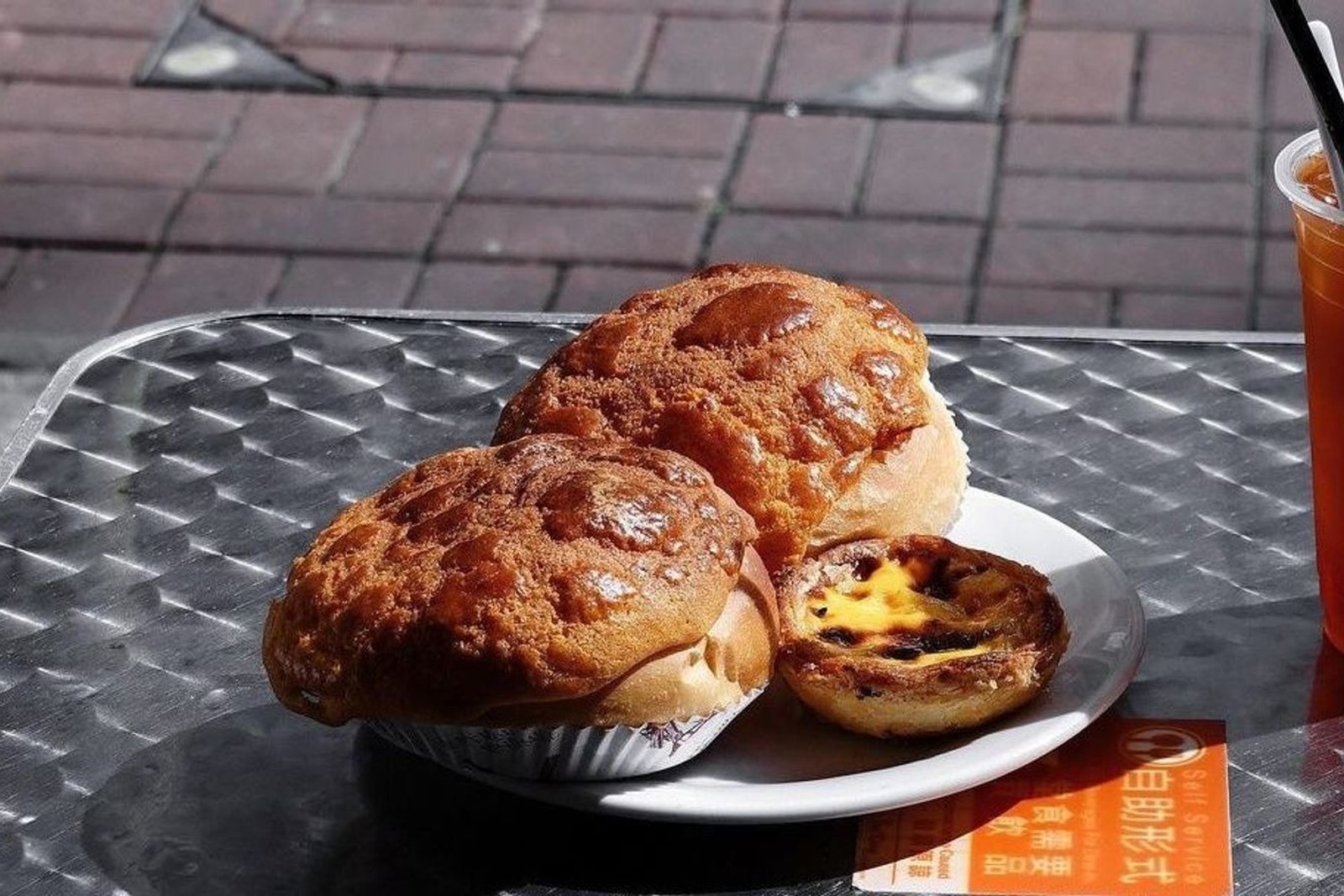
菠萝包 Bōluóbāo the bolo bun – pineapple bun, though no pineapple has ever come near one – is the teahouse pastry of Hong Kong: a soft milk-bread roll crowned with a sugar cookie crust whose crackled golden top earned the name by looking like a pineapple’s skin. The crust bakes crisp and shatters with the first bite; the crumb beneath stays pillowy and warm. 湾仔区 Wānzǎi Qū Wan Chai’s old bakeries and tea restaurants bake trays through the morning, and the smell of sugar crust and hot bread is the district’s most reliable breakfast signal.
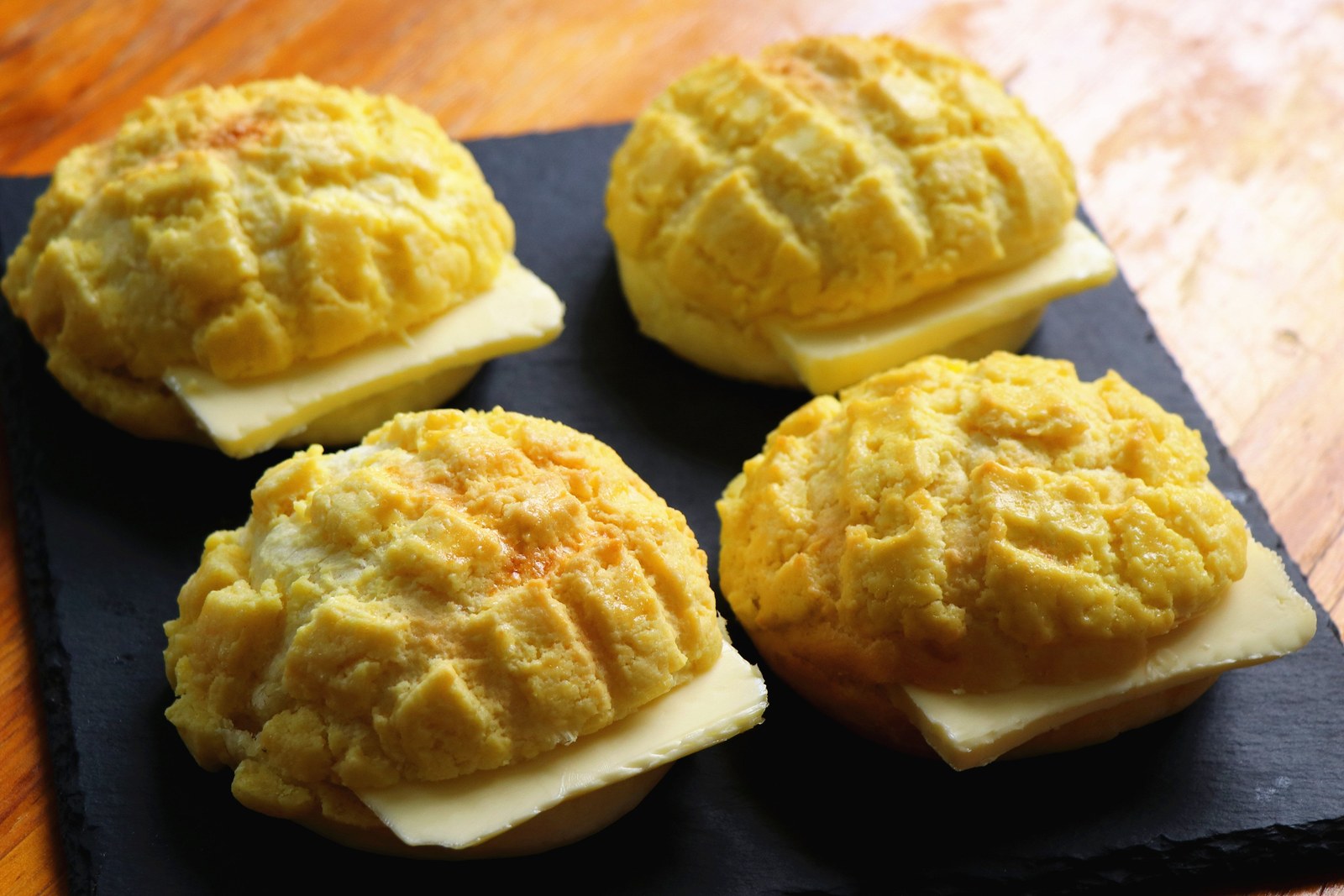
The upgrade is the 菠萝油 Bōluóyóu bolo yau – the bun sliced across while still oven-hot and folded around a thick, ice-cold slab of butter. The pleasure is thermal: scorching crumb against frozen butter, the slab softening at the edges but holding its core, and the salted seam it leaves through the middle of the sweet crust. Order it simply as 菠萝油 and the counter knows exactly what to bring – the bun, the butter, and a small plate for the fragments.
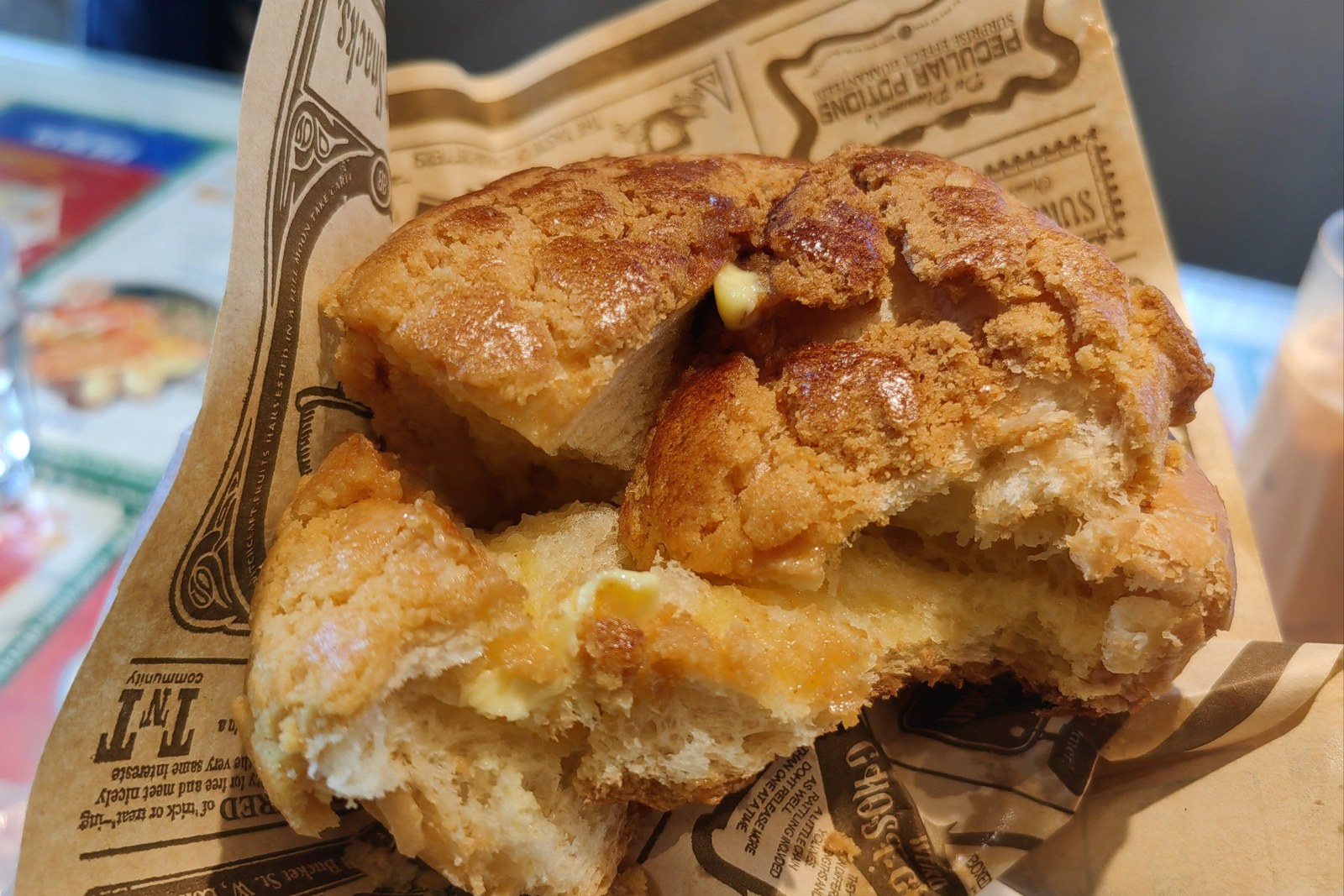
The pairing is as fixed as the bun itself: a cup of milk tea in the porcelain cup, the bun at the counter’s edge, ten unhurried minutes between errands. The bolo bun is the tea restaurant’s cheapest luxury – pocket change for a pastry assembled with more thermal engineering than most desserts – and its economics explain its reach: every bakery and cha chaan teng in the district bakes or steams them by the tray, and quality stays high because turnover never lets one sit.
Eat it at the counter within minutes of the tray, the way regulars do – carried away and cooled, it is only a roll. Morning is the classic seating, the afternoon the second-wind slot, and either way the ritual is the same: crack the crust, watch the butter begin to give, and eat fast while both temperatures still argue.
Words and Names
菠萝包 Bōluóbāo the bolo bun, the sugar-crusted milk roll; 菠萝油 Bōluóyóu the bolo yau, the bun with the cold butter slab; 茶餐厅 chácāntīng the tea restaurant, the bun’s natural counter; 牛油 niúyóu the butter, always served thick and cold; 出炉 chūlú out of the oven, the phrase that finds the fresh tray. The same 湾仔区 Wānzǎi Qū Wan Chai holds more flavors worth chasing: 避风塘炒蟹 Bìfēngtáng chǎoxiè the garlic-storm crab, 车仔面 Chēzǎimiàn the self-assembled noodle bowl, 鸡蛋仔 Jīdànzǎi the honeycomb street waffle, or 港式茶餐厅 Gǎngshì Chácāntīng the tea-restaurant institution itself – four more doors into the same district table.
What the Locals Know
Locals judge a cha chaan teng by its butter: the slab must arrive genuinely cold, thick enough to survive the walk from counter to table, and the bun hot enough to fight back. If the butter has already gone slack, the kitchen is running behind – order the milk tea and a different counter tomorrow. All checked November 2026.
flowcloud would say the bolo bun is the city’s smallest thermal argument – hot crust against cold butter, settled three bites at a time, every morning since the tea restaurants learned to bake.
Where to find it: The district’s bakery counters and tea restaurants bake through the morning – any counter with a warm tray by the window will run the classic; mid-morning and mid-afternoon are the fresh-tray hours. All checked November 2026.