
Cheese of the Steppe: Borts, the Herder’s Sour Milk Gold
奶香晒作千颗玉,毡房顶上日月长 Nǎixiāng shài zuò qiān kē yù, zhānfáng dǐng shàng rìyuè cháng – Milk fragrance dried into a thousand jade beads; above the yurts the days and months run long
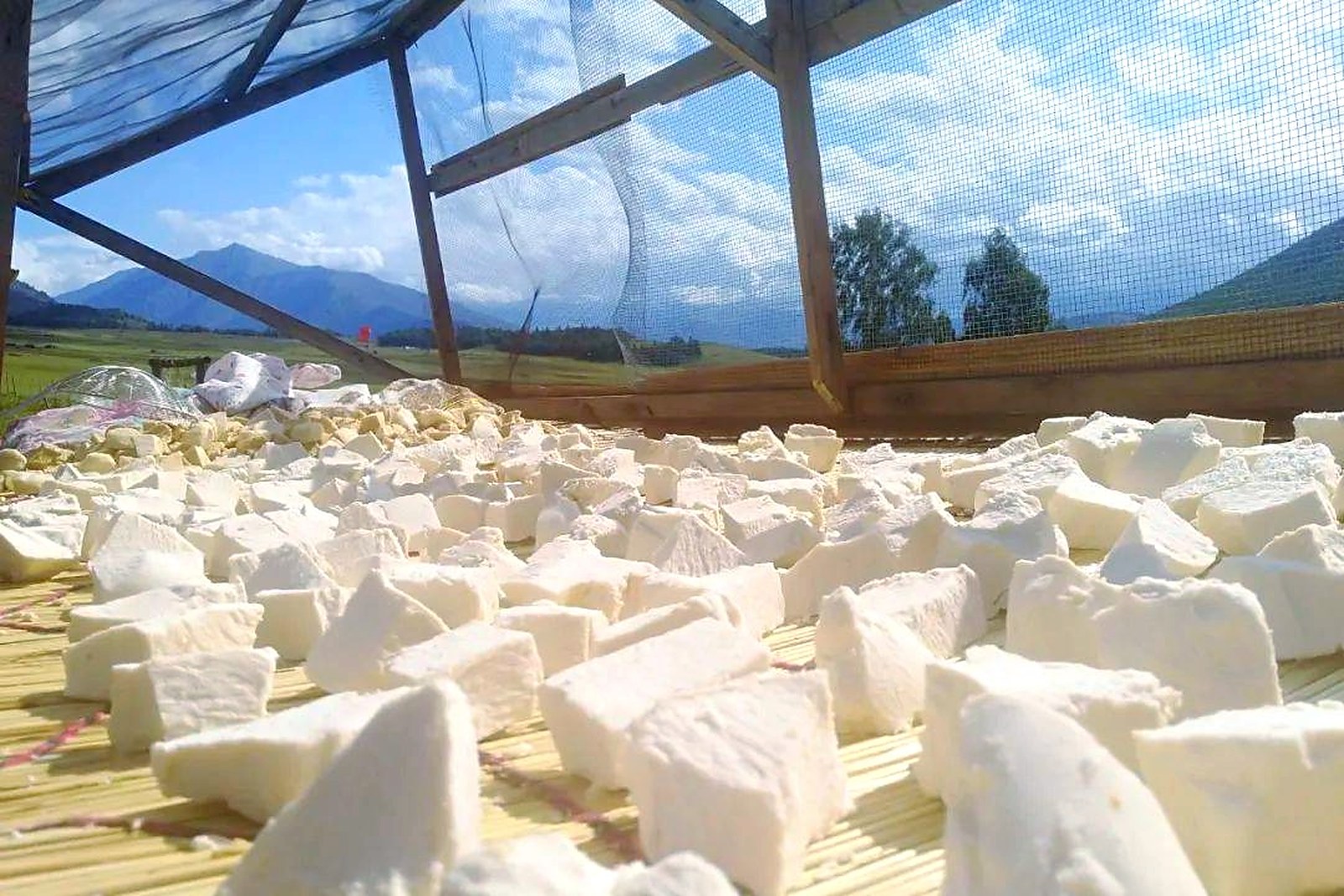
正文:奶疙瘩 Nǎigēda borts is the steppe’s answer to a simple problem – what to do with more milk than a family can drink – and the answer is to turn it into stone. Fresh sour milk is boiled, drained and pressed, then rolled or cut into small knobs and dried in the open air until they harden into pale nuggets that keep for a whole winter. Around 双河市 Shuānghé Shì Shuanghe City the herder families of the Bortala grassland still make it the old way, and on the drying mats by the yurts the white rounds sit in rows like a crop that never touches soil.
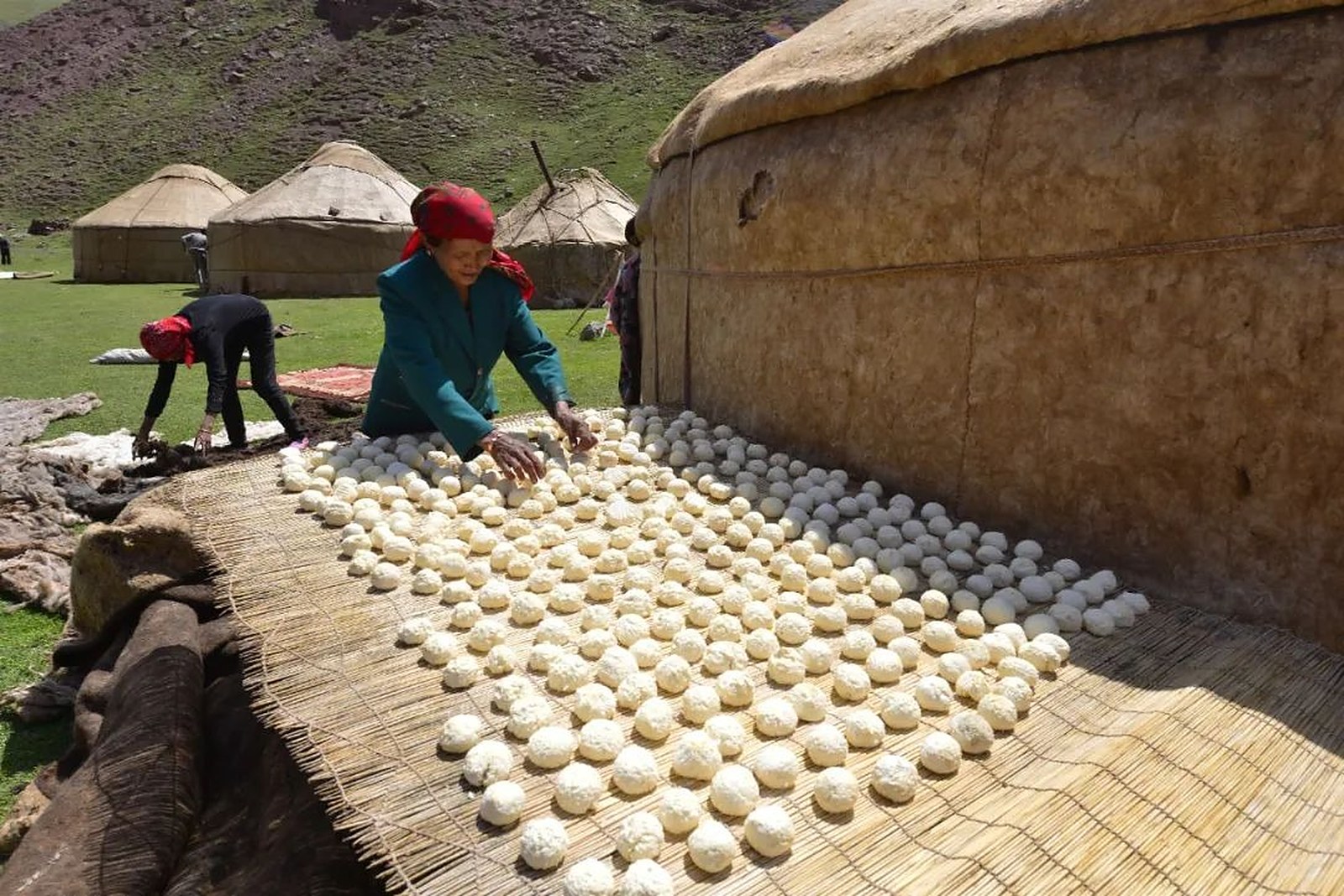
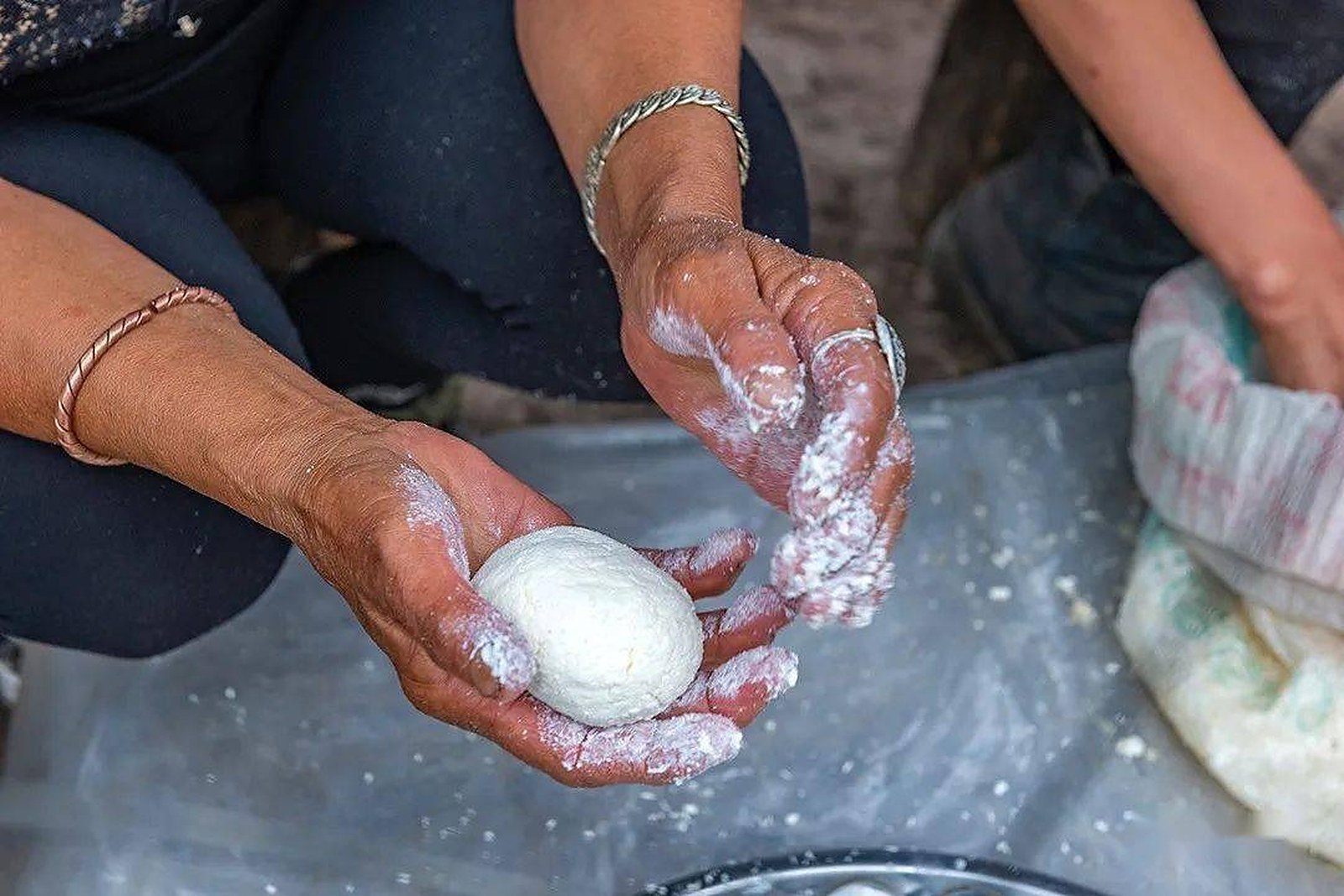
The making is the whole story. Morning’s milk, lightly soured, goes into a cloth sack that hangs and drips for a day; the curd is kneaded, salted or left sour, and shaped by hand – rounds, knots, flat lozenges, every family with its own signature shape. Drying takes days of steppe sun and wind, turned by hand each morning, and the finished borts store in cloth sacks through the coldest months, carried on journeys, crumbled into tea for guests, or handed to children as the steppe’s original candy.
Tasting it is a commitment the unprepared tongue remembers: the sour is real, the salt version is saltier than dessert has any right to be, and the texture starts rock-hard and works toward chalk as you go. Locals soften a piece against the cheek for an hour, or drop it into hot milk tea where it swells into something closer to cheese soup. Either way, borts is milk reduced to its most honest algebra – nothing added, everything concentrated.
Buying it is half the pleasure. Herder stalls at the town markets sell bags of mixed shapes, soft fresh curd knobs in summer and rock-hard winter borts by the kilo, and the vendors are happy to let you try before you commit. The best comes from families you can name – ask which herd, which pasture, and the answer becomes the flavor’s address. Around the Bortala grassland the July and August markets carry the year’s new batch, still soft and milky; by winter only the veterans remain, and they keep until spring without complaint.
Borts also explains the tea it goes into. Salt butter tea is the traditional partner – the sour cheese and the salty tea trading blows across the table – and a bowl of the tea with two borts dissolving in it is a breakfast that powered the whole grassland economy for centuries. Order the pairing once and the logic of the steppe larder falls into place.
Beyond the curd itself, the same 双河市 Shuānghé Shì Shuanghe City holds other flavors: 酥油茶 Sūyóuchá butter tea for the salted daily bowl, 拌面 Bànmiàn laghman for the working-lunch engine, 风干牛肉 Fēnggān Niúròu air-dried beef for the iron-red winter slabs, and 清炖羊肉 Qīngdùn Yángròu boiled mutton for the clear-broth final exam – four more doors into the same 双河市 Shuānghé Shì Shuanghe City. With the curd settled, our Shuanghe travel map fills the day.
Practicalities first. Market stalls sell borts by the kilo from a few yuan for a bag of fresh curd to the harder winter stock; keep it dry and airy rather than sealed, and it travels well for weeks. Try the soft summer knobs first if you are new to the sour, save the rock-hard rounds for tea, and buy from the stall whose family name you can catch – the grassland’s own provenance system.
Words and Names
What the Locals Know
flowcloud would say borts is the grassland’s bank account: summer milk converted into winter stone, sour enough to argue with, satisfying enough to have argued for centuries – the purest souvenir the steppe sells. All checked November 2026.
Where to find it: Borts sells from herder family stalls at the markets of 双河市 Shuānghé Shì Shuanghe City and the surrounding Bortala county towns – buy a mixed bag of shapes, taste the soft fresh curd first, and carry the hard rounds home in paper. All checked November 2026.