
Fuel of the Plateau: Butter Tea
董莫声声茶成乳,一碗酥油暖客心 Dǒngmò shēngshēng chá chéng rǔ, yī wǎn sūyóu nuǎn kè xīn – Churn by churn the tea turns to cream; one bowl of butter tea warms the guest’s heart
酥油茶 sūyóuchá is the drink that makes the plateau possible – brick tea boiled for hours, churned in a tall wooden churn called a 董莫 dǒngmò with yak butter and a pinch of salt until the black brew turns the color of pale caramel, silky and hot. In 西藏自治区拉萨市 Xīzàng Zìzhìqū Lāsà Shì Lhasa it is the first thing a host serves, the constant companion of tsampa, and the caloric habit that carries herders, monks and city families through winters that would otherwise be unthinkable.
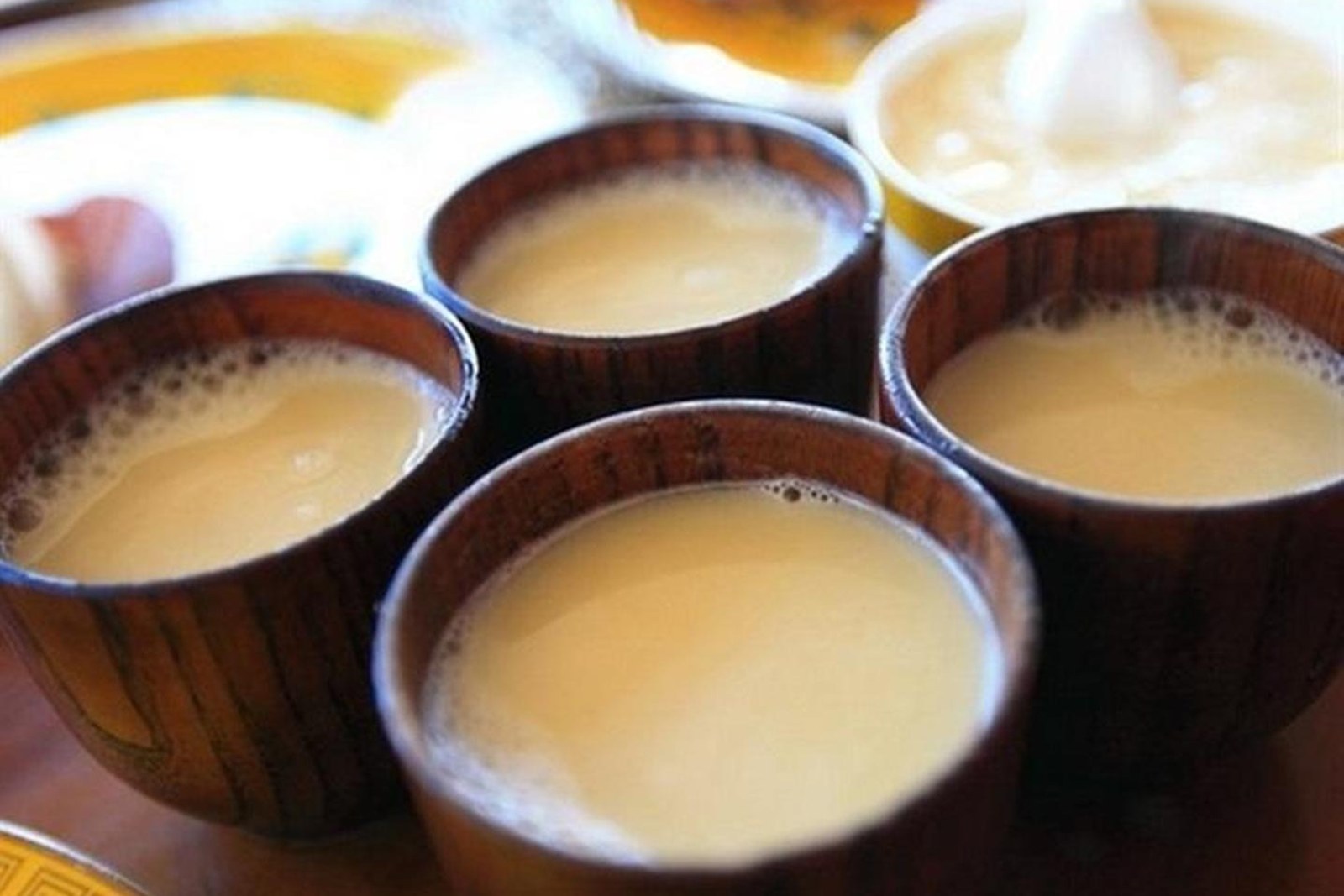
The making is labor turned ceremony. The strong tea base simmers in a pot all day; to serve, the cook pours tea, butter and salt into the tall churn and works the plunger – a rhythmic shhk, shhk from every kitchen at dawn – until the fat emulsifies fine and the tea takes on its creamed sheen. City households now use electric churns; the sound of the wooden plunger is still the sound of a Tibetan morning.
The taste surprises newcomers and converts them. It is neither soup nor tea as a visitor expects: rich, faintly salty, with the roast depth of brick tea and the grassy animal sweetness of yak butter underneath. The etiquette is the point – your host tops up your cup before it empties, you leave a skin of tea to show contentment, and a guest who drains three bowls has paid the household the right compliment.
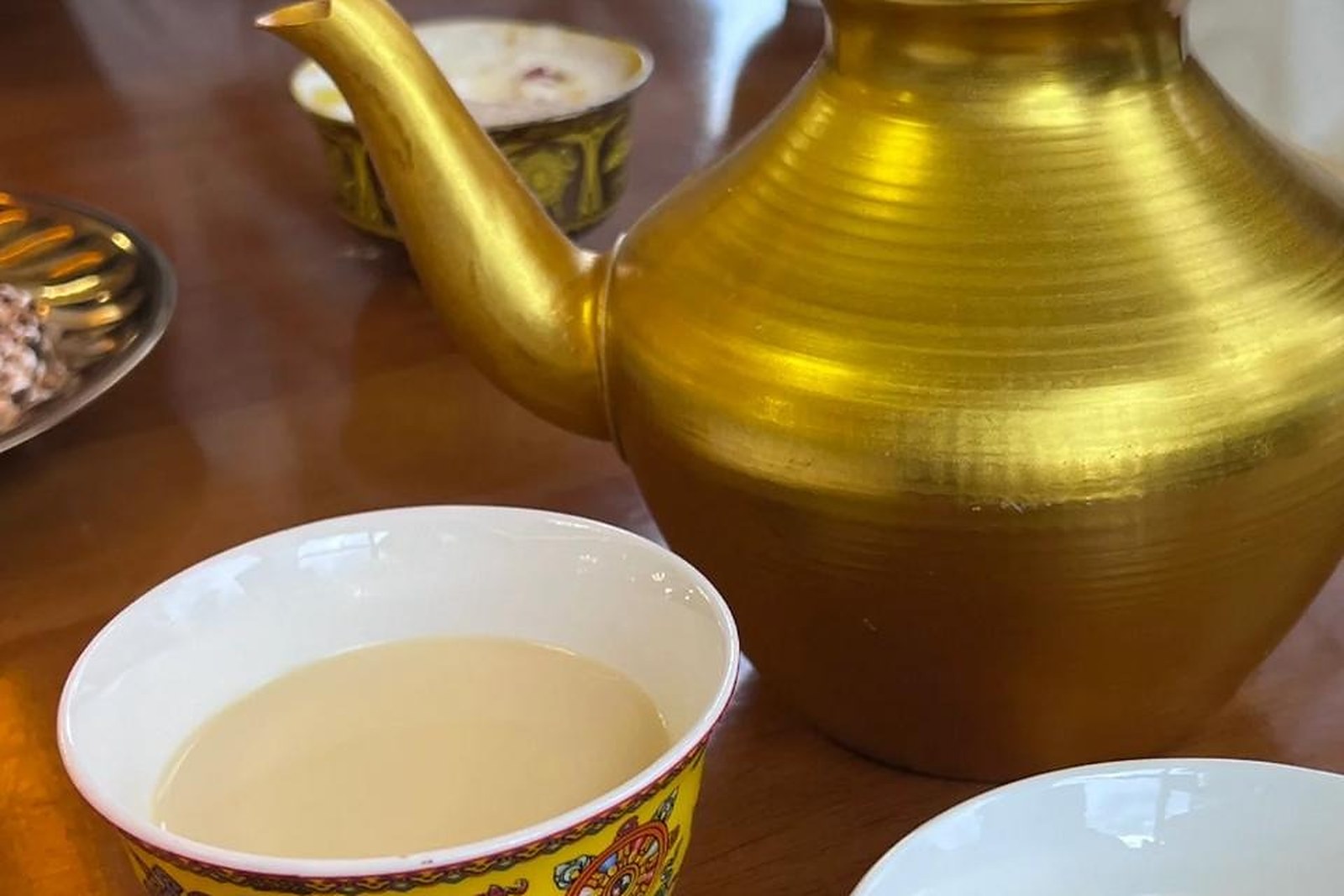
In Lhasa the tea runs everywhere the sweet-tea trade runs – farmhouse tables, teahouse thermoses, monastery rest stops – but the household cup remains the benchmark, churned that morning from the family’s own butter. Visitors who begin with polite sips at breakfast end the week buying their own wooden cup; the plateau adjusts your palate faster than you expect.
The same 西藏自治区拉萨市 Xīzàng Zìzhìqū Lāsà Shì Lhasa holds more flavors worth chasing: 糌粑 zānba the flour it partners, 甜茶 tiánchá the sweet-teahouse answer, 牦牛酸奶 máoniú suānnǎi the set yogurt, or 藏式牦牛肉 zàngshì máoniú ròu the yak pots – four more doors into the same Lhasa table.
Words and Names
酥油茶 sūyóuchá butter tea; 董莫 dǒngmò the tall wooden churn; 酥油 sūyóu yak butter, the churn’s fat; 砖茶 zhuānchá the brick tea base; 打茶 dǎchá the churning itself.
What the Locals Know
The butter is the whole secret – fresh yak butter from the summer pastures churns sweet, old butter turns the bowl rancid, and locals can tell the season from one sip. The plunger rhythm matters: a slow, full-stroke churn emulsifies fine, a lazy one leaves oil floating. And at a farmhouse table the third bowl is the signal you are family – count them as they come. All checked November 2026.
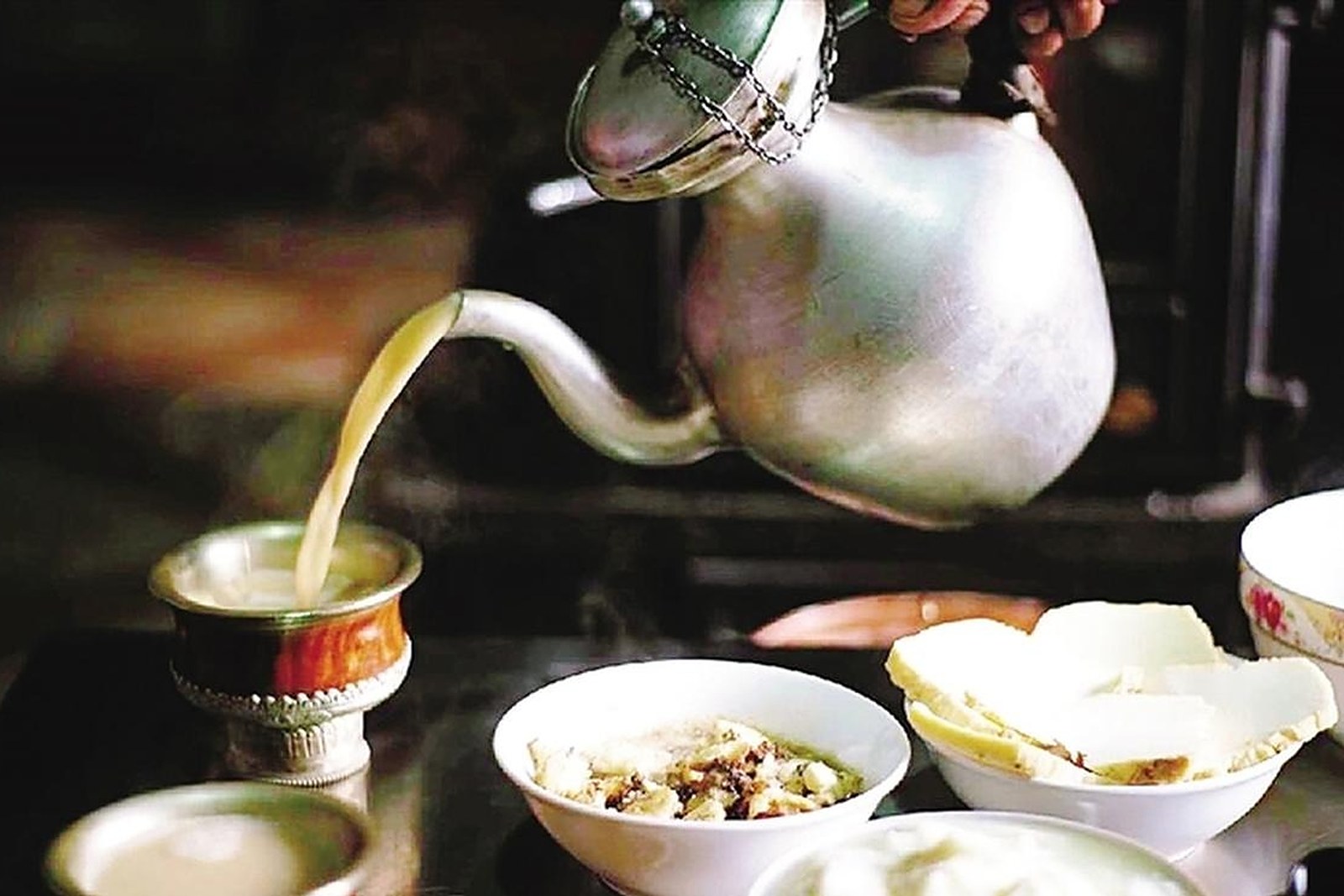
flowcloud would say butter tea is the plateau’s hospitality meter: the cup refills itself, and refusing the fourth refill is the only rude thing a guest can do.
Where to find it: Every teahouse and farmhouse across the city pours it, guesthouses churn their own at dawn, and the market’s butter stalls supply the households that make the benchmark version. All checked November 2026.