
White Gold of the Herds: Drinking Camel Milk in Beitun
大漠驼铃摇乳雪,一杯暖意到心田 Dàmò tuólíng yáo rǔxuě, yībēi nuǎnyì dào xīntián — Camel bells in the great desert shake out milk like snow; one warm cup travels straight to the heart
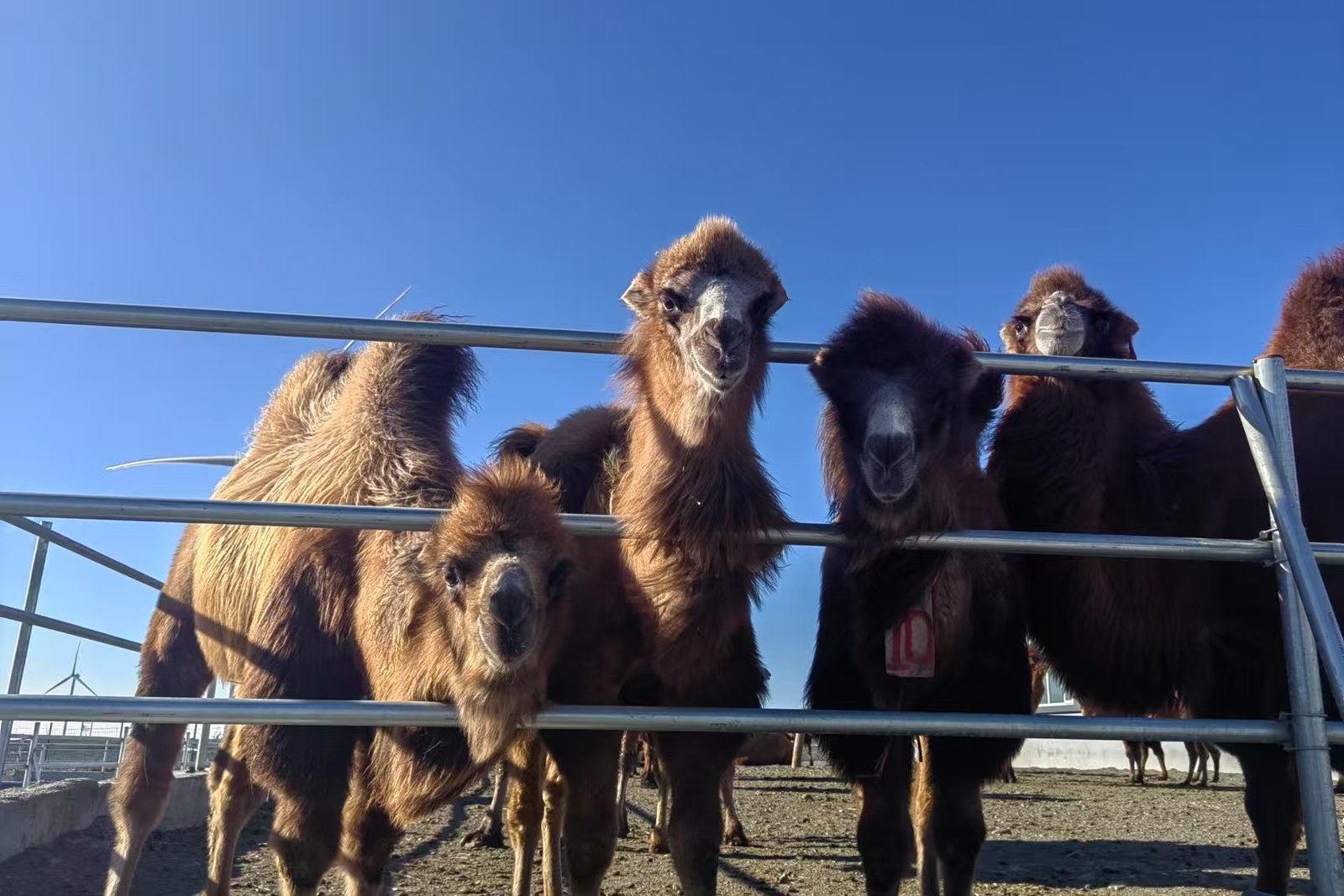
正文:驼奶 Tuónǎi camel milk is the desert edge’s white answer to the grasslands’ dairy – richer, saltier-sweet, and long treasured by the herding families who move their two-humped camels across the basin’s winter pastures. Around 北屯市 Běitún Shì Beitun City the herds graze the shrub steppe where the farms give way to sand, and the milk that comes back to town is treated as tonic more than drink: a morning cup warmed, a nightcap with honey, the welcome bowl set before guests in the felt tents of the desert-edge camps.
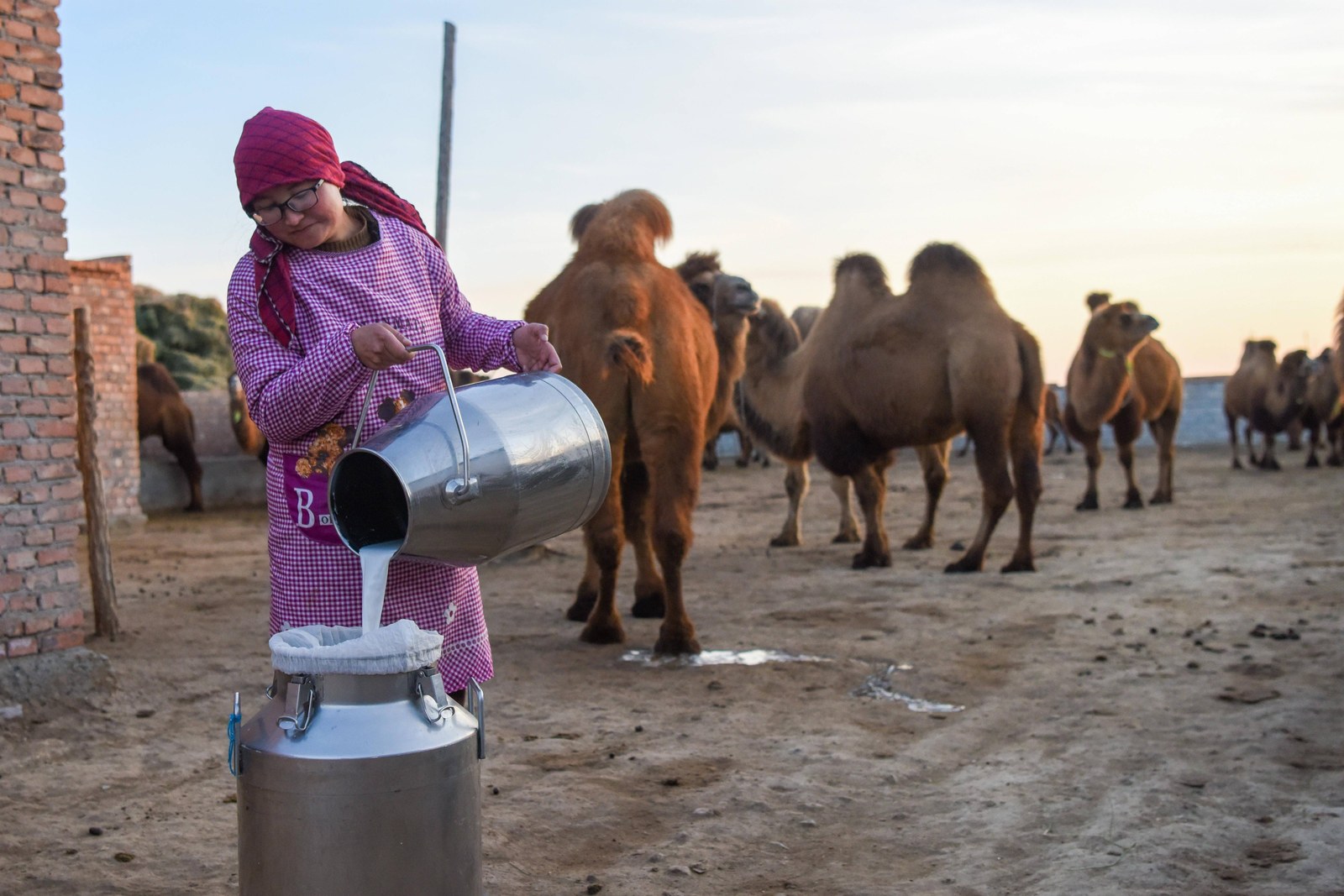
The taste is the first lesson. Camel milk runs thicker than cow’s milk, with a whisper of salt and a long, faintly sweet finish that lingers at the back of the tongue; fresh from the herd, warmed slowly and never boiled hard, it is one of the distinctive flavors of the northern frontier. Locals rate it as strength-giving – the herders’ own breakfast before a cold ride – and the modern city has built a small industry on it: fresh cups at breakfast stalls, fermented bowls, and powdered tins that carry the taste down the motorway.
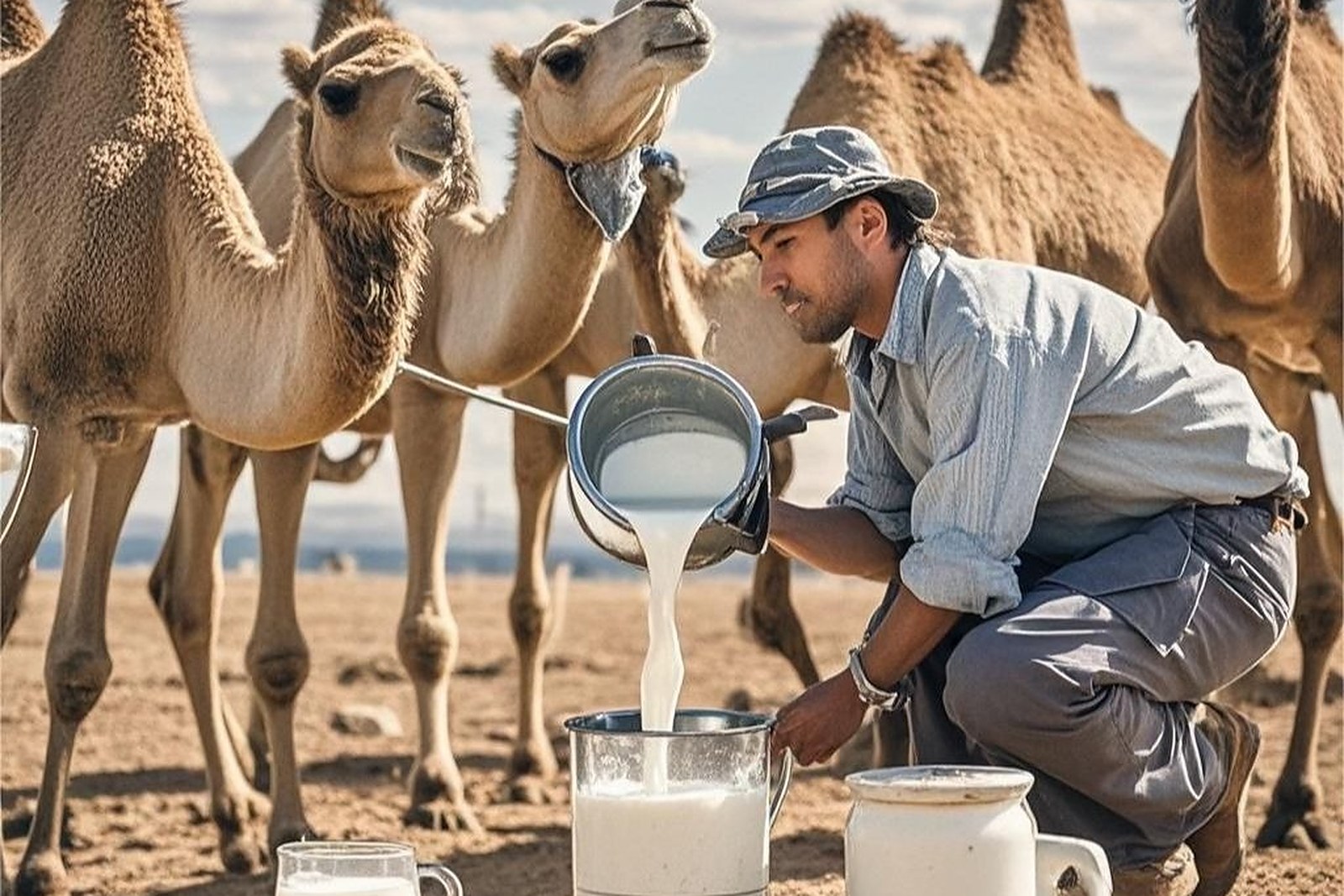
The herding side is worth knowing. Camel cows give milk in modest volumes compared to dairy cattle, and only for a short window after calving – which is why the milk is treasured, rationed to guests, and priced like the special thing it is. The herds are milked morning and evening at the camps, the yield carried in churns to the town dairies, and the best cups in Beitun trace back to specific herders whose camels graze the same winter pastures their grandmothers used.
Drink it the local ways. Fresh and warm is the classic – a small glass, slowly sipped, at breakfast or before bed; salted and buttered it becomes the herders’ winter cup; and soured thick it dresses the noodles and dumplings of the grassland table. The breakfast shops near the market pour it from steel urns through the cold months, and the desert-edge camps serve it in bowls alongside the fried dough knots – a combination that has launched a thousand cold mornings safely.
Beyond the milk, the same 北屯市 Běitún Shì Beitun City holds other flavors: 额河鱼宴 É Hé Yúyàn the Irtysh fish feast, 风干狗鱼 Fēnggān Gǒuyú air-dried pike for the larder, 胡尔达克 Hú’ěrdákè the Kazakh meat-and-dough skillet, and 沙棘汁 Shājí Zhī sea-buckthorn juice for the sour-gold finish – four more doors into the same 北屯市 Běitún Shì Beitun City. With the milk settled, our Beitun travel map fills the day.
The tradition deserves its due. Camels carried the frontier’s salt, grain and felt for centuries before the farms came, and the milk is the old economy’s living wage – the animal that asks only sand and thorn scrub and returns warmth in a cup. Beitun’s herders keep that trade with the same quiet pride they keep their herds, and the city’s breakfast queues are the proof it still pays.
Practicalities first. Fresh cups appear at breakfast stalls and dairy shops through the cold months, powdered tins travel well for gifts, and the desert-edge camps pour the freshest bowls to guests who call ahead. The taste is richer than cow’s milk – start with a small glass and let it grow on you, as it grows on everyone.
Words and Names
What the Locals Know
flowcloud would say camel milk is the desert’s quiet luxury: a thicker, longer finish than anything from the cow, poured from urns in a town the camels built – warmth with a bell of salt at the end. All checked November 2026.
Where to find it: Breakfast shops and dairy stalls around the market of 北屯市 Běitún Shì Beitun City pour fresh camel milk warm from urns through the cold months; take the small glass plain, and buy the powdered tin for the road. All checked November 2026.