
Cart Noodles — the Bowl You Assemble Yourself
木轮走鬼声犹在,一箸配菜自己挑 Mùlún zǒuguǐ shēng yóu zài, yīzhù pèicài zìjǐ tiāo – The wooden wheels and the cry of “scatter” still echo; the toppings you pick yourself with one pair of chopsticks
车仔面 Chēzǎimiàn cart noodles are Hong Kong’s choose-it-yourself bowl – a format born in the 1950s when vendors pushed wooden carts through the streets, ladling noodles by the topping and scattering at the first sight of the police, wheels rattling down the alleys. The carts are long gone, but the format they invented became the city’s standard dialect for a quick bowl, and 湾仔区 Wānzǎi Qū Wan Chai’s noodle counters run it all day: pick a noodle, pick a broth, then build the bowl topping by topping from the braised pot at the counter’s edge.
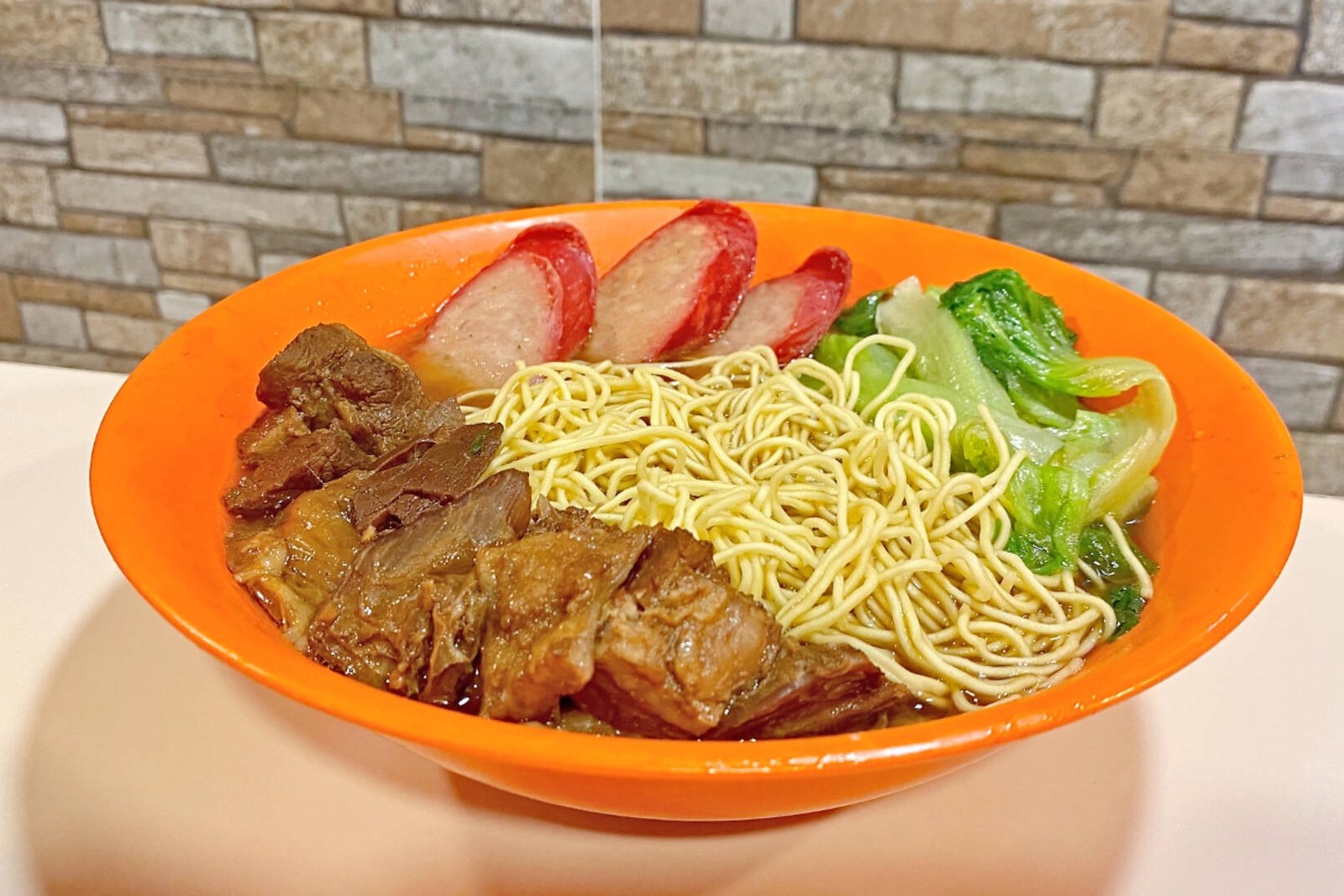
The grammar is simple and ruthless. The noodle comes first – thick wheat, thin alkaline 油面 yóumiàn oil noodles, rice ho fun – then the broth, then the toppings at so much per piece: braised beef, pig’s blood curd, stewed daikon, cuttlefish, fish balls, seaweed, a stewed egg, chicken wings braised dark. The economics are the point – a base price plus each topping, so the bowl is exactly as ambitious as the appetite and budget behind it, and no two regulars’ bowls are ever the same.
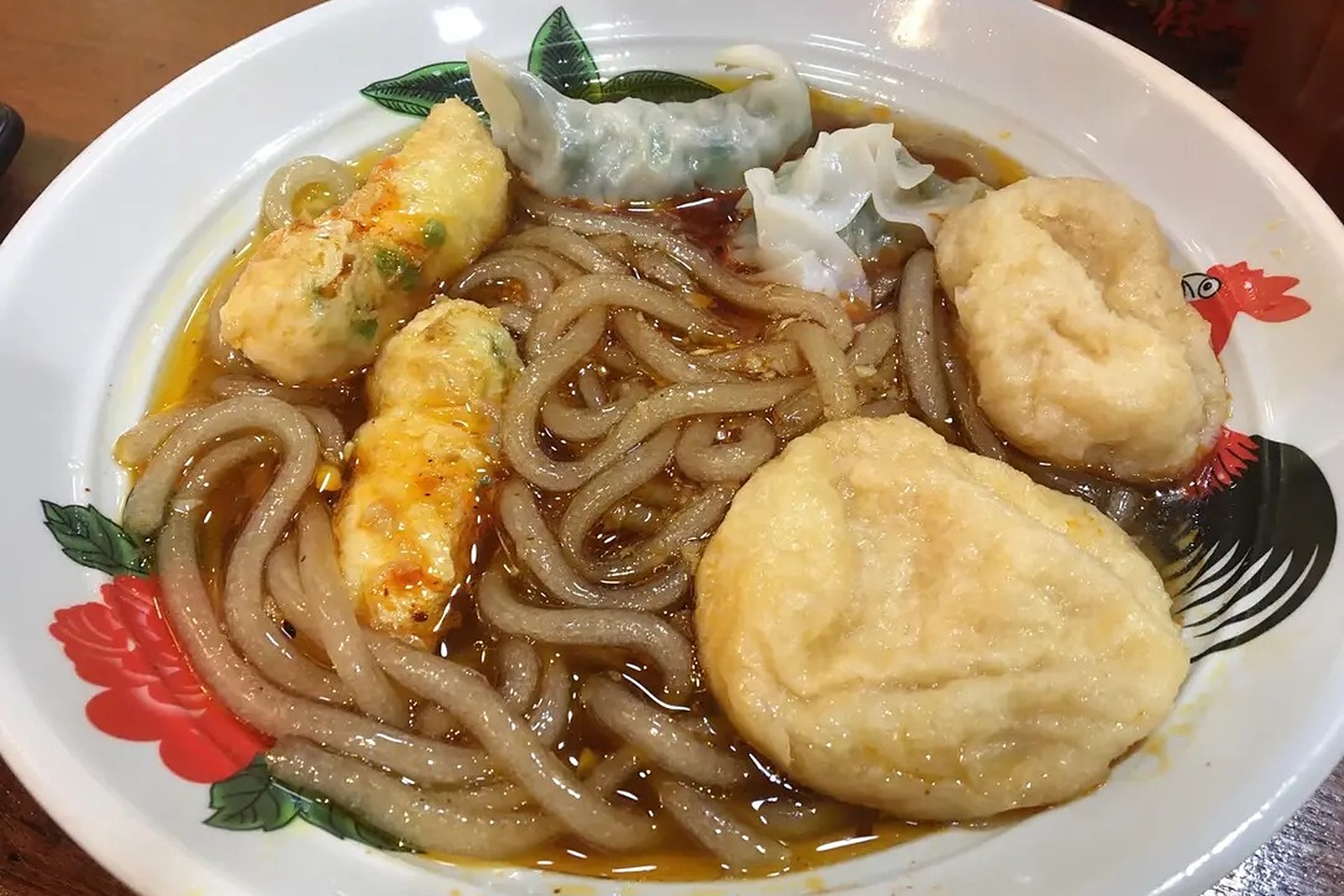
What separates a good shop from a food-court one is the braised pot: the master broth that has simmered years of daikon and beef into itself, so every topping arrives pre-seasoned by the pot it lives in. The quiet test is the daikon – stewed proper it is amber, translucent at the edge, sweet through; boiled lazy it is a wet radish. The counters that pass that test keep their queues, and the district’s oldest noodle shops keep decades of pot behind their bland storefronts.
Order by pointing at the topping trays or reciting your list to the counter, take the tray to the shared table, and eat fast – the noodles drink broth and swell, and the bowl is best inside ten minutes. Lunch crowds run the room; late morning and mid-afternoon are the relaxed hours, when the counter aunties grade your Cantonese and add the stewed egg unasked.
Words and Names
车仔面 Chēzǎimiàn cart noodles, the choose-your-own bowl; 配菜 pèicài the toppings, priced piece by piece; 牛腩 niúnǎn braised beef brisket, the premium topping; 萝卜 luóbo the stewed daikon, the quiet test of the pot; 走鬼 zǒuguǐ literally “scatter, ghosts” – the old street cry when the police came. The same 湾仔区 Wānzǎi Qū Wan Chai holds more flavors worth chasing: 避风塘炒蟹 Bìfēngtáng chǎoxiè the garlic-storm crab, 菠萝油 Bōluóyóu the butter-stuffed bun, 鸡蛋仔 Jīdànzǎi the honeycomb street waffle, or 港式茶餐厅 Gǎngshì Chácāntīng the tea-restaurant institution itself – four more doors into the same district table.
What the Locals Know
Locals order the toppings in an order worth copying: daikon first so its sweetness seasons the bowl, meats second, the egg last so it stays intact. And they know the best counter in any block is the one where the pot steams loudest – volume of steam is decades of broth. All checked November 2026.
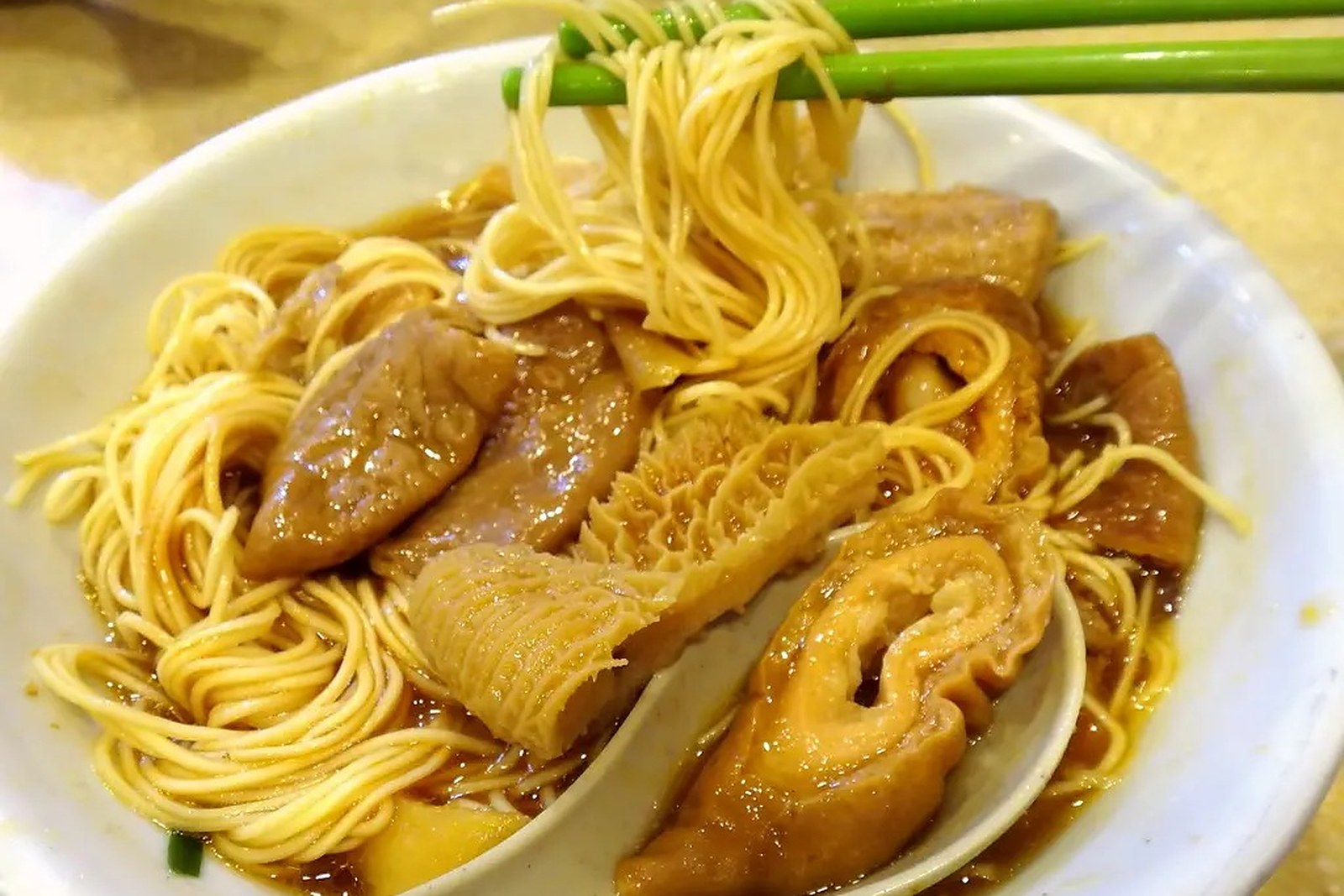
flowcloud would say cart noodles are the city’s breakfast democracy – every topping a vote, every bowl a different result, and the wooden cart’s scatter-cry still the fastest way to clear a table.
Where to find it: The district’s noodle counters run the format all day – look for the topping trays by the window and the braised pot at the counter; late morning and mid-afternoon are the calm hours. All checked November 2026.