
Tea, Dutar and Sunlight: An Afternoon at Kashgar’s Hundred-Year Teahouse
木栏茶一碗,琴声落满楼 Mùlán chá yī wǎn, qínshēng luò mǎn lóu – One bowl of tea on the wooden balcony; the music fills the whole floor
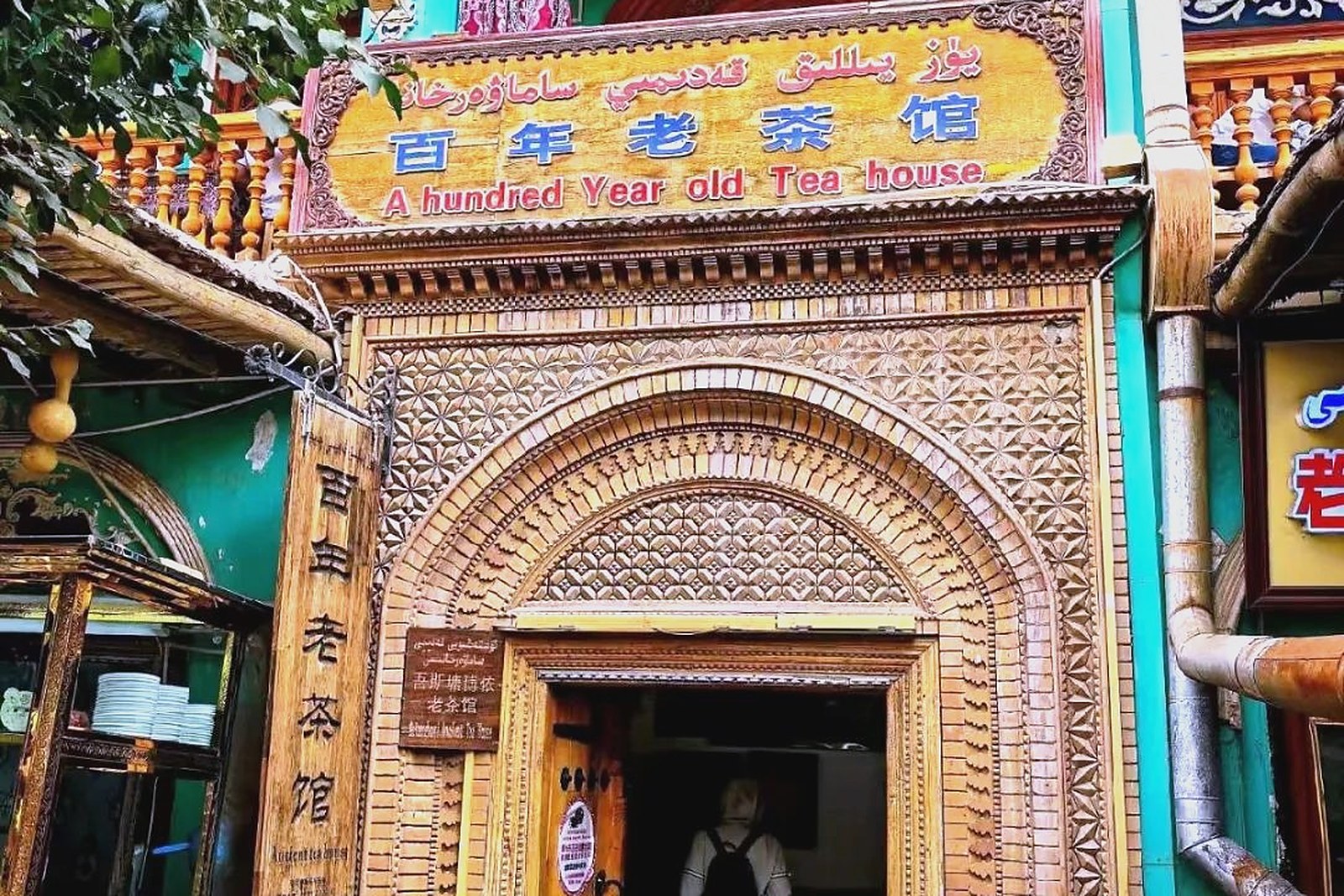
正文:百年老茶馆 Bǎinián Lǎocháguǎn the century-old teahouse faces the Id Kah square from across the street – a wooden balcony room above the pavement where 喀什地区 Kāshí Dìqū Kashgar Prefecture has taken its tea for as long as living memory runs. The room is famous and still, improbably, entirely local: elders arrive after morning prayers with their own bowls, the dutar player sets up by the window, and the brick tea flows from a samovar that has outlived every bank and bureau on the square. Tourists come for the photograph; the regulars barely notice them, which is exactly why the photograph works.
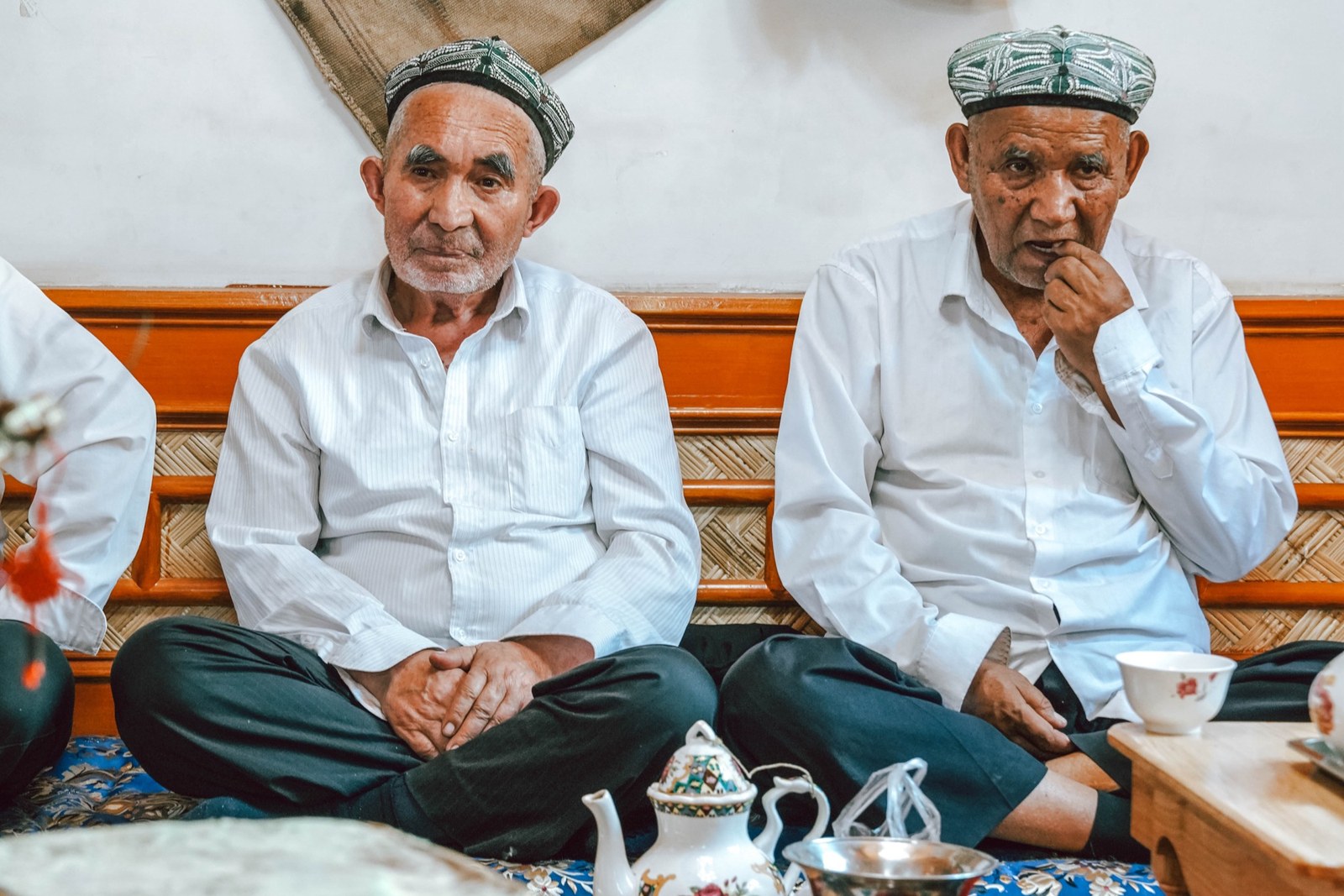
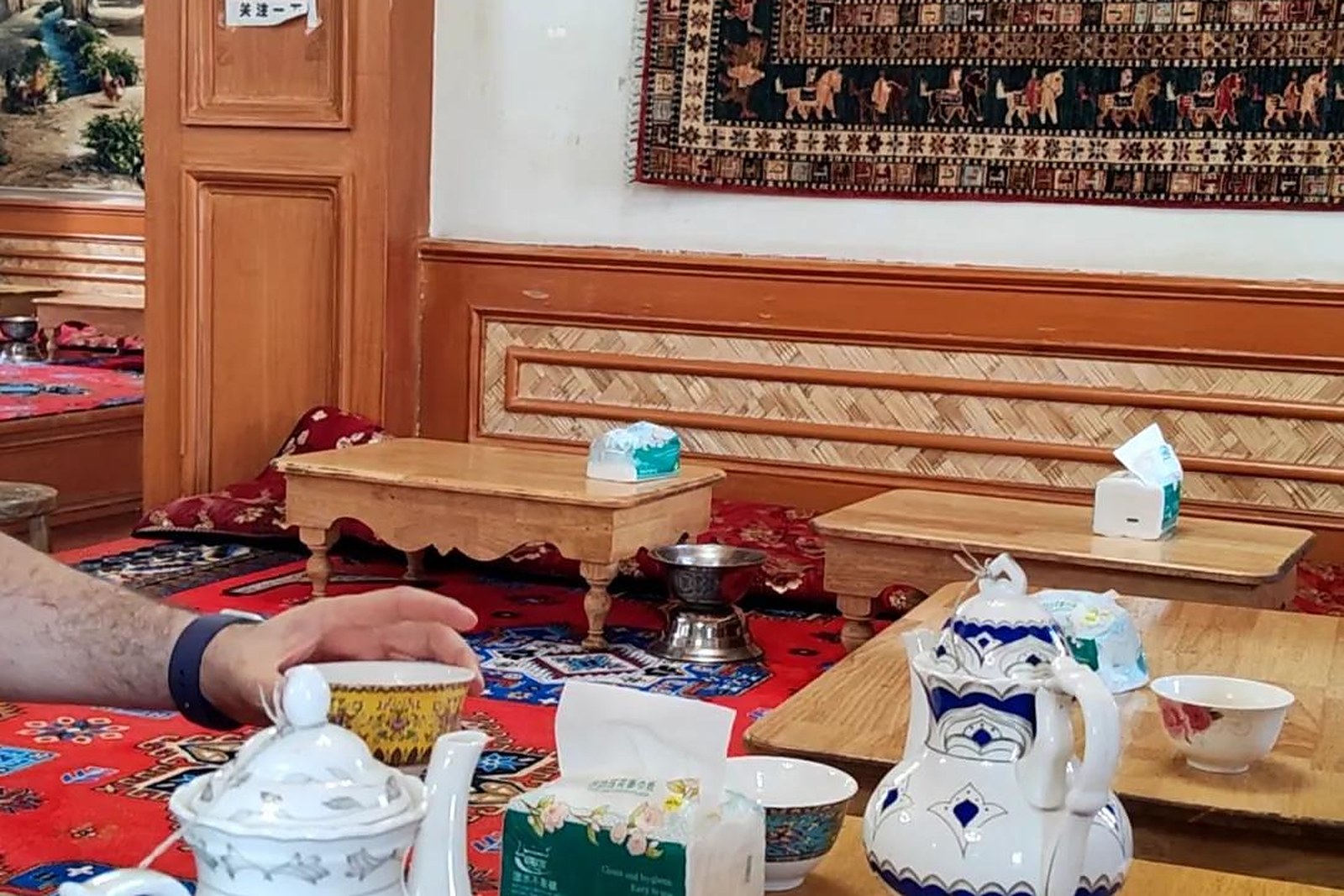
The menu is short and perfect. Brick tea by the bowl, the milky tea for the winter months, medicinal brews with rose, saffron or the mountain herbs that old men prescribe each other across the table, and – at certain counters – the strong sweetened tea with naan for a working breakfast. Prices are old-world. Bring a book or don’t: the entertainment is the room itself, and the conversation runs in Uyghur, Uzbek, gestures and laughter, with visitors folded in as welcome extras.
The balcony is the room’s crown. Floor cushions line the rail, the square spreads below, and the afternoon light through the wooden lattice cuts the floor into gold stripes. The best hours run from just after lunch to four, when the sun reaches the balcony, the dutar starts up, and the room’s rhythm shifts from coffee-shop murmur to full afternoon session – songs, spoon-percussion on the tea saucers, and the impromptu duet that the regulars score by nodding.
Beyond the balcony rail, the same 喀什地区 Kāshí Dìqū Kashgar Prefecture holds other flavors: 烤包子 Kǎobāozi samsa, 鸽子汤 Gēzitāng pigeon soup, 缸子肉 Gāngziròu mug-stewed lamb, and 喀什石榴 Kāshí Shíliu Kashgar pomegranate – four more doors into the same 喀什地区 Kāshí Dìqū Kashgar Prefecture. With the tea settled, our Kashgar travel map fills the day.
The teahouse’s history reads in its fittings. The carved ceiling beams are original; the cupboards hold bowls individual customers have used for decades, stored between visits like guitar cases; and the staircase – steep, worn, polished – has carried four generations up to the same benches. The building has been repaired many times and modernised never: the tea still brews on the samovar, the water still carries from the urn by hand, and the management’s conservatism is the point. Nothing here is themed. Everything here is true.
Visitors are absorbed without ceremony. Point at what the next table has if the menu defeats you; accept the offered taste from a neighbour when it comes, because it will; and photograph the musicians after asking, which earns a pose rather than a scowl. The teahouse welcomes children, tolerates sketchers, and quietly enforces the only rule that matters – nobody hurries anybody, and the tea never runs out.
Practicalities: the teahouse opens through the day from morning to early evening, takes cash and local payment apps, and fills tightest after Friday prayers. The balcony seats go first – arrive before one to hold one – and the downstairs benches by the samovar have their own conviviality if the stairs are full. Pair it with the mosque square and the old town lanes around it, and the afternoon plans itself.
An afternoon here is the city’s culture in miniature: tea as time-keeping, music as conversation, a room where the generations still overlap. Travellers who complain there is nothing to do at the teahouse have misread the establishment – the tea is not the activity; the tea is the permission to stay.
Words and Names
What the Locals Know
flowcloud would say the teahouse is Kashgar’s living room upstairs: a bowl of brick tea, a dutar by the window, and four generations of regulars who never once checked the time – the city’s best afternoons are served by the samovar. All checked November 2026.
Where to find it: The century teahouse sits on the second floor directly opposite the Id Kah square; climb the worn staircase before one for balcony seats, order the brick tea or the rose brew, and let the dutar set the schedule. All checked November 2026.