
昌化镇 Chānghuà Zhèn and 海尾镇 Hǎiwěi Zhèn hold the two ends of 昌江黎族自治县’s sea. The county’s coast runs 65.97 kilometres – the figure the county fisheries office’s own 文韬立 Wén Tāolì gave national radio in September 2023 – from 新港村 Xīngǎng Cūn in 海尾镇 at the mouth of the 珠碧江 Zhūbì Jiāng in the north to 咸田村 Xiántián Cūn in 昌化镇 at the mouth of the 昌化江 Chānghuà Jiāng in the south, and four working ports sit on it: 昌化港, 新港, 海尾港 and 沙渔塘港. The year has a hinge: a summer closed season of three and a half months on the South China Sea, lifting in mid-August, after which the ports go back to work all at once.
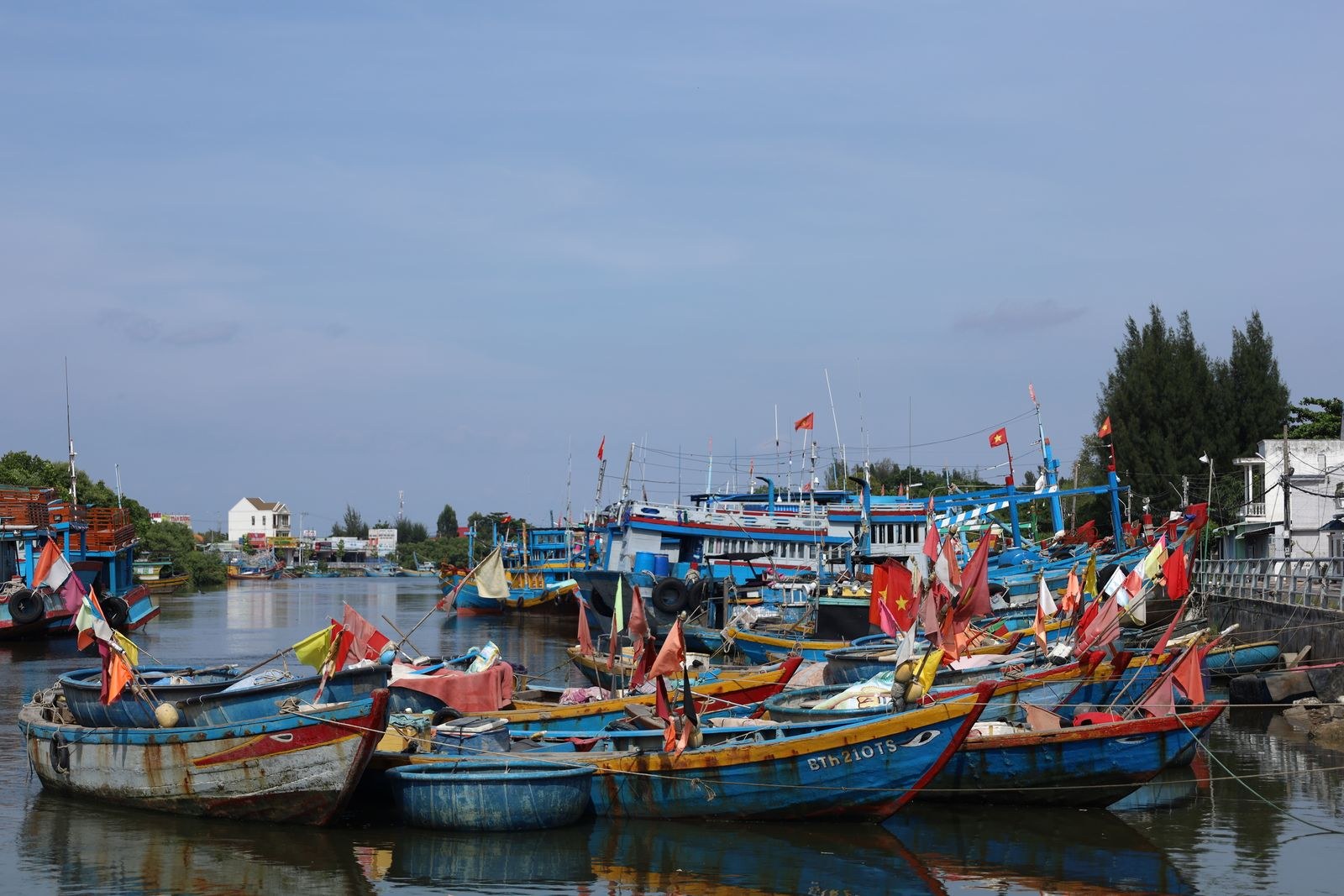
The hinge has a date. On the morning of 20 August 2025 the first nets of the season came back to the 海尾 wharf and more than a hundred boats landed behind them: sardines, prawns, a local sea carp, 兰花蟹 lánhuā xiè flower crabs, scallops, and small sharks in the mix. The community committee’s 张照福 Zhāng Zhàofú walked the landing and the buyer 桂柯 Guì Kē priced it; locals bought prawns to eat the county way, with 糟粕醋 zāopòcù, the sour fermented-rice vinegar broth Hainan knows. For weeks after the opening the early morning is the landing peak, and the wharf auction runs straight off the boats.
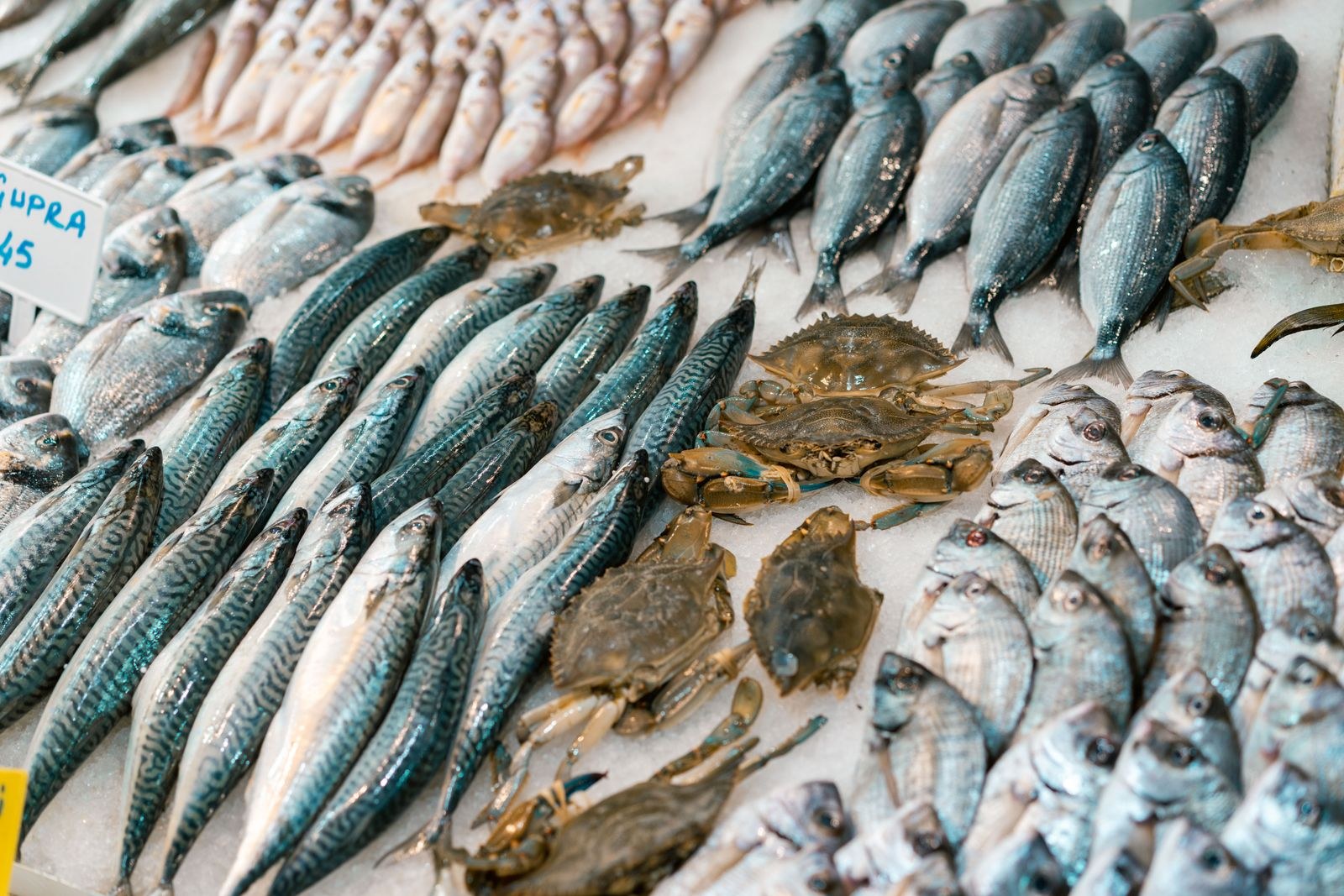
What the ports cook is fixed by the catch. The county’s tourism bureau lists the house dishes as 清蒸蟹膏 qīngzhēng xiègāo, crab roe steamed plain, 椒盐皮皮虾 jiāoyán pípíxiā, salt-and-pepper mantis shrimp, and 干煎马鲛鱼 gānjiān mǎjiāo yú, pan-dried Spanish mackerel; more than twenty restaurants and processing shops across 昌化镇 and 海尾镇 run a buy-it-here, cook-it-here trade. The opening-season guide’s register names the addresses: the seafood shop row on 昌盛路 Chāngshèng Lù in 昌化镇 – 昌化海鲜店, 叶姐海鲜, 大众海鲜酒楼, 迎海海鲜楼 among them – the 渔人码头 on the X700 county road about 120 metres west of the 海尾 town government, and 新港’s 生生海鲜酒楼. One famous crab does not belong: 和乐蟹 is 万宁 Wǎnníng’s, and no Changjiang catch list carries it.
The sea beyond the ports is farmed as well as fished. The deep-water golden-pomfret bases sit about ten nautical miles offshore, in water that holds 20 to 30 degrees year-round and stays clean; the county’s mariculture concentrates in 海尾镇 and 昌化镇. 海尾镇’s 翔泰 fishery works circular gravity cages, and one cage, lifted at a single haul, brings in close to 150,000 斤 jīn of golden pomfret – about seventy-five tonnes. The farm’s manager 林禄壮 Lín Lùzhuàng put the yearly line at a million jin shipped. After a harvest the cages come up for maintenance and the seabed rests, restocking comes around April, and September is the growth peak and the main lift; the fish go into ice-water tanks on the boat and on to the factory for deep processing and export.
The seed side has its own numbers. The 民本 marine-germplasm institute’s black-tiger prawn fry broke a million on the first export shipment to Malaysia, and the county has compiled the sea-area assessment and environmental review for 867 hectares of shellfish farming, building up 白蝶贝 mother-of-pearl oysters and 黄金蚝 golden oysters as the specialty lines. In 2025 the first cages of the season were lifted by a different operator, 海南昌江元道养殖有限公司, which is how the accounts keep the 2023 profile and the 2025 opening-season reports distinct.
Words and Names
伏季休渔 fújì xiūyú is the summer closed season, three and a half months on the South China Sea, and 开渔 kāiyú is the opening it ends in. 金鲳鱼 jīnchāng yú is the golden pomfret of the offshore cages; 兰花蟹, the flower crab, is the far-sea swimming crab of the local lists; 马鲛鱼 mǎjiāo yú is the Spanish mackerel, 皮皮虾 pípíxiā the mantis shrimp, 扇贝 the scallop. 糟粕醋 zāopòcù is the sour fermented-rice vinegar broth the island eats with everything; 斤 jīn is the market half-kilo every one of these figures is counted in, so 150,000 斤 is about seventy-five tonnes.
What the Locals Know
Two clocks run the table. The wild one is the state’s: a closed season of about 105 days, then the opening, the first nets, the wharf auction, and a processing shop putting the catch on a table within the half hour. The farmed one is the cage’s: restock around April, grow through the summer, lift from September, cages up and seabed resting in between. 昌化港 stands beside the 峻灵王庙 Jùnlíngwáng Miào, the old belief-centre of the river-mouth villages, and the 昌化江 is Hainan’s second river; the mixing of fresh and salt water at the mouth is the local explanation for why the fish taste cleaner – a local claim, carried by no literature, and printed here as exactly that.
The opening season is now a product. On 17 August 2025 the county tourism bureau launched the season’s programme: 海腾渔业 runs boat sightseeing, sea angling and jet skis; 沙渔塘’s mushroom-house landmark draws the reality-show crowd; and the coastal route strings together the island’s No. 7 scenic road, the 海尾 national wetland park, 峻灵王庙, 棋子湾 Qízi Wān and the grassland at 咸田村. The food part of the route is the morning market and the buy-and-cook shops, which is where the day’s catch meets the visitor.
The numbers each carry their year. The 65.97-kilometre coast is the 2023 official figure; the 150,000-jin cage haul is the 2023 翔泰 account, with a different company, 元道, making the 2025 first lift; the hundred boats and the catch list are the morning of 20 August 2025 – one day’s landing, not a standing inventory. No authoritative retail price for any of it has been published, not for the pomfret and not for the crabs, so the text prints none; the morning wharf is the price discovery, and it moves with the weather.
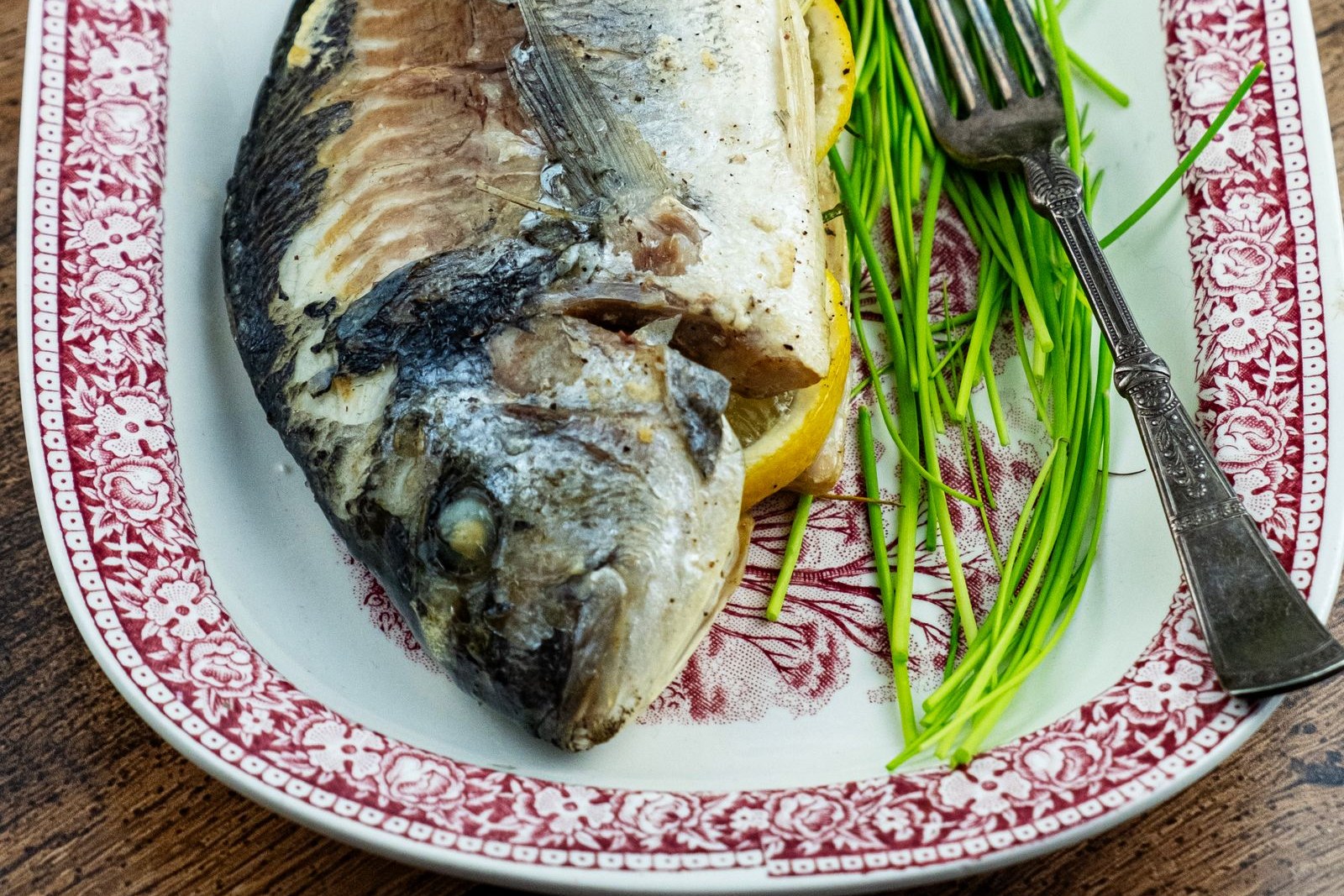
flowcloud would say that the west coast runs on two clocks – the state’s closed season and the cage’s nine months – and that a county with 65.97 kilometres of sea learns to eat by both of them.
Where to find it: the 昌盛路 Chāngshèng Lù shop row in 昌化镇 Chānghuà Zhèn, where 叶姐海鲜 and the others cook what you buy; the 渔人码头 on the X700 at 海尾镇 Hǎiwěi Zhèn, about 120 metres west of the town government, and 新港’s 生生海鲜酒楼 behind the north port; the morning landings at the 海尾 wharf in the weeks after the mid-August opening, when the first nets are auctioned off the boats; and the county’s opening-season programme of boat sightseeing and sea angling run by 海腾渔业. Go early, buy the prawns, and ask for 糟粕醋 on the side.