
Changjiang Mango and the Orchards of the Island’s Dry West
昌江芒果 Chāngjiāng mángguǒ grows where Hainan is driest: 昌江黎族自治县 Chāngjiāng Lí Zú Zìzhì Xiàn, Changjiang Li Autonomous County, sits on the island’s west coast in the rain shadow of the central mountains, with the dry heat and long light that mango country calls the golden climate belt for sugar, and the orchards run through every one of its eight towns, from the county seat 石碌镇 Shílù Zhèn to the canyon Li township of 王下乡 Wángxià Xiāng. It is the county’s headlining crop and the only Hainan mango registered twice as a geographical indication; the county is long called 中国芒果之乡, China’s home of the mango, and no source says when the title was conferred, so this text carries it as reputation.
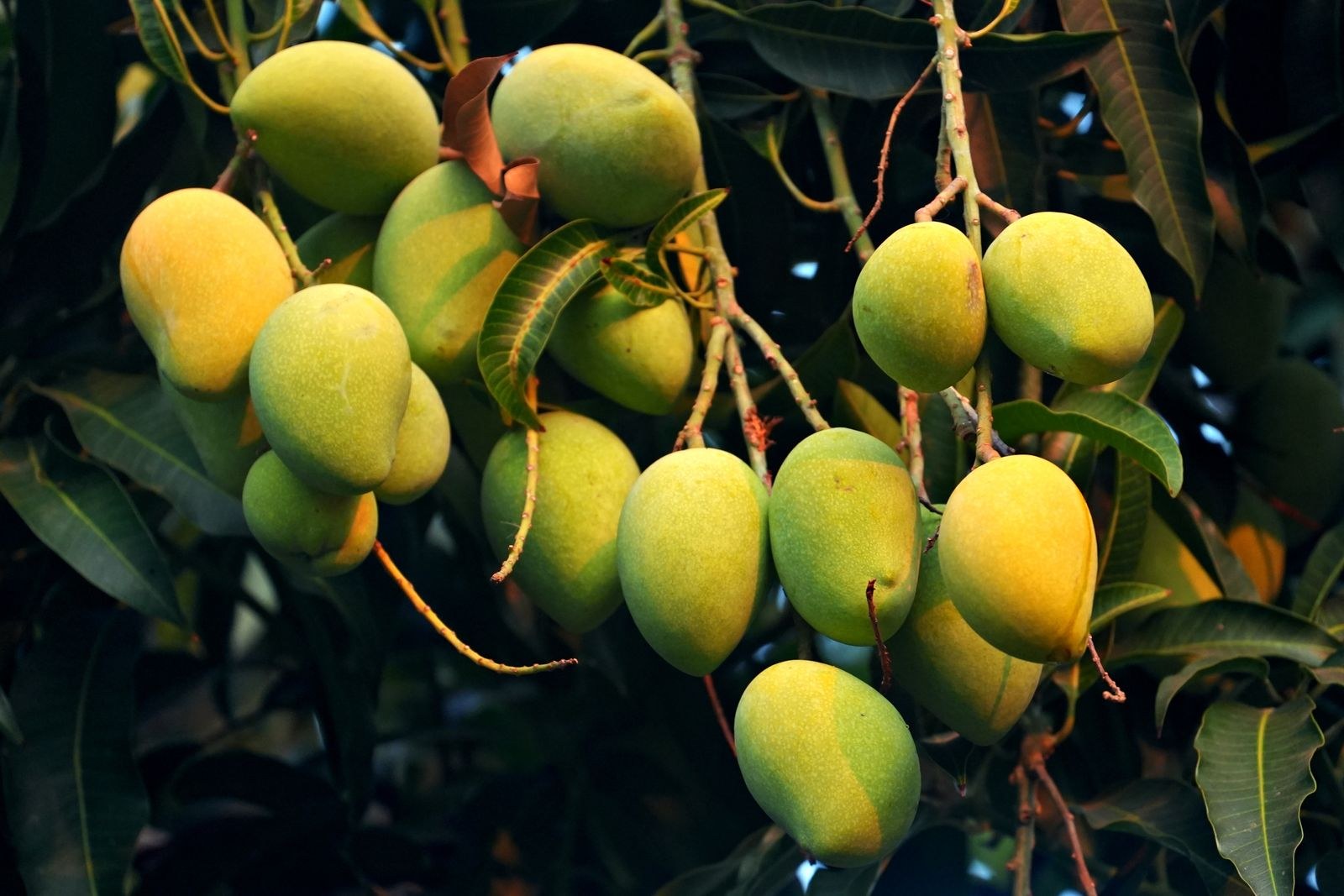
The paperwork is where to start, because it comes twice from two offices. On 12 February 2018 the former Ministry of Agriculture registered 昌江芒果 as a national agricultural product of geographical indication, the 农产品地理标志 nóngchǎnpǐn dìlǐ biāozhì line; on 9 June 2025 the National Intellectual Property Administration granted a second protection as a 地理标志产品 dìlǐ biāozhì chǎnpǐn, a geographical-indication product. The registers are kept by different bureaucracies and mean different things, and one fruit holding both is unusual enough to be the point. The protected territory is the whole county – the eight towns and the two state farms, 红田 and 红林 – bounded at east longitude 108°38′ to 109°17′ and north latitude 18°53′ to 19°30′.
The registration carries a growing specification. Orchards stand inside protective forest belts, and one plot carries one variety; trees are set 3 to 4 metres apart in the row and 5 to 6 between rows, and ground steeper than twenty degrees is ruled out. Seedlings must test at 97 per cent varietal purity or better, the graft sits no more than 30 centimetres above the ground, and the rootstock joint measures at least 0.8 centimetres across.
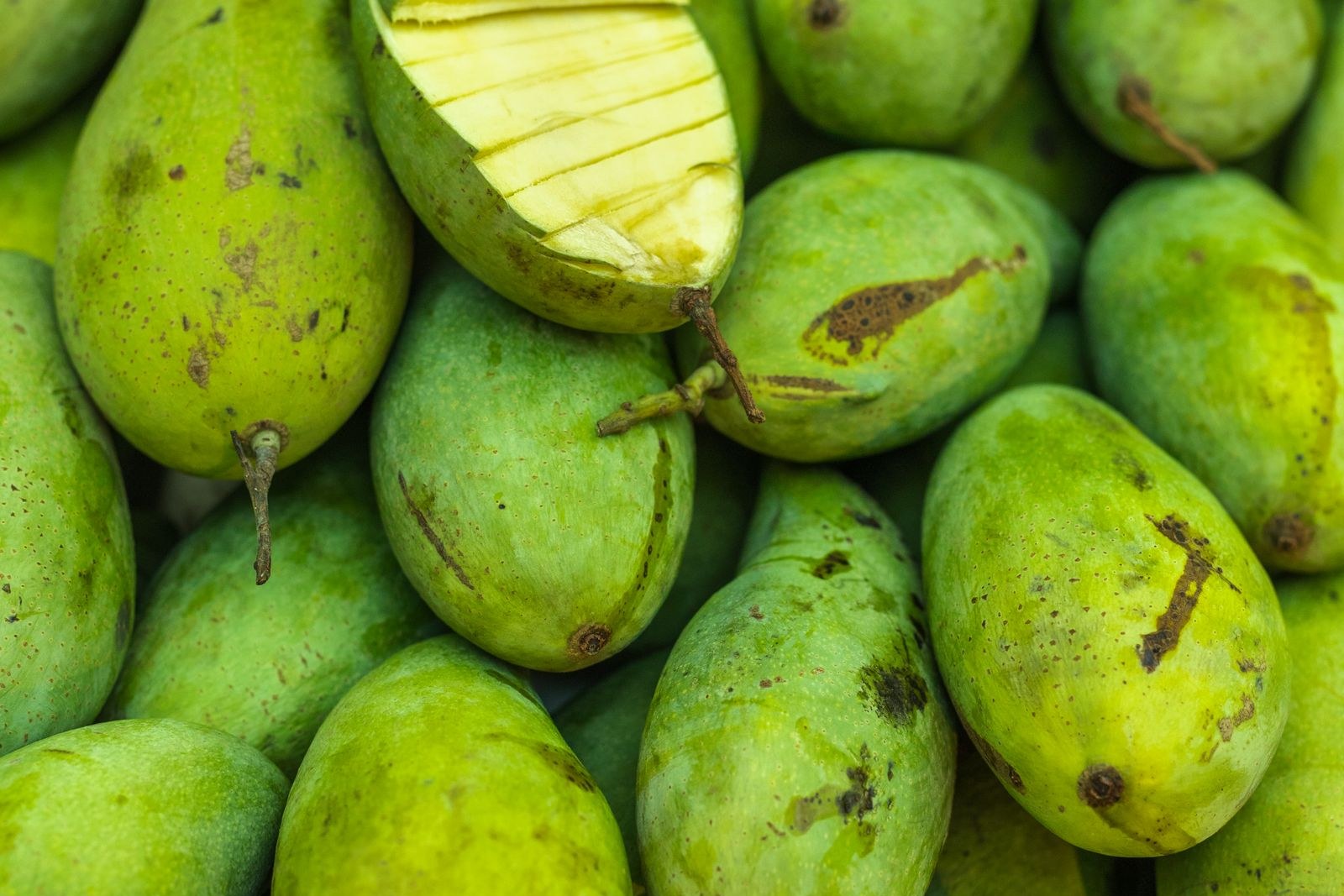
The history the county tells runs long. Official accounts plant mango growing here in the Tang and Song, and at a county launch in April 2026 the agriculture bureau’s deputy director 高立敏 Gāo Lǐmǐn went further, calling Changjiang the native origin and core seed source of the Hainan mango – a platform claim, quoted as one. Documentable is more recent: in the late 1970s the management bureau of the 石碌 reservoir brought in improved varieties; in 1995 the county adopted the strategy it wrote as 科技兴芒、芒果强农, mango through science and mango for strong farming; in May 1996 it held the first 昌江芒果节; and in 2011 came another round of new varieties.
The numbers travel in two published sets and must not be merged. The county’s own May 2022 account put the orchards at 38,000 亩 mǔ, with 台农 Táinóng, 红玉 Hóngyù, 金煌 Jīnhuáng and 贵妃 Guìfēi leading, an expected 26,000 tonnes and a value near 150 million yuan. The provincial agriculture department in July 2025 and the county again in April 2026 give the newer line: 47,000 mu planted, a little over 22,000 tonnes a year, more than twenty varieties. Older encyclopaedia entries carry much larger figures for 2016 and 2017, far outside both series; the material reads them as a different and unverifiable statistical basis and advises leaving them unused, so they are named here and not quoted. Missing entirely is a retail price: farm-gate numbers exist below, but no authoritative shop price for a Changjiang mango has been published.
Words and Names
昌江芒果 Chāngjiāng mángguǒ is the fruit and its registered name, and 芒果节 mángguǒ jié is the festival. The lead varieties: 台农 Táinóng Tainong, the small sharp-sweet workhorse; 红玉 Hóngyù, Red Jade; 金煌 Jīnhuáng, the big golden Jinhuang; and 贵妃 Guìfēi, the Imperial Concubine. 亩 mǔ is a field unit of about 667 square metres and 斤 jīn a market half-kilo. The two registers keep their names apart – 农产品地理标志 is the agriculture ministry’s agricultural-product line, 地理标志产品 the intellectual-property office’s product line – and the county holds one of each for this single fruit.
What the Locals Know
Two growers show how the county actually farms it. In 乌烈镇 the grower 梁明章 Liáng Míngzhāng runs 300 mu, and in 2024 a hundred of them became the core demonstration plot for the county’s programme of cutting pesticide and fertiliser use, where the agronomist 林先山 Lín Xiānshān pushed sticky boards against pests and drip lines that fertilise with the water. His fruit sells to Beijing, Shandong, Ningxia, Guangdong and Guangxi, peak harvest days take seventy to eighty hands, and in 2025 a trial lot of 10,000 斤 went off to Russia. In 七叉镇 the 华超 company farms about 800 mu and picks about a million 斤 a year off the same three varieties, and in 2022 its buyers offered 1.5 to 4 yuan a 斤 at the farm gate. 文成忠 Wén Chéngzhōng, who heads the county mango association, says it gives growers packing space, materials and pooled logistics free.
七叉镇 keeps something no planting programme can issue: officials say a large stand of mango trees over a century old survives there, a scarce bank of good germplasm – no count of trees or area has been published, so it stands as an official claim and no more. The festival side has more paper: on 28 April 2026 the county launched 夏品芒果香·共游昌江夜, a summer series running May to August, with a 1 May launch, Saturday mango weekend camps for picking and cooking, a mango starlight night market, and over the May Day holiday a county-hotel room card waiving the picking-experience fee.
The county also prints the worry, and it is worth reading. The provincial agriculture department’s July 2025 profile concedes 丰产不丰收 – bumper harvests that fail to turn into money – and competition from the mango counties next door. The 1.5 to 4 yuan of 2022 is a farm-gate wholesale band, not a shop price, and no current retail figure is published.
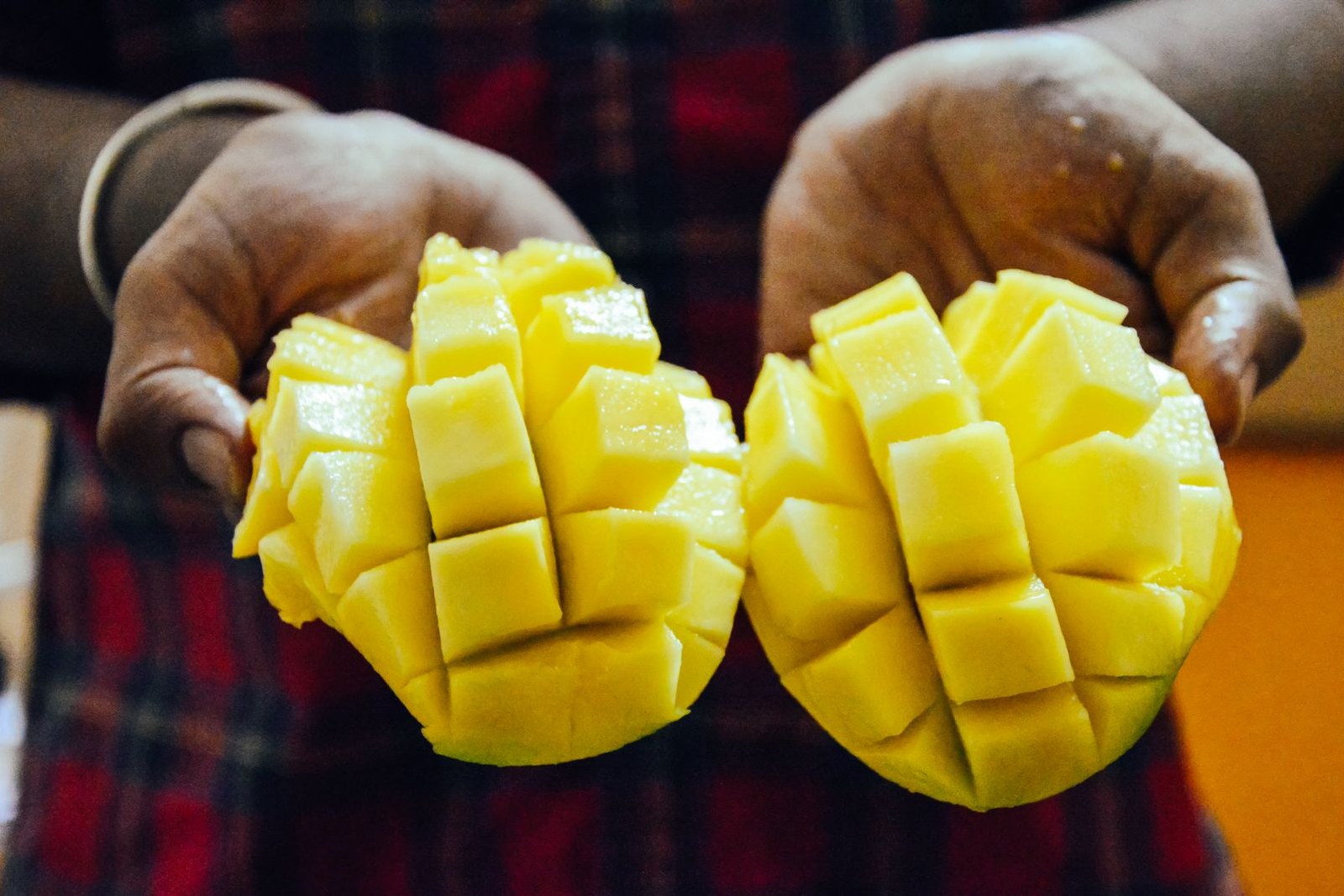
flowcloud would say that 昌江芒果 is what the island’s dry side is for – a rain-shadow county that turned thin rain and hard light into a registered taste, twice over, and still argues with the market about what the taste is worth.
Where to find it: the orchard country of 乌烈镇 Wūliè Zhèn and 七叉镇 Qīchā Zhèn, where 梁明章’s demonstration plot and the 华超 base both sell at the gate in season; the Saturday mango weekend camps and the mango starlight night market, May to August since 2026; the 昌江芒果节, first held in May 1996; and the county seat 石碌镇 Shílù Zhèn, where the association’s packed fruit sets out for the Beijing and Shanghai markets. Come in June or July when the harvest peaks, and try 贵妃 and 金煌 side by side before you choose.