
Changping Apples: Mountain-Front Warm Belt, Fuji Rows and the October Orchard Country of Changping District, Beijing
山前暖带秋光好,十里果园富士红。Shānqián nuǎndài qiūguāng hǎo, shílǐ guǒyuán Fùshì hóng – The mountain-front warm belt wears fine autumn light; ten li of orchards redden with Fuji.
昌平苹果 Chāngpíng píngguǒ Changping apples are the October fruit Beijing’s northwest drives out to pick by the box, and the address is a warm belt: the strip of orchard country along the southern foot of the 军都山 Jūndū Shān Jundu Mountains, where 十三陵镇 Shísānlíng Zhèn Shisanling town around the Ming-tomb valley and 南口镇 Nánkǒu Zhèn Nankou town by the old pass anchor the orchard villages (worth confirming the current acreage). The geography is the growers’ own argument: the 山前暖带 shānqián nuǎndài mountain-front warm belt, where south-facing slopes bank the autumn sun, cold air drains downhill at night instead of pooling in the orchards, and stony sandy soils drain fast – a set-up that ripens fruit where the city plain would only redden it. The dominant cultivar is 红富士 Hóng Fùshì Red Fuji, planted across the belt in thousands of mu, bagged in spring, unbagged in the home stretch to stripe its colour, and picked in the middle and late weeks of October – never rushed ahead of its sugar. The craft most visitors under-rate is the thinning: blossoms and young fruit are culled by hand so each apple carries the tree’s whole allowance – orchard work the gift box never credits. The naming is the tell: the fruit takes the district’s name, which put the apple on the national geographical-indication rolls (worth confirming year and registry).
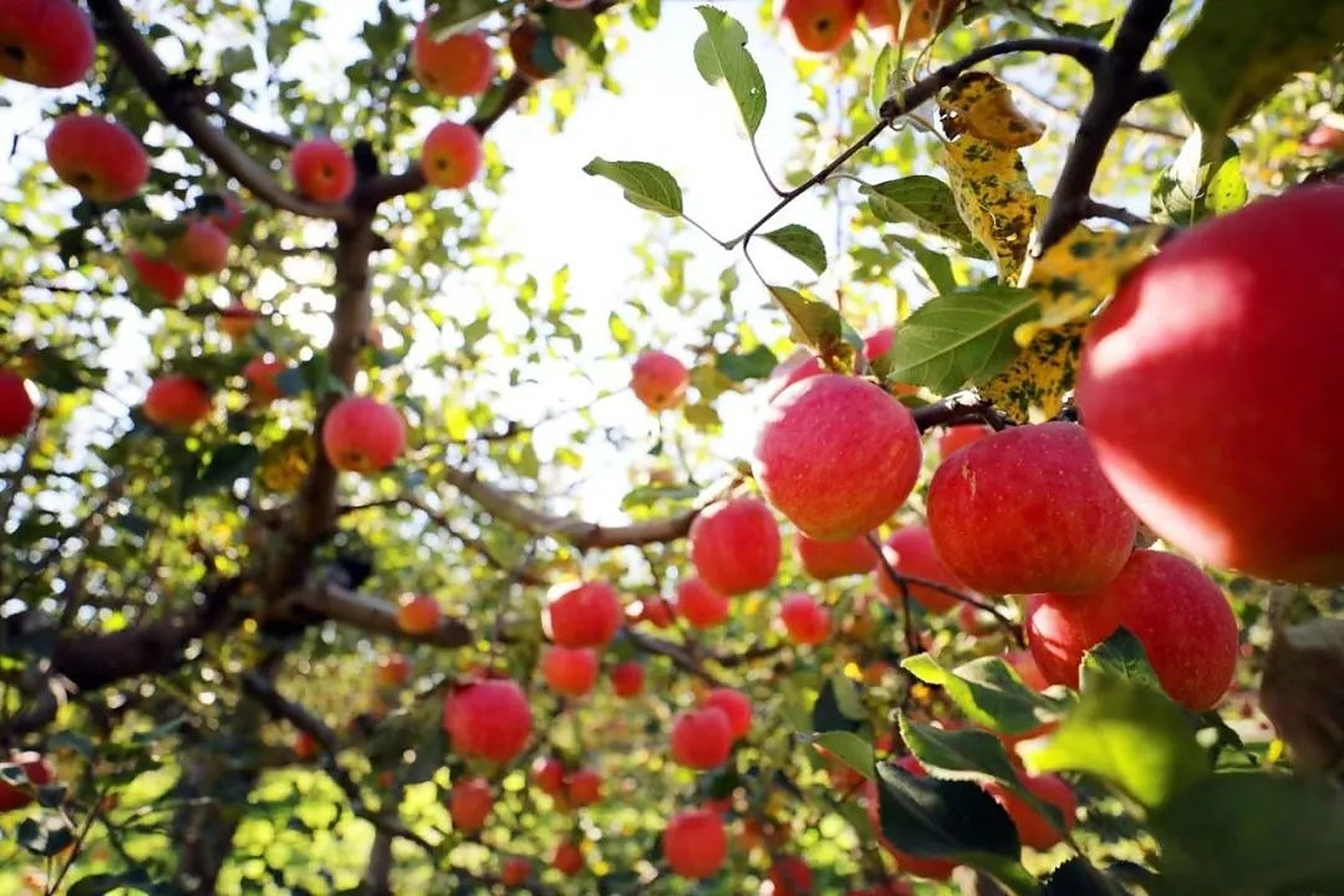
The eating is a bite-and-snap grammar written for fruit graded by crunch, and it leans 甜 tián sweetness plus 脆 cuì crisp to match the picking rows. The anchor is the fruit off the tree, eaten standing between the rows – skin taut, flesh cracking white, juice cold-sweet, a texture the same variety trucked and shelved never keeps – and in a good year the knife finds the 糖心 tángxīn honeyed heart, a translucent sugared core the mountain’s day-warm, night-cold arithmetic writes into the ripest fruit (worth confirming the details – a season’s bonus, not a guarantee). Around the fresh bite the orchard kitchens run their winter book: apples cellared in cool dark rooms for weeks, pressed into juice, dried into rings, boxed at the shed for the drive home – the Fuji’s thick skin built for keeping, which is why the cellars smell of October all winter. The season is short and public: picking opens around mid-October and the orchards post open rows and prices at their gates (worth confirming the details – which rows open in which week).
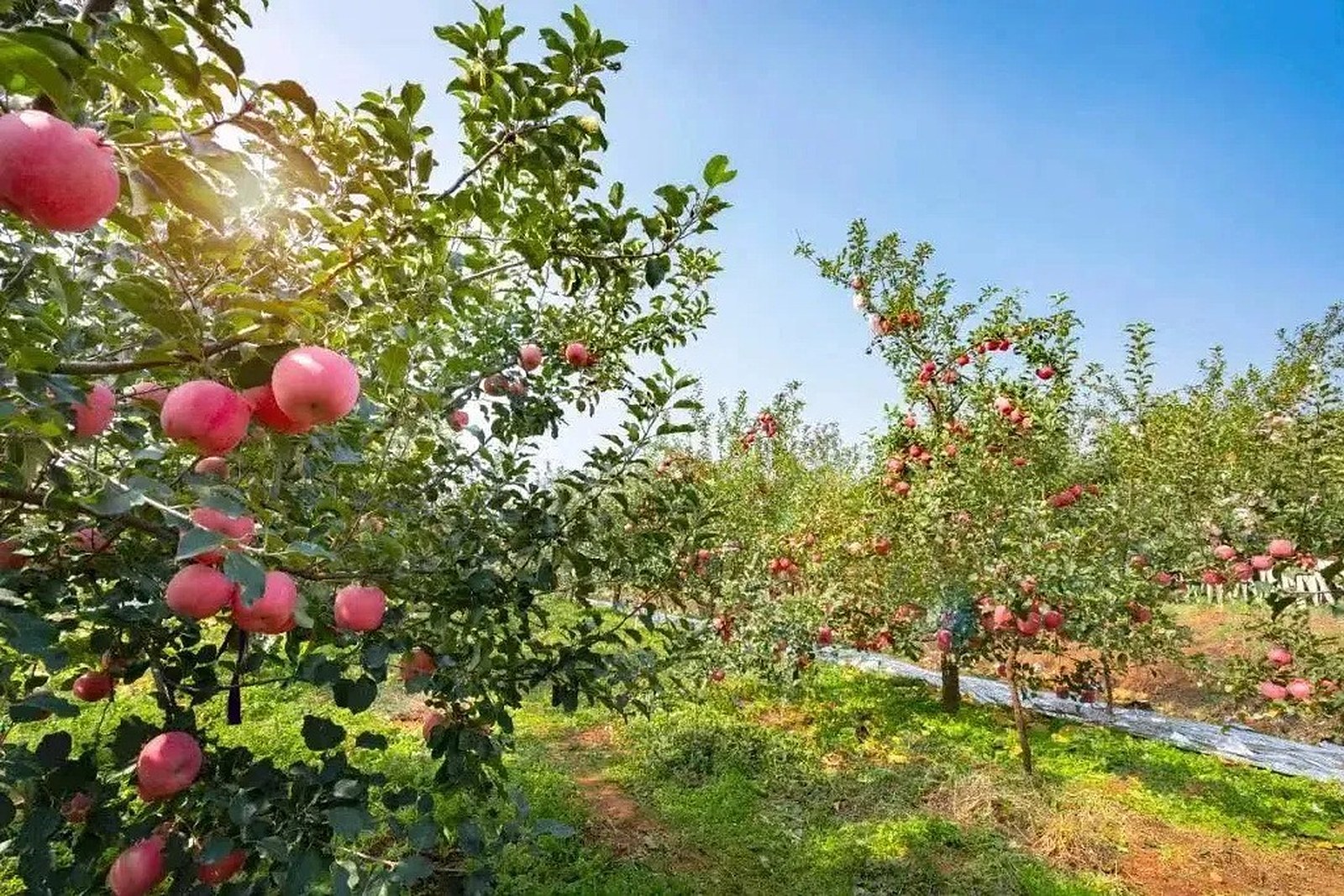
The honest grade is geography plus the ripeness clock. In 昌平区 Chāngpíng Qū Changping District, Beijing the orchards gather along the lanes under the tombs’ valley and westward toward Nankou, where the clientele is half 周末 zhōumò weekend pickers with empty boxes and half city buyers collecting reserved crates – a mix that keeps the rows honest, because a grower here is graded by returning families who remember which block ripened sweet last October (worth confirming which gardens book by phone). The picker’s test outranks any label: snap a sample apple in two – ripe Fuji parts with a clean crack and a wet click; mealy fruit tears soft and dry – and read the colour: deep red to the stem end means the bag came off long ago. A per-person bill runs on the box and the block, so call it worth confirming the details rather than a fixed number, and come mid-week or early: October weekends empty the parking lots as fast as they fill the picking bags.
The wry truth is that 昌平苹果 Chāngpíng píngguǒ is over-rated as a gift box and under-rated as microclimate reading: the souvenir aisle files it under “nice local apples”, while the actual thing – a warm belt engineered by mountains, an air-drainage argument the night re-runs daily, bagging and hand-thinning that spend the tree’s allowance – is climate cartography the sticker never explains. The self-deprecating footnote, and the district braid: a food writer will say “terroir” to a grower whose answer is to halve an apple and hand it over, weigh a box at heroic shutter, and then call the fruit “commendably crisp” as if crunch were a slogan – which is the honest grade: 昌平苹果 Chāngpíng píngguǒ is a working orchard the writer will romanticise more than he picks from, and the family at the next row has eaten a box standing up and ordered the second for the cellar before the shutter closes. The same 昌平区 Chāngpíng Qū Changping District, Beijing thread runs on: the copper pots of 阳坊涮肉 Yángfāng shuànròu Yangfang instant-boiled mutton steam in the southwestern town, the trays of 小汤山蔬菜 Xiǎotāngshān shūcài Xiaotangshan vegetables fill the winter counters, the rows of 兴寿草莓 Xīngshòu cǎoméi Xingshou strawberries redden from the first cold weeks, and the pressed threads of 流村饸饹面 Liúcūn hélao miàn Liucun helao noodles fill the mountain bowls – one district, four more tables.
Words and Names
- 昌平苹果 Chāngpíng píngguǒ / Changping apples · the geographical-indication fruit of the capital’s northwest - 山前暖带 shānqián nuǎndài / mountain-front warm belt · the sun-banked, cold-draining strip the orchards climb - 红富士 Hóng Fùshì / Red Fuji · the striping, keeping cultivar of the belt - 十三陵镇 Shísānlíng Zhèn / Shisanling Town · the Ming-tomb valley town at the belt’s heart - 南口镇 Nánkǒu Zhèn / Nankou Town · the old pass town at the belt’s western end - 糖心 tángxīn / honeyed heart · the sugared translucent core of ripe fruit - 套袋 tàodài / bagging · the spring cloak stripped before colouring - 昌平区 Chāngpíng Qū / Changping District · the Beijing district holding the warm belt
What the Locals Know
- Buy by the month, not the sticker: true-season Fuji starts around mid-October – earlier “fresh” fruit is last year’s stock (worth confirming orchard by orchard).
- Run the snap test: a ripe apple cracks clean and wet; mealy fruit tears soft – the bite grades the box.
- Ask about the honeyed heart: the translucent 糖心 tángxīn core shows in the ripest fruit of a good year – cut one before you buy the case.
- Store them dark and cold: Fuji keeps for weeks in a cool room – and keep the apples alone, or the whole fridge smells of them.
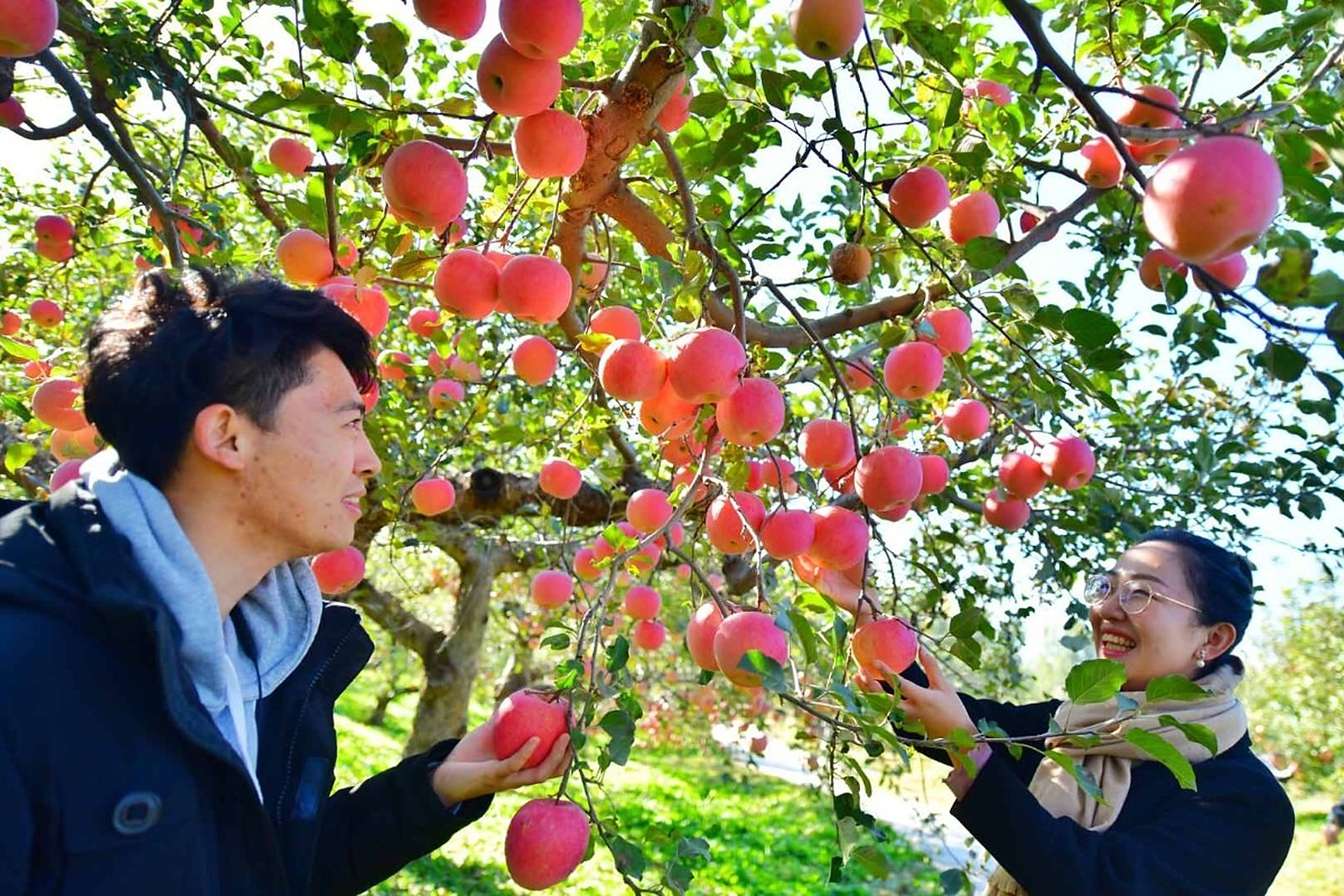
flowcloud would say that the 昌平苹果 Chāngpíng píngguǒ is the mountain-front warm belt, Fuji rows and the October orchard country of Changping District, Beijing – a 山前暖带 shānqián nuǎndài slope where 红富士 Hóng Fùshì is bagged, bared and striped into a 糖心 tángxīn crunch – and that the honest move is to buy by the month, snap the first bite, and cellar the rest, because the mountains bank the sun and the rows keep the sugar. All checked October 2026.
Where to find it: Changping District Chāngpíng Qū, Beijing – the picking orchards and shed counters along the mountain-foot lanes of 十三陵镇 Shísānlíng Zhèn Shisanling town and 南口镇 Nánkǒu Zhèn Nankou town, where Red Fuji rows open to the picking boxes from around mid-October (worth confirming the details – which gardens book by phone); a per-person bill runs on the box and the block, so call it worth confirming the details rather than a fixed number. Changping apples are the mountain-front warm belt, Fuji rows and the October orchard country of Changping District, Beijing, soil before sugar.