
Changsha Spicy Crayfish
It arrives in a steel basin the size of a hubcap, and the smell arrives a second before it does — chilli, garlic, and underneath both, something green and slightly medicinal that you will not be able to name until someone tells you it is perilla. Everything in the basin is red. There are plastic gloves on the table beside it and a bucket underneath for the shells, and both are non-negotiable, because 口味虾 (kǒuwèi xiā) is not a dish you eat with cutlery. It is a dish you eat with your hands, over a long time, in a hot city, with a glass of cold beer you keep forgetting to drink.
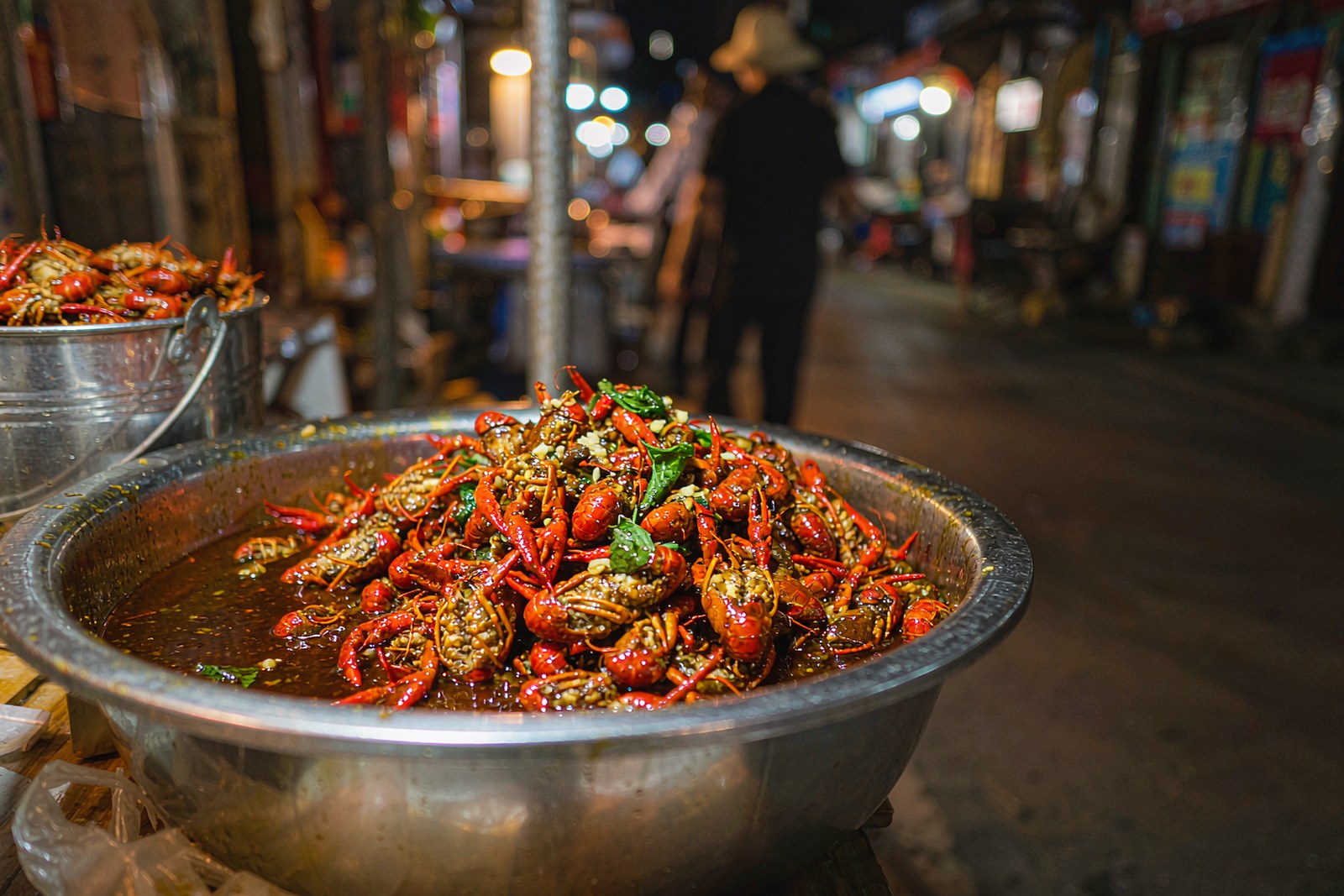
Changsha in July does not cool down at ten at night. It gets marginally less hot and considerably louder. The tables come out onto the pavement, sometimes onto the road itself, and by eleven every neighbourhood in 天心区 has the same scene running: families, students, colleagues, taxi drivers off shift, all hunched over basins, all of them quiet for thirty seconds at a time and then suddenly not. 口味虾 is the reason. It is the single most ordered dish in the city’s night market — by one count it accounts for over seventy per cent of late-night orders — and it is the actual, load-bearing element of a Changsha summer, in a way that its cousin 臭豆腐 is not.
Why the City Cooks It This Way
Crayfish are not native to Hunan. The 小龙虾 (xiǎolóngxiā, “little dragon shrimp”) that ends up in these basins is farmed, mostly, and comes in from Hubei’s 潜江, Jiangsu, Anhui and the Dongting Lake flats — an entire agricultural industry that barely existed forty years ago and now covers more than thirty million mu of ponds and paddies and turns out something like three and a half million tonnes a year.
What Changsha did with them is the interesting part, and it is the same thing Hunan does with everything: it applied 口味. The word is doing a lot of work. 口 (kǒu) is mouth, 味 (wèi) is taste, and as a cooking term it means the local treatment — heavy oil, dried and fresh chilli, fermented bean, garlic, and a long braise so the seasoning goes through the shell and into the meat rather than sitting on top of it. The result is a dish that hits salt, savoury, hot, numbing and fragrant within the same mouthful, and does not apologise for any of it.
The thing that makes a Changsha 口味虾 recognisable as a Changsha 口味虾 and not a Wuhan 油焖大虾 or a Sichuan 麻辣小龙虾 is 紫苏 (zǐsū) — perilla, the purple-green leaf that grows in every back yard in Hunan and tastes like mint crossed with something wilder. It goes in at the end, after the chilli has done its work, and it is the note that turns a heavy braise back into something you can keep eating.
What Is Actually in the Basin
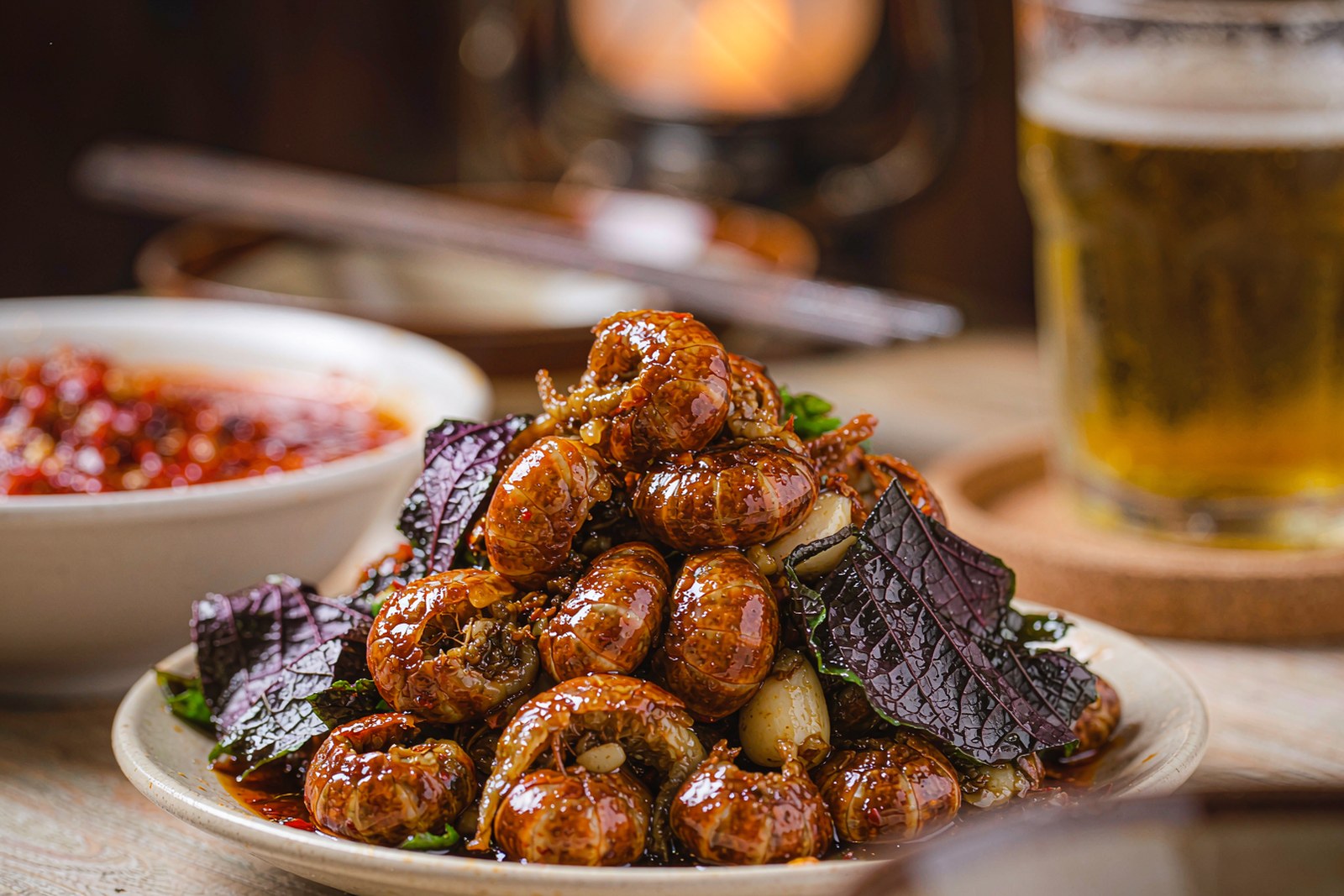
The crayfish. Purged in clean water, de-veined through the tail, and mostly served as 虾尾 (xiāwěi) — tails only, head removed. This is a Changsha habit and it is a good one, because it means less weight, less mess and a more honest plate. Some houses serve them whole; ask before you order if it matters to you.
The sauce. Soy, rock sugar, dried chillies, 豆瓣 fermented bean paste, a great deal of garlic, ginger, star anise and 桂皮 cinnamon bark, then the crayfish braised until the sauce is thick enough to coat the shell without dripping off. Some kitchens add a spoon of 辣妹子酱 (làmèizi jiàng), the local chilli paste, for colour.
The 紫苏. Put in near the end, bruised so it releases.
The sides. 藕片 lotus root, 土豆 potato, 花甲 clams, 毛豆 edamame. All of them optional, all of them absorbing the sauce better than the crayfish does.
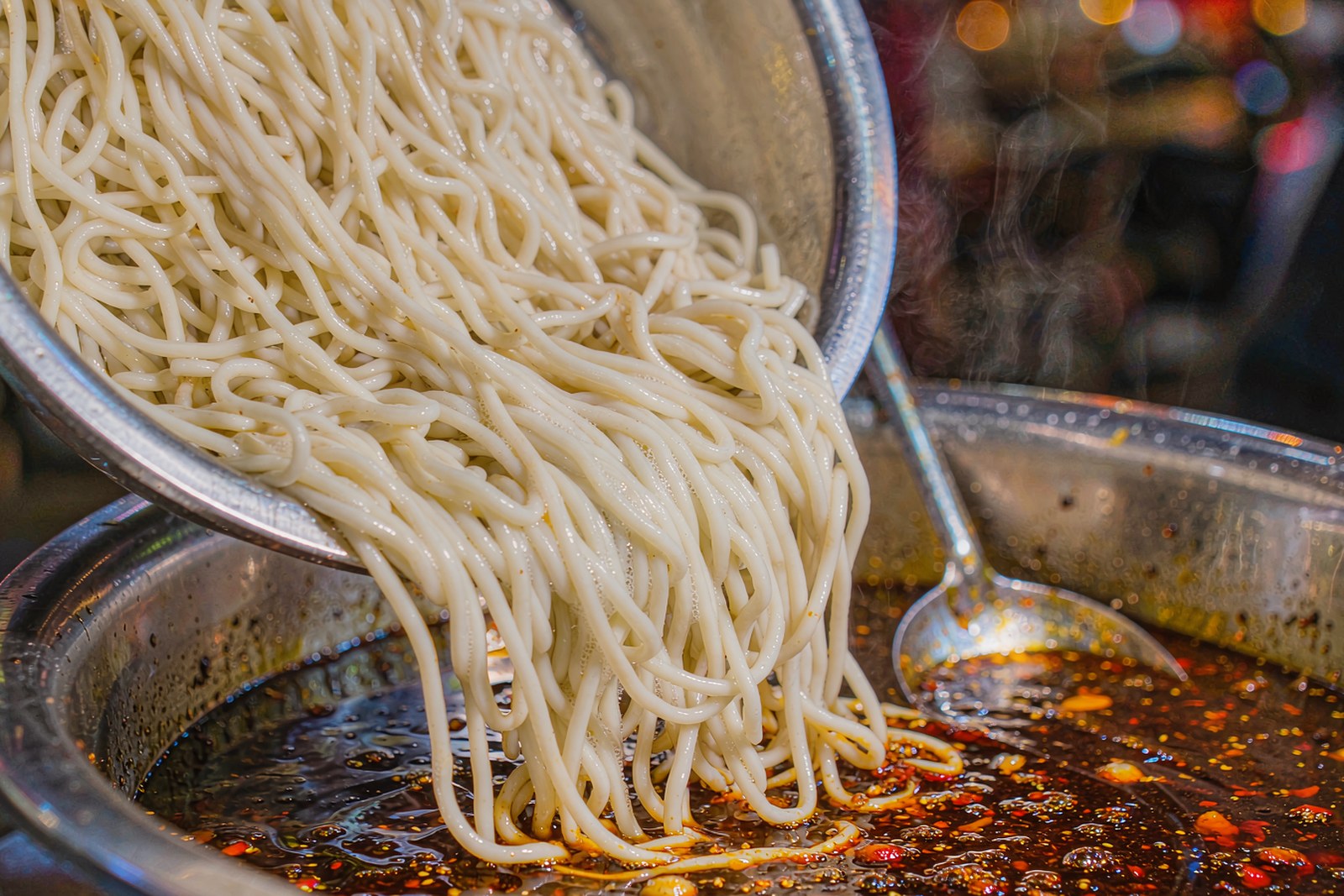
The 清水面. This is not a side. This is the second half of the meal. A bowl of plain boiled noodles arrives when you ask for it, dry and chewy, and you tip them into whatever sauce is left, mix until dark, and eat standing up because your seat has been taken. Some places do it with cold 凉面 instead. Either is correct, and skipping it is the single most common mistake visitors make.
The Money, 2026
This is the summer to be eating it. Crayfish prices in Changsha in 2026 have dropped to the lowest they have been in five years, after a warm winter pushed the crop out ten to fifteen days early, into a market that was already oversupplied. At the 马王堆 wholesale market — the city’s price barometer — 中青, the four-to-six-qian grade that most restaurants use, went from around ¥30 a jin last year to ¥13–16; small 小青 fell to ¥8–8.5; only the biggest 大青 held at ¥28–32.
At the table that shows up as a portion — roughly two jin, cooked — priced anywhere from ¥58 to ¥128, with the mainstream sitting around ¥88–128. Per head, expect ¥80–120 for a proper crawfish dinner with sides and a drink, and consider that a shop charging materially less than ¥60 for a basin is either losing money or buying badly. Prices will firm up again in late August as the big shrimp come off, so the arithmetic you get is the arithmetic of the week you eat it.
How to Eat It
Put the glove on. Twist the tail away from the body if it is whole, or take the tail by both ends and bend it until the shell cracks across the segments. Peel from the wide end. Pull the meat out in one piece and dip it back into the sauce in the basin — always dip, the meat is deliberately cooked to be ready for it, not seasoned through.
Then 嗦 (suō): suck the sauce out of the shell before you discard it. This is not optional and nobody will pretend it is. The shells go in the bucket, the sauce goes on your fingers, and you will use an unreasonable number of paper napkins.
Order the 清水面 after. Order the 紫苏桃子姜 — perilla with peach and ginger, a cold sweet-sour pickle, about ¥15 — before, or in the middle, to reset a palate that has been going hard for an hour.
What It Refuses to Be
It refuses to be a quick meal. Peeling takes time, and the time is the point; a Changsha 口味虾 dinner runs two or three hours and is a social occasion with food attached, not a plate of food that happens to be shared.
It refuses to be genuinely dangerous. The reputational problem is the “super-spicy” version, which at some shops is achieved with industrial capsaicin rather than a lot of chillies, and which is a bad idea — order the normal one, which is already brutal.
And it refuses to be seasonal in the way it used to be. Crayfish now turn up on these tables all year, because industrial farming does not know about summer. They are simply at their best, fattest and cheapest from May to September, and that is when you should come.
Words and Names
口味 kǒuwèi — literally “mouth taste”, but in Hunan it means the local heavy-spiced preparation: 口味虾, 口味蛇, 口味蟹, 口味花甲, 口味田鸡. If a dish has 口味 in front of it, it is going to be red, oily, chillied and excellent. 虾 xiā is shrimp; 小龙虾 xiǎolóngxiā, “little dragon shrimp”, is the crayfish. 虾尾 xiāwěi are the tails on their own. 嗦 suō is the verb for pulling something off a shell or a bowl with suction, and it is used with affection about noodles, snails and anything else worth the effort.
What the Locals Know
Live shrimp or nothing. A dead crayfish’s tail goes straight and stiff before cooking and the meat turns to sawdust. Every good shop purges and cooks the same day.
Look at the 虾线. The gut line should be removed — you will see the slit down the back of the tail. Shops that skip it are telling you what else they skip.
Go at 10pm on a Tuesday. The famous places have queues from eight o’clock on weekends and the queue is genuinely an hour. Weeknights, later, and you walk in.
Order 藕片 into the sauce. Lotus root has the right texture for it and it costs almost nothing.
Do not wear anything you like. The oil goes everywhere, and in the wrong light your white shirt will never recover.
冬瓜山 and 南门口 are where locals eat. 天心区’s old residential streets are the real geography of this dish: pavement tables, plastic stools, no website, no queue app, no air conditioning.
Where to Find It
The canonical addresses are all in 天心区, and they cluster in the same way: old low-rise neighbourhoods where the pavement is wide enough to put tables on.
天宝兄弟 — 芙蓉中路, 众东国际, unit 104 on the ground floor. The benchmark, famous for a sauce that blends the idea of 岳阳 shrimp tails with 潜江 braising and Sichuan heat. Open 16:00 to 03:00; around ¥177 a head, and worth it once.
瞿记秘制虾 — open 15:00 to 03:00, roughly ¥137 a head. The thickest, richest sauce of the well-known houses; the shrimp roe is the reason people come back.
虾小龙老长沙 — around ¥120 a head; the garlic version is the one to order and the most balanced of the mainstream names.
老长沙口味虾 — around ¥110 a head, straight traditional 爆炒, and the chilli level that Hunan people actually mean.
幸福的味道 — 冬瓜山路 at 裕南街, ¥45 a head and open from 15:30 to 03:00. The cheap, excellent, no-frills option; they de-vein and let you set your own heat.
严三毛口味虾 — 赤岭路, 金碧文华, 文心苑 building 12. A thirty-year sauce recipe, shrimp tails and 清水面 as standard.
杨记口味虾 — 人民西路 155, 16:00 to 02:00, around ¥75 a head, with 香辣, 麻辣 and 十三香 versions and a very good plate of 嗦螺 next to it.
北二楼 — 天心路 128, second floor opposite 天心阁, 17:00 to 02:00. Grilled things and crayfish on a roof terrace above the old lanes; the atmosphere is worth the walk.
flowcloud would say that a city which invents a food you cannot eat quickly, cannot eat cleanly and cannot eat alone has understood something about summer evenings that most places spend a great deal of money failing to buy.
Where to find it: 口味虾 (kǒuwèi xiā), Changsha spicy crayfish. 天心区, Changsha, Hunan — the best of it on the old residential streets around 南门口, 冬瓜山, 金盆岭 and 天心阁. Reference shops: 天宝兄弟 (芙蓉中路, 众东国际 104, 16:00–03:00, about ¥177 a head), 瞿记秘制虾 (15:00–03:00, about ¥137), 虾小龙老长沙 (about ¥120), 老长沙口味虾 (about ¥110), 幸福的味道 (冬瓜山路 at 裕南街, 15:30–03:00, about ¥45), 严三毛口味虾 (赤岭路 金碧文华 文心苑 12), 杨记口味虾 (人民西路 155, 16:00–02:00, about ¥75) and 北二楼 (天心路 128, 17:00–02:00). A portion is about two jin and costs ¥58–128; per head ¥80–120 with sides and a drink. Order 清水面 at the end to finish the sauce, and 紫苏桃子姜 about ¥15 to reset the palate.
We are still eating our way through Changsha Spicy Crayfish. Guides are on the way.