
血豆腐 xuě dòufu, blood tofu, is Changshou’s signature cured food – a winter craft that turns three humble things into one dense, smoky round. The recipe is old household arithmetic: fresh pig’s blood, crumbled firm tofu and minced pork, blended by hand, seasoned, and shaped by hand into firm balls that are set to cure where the smoke lives. Over weeks above a slow fire the surface darkens to a deep mahogany and the interior sets firm, and what was perishable becomes a larder item that lasts through the coldest months. In a district whose name means longevity, this is the food that families actually mean when they talk about keeping well through winter – preserved protein, made at home, made to last.
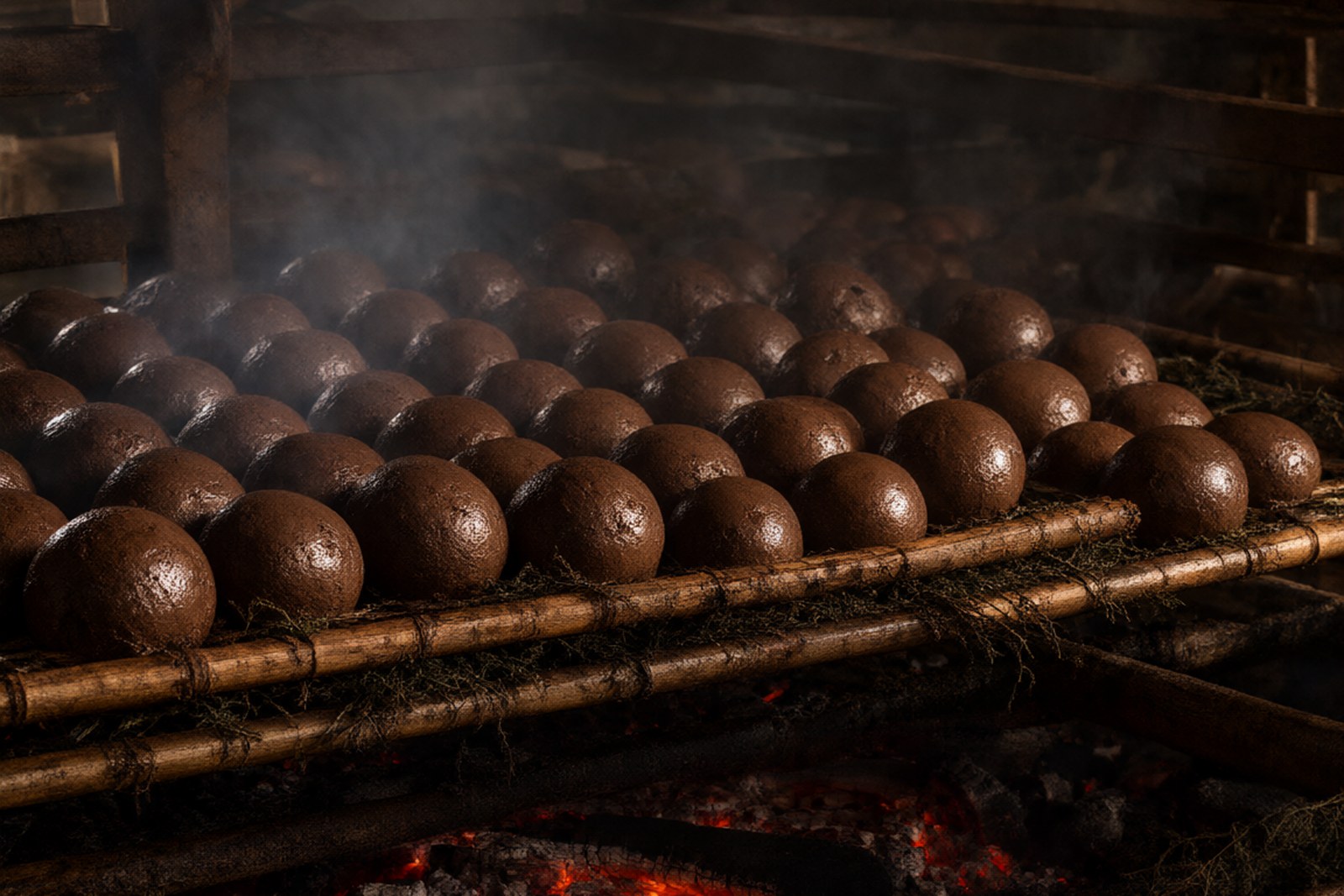
The making follows the killing of the New Year pig – 杀年猪 shā niánzhū, the winter slaughter that every farming household in the district has long organized around. The fresh blood is caught and blended while warm with the tofu crumbled fine and the minced pork that gives the ball its body; salt and seasoning go in, and the mixture is shaped by hand into firm round balls. Then the balls are set on racks and smoked over 柏枝 bǎizhī, cypress branches, often with orange wood alongside, and the smoke does its weeks of slow work. Cypress is not an accident: it burns cool and sweet-smelling, and it is the reason a properly cured ball smells of resin and orchard firewood rather than of anything acrid.
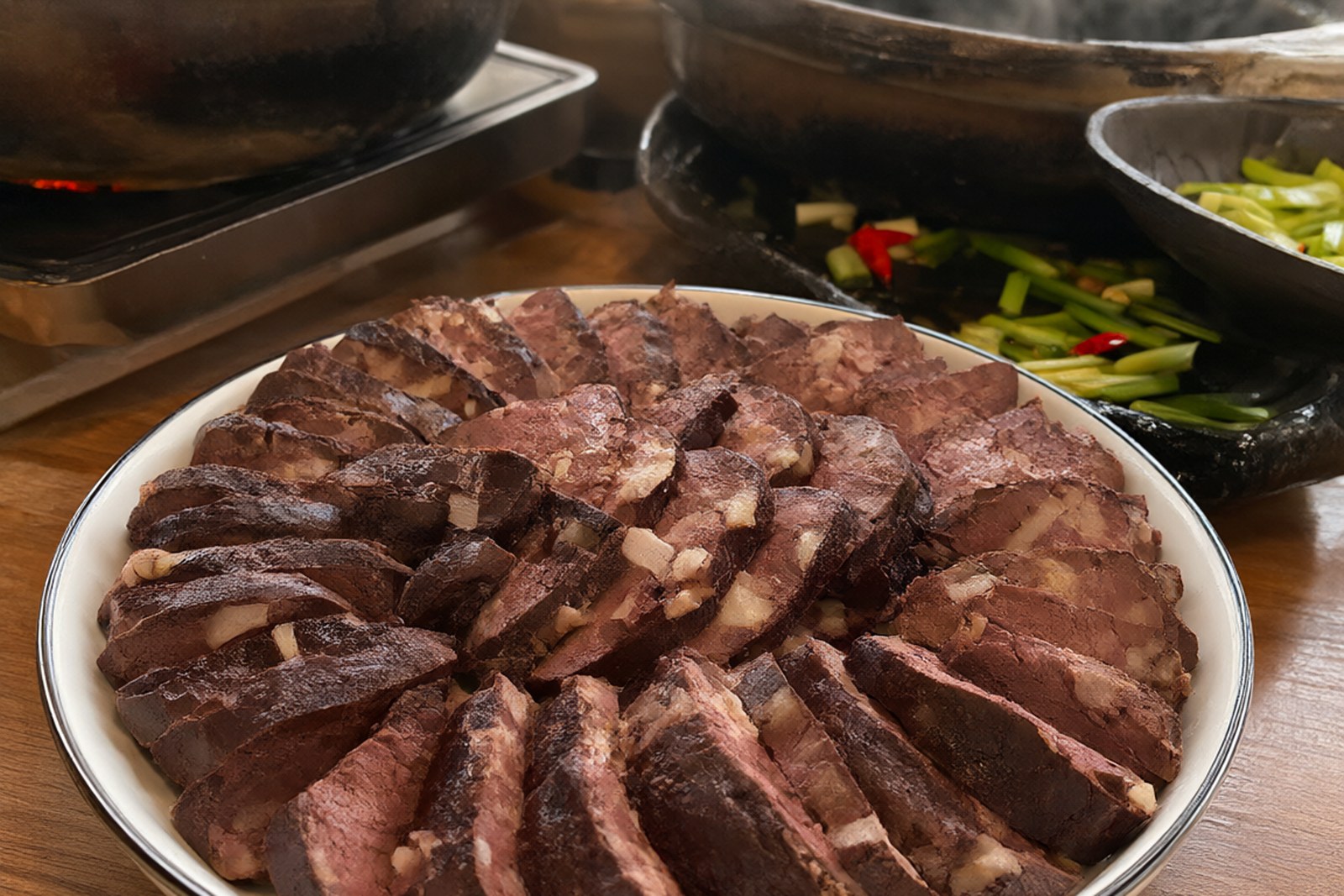
The eating comes in two registers. Sliced thin and stir-fried with 蒜苗 suàimiáo, garlic sprouts, and chili, the block is a fast, fierce home dish – the smoke and salt against the green bite of the sprouts, everything done in minutes over a loud flame. Layered into a clay-pot stew, the 砂锅 shāguō, the same slices mellow for the length of a long simmer, and the smoke dissolves into the broth until the pot tastes of one continuous, deep thing. The first register is the everyday one; the second is the feast one, and both start from the same block resting on the kitchen shelf.
The social life of the block matters as much as its cooking. Every family that kills its New Year pig makes its own, and the variations – saltier or sweeter, more pork or more tofu, a longer or shorter spell in the smoke – are matters of household pride argued over across courtyards. The district’s vacuum-packed versions travel well, which has made blood tofu the standard gift locals carry when they visit relatives in the city: a taste of the family smokehouse, sealed for the bus. That portability is the quiet genius of the craft – a preserved food that began as winter insurance has become the district’s most personal souvenir.
The discipline of this page is worth stating plainly. The record consulted – the plan’s own facts – names the three ingredients, the shaping into balls, the weeks over cypress and orange-wood smoke, the mahogany surface, the two ways of cooking, the New Year pig, the vacuum-packed gift trade and the winter markets; it does not name a founding producer, a founding year, a posted price or a single shop address, and none is invented here. The honest page describes a household craft with a market season rather than a branded product, and dates the tradition to its rhythm – the pig-killing weeks – rather than to any year.
Words and Names
血豆腐 xuě dòufu, blood tofu, Changshou’s signature cured food: fresh pig’s blood blended with crumbled firm tofu and minced pork, seasoned, shaped by hand into round balls and smoked for weeks over cypress and orange wood until the surface darkens to mahogany and the interior sets firm. 杀年猪 shā niánzhū, the killing of the New Year pig, the winter household event around which the craft is organized. 柏枝 bǎizhī, cypress branches, the sweet-burning smokewood; 蒜苗 suàimiáo, garlic sprouts, the classic stir-fry partner; 砂锅 shāguō, the clay pot for slow stewing. The record names no founding producer, year or price, and none is invented here.
What the Locals Know
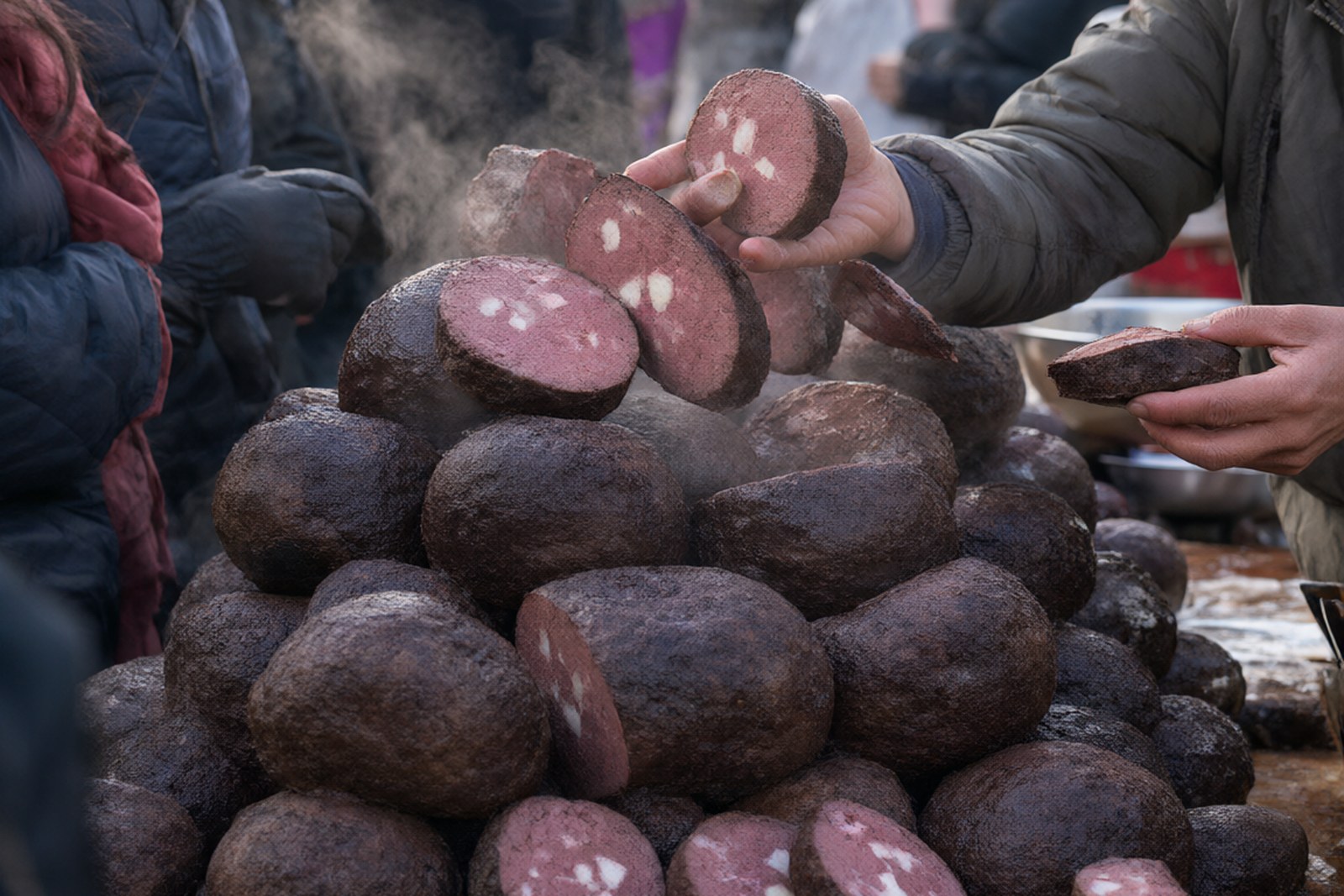
The first thing locals know is the season. The best batches come from the winter markets, still warm from the smokehouse, because the curing runs on the pig-killing calendar and the smokehouses work hardest in the cold months. A batch bought in season has a softer, fresher smoke note than one that has sat packaged for a long time, and locals who have a relative in the countryside simply wait for the family batch rather than buying at all. The vacuum-packed trade is real and respected, but it is understood as the travelling form of a thing that is best met in its weeks.
The second thing locals know is the cut and the colour. A good block slices clean without crumbling, dense enough to hold a thin edge, and the cross-section should be even, dark at the skin and a deep, uniform red-brown within. If the slice tastes only of salt, the smoke was too short; if the surface smells sharp rather than resin-sweet, the wood was wrong. Locals also know the household differences – which family cures harder, which mixes more pork – and treat those differences the way other regions treat wine villages.
flowcloud would say that Changshou blood tofu is the winter craft of the district’s kitchens – pig’s blood, tofu and minced pork shaped by hand into round balls and smoked for weeks over cypress and orange wood until the surface darkens to mahogany – sliced thin with garlic sprouts and chili or mellowed in a clay pot, made by every family that kills its New Year pig, carried to city relatives in vacuum packs and best bought from the winter markets still warm from the smokehouse, with no founding producer or price on the record and none invented. All checked October 2026.
Where to find it: the winter markets of 长寿区 Chángshòu Qū, Changshou District, around the pig-killing weeks of the cold months, are where the fresh-smoked blocks surface, and the vacuum-packed versions sell year-round wherever the district’s local specialities are stocked; the stall that smells of cypress smoke is the practical guide. No specific address, posted price or founding year is on the public record consulted. Pair this page with the ancient-town food lanes for where the cured dishes meet visitors, and with the district-seat hotel page for the base you carry the blocks home from.