
长寿湖 Chángshòu Hú, Changshou Lake, has one culinary certainty that its restaurants are built on: the fish was swimming in open water an hour before it reached the table. The reservoir’s clean, deep water grows firm-fleshed fish – silver carp, grass carp and wuchang fish above all – and the lakeside fishing villages, having caught the fish for generations, have long since organized the entire animal into a single procession of dishes. The format has a name: 全鱼宴 quányú yàn, the whole-fish banquet. It is not a menu you compose but a sequence you submit to, and it moves with the confidence of a kitchen that has nothing left to prove about its raw material.
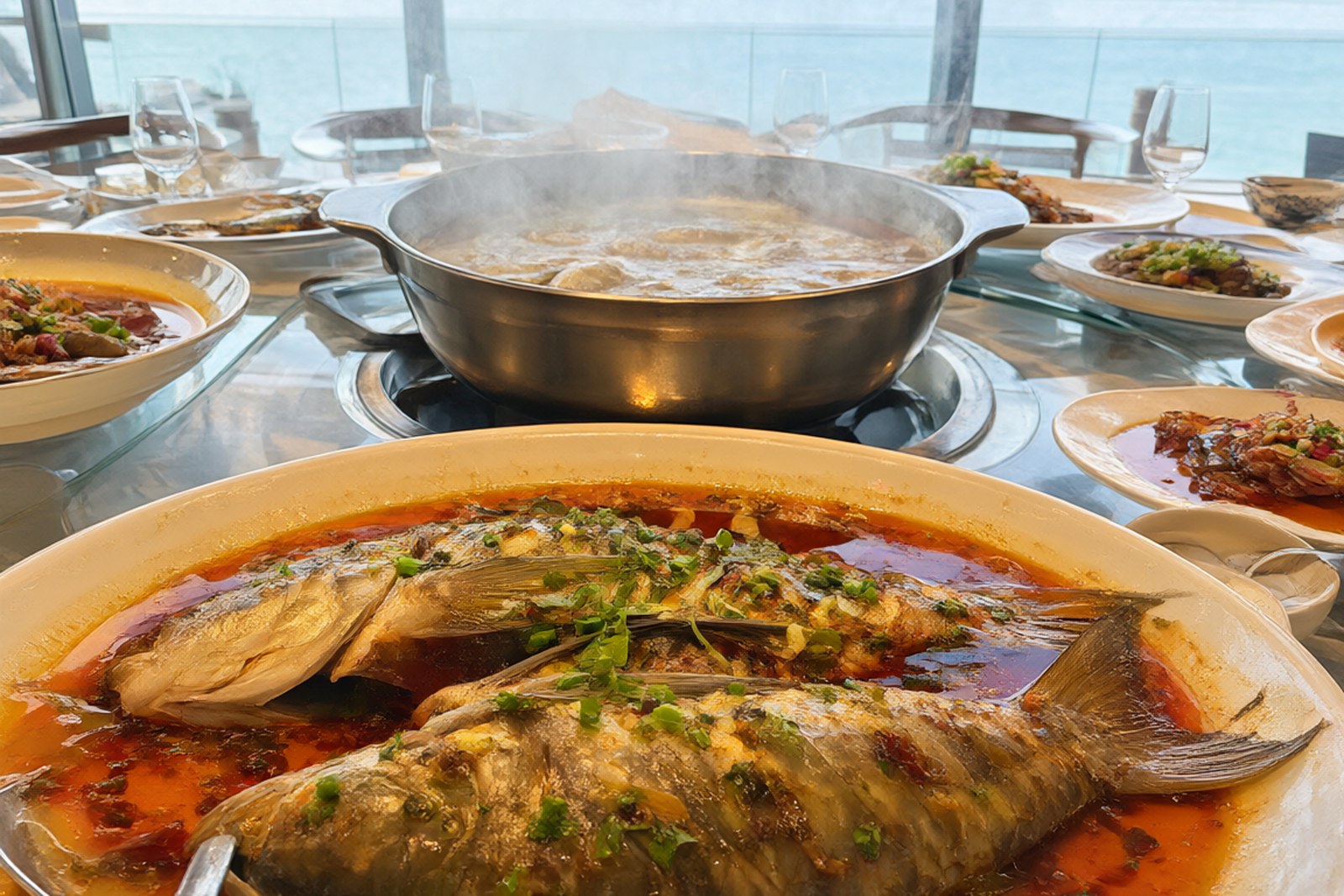
The banquet opens at its loudest: 水煮鱼 shuǐzhǔyú, boiled fish flooded with chili oil so hot from the wok that the surface still shivers, the tender white fillets buried under a red lake of oil and dried chilies. Then the sequence slows and turns milky – the fish-head soup, simmered long with tofu until the broth turns opaque white, the kind of soup that is drunk by the bowlful before the chopsticks move. From there the kitchen demonstrates its range: 鱼面 yúmiàn, fish noodles pressed from minced fish and starch, springy and faintly sweet; crisp-fried fish chunks dusted with Sichuan pepper salt, eaten crackling; and finally the pickled-pepper fish slices, sour and bright, the closing note that resets the palate.
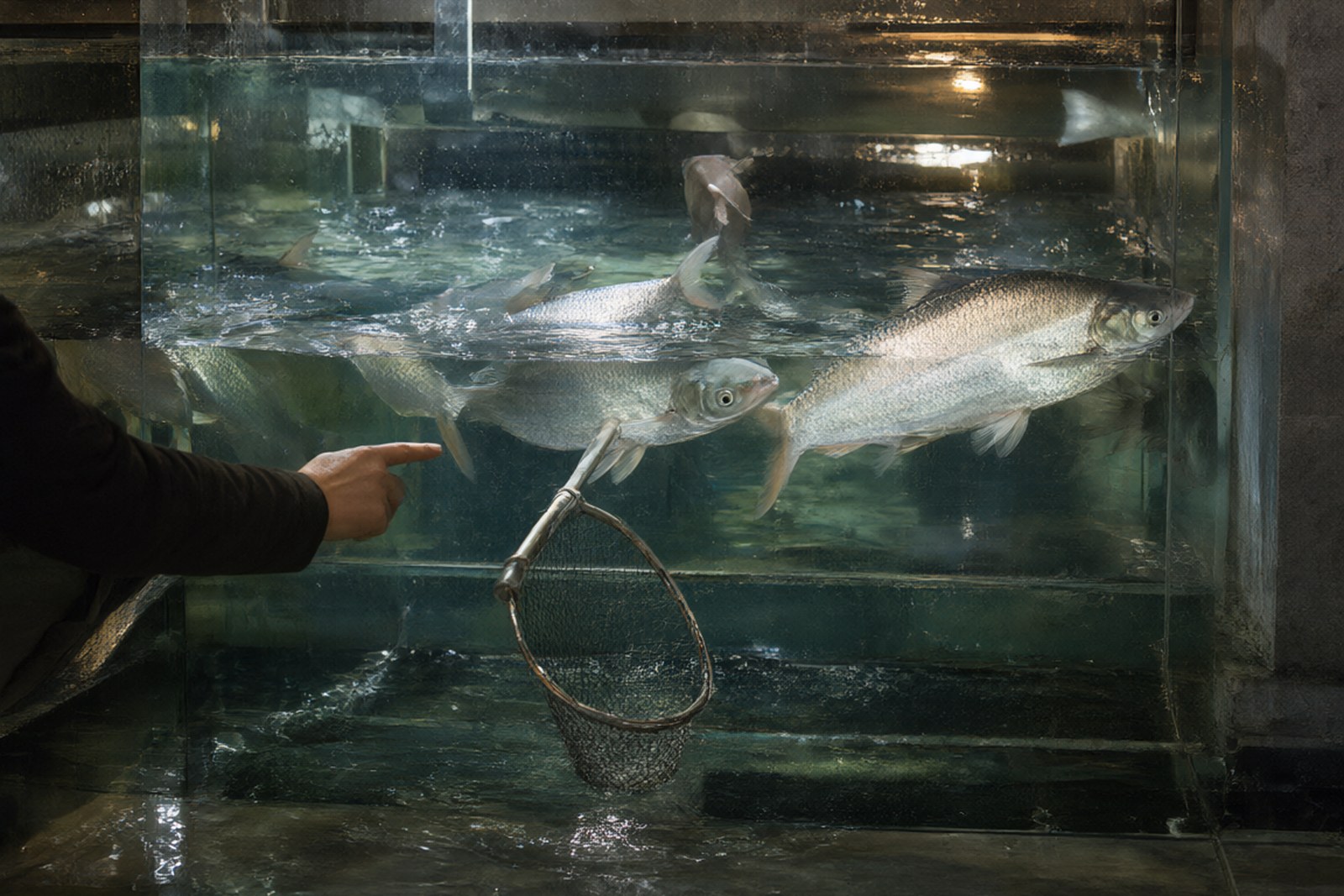
The ceremony before the meal is part of the point. Tanks at the door of the lakeside restaurants hold the day’s catch alive, and diners point – at a silver carp, at a grass carp – and the fish is lifted out, weighed in front of the table, and carried off to the kitchen. Nothing is hidden and nothing is frozen; the transparency is the argument the villages make about their water. The meal that follows is the standard celebration meal for families across the district, the table booked for birthdays and reunions, and on weekends the car parks fill with Chongqing plates, the city driving out for the water and the fish in a single trip.
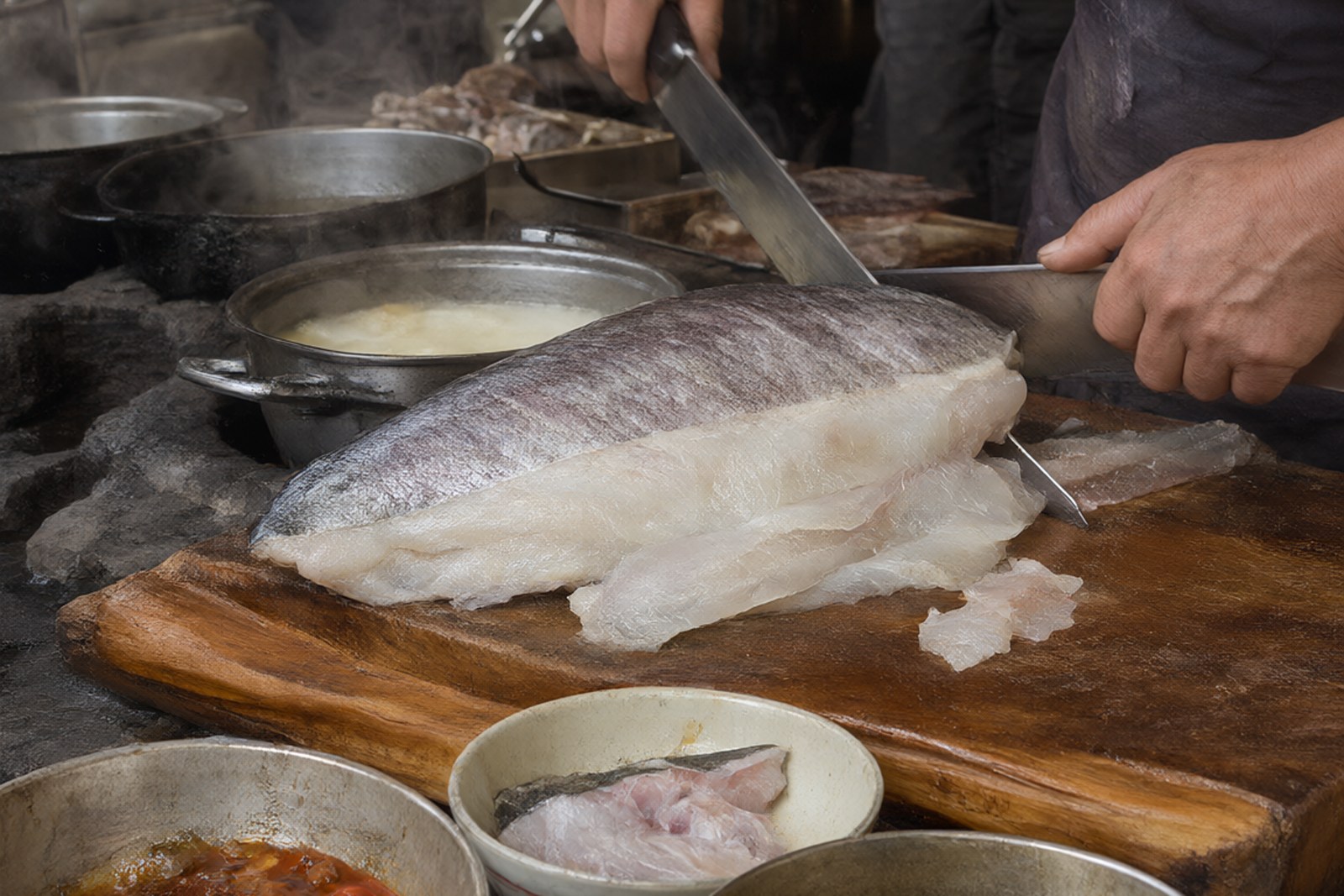
What makes the feast worth describing rather than merely listing is the economy of it. One fish becomes five or six preparations because each cut suits a different treatment: the head, richest and most gelatinous, belongs in the milky soup; the fillets, tender, go to the chili oil and the pickled peppers; the trim and the coarser flesh are minced for the noodles; the crispiest bones and chunks go to the fryer. Nothing is wasted, and every plate is a demonstration that the same water produced the whole table. It is, in effect, the reservoir’s biography told in courses.
The discipline of this page is worth stating plainly. The record consulted – the plan’s own facts – names the open-water freshness, the three principal fish, the five-dish banquet sequence, the live tanks and the weighing, the family celebration trade and the weekend Chongqing crowds; it does not name a founding restaurant, a founding year, a posted price or a single address, and none is invented here. The honest page describes a lakeside banquet format practised across the fishing villages rather than one celebrated house, and the fish you point at remains the only quotation the meal needs.
Words and Names
全鱼宴 quányú yàn, the whole-fish banquet of Changshou Lake: a set procession of dishes from a single day’s catch, from boiled fish in chili oil through fish-head soup, fish noodles, crisp-fried chunks and pickled-pepper slices. 水煮鱼 shuǐzhǔyú, boiled fish flooded with sizzling chili oil, the loud opening dish; 鱼面 yúmiàn, noodles pressed from minced fish and starch; 花椒 huājiāo, Sichuan pepper, ground into the salt for the fried chunks. The principal fish are silver carp, grass carp and wuchang fish, raised in the reservoir’s open water. The record names no founding restaurant, year or price, and none is invented here.
What the Locals Know
The first thing locals know is the order of eating. The chili-oil fish is taken while the oil is still moving; the fish-head soup is waited for, because its whiteness and its body come only after the long simmer, and drinking it too early is drinking the broth’s promise rather than the broth. The fried chunks go between the two, as a textural rest, and the pickled-pepper slices come last so that the sourness clears the accumulated richness. Locals pace the table accordingly, and a family that rushes the soup is a family still learning the lake.
The second thing locals know is the fish itself. Open-water fish from the reservoir’s deep bays have firm flesh and none of the muddy note of pond fish, and locals read the fillet the way a butcher reads meat – the flake, the spring, the sweetness behind it. They also know the season of the water: after wind the bays change and the catch moves, and the villages that net their own tanks daily simply serve whatever the water gave. That is why the point-and-weigh ritual matters – the fish is not chosen from a description but from the living animal in the glass.
flowcloud would say that Changshou Lake’s restaurants rest on one certainty – the fish was in open water an hour before it was on the table – and that the whole-fish banquet turns that certainty into a sequence: boiled fish in sizzling chili oil, milky fish-head soup with tofu, fish noodles, crisp-fried chunks with Sichuan pepper salt and pickled-pepper slices to close, chosen live from the tanks at the door and weighed before the table, the district’s standard celebration meal that fills the weekend car parks with Chongqing plates, with no founding house or price on the record and none invented. All checked October 2026.
Where to find it: the whole-fish tables run along the shores of 长寿湖 Chángshòu Hú, Changshou Lake, in the fishing villages turned restaurants around the lake town and the boat docks, where the tanks at the door hold the day’s catch alive; the restaurant whose tank you can point into is the practical guide. No specific address, posted price or founding year is on the public record consulted. Pair this page with the lake travel page for the boat day that earns the appetite, and with the lake-view hotel page for the base that lets the feast run long.