
长寿米粉 Chángshòu mǐfěn, Changshou rice noodles, are the district’s opening ritual – the dish that starts the day before the shops have properly opened their shutters. The craft begins the night before, when rice is set to soak in cold water, and ends early the next morning, when the swollen grain is wet-milled into a fine slurry and pressed into round, glassy strands. It is this freshness that separates the Changshou bowl from every dried commercial noodle: the strand holds a spring, a faintly sweet rice perfume and a slipperiness that no rehydrated product can counterfeit. Every neighbourhood in the district seat has its shop, and the morning queue that forms outside the old ones is simply part of the townscape, as fixed as the bus stops and the plane trees.
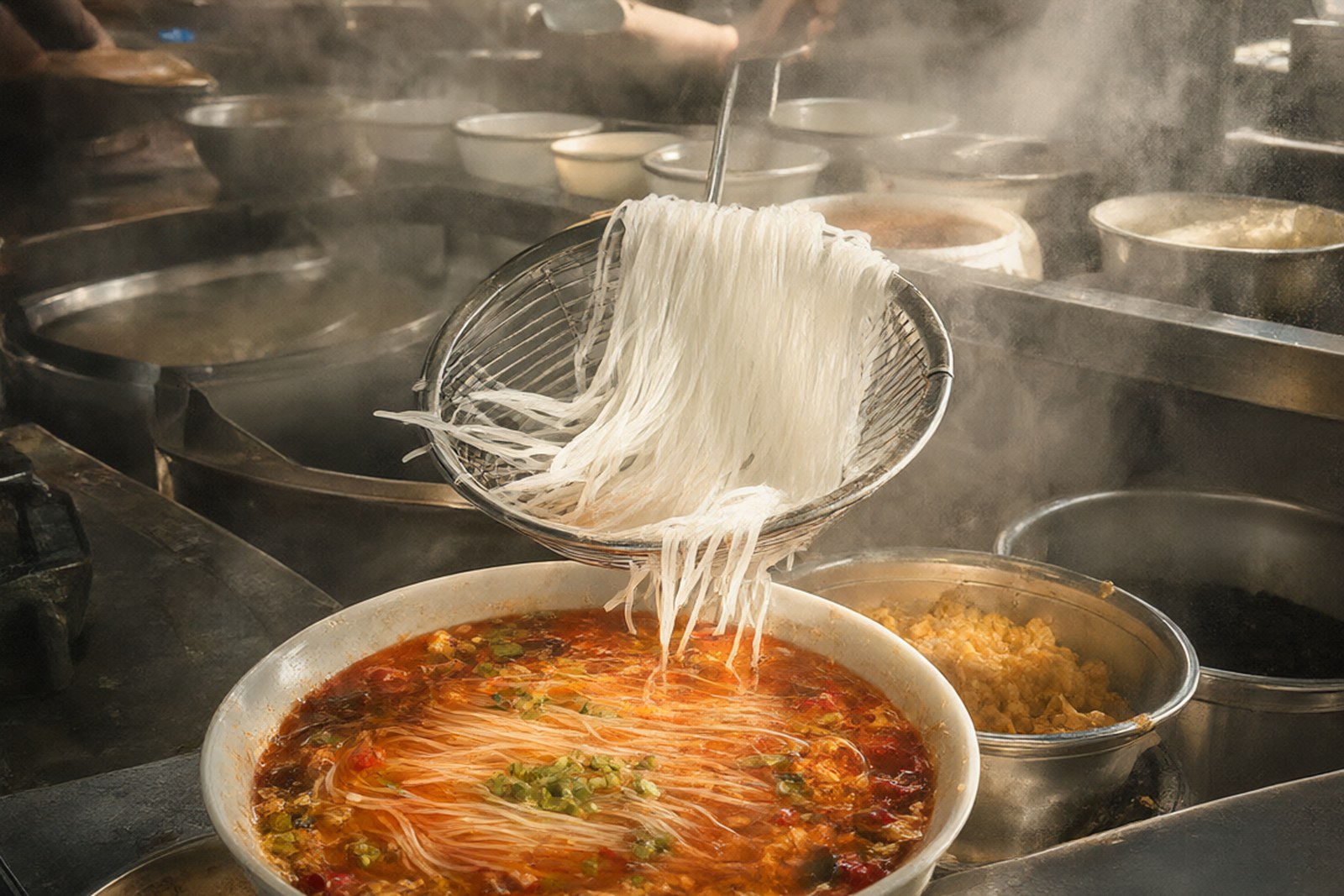
The cooking itself is a study in speed. The shops keep a pot of water at a steady boil, drop a bamboo or metal basket of strands into it for a matter of seconds, shake the water off and tip the noodles into a waiting bowl. Then comes the choice that defines the bowl: the broth of the customer’s picking. The classic register runs from 清汤 qīngtāng, the clear chicken soup sharpened with ginger, to 红烧牛肉 hóngshāo niúròu, the red-braised beef broth, dark and rich, to the local favourite – fatty pork simmered with pickled mustard greens, a broth that is simultaneously greasy, sour and deeply savoury. The strand is the constant; the broth is the personality.
The toppings are standardized by habit rather than by menu. Every bowl receives fried peanuts for crunch, a scatter of chopped scallion, a spoonful of 辣椒油 làjiāoyóu, chili oil, and a portion of 酸豆角 suān dòujiǎo, pickled long beans, cut small. The regular gives the chili oil a look rather than a word, and the cook adjusts the spoon. Nothing about the assembly is slow, and nothing about it is casual either – the sequence has been run so many thousand mornings that it has the rhythm of a drill, and part of the pleasure of watching is that no motion is wasted.
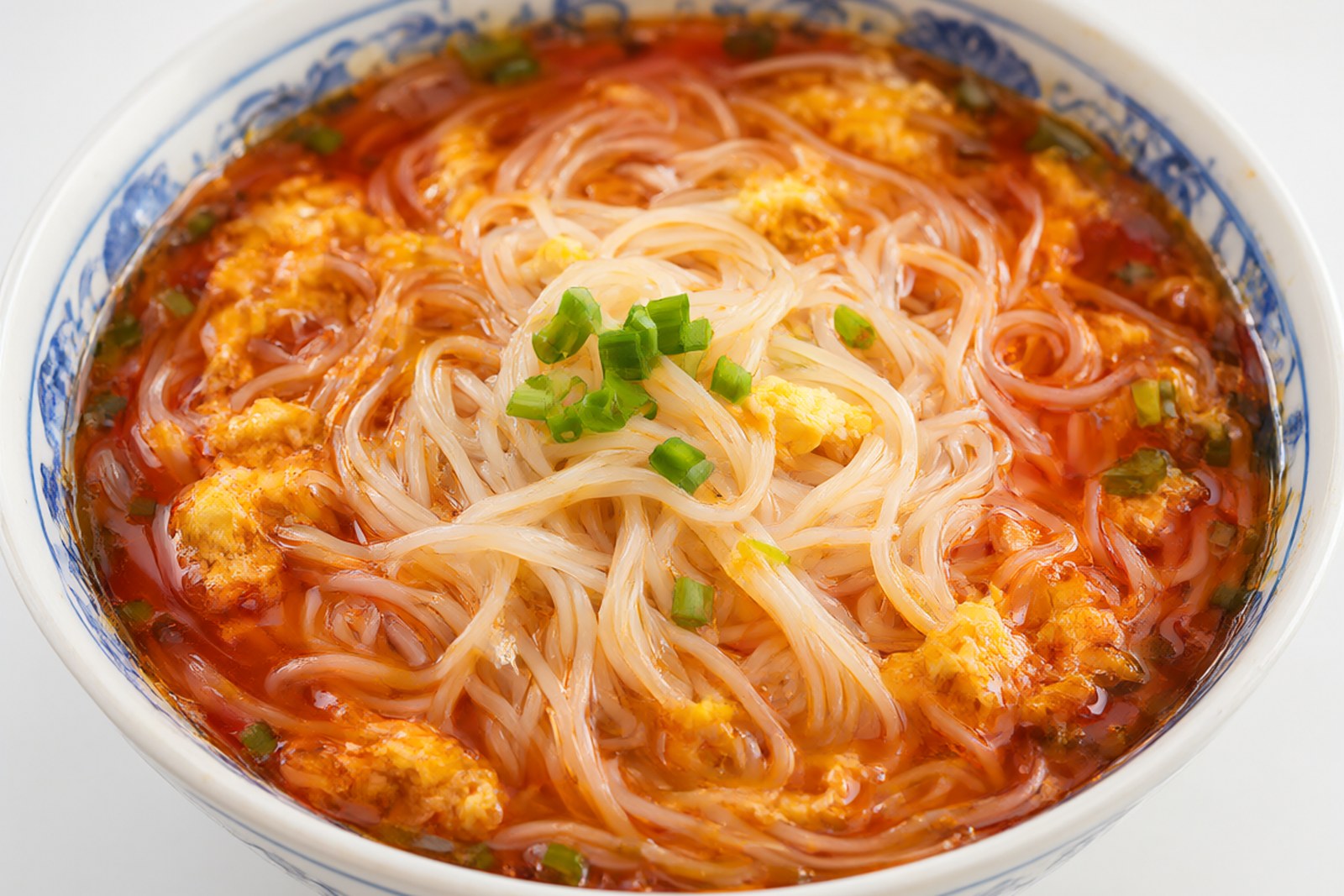
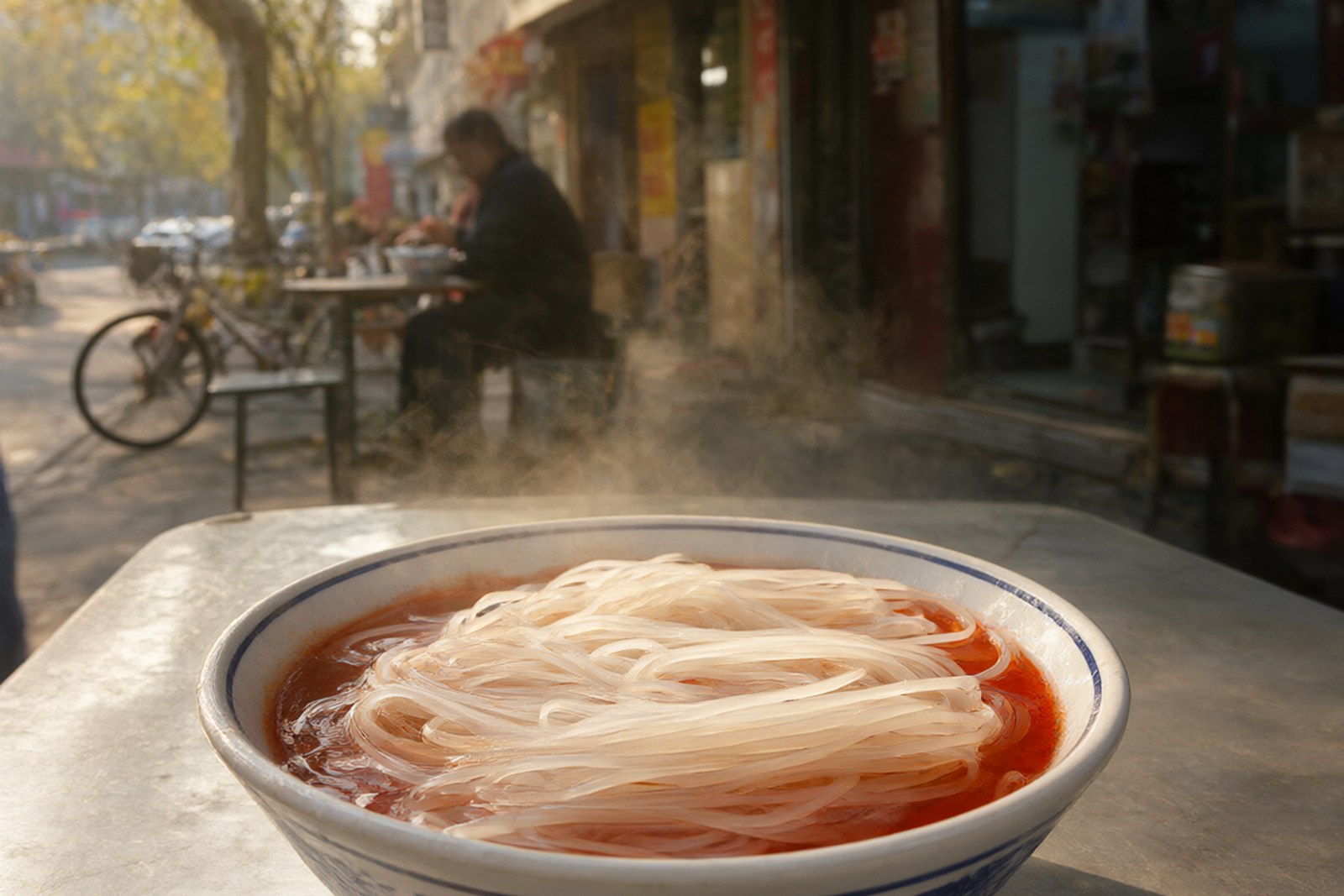
A bowl costs little more than a bus ride, and the shops sell out by mid-morning – two facts that together explain the whole culture around the dish. Because the price sits at the level of everyday transport, the noodle shop is not a destination restaurant but an extension of the kitchen at home, a place where pensioners, schoolchildren, market porters and office workers stand in the same short queue and eat at the same wobbly tables. Because the stock and the strands run out, the morning has a real deadline: arrive at nine and the choice of broths may already be narrowing, arrive at eleven and the shutters may simply be down. The dish belongs to the hours when the town is still rubbing its eyes.
The discipline of this page is worth stating plainly. The record consulted – the plan’s own facts – names the overnight soak, the morning wet-milling, the pressed round strands, the seconds-long blanch, the three broths, the four habitual toppings, the morning queue, the bus-ride price and the mid-morning sell-out; it does not name a founding shop, a founding year, a posted price in figures or any single address, and none is invented here. The honest page describes a district-wide breakfast format rather than one celebrated establishment, and lets the queue outside whichever shop you find be the recommendation.
Words and Names
长寿米粉 Chángshòu mǐfěn, Changshou rice noodles, the district’s breakfast institution: rice soaked overnight, wet-milled each morning and pressed into round, glassy strands that hold a spring the dried commercial noodle never has, blanched for seconds to order and drowned in the customer’s chosen broth. 清汤 qīngtāng, the clear chicken broth with ginger; 红烧牛肉 hóngshāo niúròu, red-braised beef; 酸菜 suāncài, pickled mustard greens, stewed with fatty pork in the local favourite version. 辣椒油 làjiāoyóu, chili oil; 酸豆角 suān dòujiǎo, pickled long beans – two of the habitual toppings alongside fried peanuts and chopped scallion. The record names no founding shop, year or figure price, and none is invented here.
What the Locals Know
The first thing locals know is the clock. A rice-noodle shop is a morning animal: the strands are milled and pressed for the day’s trade, the broths are made for the day’s trade, and when either runs out the shop closes rather than improvises. Regulars plan their mornings around this – the queue is shortest just after opening and the selection is fullest then – and they are greeted by bowl order, not by name: the cook sees the face, reads the usual broth and spoon of chili oil, and the bowl is already moving before the greeting finishes.
The second thing locals know is the strand. Fresh-milled rice noodles should bend and bounce, not slump; a bowl with limp, breaking strands tells you the noodle is not today’s or not the district’s. Locals also judge by the broth’s clarity – the clear chicken version should be genuinely clear, fragrant with ginger, and the pickled-greens-and-pork version should carry a proper sour note from real fermented greens rather than vinegar. A shop that passes both tests will have its queue without advertising, which is why the old shops near the markets and the ferry side keep their trade while newer signs come and go.
flowcloud would say that Changshou rice noodles are the district’s opening ritual – rice soaked overnight and wet-milled each morning into round, glassy strands, blanched for seconds and drowned in clear chicken, red-braised beef or the local favourite of fatty pork with pickled mustard greens, topped by habitual peanuts, scallion, chili oil and pickled long beans – and that the morning queue, the bus-ride price and the mid-morning sell-out are the whole culture of the dish, with no founding shop or figure price on the record and none invented. All checked October 2026.
Where to find it: the rice-noodle shops run through every neighbourhood of 长寿区 Chángshòu Qū, Changshou District, densest around the old-town streets, the market edges and the lanes that feed the morning ferry and bus crowds; the queue that forms before the shutters are fully open is the practical guide, since the shops sell out by mid-morning. No specific address or posted price is on the public record consulted. Pair this page with the ancient-town food lanes for the evening counterpart, and with the district-seat hotel page for the base that puts you at a bowl by eight.