
沙田柚 shātián yòu, the shatian pomelo, is the fruit that gave Changshou’s orchard hills a national reputation, and the district’s nickname for it – the “natural canned fruit” – is less a slogan than a technical description: kept in a cool room, the fruit holds its honeyed flavour for months, sealing its own sweetness inside a thick skin the way a can seals its contents. The Changshou pomelo is a geographic-indication product, grown across nearly one hundred thousand mu of orchard hills, and the combination of that scale and that keeping quality explains its place in the district’s economy – a harvest that does not have to be rushed, and a fruit that improves the household’s winter as much as its autumn.
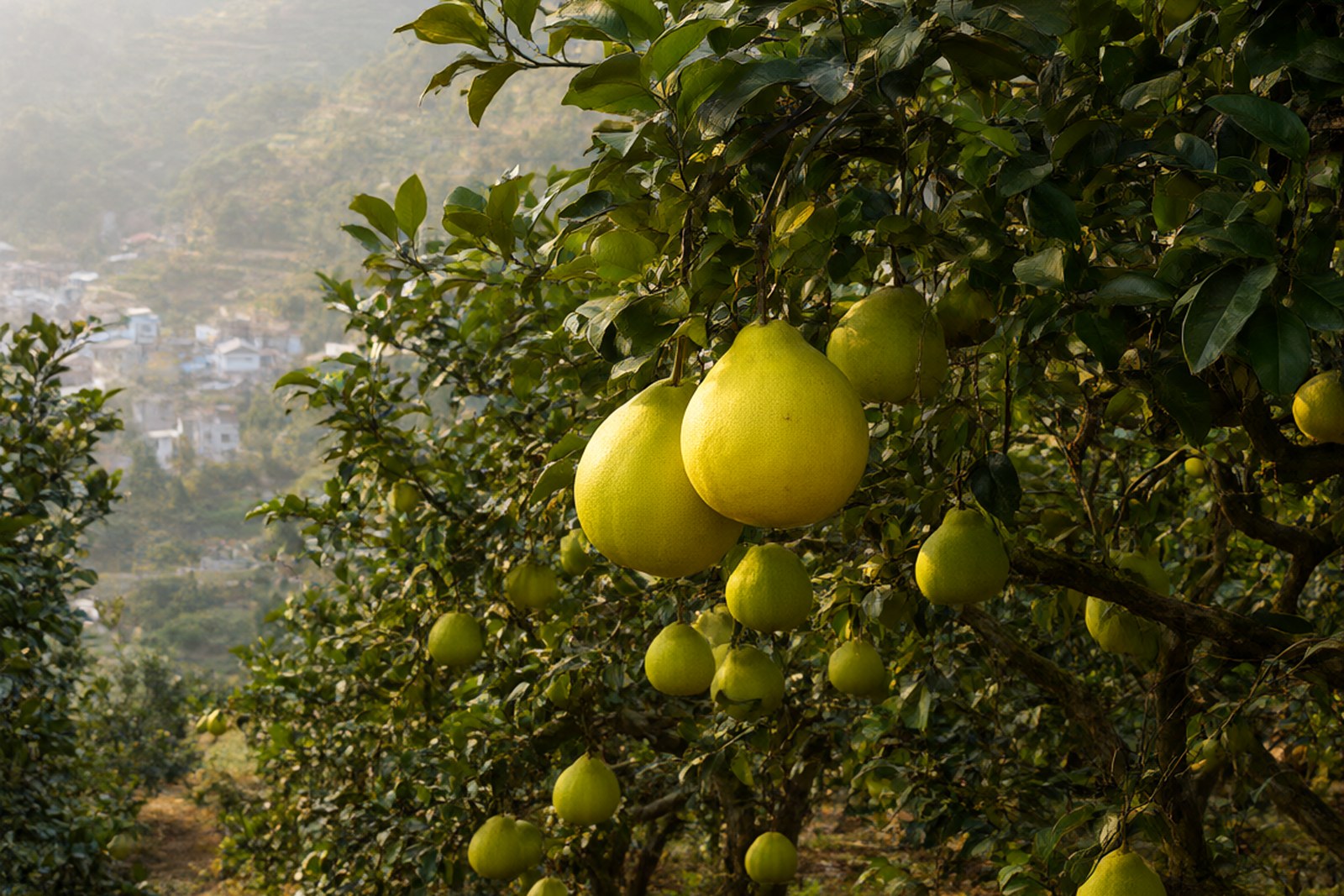
The fruit itself earns the nickname on three counts. The skin is thick and easy to peel, coming away from the flesh in broad pieces without a fight; the flesh is fine, almost fibreless, so that each segment eats clean rather than stringy; and the juice runs sweet with barely a trace of acid, a softness that makes the pomelo edible in quantities that sharper fruit would not survive. Locals rate a good Changshou pomelo by the weight in the hand relative to its size – dense means juicy – and by the fine grain of the flesh when a segment is pulled apart. It is a fruit that has been selected for patience and sweetness at once, and the pairing shows.
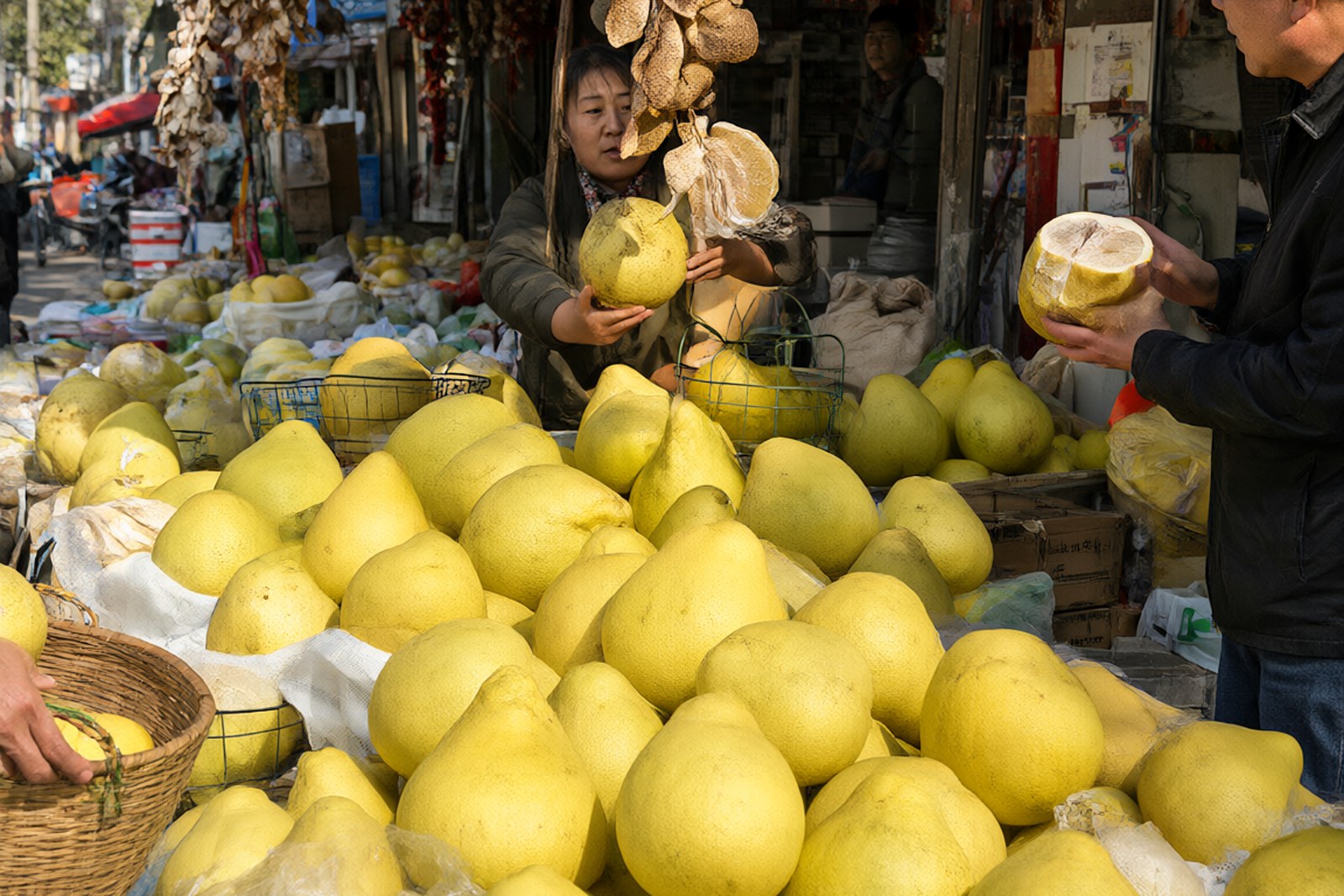
The harvest peaks in late autumn, and that is when the district turns into its own market. The ’ten-li pomelo country’ – 十里柚乡 shílǐ yōuxiāng, the pomelo country stretching ten li – fills with picking crowds, the villages press the surplus into pomelo-honey tea and candied peel, and the fruit fairs of October turn the slow-city roads into one long market, stalls running lane to lane with crates stacked into pyramids. 慢城 mànchéng, the Slow City farm belt south of the lake, is the heart of the orchard country, and in the picking season its cycling loops become tasting routes, with baskets leaving the orchards faster than the trailers can carry them.
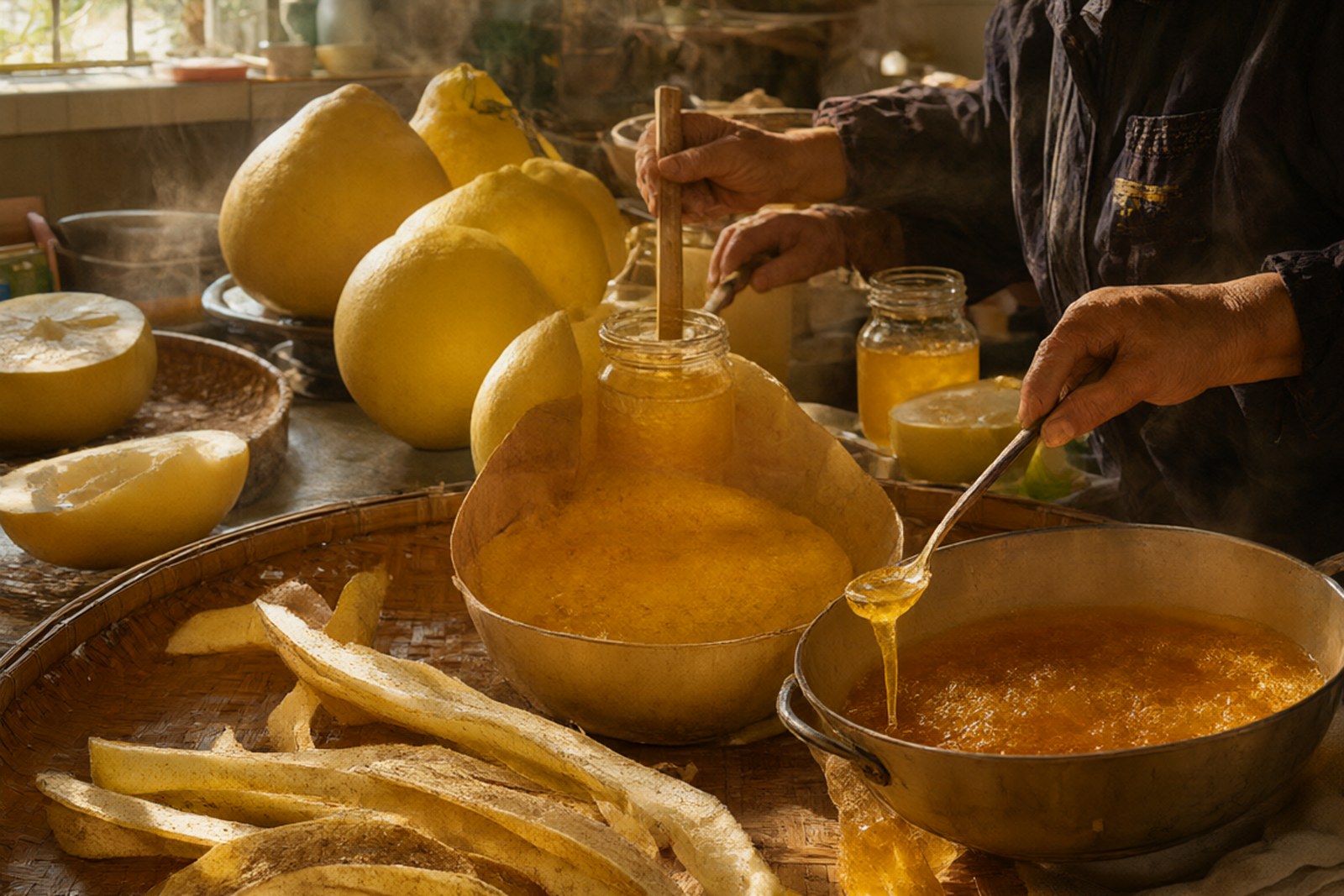
The surplus has its own craft. 柚子蜜茶 yòuzi mì chá, pomelo-honey tea, is the village method for turning the season into shelf life: the peel and flesh simmered with honey into a golden preserve, spooned into hot water through the winter as a sweet, floral drink. The candied peel is the older form – strips of skin cooked in sugar until translucent and chewy, the green note of the pith converted into something between sweet and medicine. Both exist because the fruit keeps so well that even its surplus can be processed without hurry, and both taste of the same orchard air that the fresh segments do.
The discipline of this page is worth stating plainly. The record consulted – the plan’s own facts – names the nickname, the geographic-indication status, the hundred-thousand-mu scale, the thick skin, the fine flesh, the sweet low-acid juice, the late-autumn harvest, the picking season, the honey tea and candied peel and the October fairs; it does not name a founding grower, a founding year, a posted price or a single farm address, and none is invented here. The honest page describes a district-wide orchard economy rather than one celebrated estate, and dates the season by its rhythm – late autumn, the fair weeks – rather than to any precise calendar.
Words and Names
沙田柚 shātián yòu, the shatian pomelo, Changshou’s “natural canned fruit”: thick-skinned, easy to peel, fine almost fibreless flesh and a honeyed juice with barely a trace of acid, able to keep months in a cool room. 十里柚乡 shílǐ yōuxiāng, the “ten-li pomelo country,” the orchard belt at the heart of the harvest; 慢城 mànchéng, the Slow City, the district’s branded citrus-and-pomelo farm belt; 柚子蜜茶 yòuzi mì chá, pomelo-honey tea, the simmered peel-and-honey preserve for winter. 地理标志 dìlǐ biāozhì, the geographic-indication protection the fruit carries. The record names no founding grower, year or figure price, and none is invented here.
What the Locals Know
The first thing locals know is the handshake test: a good pomelo feels heavy for its size, dense with juice, and the skin should be taut rather than spongy. They read the shape too – the Changshou fruit’s proportions are familiar to anyone who has bought them by the crate for years – and they buy in late autumn not only because the harvest is freshest but because the fruit improves in storage, mellowing in a cool corner of the house while the acidity drops further. A pomelo bought at the fair and opened at New Year is, by local agreement, better than the one eaten the week it was picked.
The second thing locals know is what happens after the flesh is gone. The thick peel is never waste: strips dry on every windowsill in the orchard villages in the season, for the candied pot and for the honey tea, and a household’s November smell of simmering peel and honey is as much a marker of the harvest as the orchards themselves. Locals also know that the fruit is the standard after rich meals – the fresh segments cut through a heavy dinner – and that crates of it travel as New Year gifts the way other regions send wine.
flowcloud would say that the Changshou shatian pomelo is the “natural canned fruit” – thick-skinned, fine-fleshed and honey-sweet with barely a trace of acid, a geographic-indication crop grown across nearly one hundred thousand mu of orchard hills – harvested in late autumn when the ten-li pomelo country fills with picking crowds and the October fairs turn the slow-city roads into one long market, the surplus pressed into pomelo-honey tea and candied peel and the fruit gifted by the crate at New Year, with no founding grower or price on the record and none invented. All checked October 2026.
Where to find it: the pomelo country runs south of 长寿湖 Chángshòu Hú, Changshou Lake, through the Slow City farm belt of 长寿区 Chángshòu Qū, Changshou District, where the orchard roads and cycling loops pass gate after gate selling fruit from the trees beside them, and the October fruit fairs gather the whole harvest into the village lanes; the orchard gate that weighs the fruit in front of you is the practical guide. No specific address, posted price or founding year is on the public record consulted. Pair this page with the slow-city travel page for the cycling routes between the orchards, and with the lake-camping page for an autumn weekend that ends in pomelo instead of marshmallows.