
Chaogan: The Starch-Glued Intestine and Liver Bowl of Xicheng District, Beijing
炒肝稠浓肝肠嫩,蒜香一勺老北京。Chǎogān chóunóng gāncháng nèn, suànxiāng yī sháo lǎo Běijīng – Chaogan thick and rich, liver and intestine tender; a spoonful of garlic, the taste of old Beijing.
炒肝 chǎogān chaogan is the breakfast bowl that divides Beijingers by their tolerance for texture, and its name is a small lie: 炒 chǎo means “fried”, but there is no frying in it – the dish is a 猪肠 zhūcháng pig-intestine and 猪肝 zhūgān pig-liver stew bound into a glossy, gravy-thick suspension by a heavy 勾芡 gōuqiàn starch slurry. The craft is in the glue and the timing: the intestine is cleaned, blanched and cut into short lengths, the liver into thin slabs, and both are simmered in a 蒜 suàn garlic-forward broth until the starch is whisked in and the whole thing turns from soup into something you eat with a spoon rather than chopsticks – a Beijinger drinks 炒肝 chǎogān from the rim of the bowl, never lifts it with sticks, and the regular who picks up chopsticks has outed himself as a stranger. The flavour is 蒜香 suànxiāng garlic-first, 酱香 jiàngxiāng soy-deep, with the liver kept just shy of firm so it reads tender rather than chalky, and the intestine chewy rather than rubbery.
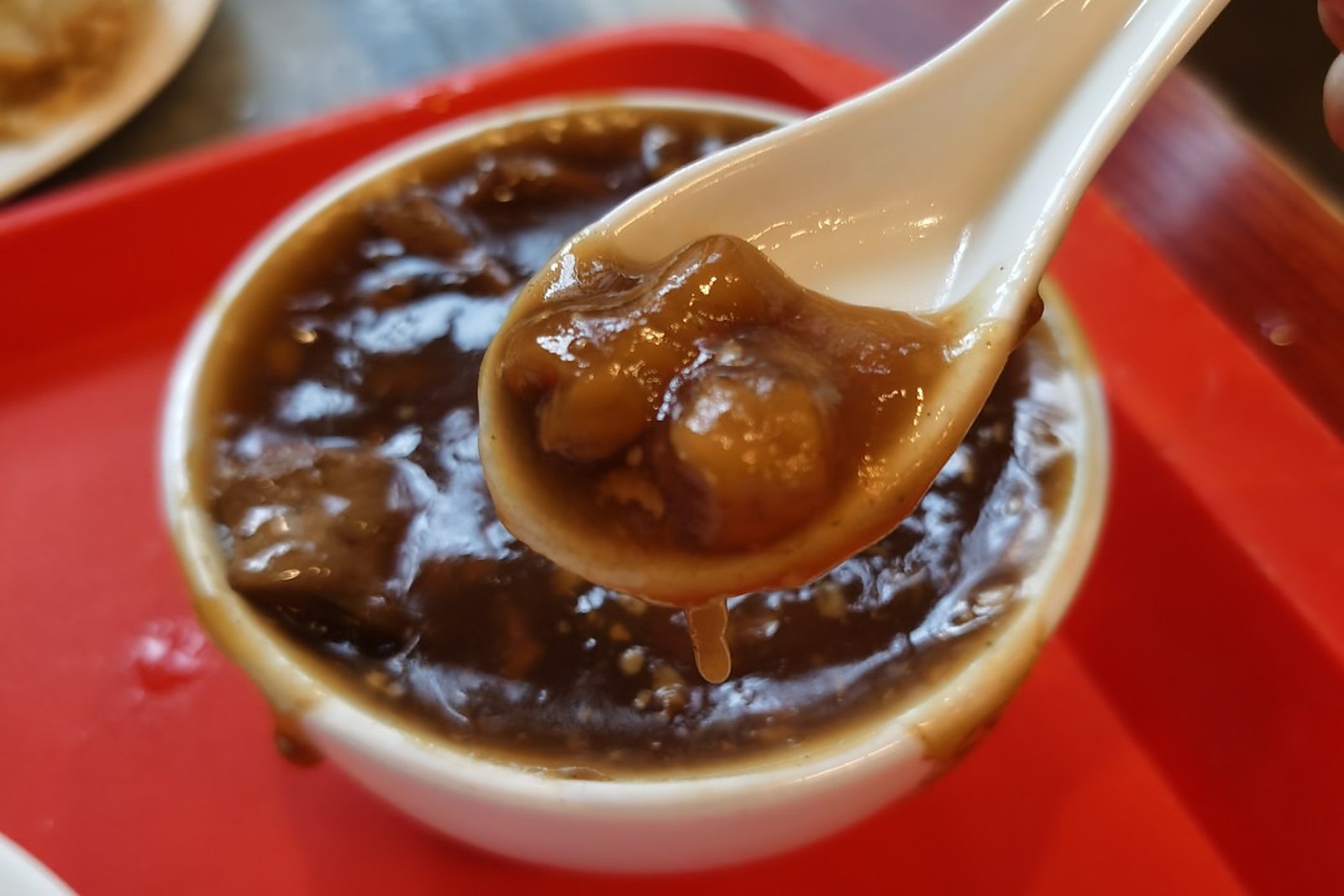
The honest pairing is the 包子 bāozi steamed bun: a bowl of 炒肝 chǎogān and a couple of 猪肉白菜 zhūròu báicài pork-and-cabbage buns is the canonical Xicheng breakfast, the kind of working meal a hutong regular eats standing at the counter before the morning is properly awake. This is a morning food in the strict sense, poured at the 早点铺 zǎodiǎnpù breakfast shops and the 护国寺小吃 Hùguósì Xiǎochī Huguo Temple snack counters that dot 西城区 Xīchéng Qū – dense along 护国寺街 Hùguósì Jiē Huguo Temple Street and the 西四 Xīsì Xisi corridors – thinning out by mid-morning and gone by lunch, so an afternoon visit is a plan to eat nothing. The bill is among the cheapest cooked things in the district; call it worth confirming the details rather than a number, because the price moves only in single digits and the point is the bowl, not the tab.
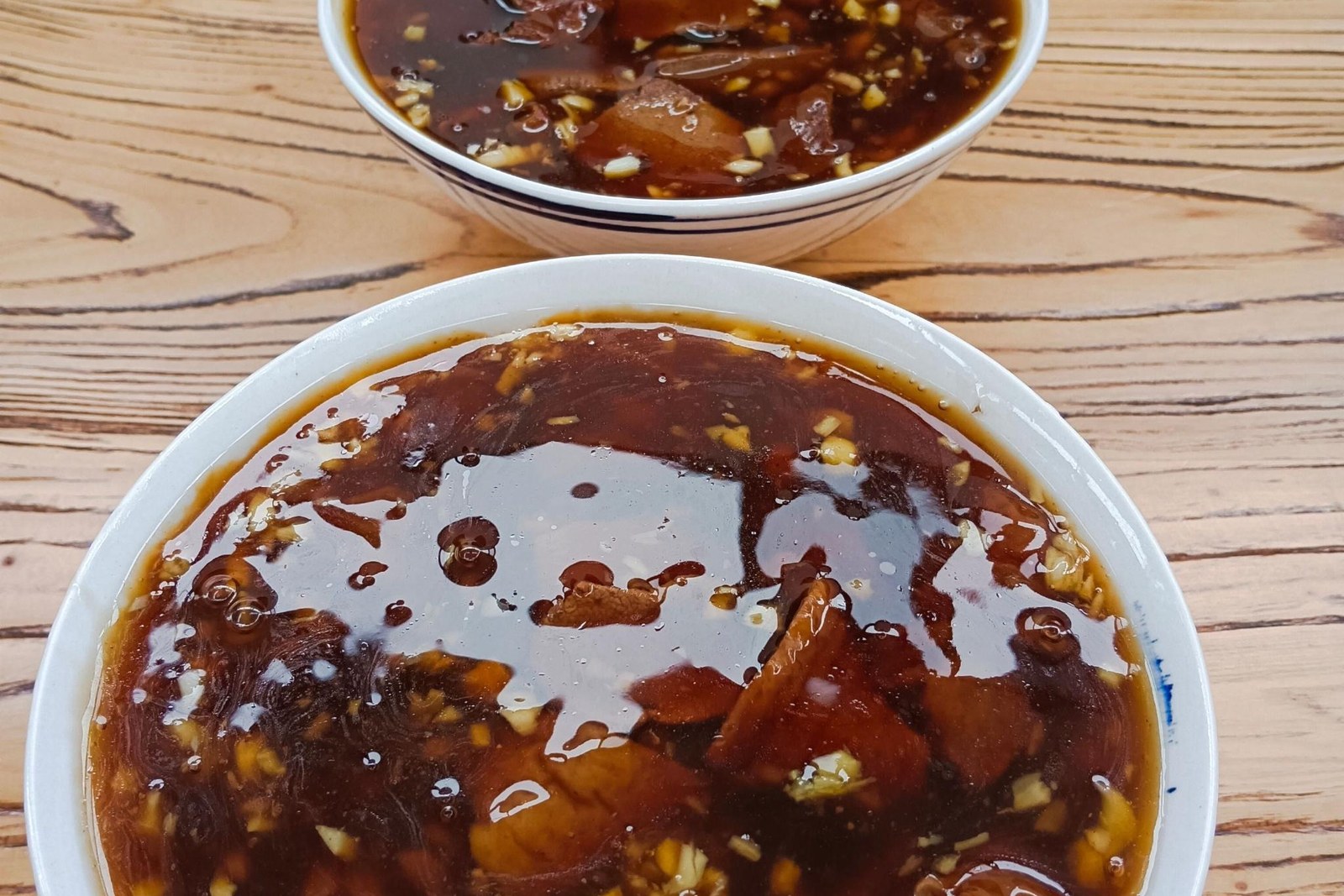
The wry truth is that 炒肝 chǎogān is over-rated as an offal dare and under-rated as a texture study: travel lists file it next to the sour 豆汁儿 dòuzhīr, while locals file it under breakfast, an everyday glue of garlic and starch that opens the stomach the way coffee opens someone else’s. The real exam is the slurry – a properly 勾芡 gōuqiàn bowl is glossy and coats the back of a spoon, never watery and never a stiff paste, and the liver must be sliced thin and dropped late so it stays tender; a grey, overcooked liver or a soupy, under-set gravy means the counter is coasting on the name. Season barely registers – warm in winter steam, coolish in summer – but the hour is everything, and the honest bowl is the one in front of a regular who is already halfway through it at eight.
The self-deprecating footnote: a food writer will explain the etymology of 炒 chǎo to a counter owner who has been whisking starch since before the writer was born, drink the bowl from the wrong side, announce the slurry “texturally ambitious”, and then order a second 包子 bāozi to prove the first was research – which is the honest grade: 炒肝 chǎogān is a breakfast glue that survives its own weirdness, and the writer who came to audit the texture leaves having slurped the rim like a native.
Words and Names
炒肝 chǎogān / chaogan · a starch-bound pig-intestine and liver stew eaten with a spoon, not chopsticks 勾芡 gōuqiàn / starch slurry · the thickening that turns the broth from soup into a glossy gravy 猪肠 zhūcháng / pig intestine · the chewy half of the bowl, cleaned and cut short 猪肝 zhūgān / pig liver · the tender half, sliced thin and dropped late 包子 bāozi / steamed bun · the canonical breakfast partner, pork-and-cabbage 护国寺小吃 Hùguósì Xiǎochī / Huguo Temple snacks · the Xicheng snack chain serving chaogan and the hutong breakfast set 早点铺 zǎodiǎnpù / breakfast shop · the morning counter where the pot is full at seven and empty by noon 西城区 Xīchéng Qū / Xicheng District · the Beijing district of Huguo Temple Street and the Xisi snack corridors
What the Locals Know
- Drink it, do not lift it: 炒肝 chǎogān is eaten from the bowl’s rim with a spoon – chopsticks mark you as a tourist before you have tasted a thing.
- The hour is the bowl: the pot is full at seven, thinning by nine, gone by mid-morning – an afternoon order is an empty pot and a shrug.
- The slurry is the exam: glossy and spoon-coating means a house that knows its starch; watery or pasty means it is trading on the name (worth confirming the details).
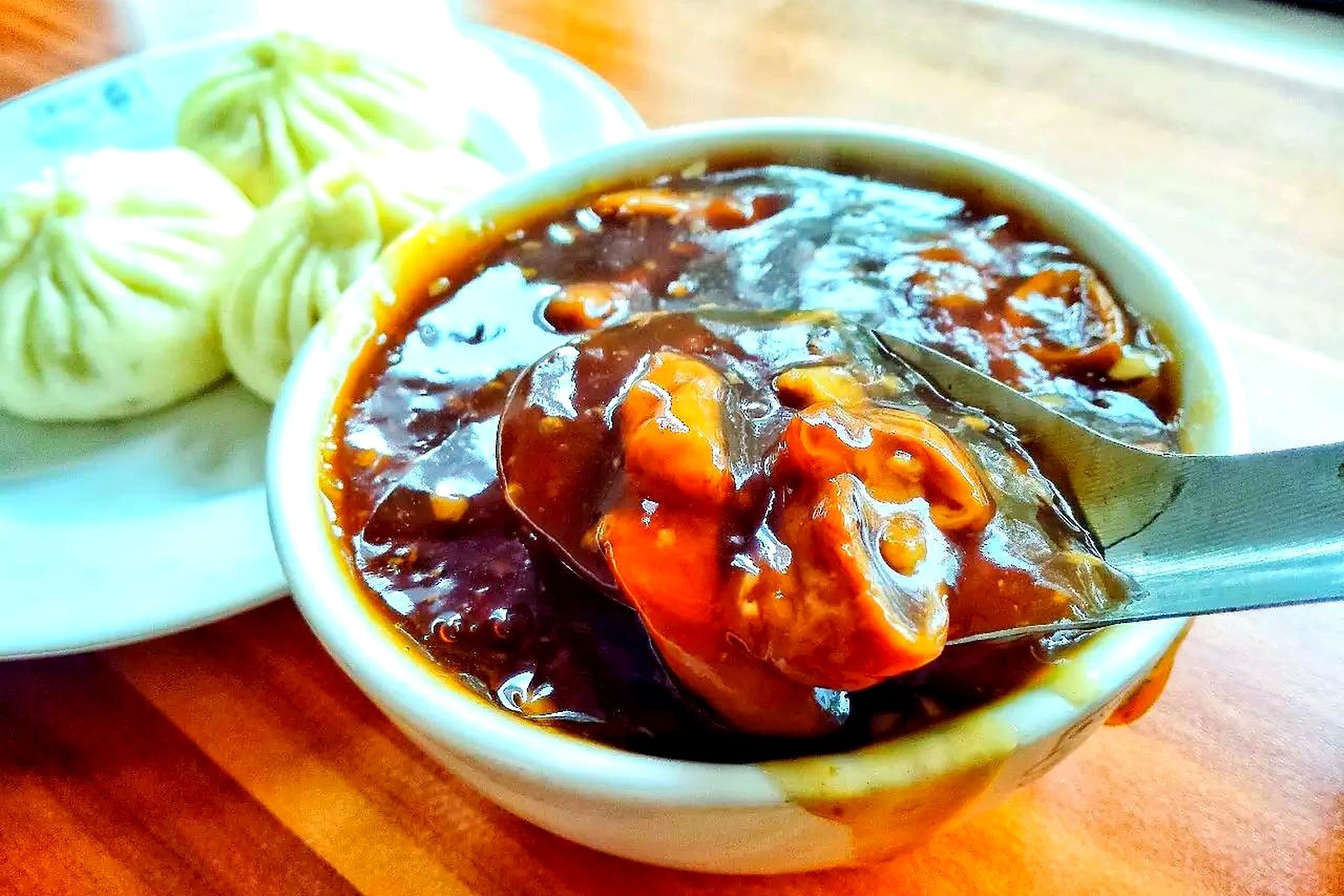
flowcloud would say that the 炒肝 chǎogān is Xicheng District’s breakfast glue – 猪肠 zhūcháng intestine and 猪肝 zhūgān liver bound by a 勾芡 gōuqiàn starch slurry into a garlic-forward bowl you drink from the rim, paired with a 包子 bāozi and found at the 护国寺小吃 Hùguósì Xiǎochī counters before ten – and that the honest move is to go early, eat it standing, and judge the house by the sheen of the gravy, because this is a working breakfast that outlasts its own strangeness. All checked October 2026.
Where to find it: Xicheng District Xīchéng Qū – the 护国寺小吃 Hùguósì Xiǎochī snack counters along 护国寺街 Hùguósì Jiē Huguo Temple Street and around 西四 Xīsì Xisi, mornings only (worth confirming the details – which counters still simmer intestine in-house); a bowl runs in single digits, eaten with a 包子 bāozi before ten. Chaogan is the starch-glued intestine and liver bowl of Xicheng District, Beijing, spoon before chopsticks.