
Xinjiang Stir-Fried Rice Noodles: The Fiery Sauce of the Student Streets, the Thick-Noodle Wok Toss and the Spice Ladder of Hami in Hami, Xinjiang
一勺红酱炒天下,米粉裹辣不回头。Yī sháo hóngjiàng chǎo tiānxià, mǐfěn guǒ là bù huítóu – One ladle of red sauce stir-fries the world; the rice noodles wrap the heat and never look back.
新疆炒米粉 Xīnjiāng chǎomǐfěn Xinjiang stir-fried rice noodles are the young city’s own dish – thick, round rice noodles tossed in a wok with a thick red sauce of fermented broad-bean paste and dried chili, often with chicken, beef or celery riding along, finished so that every strand wears the sauce like paint (worth confirming the details for the spice-ladder levels, since the counters grade heat from 微辣 wēilà mild to 爆辣 bàolà explosive and the top rung is not a joke). The dish spread from Urumqi’s student streets across the province in a generation, and Hami’s counters run the same religion: noodles par-boiled to a chewy firmness, sauce fried until the oil splits red, and a school-hour queue that judges each shop by its wok. The register is controlled fire: a meal eaten with tissue on standby and a drink within reach.
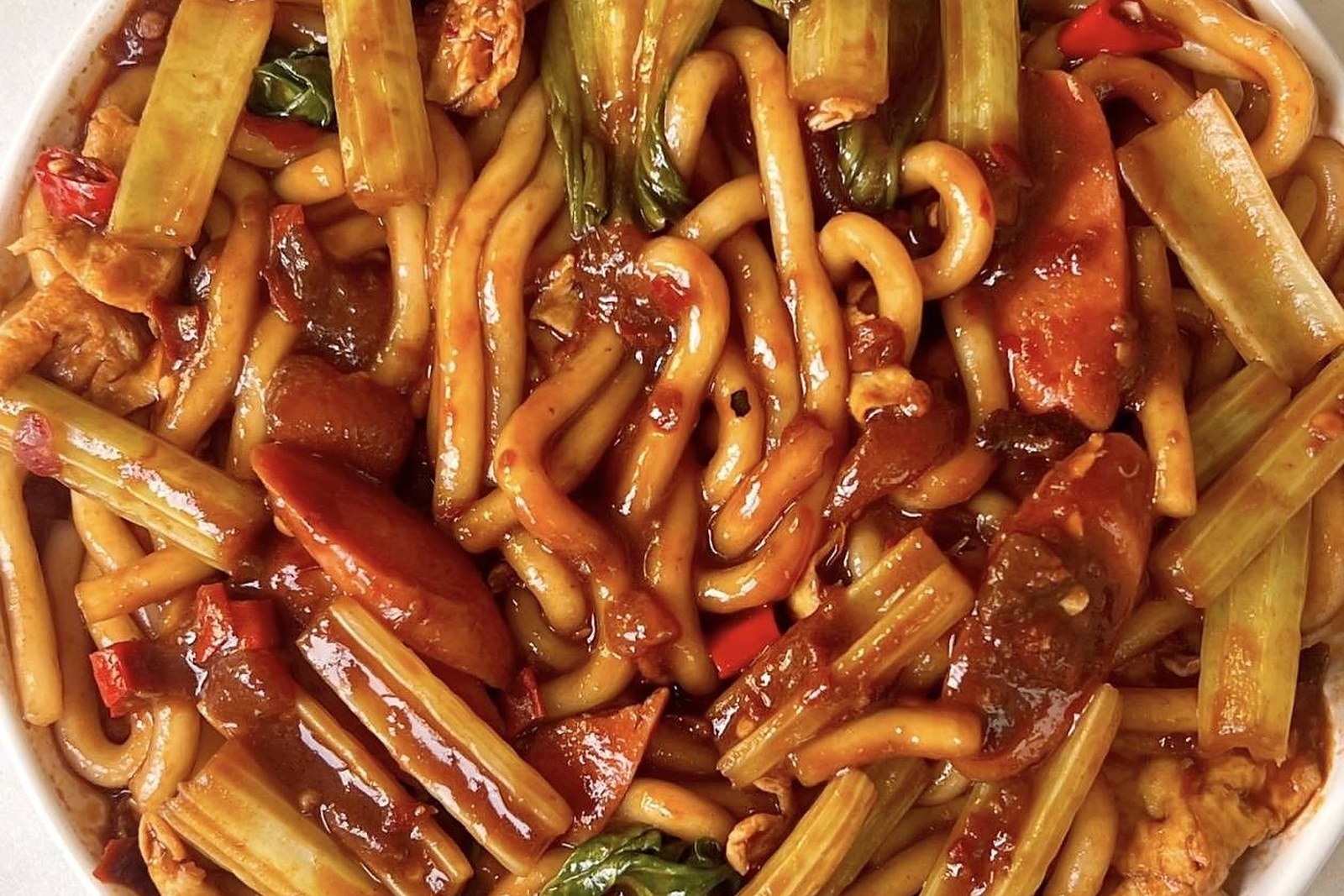
Call it honestly: counter money on a school clock. Getting there is one door: the noodle counters around the city’s school gates and market arcades keep the woks hot through the afternoon (worth confirming the details for the afternoon queue peaks, which the school hours drive), and the night-market stalls plate the same dish to the evening crowd. A plain chicken plate prices at pocket-change money, a loaded beef-and-quail-egg plate at snack-within-reason money, a shared double-wok order at meal-within-reason money – though exact figures are worth confirming the details on rather than quoting, the counters repricing rarely. The crowds run to the bell: the after-school hours stack the queues, the weekday mornings hand the arcades to the shift workers, and the hour just before the school bell – when the first wok of the afternoon comes off – is the eater’s own.
The honest star is the sauce discipline: broad-bean ferment fried past its rawness, chili bloomed in oil rather than drowned, and a thickness that clings instead of pooling. What gets oversold is the “just spicy noodles” framing: guides sell a dare where the dish is a craft, because the same heat without the ferment reads flat, and the same ferment without the wok toss reads greasy. What repays is the noodle chew – thick strands that hold their snap under the sauce – and the ordering arithmetic that pairs a heavy sauce with a light egg or a celery crunch (worth confirming the details for each counter’s house sauce, which the regulars can name blind).
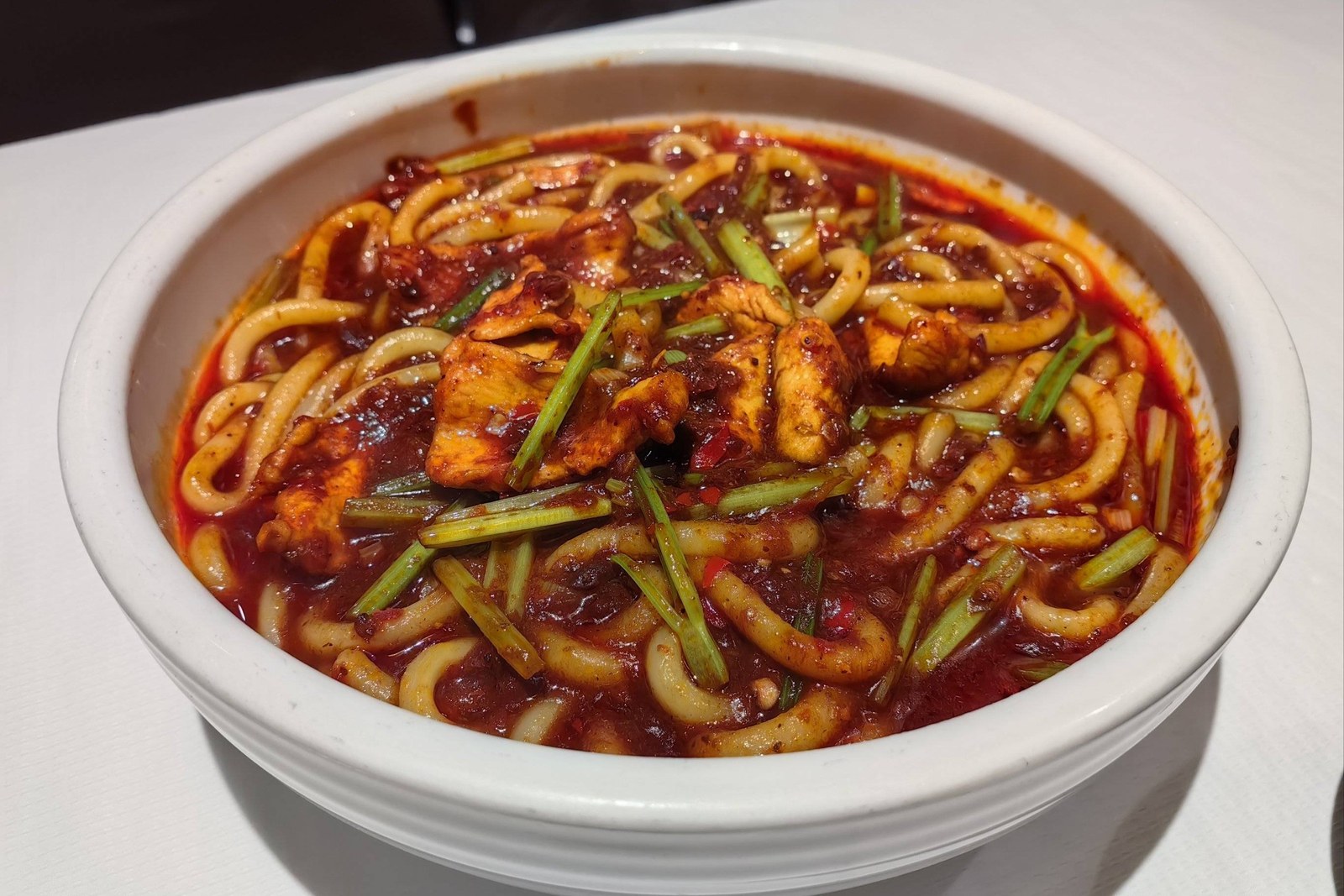
The town’s deepest habit is the spice ladder itself: first-timers ordered down a rung by the counter staff, veterans ordering 爆辣 bàolà with a straight face, and the shared table ritual of lending tissue across the sweat – a dish eaten as a minor ordeal and repeated weekly anyway.
The rest of this Hami list keeps other tables: the bin sweetness of 哈密大枣 Hāmì dàzǎo the red dates fills the pantry, the salt-and-lamb honesty of 手抓羊肉 shǒuzhuā yángròu the hand-grabbed mutton fills the noon, the breakfast steam of 羊杂汤 yángzà tāng the offal soup opens the day and the layered pull of 油塔子 yóutǎzi the oil tower anchors the teapot – four more doors into the same 哈密市 Hāmì Shì Hami City.
Words and Names
What the Locals Know
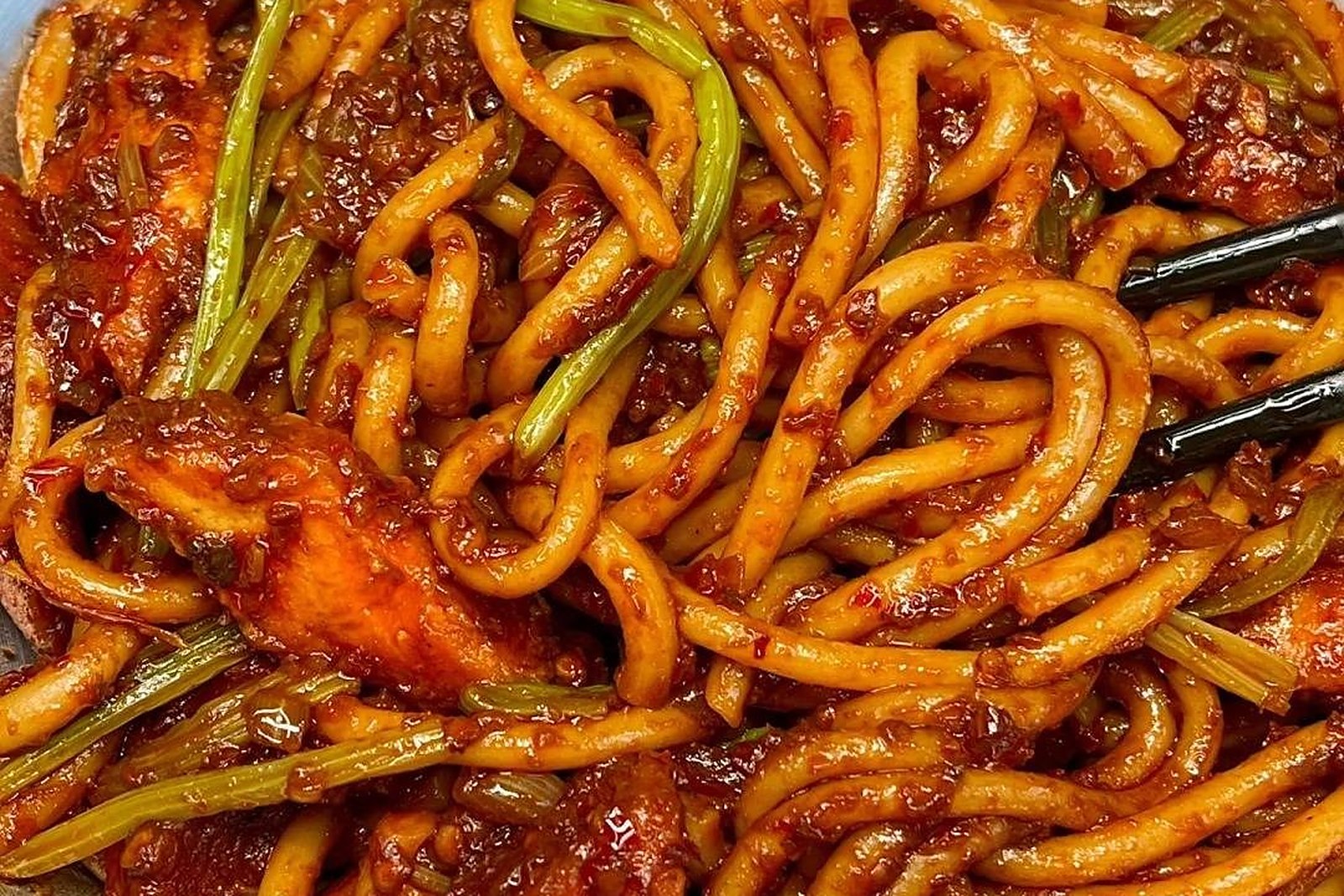
flowcloud would say that the 新疆炒米粉 Xīnjiāng chǎomǐfěn is the student streets’ red badge and the wok’s own spice ladder – thick noodles that answer the sauce cabinet with a full coat – and that the honest move is to order one rung braver than you plan, watch whether the sauce clings to the last strand, and let the tissue-lending table cast the vote, because the ferment built the depth and the chili kept the promise. All checked November 2026.
Where to find it: 哈密市 Hāmì Shì Hami City, Xinjiang – the noodle counters around the school gates and market arcades, where the 炒米粉 chǎomǐfěn keeps the red-sauce register through the year and the wok counters and night-market stalls do the tossing, reached on foot from the central streets or by short taxi hops between arcades (worth confirming the details for which counters grind their own sauce base and which trade on the standard paste, counter doors turning over as student streets do), where the trade keeps the school clock – after-school hours the stacked queues, weekday mornings the shift workers, pre-bell minutes the eater’s own; pocket-change to meal-within-reason money by the plate, so call it worth confirming the details rather than a fixed number, and let the wok cast the vote. Xinjiang stir-fried rice noodles are the student streets’ controlled fire, eaten one sauce-coated, chew-holding strand at a time – the taste of 哈密市 Hāmì Shì Hami City eaten one red-glazed, tissue-adjacent mouthful at a time. All checked November 2026.