
Chaoshan Beef Hotpot
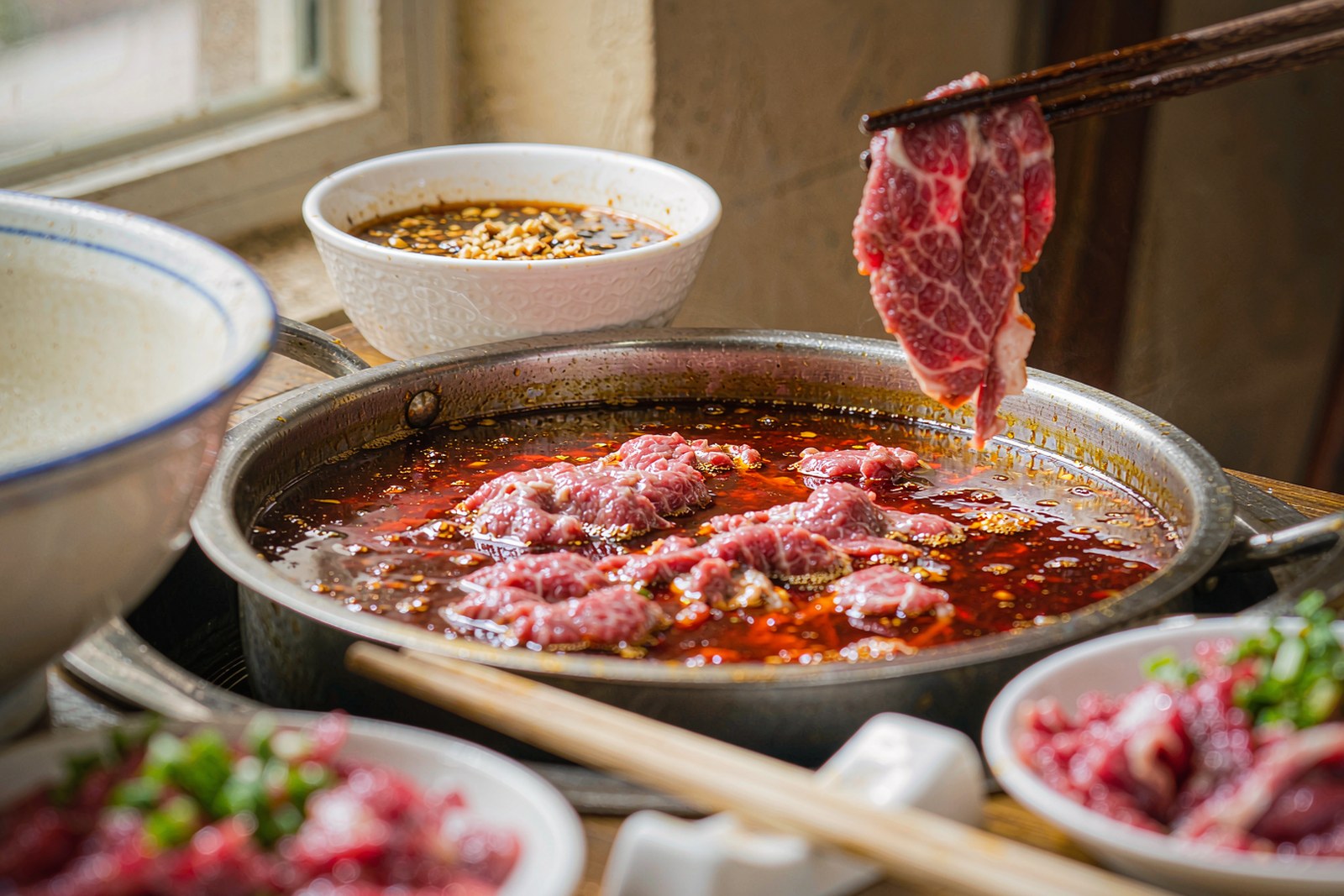
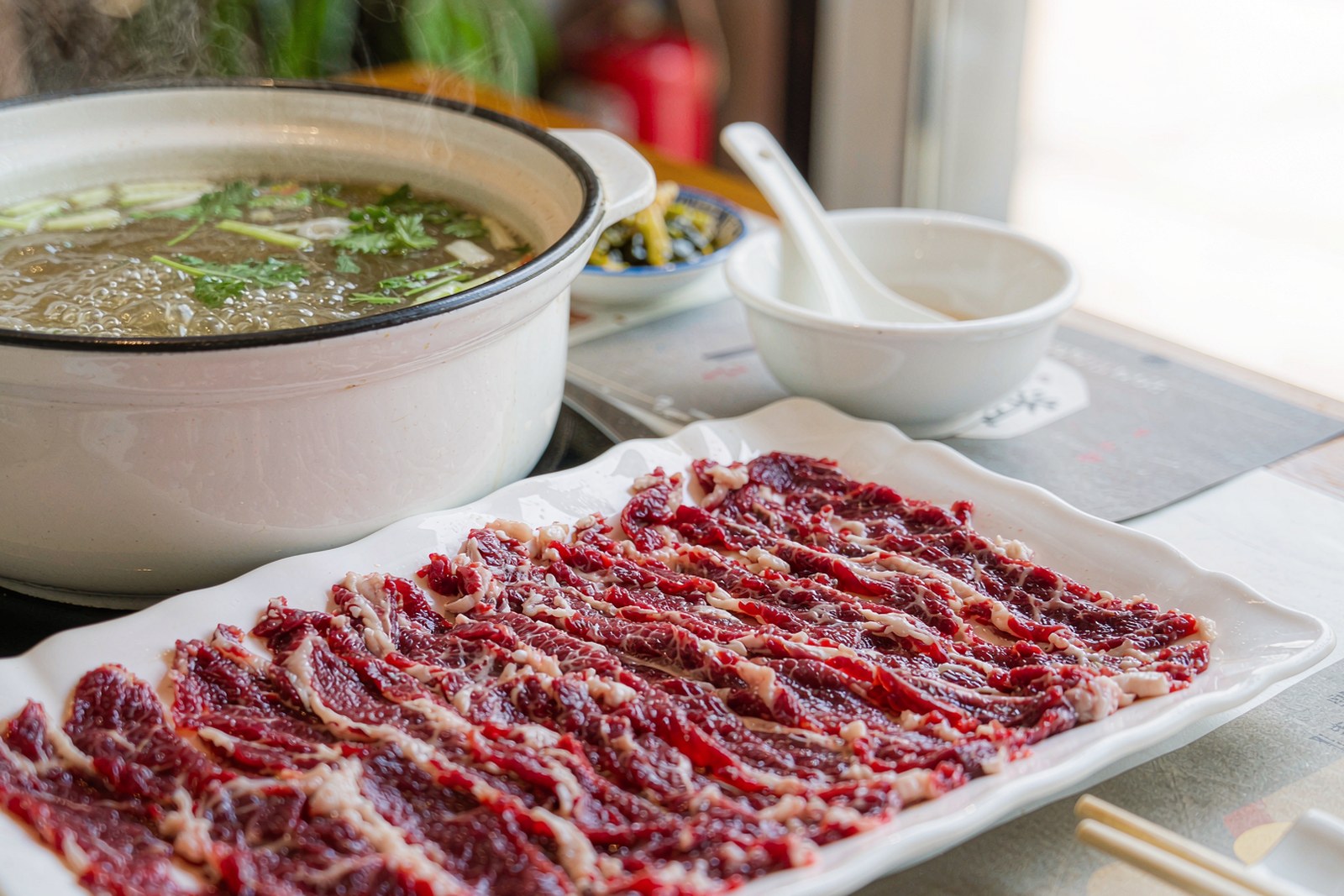
The broth was barely a broth, clear and faintly beefy, and the plate in front of me held roses of meat so thin the marbling showed through like veins in stone. I lowered one into the rolling pot, counted to eight, and pulled it out pink and trembling. It tasted of beef and nothing else, sweet and clean, and I understood why people in 潮汕 Cháoshàn line up at midnight for this. This is 潮汕牛肉火锅 Cháoshàn niúròu huǒguō.
潮汕牛肉火锅 Cháoshàn niúròu huǒguō means “Chaoshan beef hotpot,” from the 潮汕 Cháoshàn region of eastern Guangdong (潮州 Cháozhōu and 汕头 Shàntóu) and their obsession with fresh local beef. The style grew in the late 20th century as 潮汕 Cháoshàn butchers perfected same-day slaughter and knife-cut service, and it swept Guangdong in the 2010s. It matters because it is the province’s argument against sauce: where other hotpots hide meat in chili, 潮汕 Cháoshàn serves beef so fresh it needs only a dip of 沙茶 shāchá (barbecue sauce) and 芹菜 qíncài celery salt.
The Craft
The foundation is the cow itself, a 土黄牛 tǔhuángniú local yellow cattle slaughtered hours before service and cut by hand the same day, because 潮汕 Cháoshàn doctrine says beef past a few hours is already old. The butcher separates the carcass into named parts, 吊龙 diàolóng (tenderloin strip), 五花趾 wǔhuāzhǐ (heel muscle), 匙柄 shíchǐng (shoulder), and 脖仁 bórén (neck tendon), each with its own texture and a loyal following.
The pot holds a clear 牛骨 niú gǔ beef-bone broth, often with a 白萝卜 báiluóbo radish and 玉米 yùmǐ corn, kept at a gentle boil. Each slice is dunked for a counted few seconds, 八秒 bā miǎo (“eight seconds”) for thin cuts, then dipped in 沙茶酱 shāchájiàng (a sweet sesame-peanut-barbecue sauce) or 普宁豆酱 Pǔníng dòujiàng (Puning bean paste). The meal ends with 粿条 guǒtiáo rice noodles or 牛肉丸 niúròu wán beef balls cooked in the same broth.
How to Eat It
Order a mix of parts rather than one cut, and cook each in the broth just until it changes color, never to gray. The 五花趾 wǔhuāzhǐ and 脖仁 bórén are the prized, chewy cuts; 吊龙 diàolóng is the safe, tender start. Dip lightly in 沙茶 shāchá, and save the broth for 粿条 guǒtiáo at the end. In 潮汕 Cháoshàn the ritual is late and loud, and in Guangzhou or 深圳 Shēnzhèn the best shops ship the beef daily from 汕头 Shàntóu. Freshness is the whole rule.
Words and Names
潮汕牛肉火锅 breaks into 潮汕 Cháoshàn (the-east-Guangdong region), 牛肉 niúròu “beef,” and 火锅 huǒguō “fire pot,” spoken ciu4 saan1 ngau4 juk6 fo2 wo1. The cuts have their own names: 吊龙 diàolóng “hanging dragon,” 脖仁 bórén “neck kernel,” 五花趾 wǔhuāzhǐ “five-flower toe,” a butcher’s poetry. The sauce 沙茶 shāchá is the Chaoshan 沙茶酱 shāchájiàng, related to Southeast Asian 沙爹 shādiē satay. A 牛肉丸 niúròu wán is the region’s famous bouncy beef ball.
What the Locals Know
Freshness is everything ask when the cow was slaughtered, hours matter.
Count your seconds thin cuts need 八秒 bā miǎo, any longer and they toughen.
Order many cuts 吊龙 diàolóng, 脖仁 bórén, 五花趾 wǔhuāzhǐ each tastes different.
Dip in 沙茶 shāchá the sauce is the point, but keep it light.
Save the broth cook 粿条 guǒtiáo noodles last to catch the beef essence.
flowcloud would say that the shortest distance between a field and a mouth is a pot that never stops boiling.
Where to find it: Chaoshan beef hotpot, 潮汕牛肉火锅 Cháoshàn niúròu huǒguō, is the late-night cult of eastern Guangdong, best at the source in 汕头 Shàntóu and 潮州 Cháozhōu, and now across Guangzhou and 深圳 Shēnzhèn where shops fly in 土黄牛 tǔhuángniú beef daily. Order a platter mix of 吊龙 diàolóng, 脖仁 bórén, and 五花趾 wǔhuāzhǐ with 沙茶酱 shāchájiàng and finish with 粿条 guǒtiáo; a meal for two runs roughly 150 to 280 yuan, eaten standing-room busy most nights after nine.