
In 潮州 Cháozhōu, they will tell you that a proper beef ball should bounce. Not metaphorically — literally. Drop one on the table and it should come back up to about the height of your hand. That is the whole test, and it explains everything about why these little grey-pink spheres are treated with such seriousness in the east of 广东 Guǎngdōng.
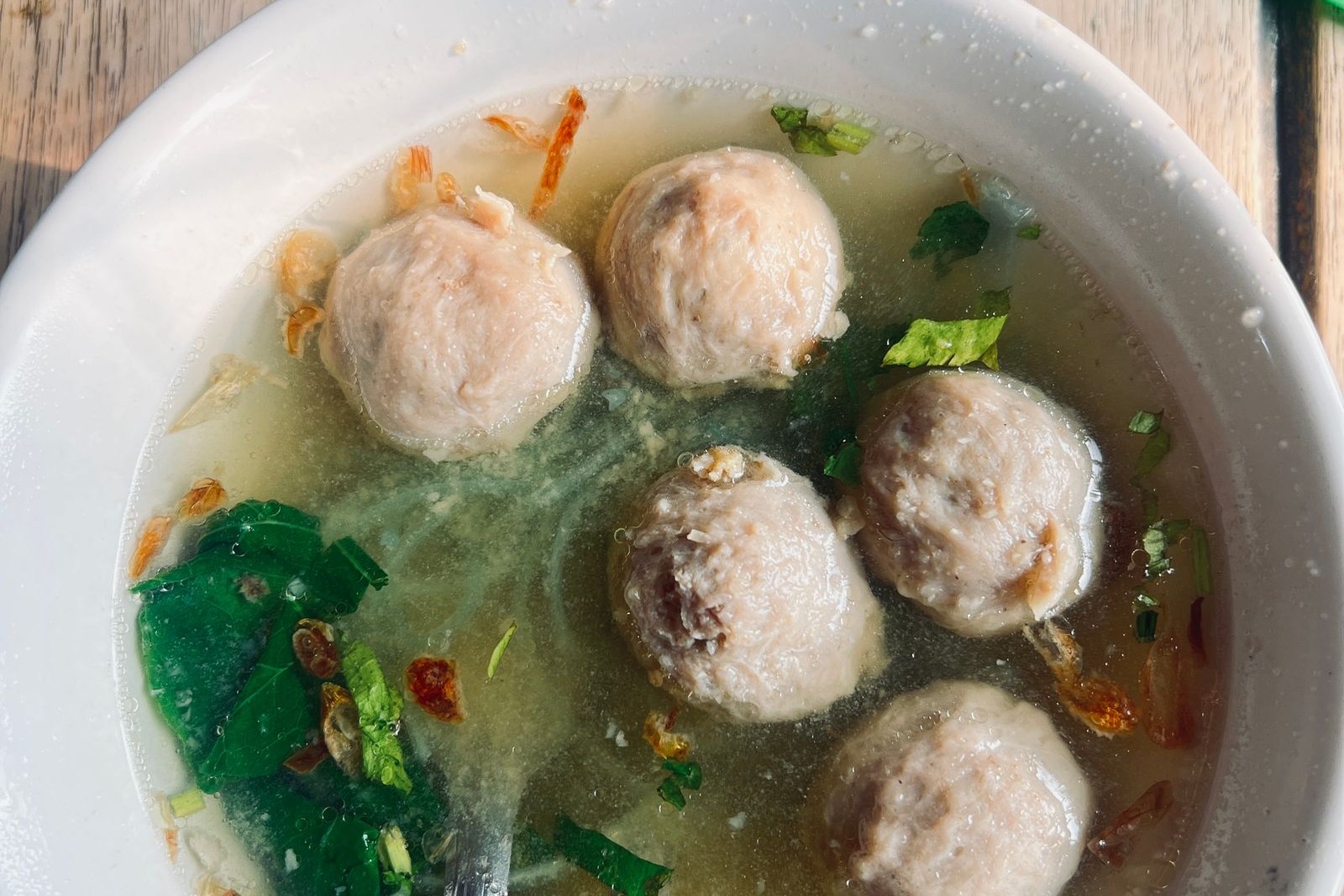
牛肉丸 niúròuwán — beef balls — look humble and taste anything but. Bite into one and it resists, then gives, then releases a small burst of juice; the texture is springy almost to the point of rubbery, in the best sense. It is a texture that no machine has ever quite replicated, which is why the good shops still make them the old way.
Why They Bounce
The bounce is engineering, not magic. Traditional Chaozhou beef balls are made with a pair of heavy square-headed mallets, and the meat — usually a lean cut of beef, sinew removed — is pounded for a long time until it becomes a sticky, fibrous paste. Only then is it seasoned, with just salt and a little baking soda to help it hold water, and squeezed by hand into balls that are poached in barely-simmering broth.
The pounding is what does it. It aligns the muscle fibres and works the proteins into a fine, elastic network, so that when the ball is cooked it springs back rather than crumbling. The salt is what lets it hold juice; without it the ball would be dry and dense. A shop that skips the pounding, or uses a food processor, will produce something that tastes of beef but has none of the spring.
How They Are Eaten
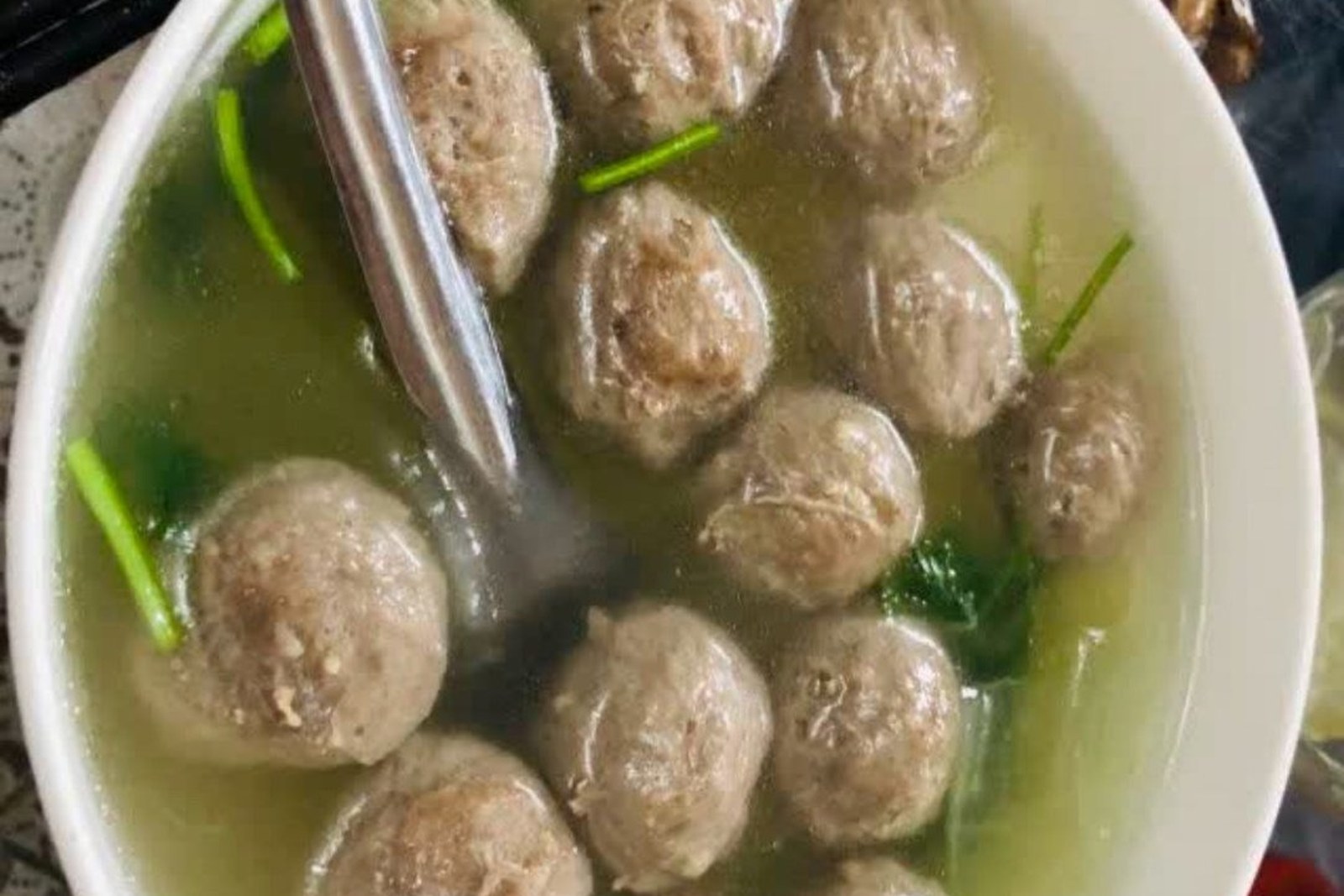
The classic way is in a bowl of clear broth, plain enough that the beef ball is the whole point, sometimes with a scatter of celery, coriander, or a few leaves of lettuce. They are also the backbone of Chaoshan beef hotpot, where the balls go into the bubbling pot alongside thin-sliced beef, and of a simple beef ball noodle soup eaten at any hour of the day.
The dipping sauce matters: a small dish of 沙茶酱 shāchá jiàng (satay sauce), sweet and nutty, is the standard partner. Some shops offer a chilli-and-soy mix instead. Either way, the ball is dipped, not soaked — you want to taste the beef.
Words and Names
- 牛肉丸 niúròuwán — beef balls, the plain name
- 潮汕 Cháoshàn — the Chaoshan region, covering Chaozhou, Shantou and Jieyang, and the heartland of this cooking
- 沙茶酱 shāchá jiàng — Chaoshan satay sauce, a sweet-savoury dip of peanuts, garlic and dried seafood
- 手打 shǒudǎ — “hand-hammered”, the label worth looking for
What the Locals Know
Ask whether the balls are 手打 shǒudǎ (hand-made) or machine-formed. Many places nowadays make them with a machine, and the difference in texture is immediately obvious to anyone who has eaten both. Also, a good shop keeps its broth deliberately plain; if the soup is heavily flavoured, it is often there to cover for a lesser ball.
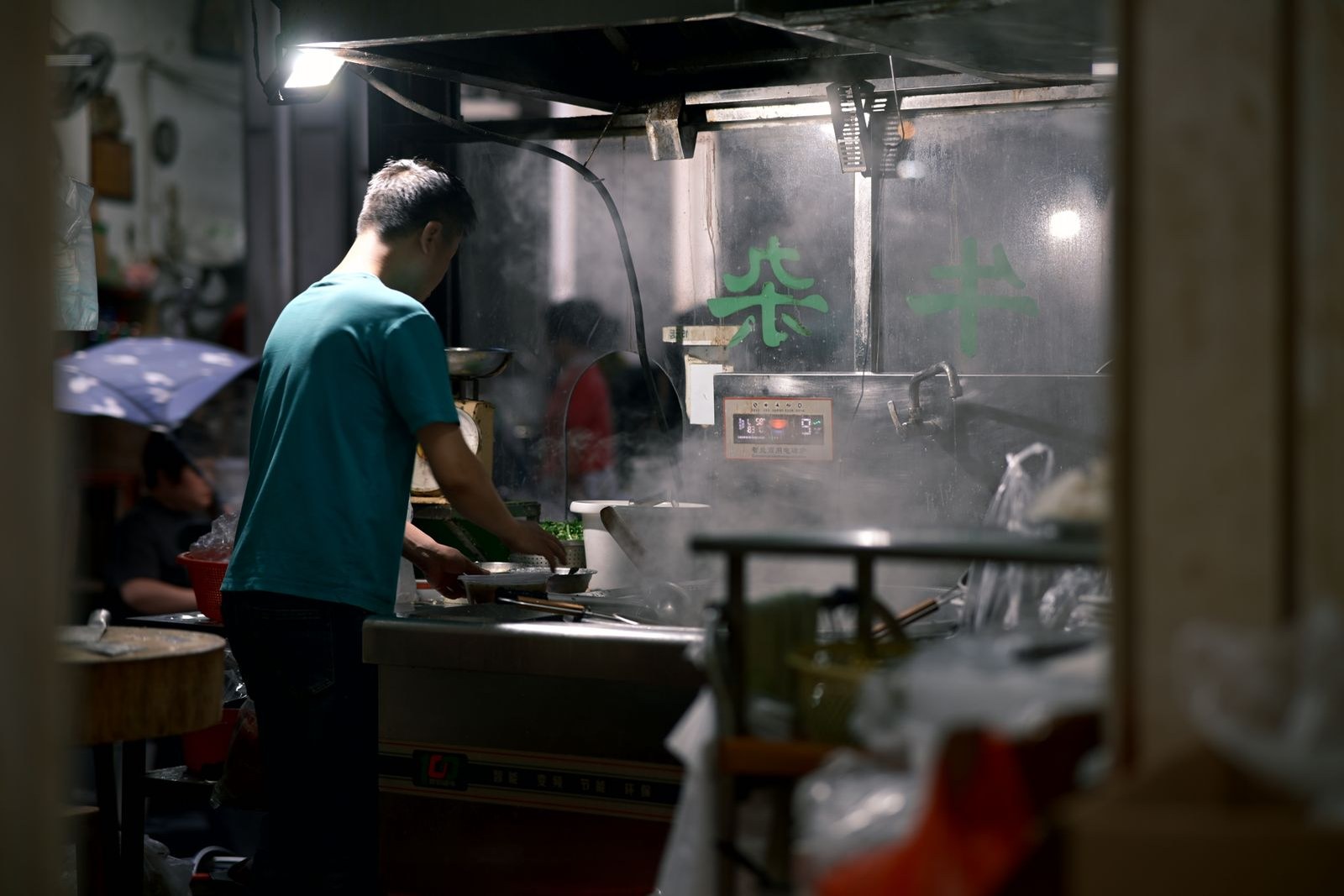
Where to find it: 牛肉丸 niúròuwán is everywhere in the 潮汕 Cháoshàn region of eastern 广东 Guǎngdōng — in 潮州 Cháozhōu, 汕头 Shàntóu and 揭阳 Jiēyáng alike — from street stalls to beef hotpot restaurants to the city’s famous late-night noodle shops. Look for the words 手打 on the sign, watch for the mallets in the window, and order a bowl of plain broth first to judge the ball on its own. Flowcloud would say that a beef ball is one of the very few foods where the physics is the flavour — bounce it, and you already know whether it is good. Order the plain broth, and taste the beef before the sauce.