
Poured from the Dragon’s Mouth: Chatang
龙嘴铜壶开水响,一碗糜香暖早霜 Lóng zuǐ tóng hú kāishuǐ xiǎng, yī wǎn mí xiāng nuǎn zǎo shuāng – The dragon-mouth copper urn rings with boiling water; one bowl of millet fragrance warms the early frost
茶汤 chátāng Chatang is the 天津市河北区 Tiānjīn Shì Héběi Qū Hebei District breakfast that arrives with a performance – 糜子面 mízimiàn broomcorn-millet flour sweetened in the bowl, then scalded straight from the 龙嘴大铜壶 lóngzuǐ dà tónghú the dragon-mouth copper urn, its spout carved as a dragon head and its water kept at a rolling boil for exactly this moment. The pour is the recipe: one arc of boiling water, the flour bursting into a thick golden paste, and the vendor’s wrist doing what no spoon could.
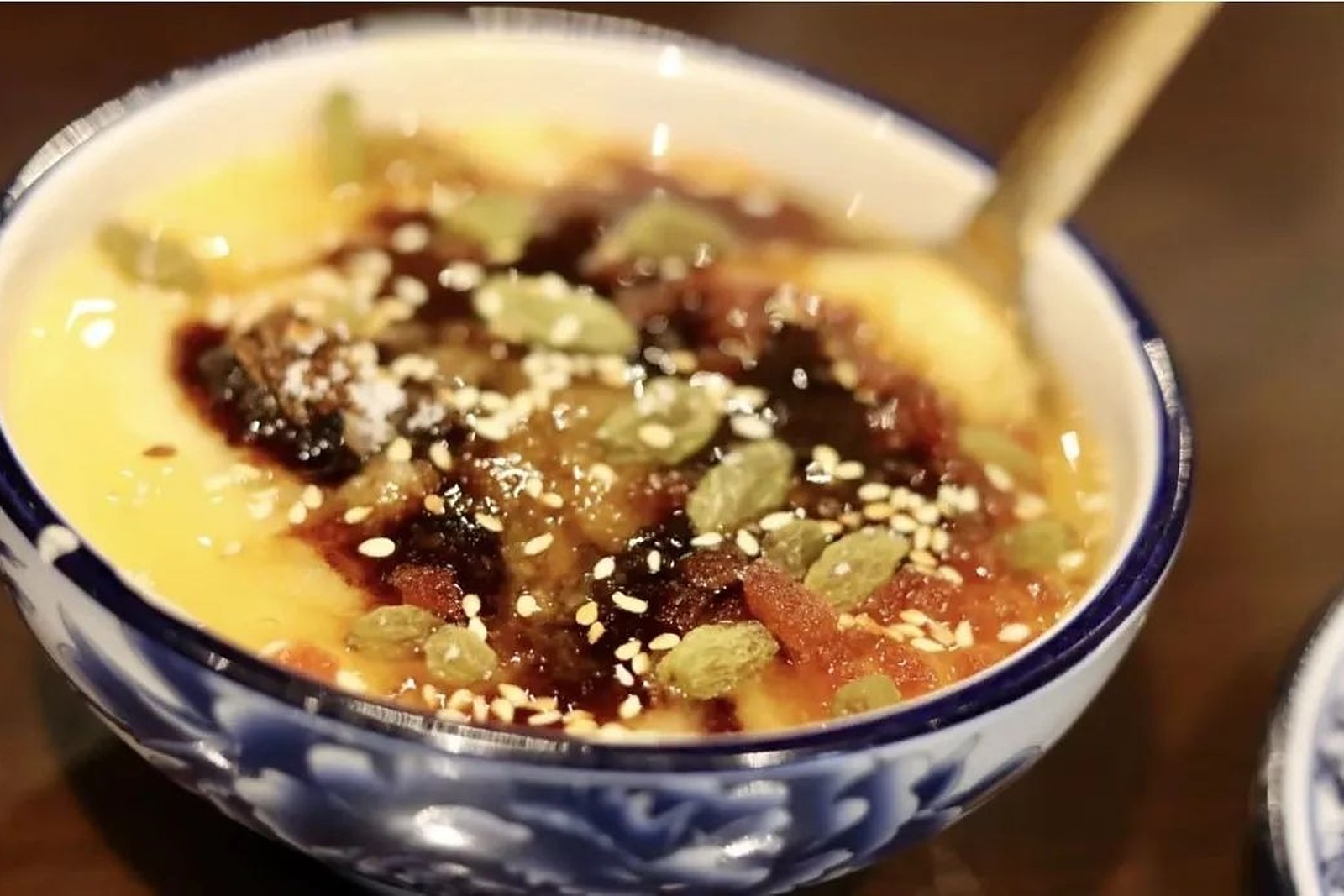
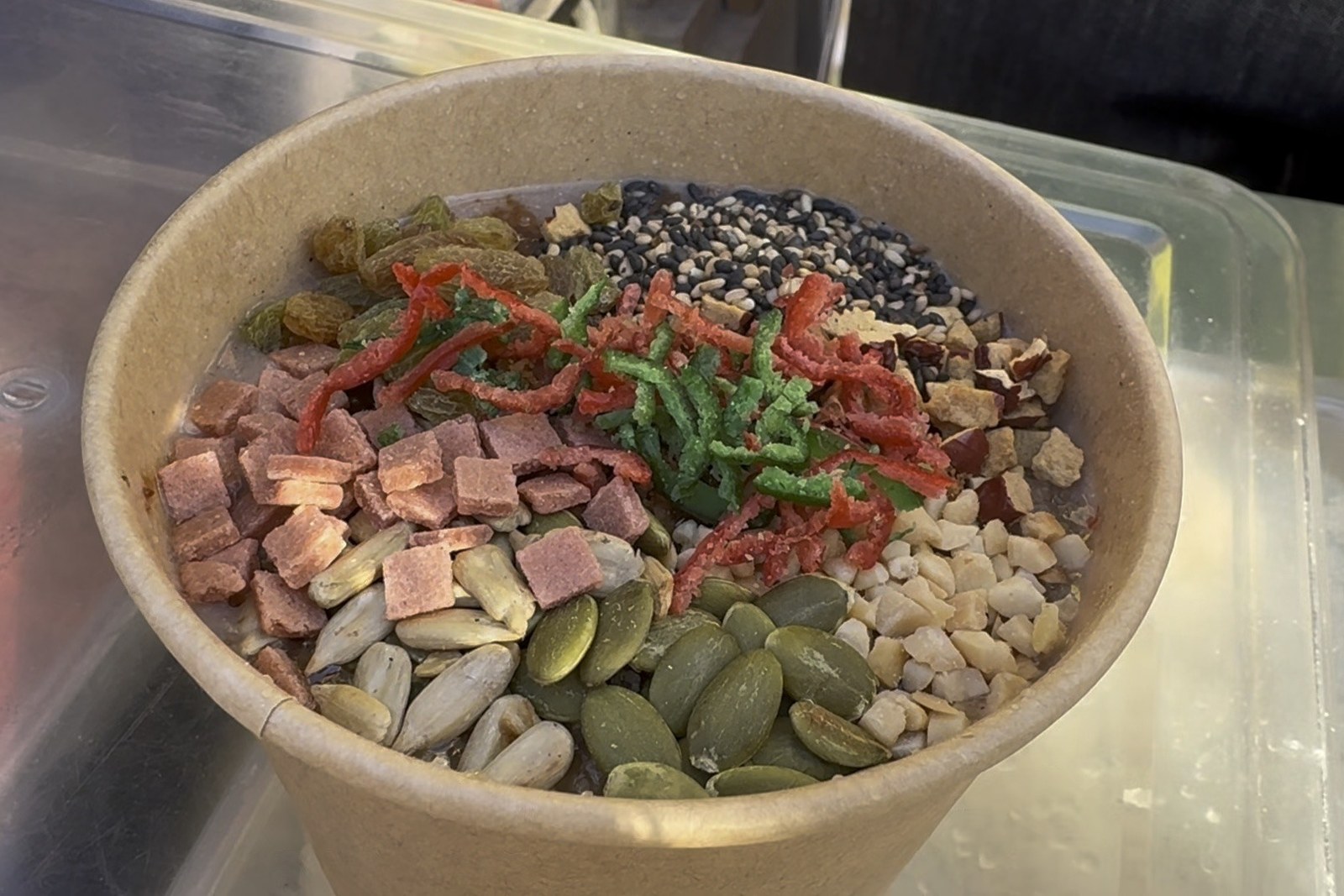
The toppings finish the dish. Brown sugar, white sesame, crushed peanuts, candied fruit shreds in red and green – laid on the paste in rows like a sweet mosaic – and the eating begins with the stir that folds everything into the hot millet base. The taste lands between porridge and dessert: warm, faintly nutty, sweet without apology, thick enough to stand a spoon in.
The urn is the heritage. Copper, polished to mirror, heavy enough to need both hands, and always boiling – the dragon mouth pours, the pot never stops steaming, and the street stall that keeps one running is a stall with a trade license from another century. Tianjin and Beijing argue over who perfected the brew; Tianjin’s case rests on the 糜子 mízi millet itself, grown on the salty flats east of the city and milled fresh for the morning trade.
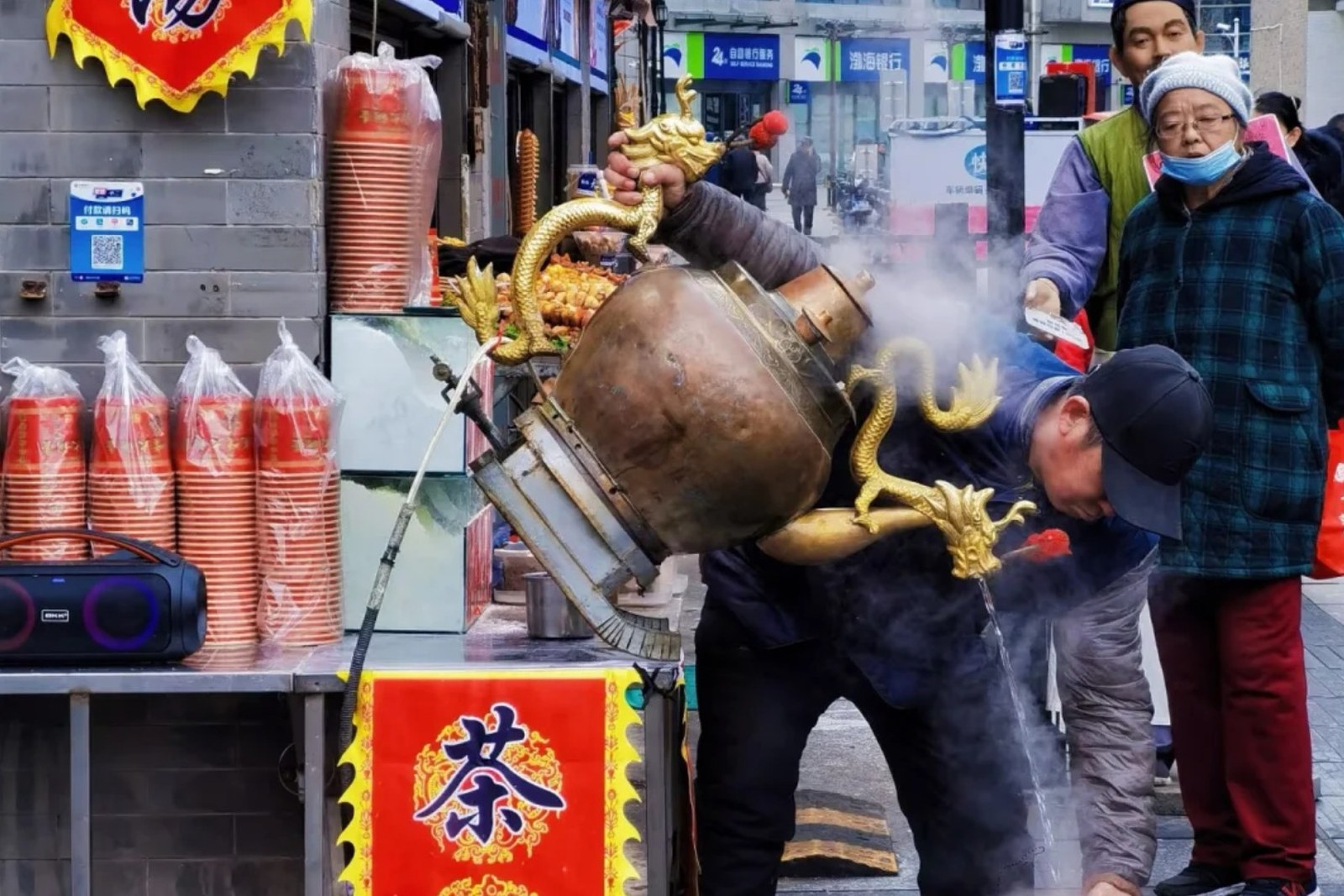
Find it at the breakfast rows and temple-fair stalls – the urn’s shine calls from a block away. Morning is the hour: a hot bowl before the crowds, the vendor’s pour as theater, and the whole performance priced at pocket change. Winter is when chatang argues best – steaming bowl, cold air, and the dragon’s mouth hissing through both.
The same district holds more flavors worth chasing: 罾蹦鲤鱼 zēngbèng lǐyú the scale-crisp carp, 锅塌里脊 guōtā lǐjǐ the egg-wrapped tenderloin, 老爆二 lǎobào’èr the twice-fried stir-fry, or 四大扒 sìdà bā the Four Great Braises – four more doors into the same Hebei District table.
Words and Names
茶汤 chátāng chatang, the “tea soup” that holds no tea; 龙嘴大铜壶 lóngzuǐ dà tónghú the dragon-mouth copper urn; 糜子面 mízimiàn broomcorn-millet flour, the base; 糖桂花 tánghuāguā osmanthus sugar, the classic topping; 冲 chōng the pour that makes the dish.
What the Locals Know
The pour decides everything – water off the boil makes paste, water at full boil makes chatang. Watch the vendor’s arc: one motion, no topping up, the bowl full but not flooded. Eat it while it stands a spoon – once it thins, the moment has passed, and no amount of sugar brings it back. All checked November 2026.
flowcloud would say chatang is the morning’s oldest theater: a dragon that pours breakfast, a flour that turns water into warmth, and a stall that has been keeping the boil since before the street had lights.
Where to find it: The breakfast stalls and market rows around 天津市河北区 Tiānjīn Shì Héběi Qū Hebei District – look for the copper urn’s shine, order one bowl sweet, and eat it standing in the steam. All checked November 2026.