
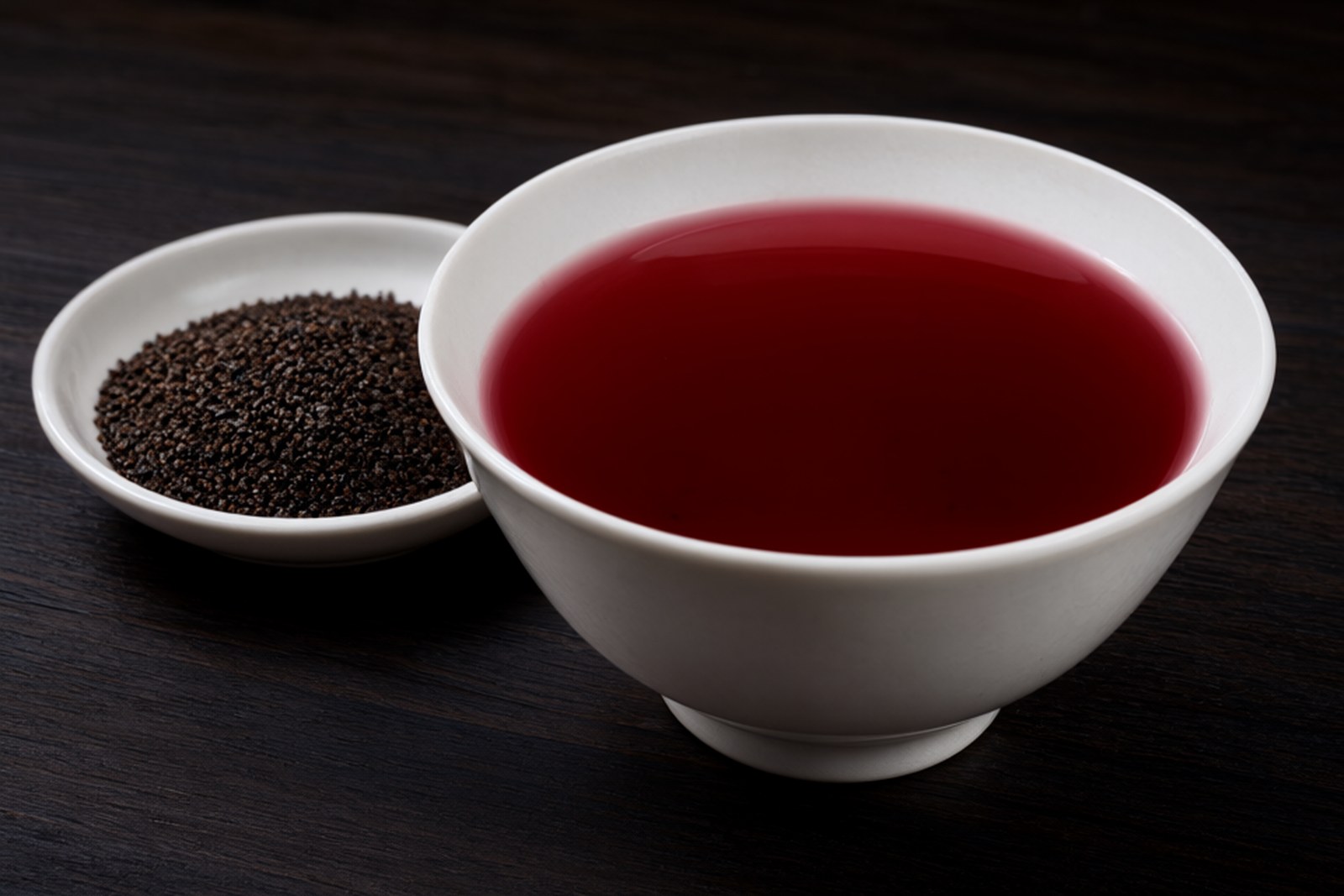
城步虫茶 Chéngbù chóng chá, the insect tea of 城步苗族自治县 Chéngbù Miáozú Zìzhìxiàn, has the strangest pedigree of anything in the Hunan larder: it is brewed not from leaves but from what moth larvae leave behind after eating them. The county’s 苗, 侗 and 瑶 households take the leaf of 三叶海棠 sān yè hǎi táng, a wild crab apple of the hills, or of 化香树 or the bitter tea bush, steep it in rice-washing water and let it ferment in a basket until it smells of something a moth wants; the moth lays, the larvae eat, and the tiny dark pellets they excrete are collected, dried, roasted and sold as 虫茶. Brewed, they give a deep red-brown cup that tastes of nothing unpleasant at all — faintly sweet, faintly woody, and closer to a dark tea than to anything else.
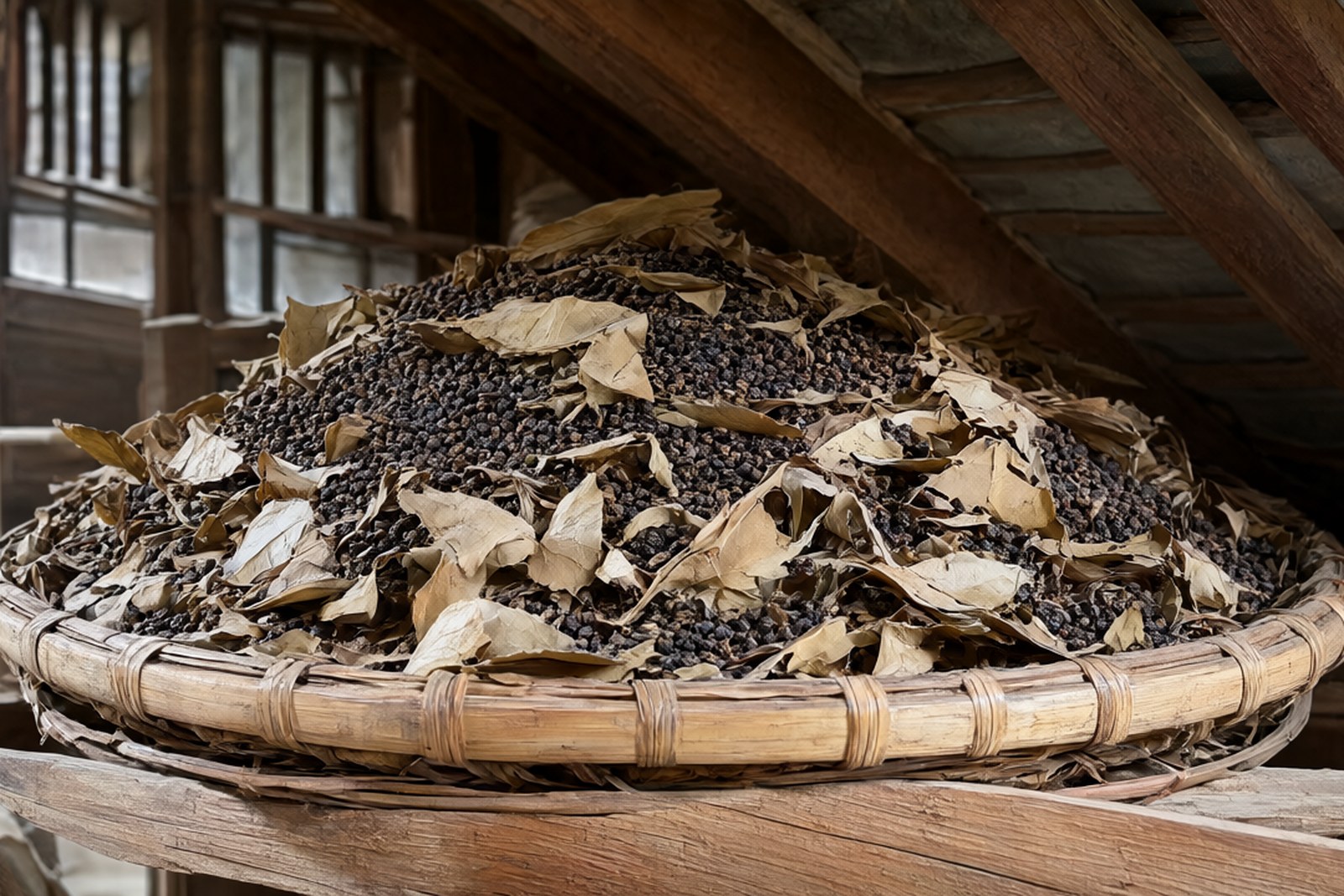
The process takes the better part of a year and runs to a calendar. The leaves are picked in late spring and early summer, usually the first two or three leaves of a shoot, and put into bamboo baskets or wooden tubs already used for the purpose, in layers, with 淘米水 táo mǐ shuǐ, water from washing rice, splashed over them. The leaves ferment, and the smell of the fermenting leaf is what attracts the moth the county calls 化香夜蛾 and which research has identified as 米缟螟, a moth whose larvae will eat nothing else. Through the summer and autumn the larvae feed and grow and drop their pellets, and the following April or May the household shakes the basket out, gathers the pellets, dries them in the sun and roasts them to stop the process. A basket yields a startlingly small weight of tea, which is why the tea is precious even at home.
The county’s claim on the drink is old and specific. The 城步 account traces it to the Han, through the practice of picking and storing the wild 斗笠芽 tea, and to the discovery that a forgotten basket of leaves had turned into a heap of grain-sized pellets that made a red infusion when the curious tried it in hot water. Ming and Qing texts take it seriously: 李时珍 has a line in the 《本草纲目》 about 茶蛀虫, the tea borer, and using its leavings, and the 《城步县乡土志》 describes tea left in an old basket for a year or two turning into 虫茶. By the Qing it was a tribute item — the emperor is said to have renamed it 龙珠茶, the tea of dragon pearls — and the heartland of the trade is the high country of 南山, at 长安营, in the 八十里大南山, where the Qing set up an office of the 宝庆 prefecture in 1741.
Whether it is a tea or a medicine is a question the county does not bother to separate: 虫茶 is drunk for thirst and taken for everything else. Analyses find eighteen or so amino acids, several times the calcium of an ordinary tea, and a flavouring of its own, and the county’s habit is to brew it strong and drink it when the weather is hot, when the stomach is unsettled, or when a nosebleed will not stop. It keeps for years without going stale, which for a mountain household is most of the point; a jar of it in the cupboard is a supply of something that can be given as a gift, sold for real money, or drunk at need. 城步虫茶 took a national geographical-indication mark in 2018 and stands on the provincial list of intangible heritage, and the county has built a small modern trade around what used to be a house secret.
Words and Names
城步虫茶 Chéngbù chóng chá is the insect tea of 城步, 虫 chóng meaning insect and 茶 chá tea; it is also called 三叶虫茶 sān yè chóng chá for the crab apple it usually comes from, and 龙珠茶 lóng zhū chá, the name the Qing court gave it. 三叶海棠 sān yè hǎi táng is the wild crab apple, 化香树 huà xiāng shù the wingnut tree and 苦茶 kǔ chá the bitter tea bush. 米缟螟 mǐ gǎo míng is the moth whose larvae do the work, 淘米水 táo mǐ shuǐ is rice-washing water, 发酵 fā jiào fermentation and 炒制 chǎo zhì roasting. 城步苗族自治县 Chéngbù Miáozú Zìzhìxiàn is the county and 南山 Nán shān the mountain it comes from.
What the Locals Know
Brew it in a glass or a white cup so you can watch the colour come up, use water just off the boil rather than boiling hard, and give it three or four minutes; a teaspoon of the pellets is enough. The first pour is the sweetest and the third is the woodiest, and it does not go bitter if it stands. Do not buy the cheapest thing sold as 虫茶 in a tourist street without looking at it: the pellets should be even, dark and clean-smelling, and a jar with a lot of leaf dust in it is a jar cut with the basket sweepings. If you are given a small box with a bark wrapper, that is the traditional presentation and a serious gift.

flowcloud would say that a mountain household which let a bucket of leaves go wrong, noticed that the thing eating them had turned it into something else, and then spent five hundred years perfecting the accident, has produced the only drink in the province that is a collaboration between a person and a moth.
Where to find it: the tea shops and farmhouse stalls of 城步苗族自治县, in particular around 长安营 and 南山, and the county’s agricultural co-operatives, with boxes also sold in the markets of 邵阳市. A small box of 50 grams is ¥40 to ¥120 depending on grade, and a gift box in the traditional bark case ¥150 to ¥400. 城步 is about three hours by road from 邵阳市; the nearest rail is 邵阳站 on the 怀邵衡 line and 武冈 the nearest commercial airport.