
澄迈无籽蜜柚 chéng mài wú zǐ mì yòu is a pomelo with no seeds in it, and the seedlessness is not the most interesting thing about it – the calendar is. The fruit ripens in high summer, months before any pomelo on the mainland is ready, and that gap is what turned a graft in a county in 海南 Hǎi nán into a national industry. It grows in 澄迈县 Chéng mài xiàn, mostly in the low ground west of 金江镇 Jīn jiāng zhèn around 山口 Shān kǒu, where the hills begin, and the plant is entirely a modern construction: a Malaysian crystal pomelo crossed back onto the local bitter one until the seeds and the bitterness both went away.
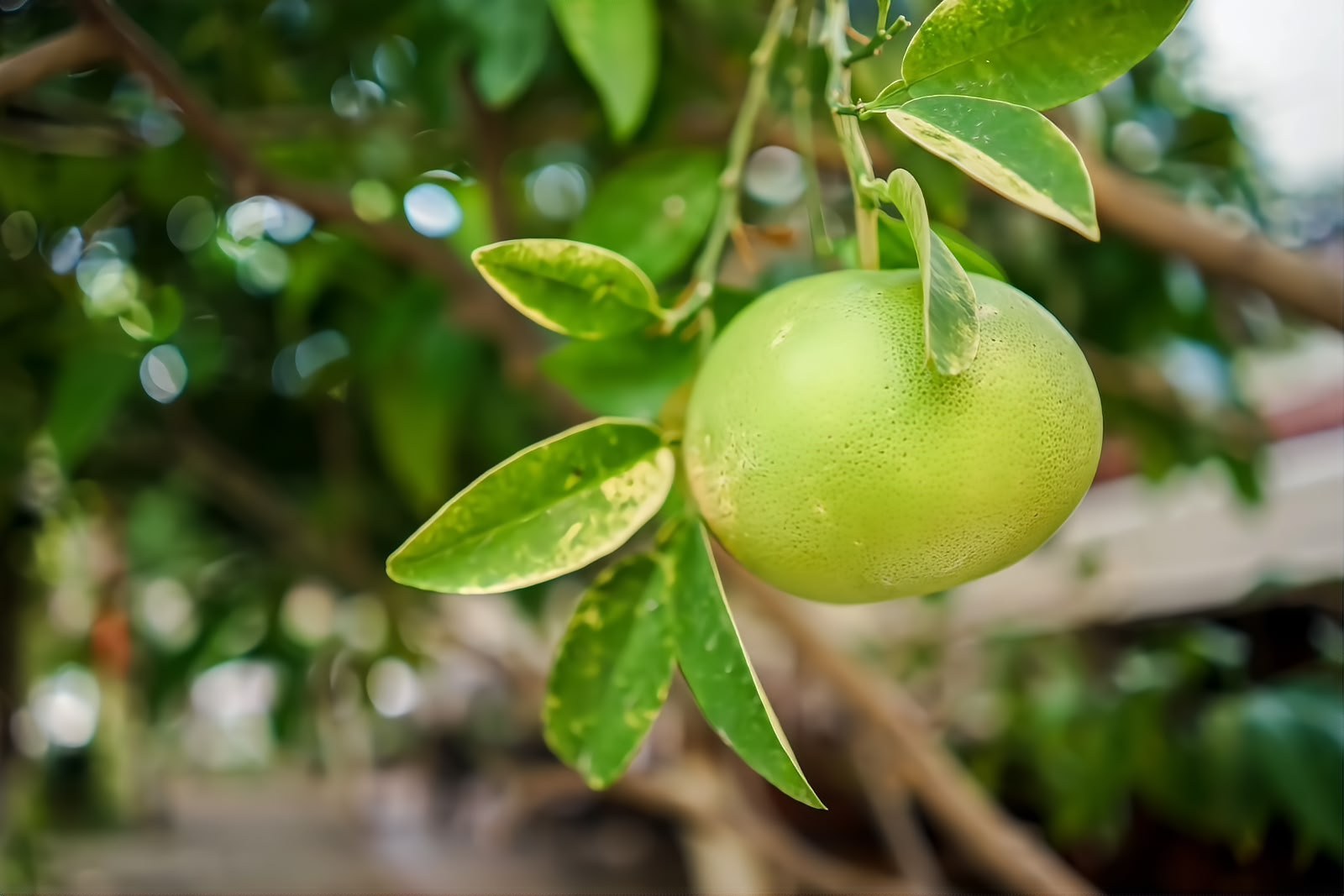
The crossing took a decade and the county remembers who did it. A local company brought in 马来西亚水晶柚 Mǎ lái xī yà shuǐ jīng yòu, Malaysian crystal pomelo, in 2002 and planted it in 澄迈; the aim from the start was to cross it repeatedly with the island’s own 苦柚 kǔ yòu, the bitter pomelo, to keep what a tropical climate does well and breed out everything that does not. A grower named 耿大林 planted in the same year and worked the same problem, and the variety was fixed and brought to market in volume around 2012. What came out of it is sold on a set of measurements rather than on adjectives: 青皮白肉, green peel and white flesh; 皮薄易剥, thin-skinned and easy to open; 脆嫩无籽, crisp and tender with no seeds; 清香多汁, fragrant and full of juice. The county quotes a water content around 85 per cent, a seedless rate above 98 per cent, calcium at 5.9 mg per 100 g – an order of magnitude above an apple – and vitamin C at 57 mg per 100 g, roughly three times a common citrus.
Its claims as a plant are as unusual as its taste. It was the first tropical green pomelo cultivar bred in the country, 国内首个热带青柚品种, and the first pomelo product in 海南 to be admitted under the national ecological-origin protection mark, 国家生态原产地保护. 澄迈 grows around ten thousand mu of it and takes about fifteen thousand tonnes a year, and the fruit sells by the piece rather than by weight: at the top of the market a single one has cleared more than a hundred yuan, and in the years after the variety was fixed the trade sold them two at a time for 288 or 388 yuan, which is where the nickname 柚中爱马仕 yòu zhōng ài mǎ shì, the Hermes of pomelos, came from. The growing is hand work and deliberately slow. The orchards run without pesticide, holding insects down with cut grass returned to the soil, chickens under the trees, fruit bagged on the branch and water lances against the pests, and the trees are thinned by hand, which is why the price holds where it does.
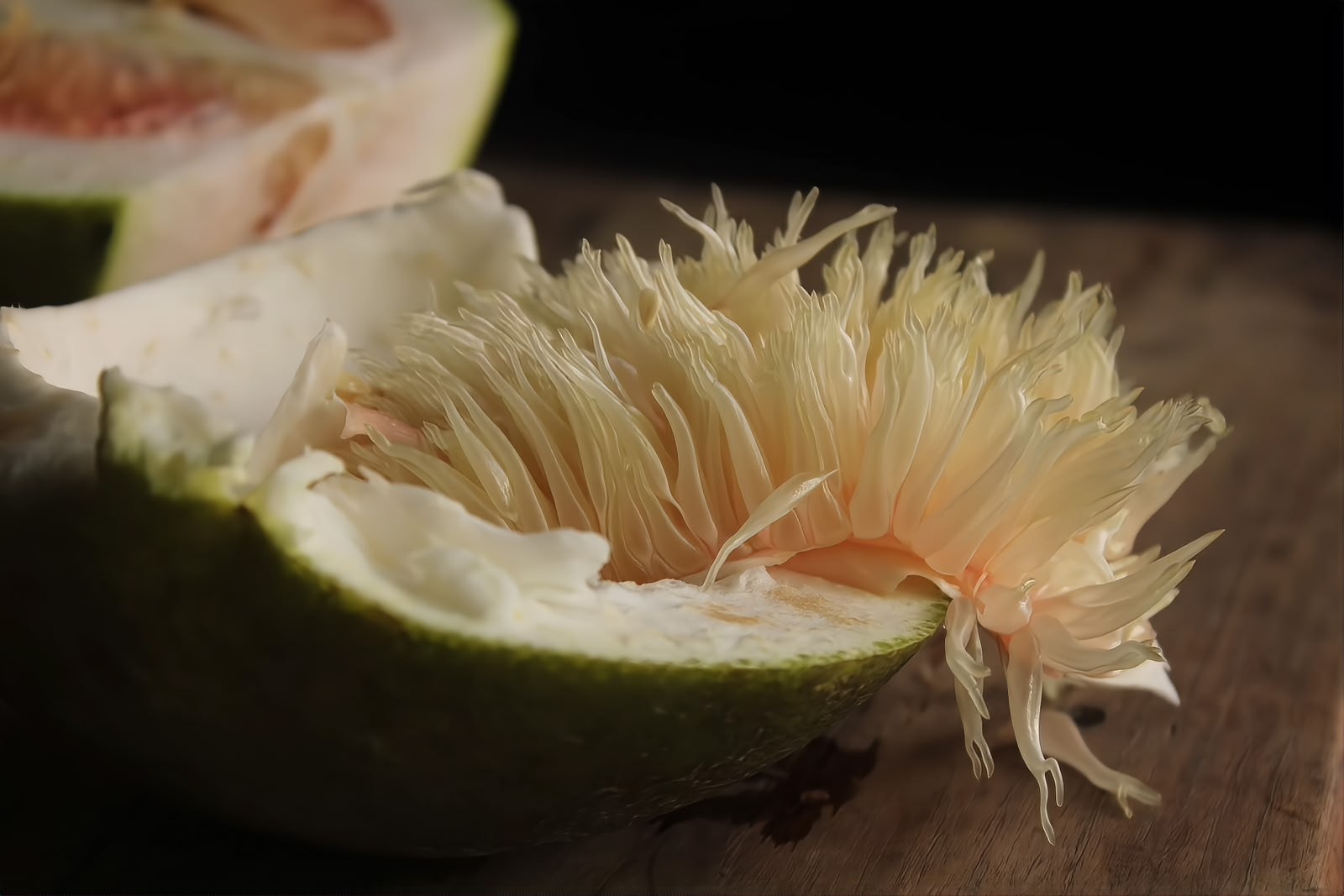
The commercial point of the whole thing is the window. The fruit is ready from July and at its best in August, so 澄迈 sells into the summer gap before 福建 and 广西 come to market, and the industry that grew out of this one orchard now runs from 临高 to 三亚 on the same early-season logic. It is eaten peeled and broken apart by hand like any pomelo, with nothing to spit out and no knife needed to open it; the peel is candied and dried, and the blossoms are dried into 柚子花茶 yòu zi huā chá, pomelo flower tea, which is sold as the answer to a heavy meal. The county’s own growers kept one piece of the old fruit in the new one – the bitterness is bred out of the flesh but not out of the pith, which is why the peel still smells of the plant it came from.
Words and Names
蜜柚 mì yòu is the honey pomelo and 无籽 wú zǐ means seedless; the full name is a description rather than a brand. 水晶柚 shuǐ jīng yòu, crystal pomelo, is the Malaysian parent, and 苦柚 kǔ yòu the local bitter one it was crossed onto. 山口 Shān kǒu, mountain mouth, is the district west of 金江镇 where most of it grows, and the growers registered the trademark 山口青釉 Shān kǒu qīng yòu – Shankou green glaze – which is the mark to look for on the fruit. 青柚 qīng yòu, green pomelo, is the category the county invented, and 柚中爱马仕 is the trade’s own joke about the price.
What the Locals Know
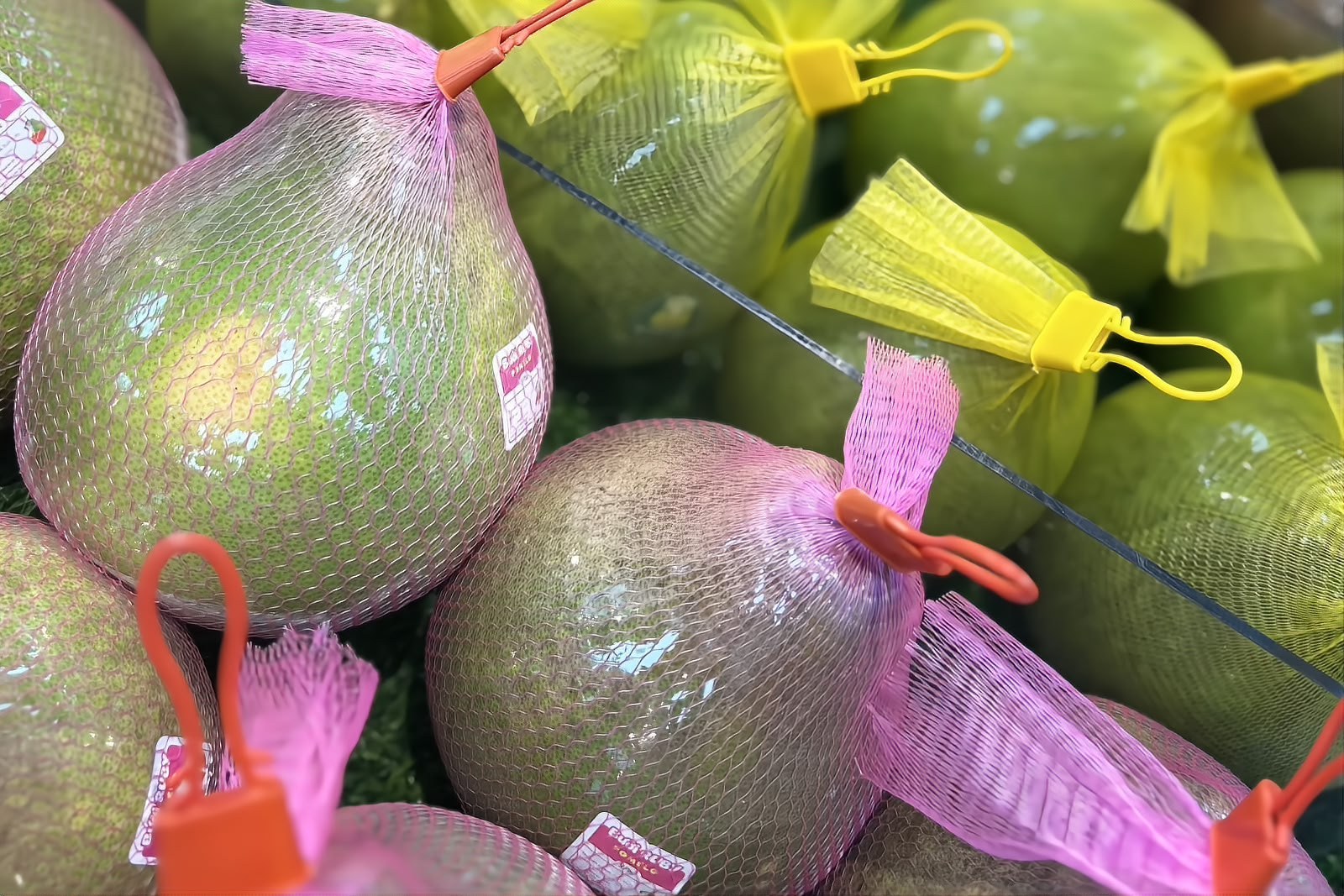
Choose by weight and by the skin’s gloss: a good one is heavy in the hand, green to yellow-green with a fine, tight, faintly oiled surface, and the small oil glands should be visible in raking light. It should not be stored in a refrigerator; the growers recommend a cool, shaded 10 to 15 degrees, where it will hold for weeks because the peel is thick and the fruit was built for a tropical climate. Open it by scoring the peel in quarters and pulling it off with the thumb, not by cutting down through the flesh, and eat it within a day or two of opening. The fruit is at its best in August and the very early crop is the one with the price on it; by September the mainland pomelos have arrived and the premium narrows, which is a good time to buy the same fruit for less.
flowcloud would say that the county took the one thing it had that nobody else wanted – a small, bitter, seedy local fruit – spent ten years grafting a foreign one onto it to get rid of the bitter and the seeds, and then discovered that what it had really bred was a date on the calendar, which is worth more than either.
Where to find it: the orchards around 山口 and the markets of 金江镇 in 澄迈县, where the fruit is sold by the piece, graded, in the weeks around August; 金江镇 is the county town and about an hour from 海口 by the 西线高速 Xī xiàn gāo sù, and the orchards are less than half an hour west of it. The growers also sell directly from the field stations in season, candied peel and flower tea are sold at the same stalls all year, and the fruit travels well enough to be sent as a gift, which is most of what happens to the top grade.