
澄迈和牛 chéng mài hé niú is wagyu raised in a county that had no cattle of its own worth naming, and the herd exists because of a transplant. In 2001 澄迈县 Chéng mài xiàn imported purebred wagyu embryos and had them carried by the island’s own 小黄牛 xiǎo huáng niú, the small yellow cattle that had been on 海南岛 Hǎi nán dǎo for centuries – a breed that tops out at five or six hundred catties and was never going to be famous. The calves born out of that work are described by the county as the first pureblood wagyu born in the country, and after more than twenty years of breeding the herd at 澄迈 is said to be the only one in China with pedigree records running past five generations.
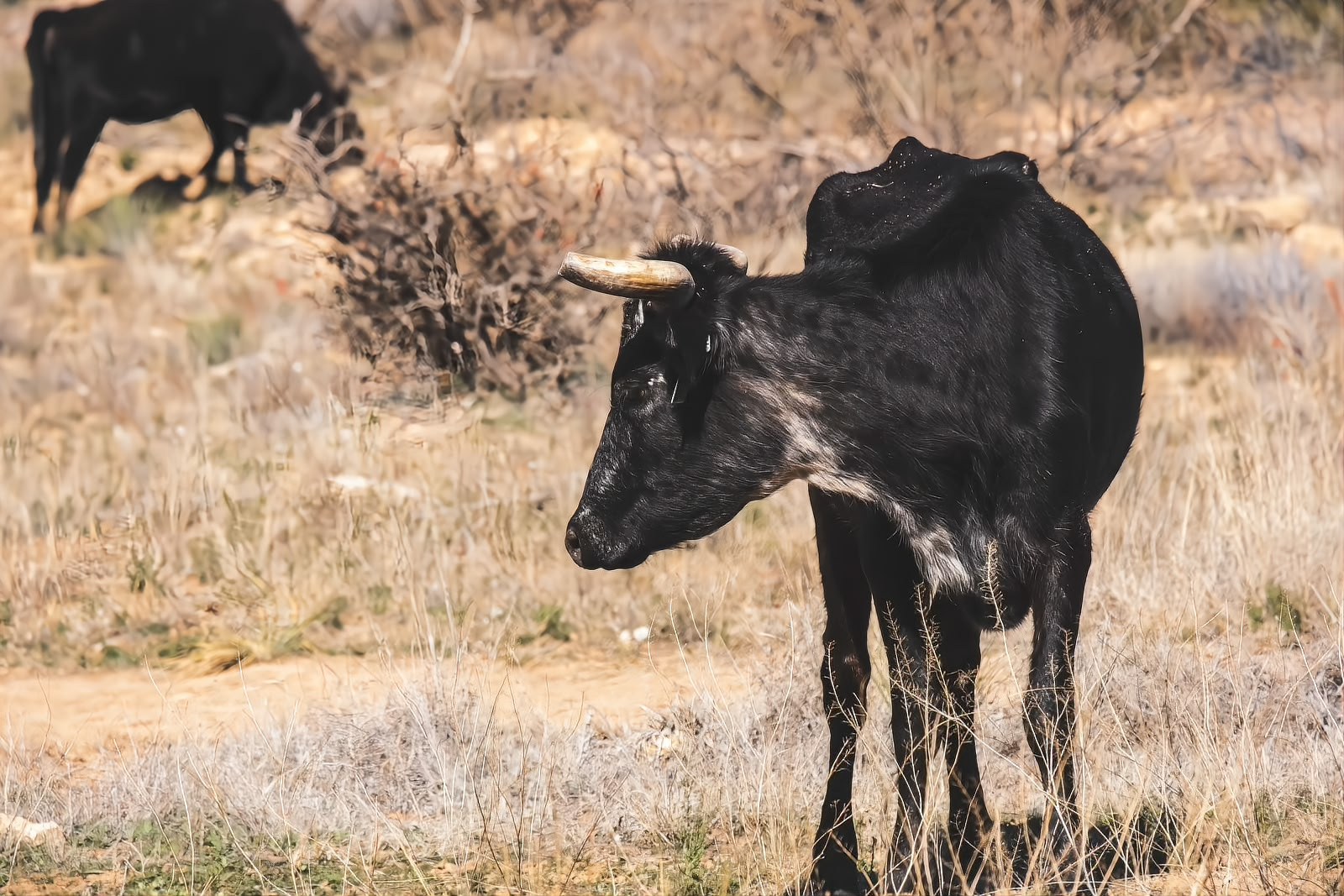
Two populations came out of it, and the difference matters to anyone reading a menu. 海岛和牛 hǎi dǎo hé niú, island wagyu, is the purebred line descended from the transplanted embryos, sold under the brand name 神坂牛. 澄迈福牛 chéng mài fú niú, Chengmai fu cattle, is the cross: the offspring of wagyu semen used on local yellow cows, and it is the one that reached the villages. The county counts around 5,300 head of 福牛 in production, held across eleven towns and 115 villages by more than 3,600 households working through eleven cooperatives, and the company at the centre of it buys young stock from those households at twenty per cent above the market rate, which is the arrangement that keeps smallholders in cattle rather than in a wage job in 海口. For scale, the county’s whole cattle count is about 47,000 head, of which the yellow cattle are the great majority and water buffalo another quarter, so the wagyu herd is small, expensive and deliberate.
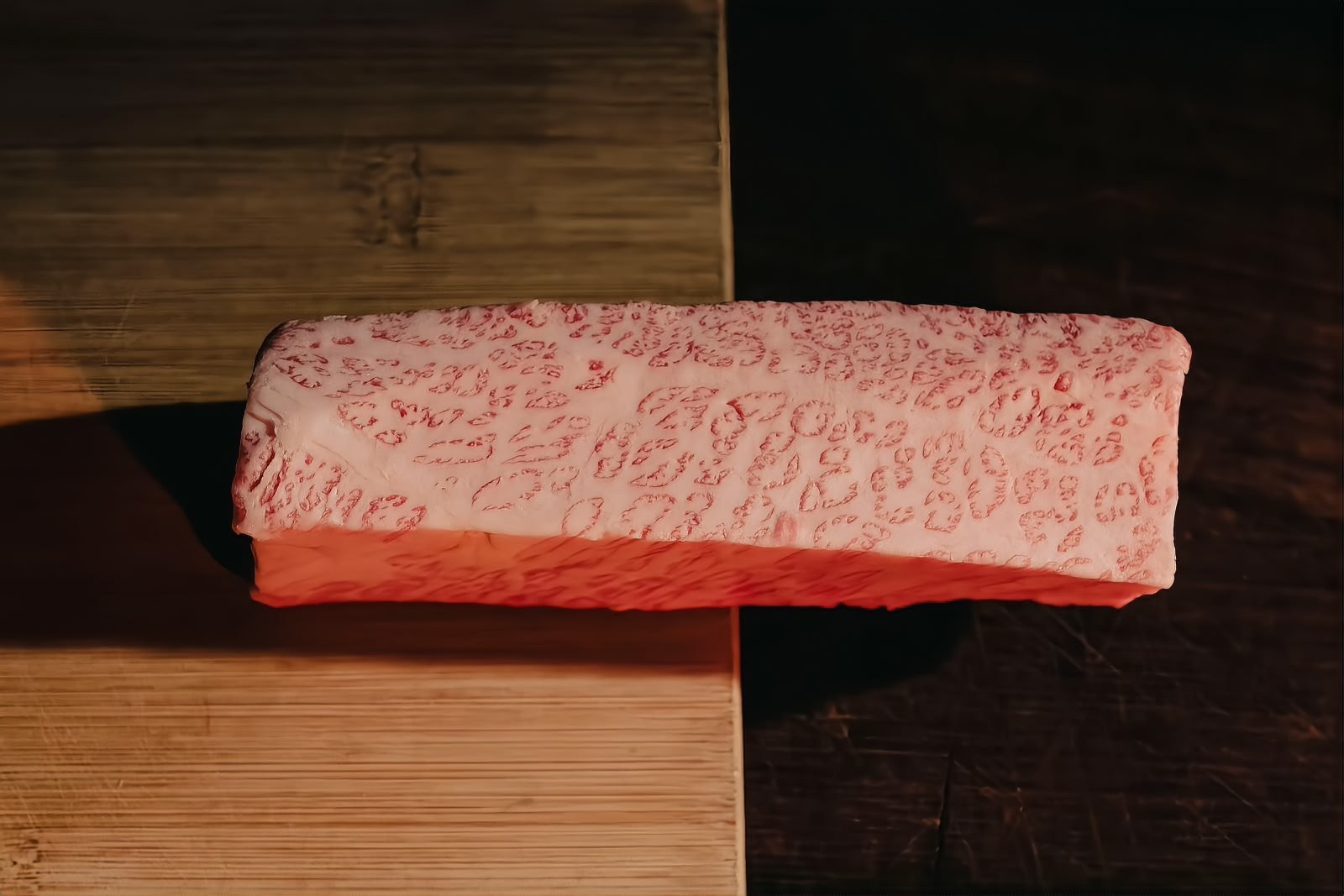
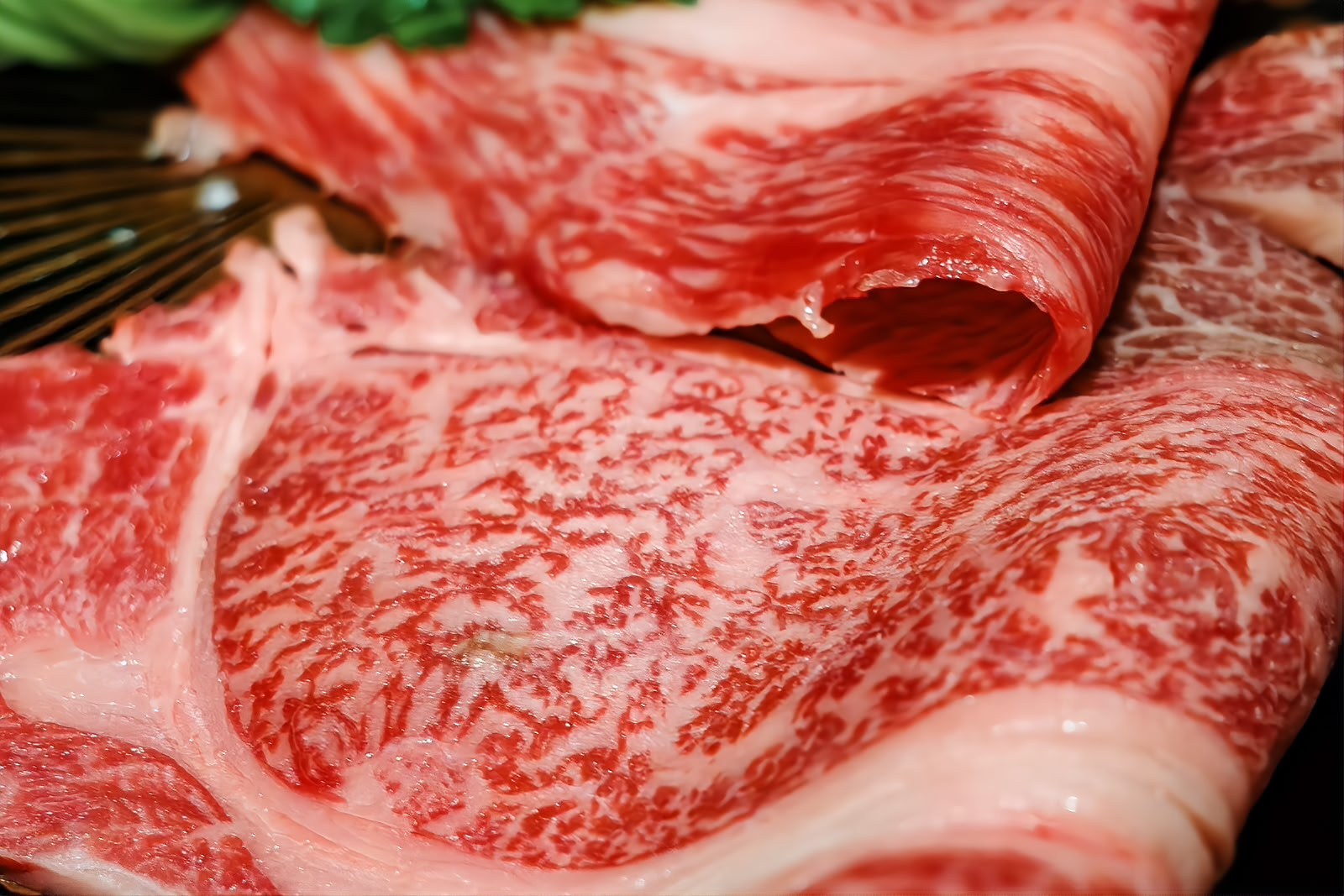
The rearing is the part the trade likes to talk about, and the numbers behind it are the reason the beef costs what it does. The animals are on a thirty-six month cycle from birth to slaughter, three years of an animal that would otherwise be killed at two; the grain ration alone is quoted at about 15,000 yuan a year per head. The pens are kept quiet, the animals are brushed and massaged, and there is music, all of it aimed at the same end, which is a fat that lays itself down inside the muscle rather than around it. What that produces is the marbling the whole business exists for: 大理石花纹, fine, even, snowflake-patterned fat through a bright red muscle, fat that melts at the temperature of a hand, described in the county’s own material as 入口娇柔滑嫩,黏舌即化, soft and slippery the moment it is in the mouth and gone at the point of contact. The company behind the herd runs its own embryo centre, semen station and breeding records, and quotes a capacity of six thousand frozen embryos and five hundred thousand doses of semen a year, which is a stud farm’s numbers rather than a ranch’s.
In 澄迈 it is eaten as steak and as thin slices for 火锅 huǒ guō, hotpot, and the county has built a 和牛文化产业园 hé niú wén huà chǎn yè yuán, a wagyu cultural park, with a visitor farm where the herd can be looked at, which is a reasonable thing to do with an animal that costs what this one does. The beef is shipped to 北京, 上海, 广州 and 深圳 rather than eaten on the island, and the portion that stays is sold at a handful of restaurants in 海口 and a few in the county. On a 澄迈 menu it functions as the county’s proof that its agriculture has a top as well as a bottom: the same ground that grows a 3-yuan sweet potato also carries a herd with five generations of pedigree behind it, and the county is not shy about putting both on the same page.
Words and Names
和牛 hé niú is wagyu, literally Japanese cattle; the county uses it plainly. 小黄牛 xiǎo huáng niú, small yellow cattle, is the local breed the embryos were carried by, 海岛和牛 hǎi dǎo hé niú, island wagyu, is the purebred line, and 澄迈福牛 chéng mài fú niú is the cross with the local cow, which is the one sold in the villages. 神坂牛 is the brand name attached to the purebred animals. 雪花 xuě huā, snowflake, and 大理石花纹 dà lǐ shí huā wén, marble pattern, are the two words for marbling, and 西冷 xī lěng and 眼肉 yǎn ròu are sirloin and ribeye, the two cuts the county names in its own promotional material.
What the Locals Know
Marbling is judged by eye and by touch. The fat should be fine and evenly spread rather than in a few thick streaks, the muscle should be a bright cherry red rather than a dull one, and a finger laid on the surface should leave a slight gloss because the fat melts below body temperature – if the fat feels hard and waxy it is not what it claims to be. Ask for the grade, not the brand: the top band is sold as A5 and the price steps down quickly from there. Because the herd is small and the beef travels, most of what is eaten in 澄迈 is the 福牛 cross rather than the purebred line, which is not a downgrade so much as a different animal, leaner and beefier, and it is what the county’s own households buy. It should be cooked hot and fast and eaten rare, or sliced thin for hotpot and taken out the moment it changes colour.
flowcloud would say that only a county with no cattle tradition would think to import an embryo rather than a bull, carry it in a cow that was never going to be anybody’s dinner, spend three years and fifteen thousand yuan a head to put fat inside the muscle instead of around it, and then name the whole enterprise after good fortune.
Where to find it: the wagyu park and the farm gates around 澄迈县, and the beef counters and hotpot restaurants of 金江镇 Jīn jiāng zhèn and 海口市 Hǎi kǒu shì; the county sits on the 西线高速 Xī xiàn gāo sù about an hour from 海口, which is close enough that the meat can be cut and eaten the same day it is slaughtered. Most of the production leaves the island for 北京, 上海, 广州 and 深圳, so what is on offer locally is the 福牛 cross or a small share of the graded purebred cuts, and a restaurant that lists 海岛和牛 by name is quoting a real distinction and should be able to say which line it is carrying.