
晨洲蚝 Chénzhōu háo are the oysters of 晨洲村 Chénzhōu cūn, a village on the tide flats of 红草镇 Hóngcǎo zhèn in the 城区 chéngqū of 汕尾市 Shànwěi shì, and they are the winter crop of this coast: milk-white, low in salt, eaten raw from December to April. 汕尾 is the prefecture the locals call 海陆丰 Hǎilùfēng, where the Hoklo-speaking tide-flat towns of the coast and the Hakka hills of 陆河县 Lùhé xiàn sit inside one border. The oyster belongs entirely to the first half of that, a river mouth and a farming calendar rather than a hillside.
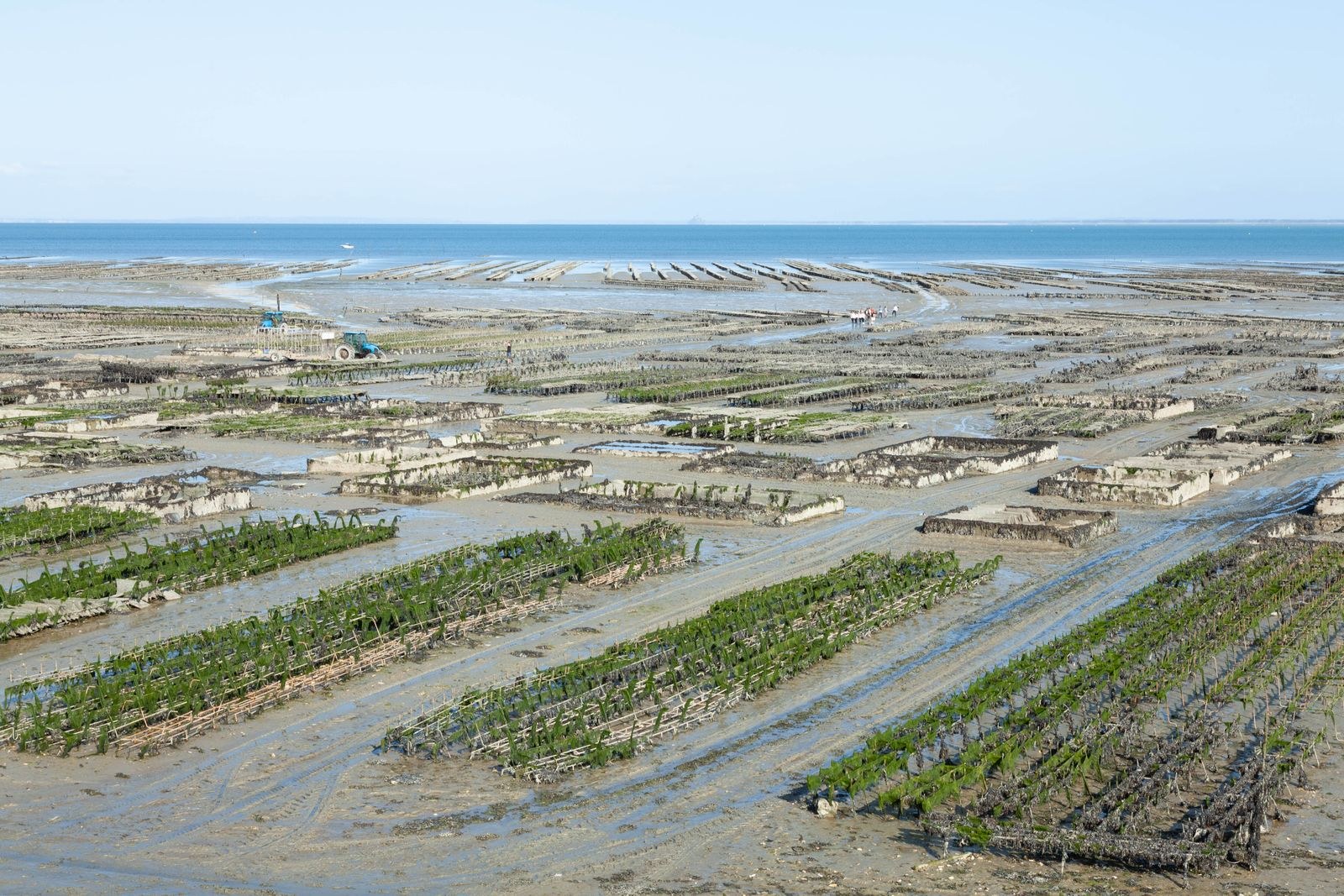
The oyster is 香港牡蛎 Xiānggǎng mǔlì, the Hong Kong oyster, shaped here by long natural selection rather than being any separate subspecies, and the village takes it at three years old or more out of a four- to five-year growth cycle. What makes it different is fresh water. The beds sit where three rivers, 黄江 Huáng jiāng, 龙津河 Lóngjīn hé and 大液河 Dàyè hé, come out into the sea together, and the water holds twelve to fifteen parts per thousand of salt all year except when a spring tide pushes brine back up the channel, so the oyster lives most of its life in the brackish layer.
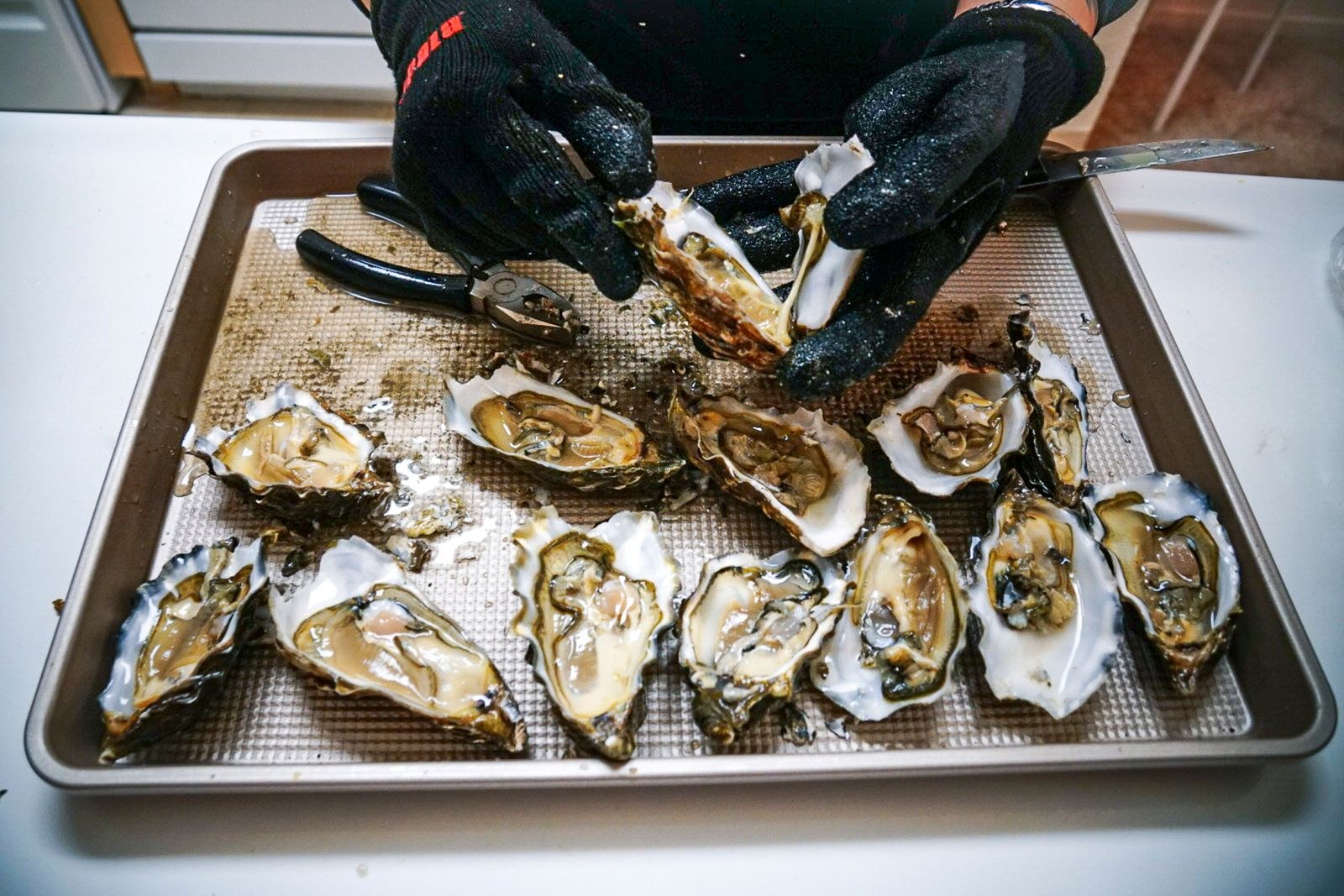
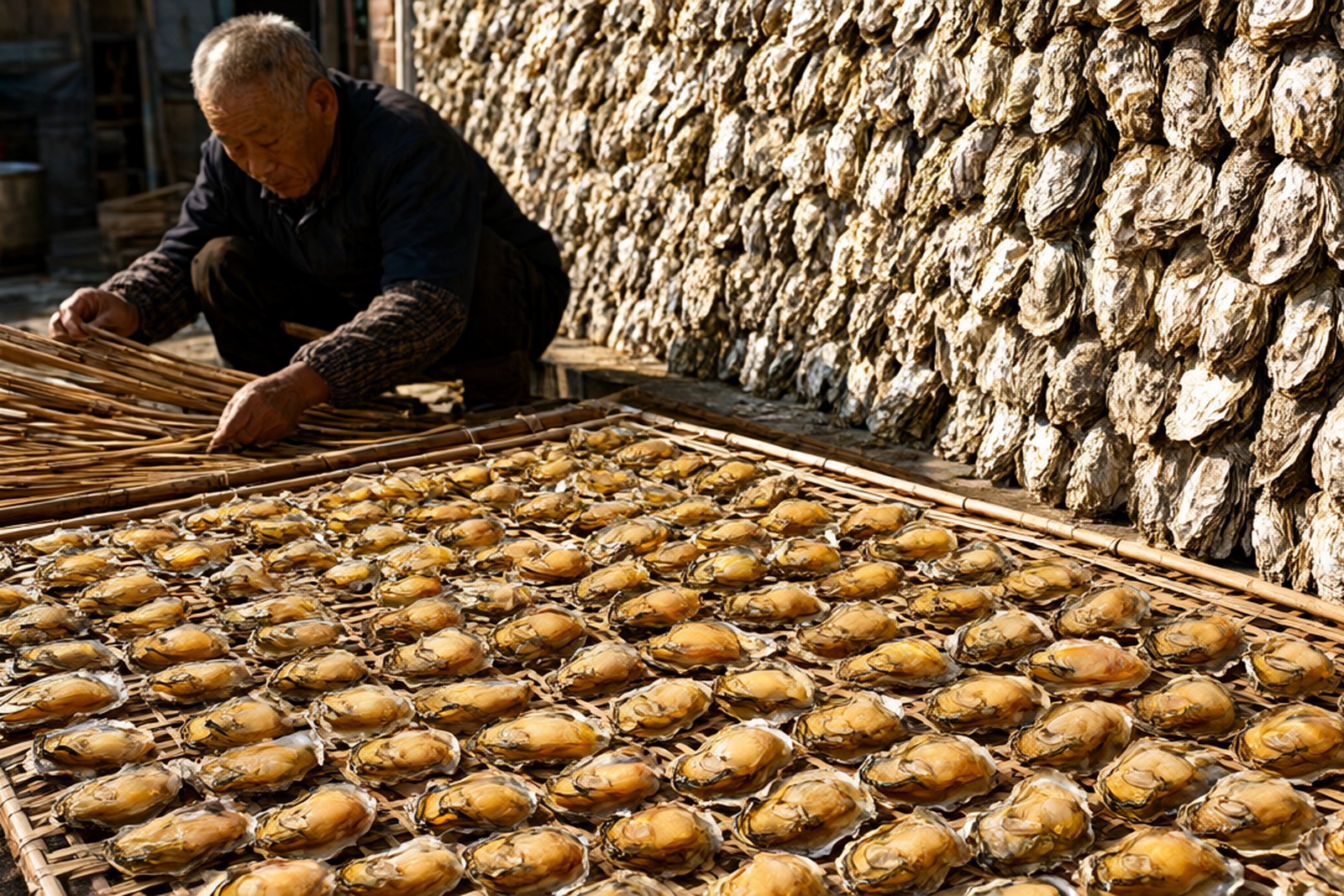
Eating it starts raw. Iced, with lemon or mustard, is the village’s first answer, and 冬至到清明,蚝肉肥晶晶, from the winter solstice to the Qingming festival the meat is fat and glistening, is the proverb that governs the season. After that the county lists 一蚝六吃, six ways with one oyster, which takes in charcoal-grilled oysters with garlic, 蚝仔烙 háozǐ lào, the omelette in which the oyster can be more than sixty per cent of the mixture, and 咸菜羊肉蚝. The drying side is older: 三年一夹,煮晒作干, three years to grow it, boil it and dry it, gives 明蚝干 míng háogān.
The old method is worth spelling out because it is the one in the record: 春投石养苗,冬起石取蚝, put the stones down in spring to catch spat and lift them in winter to take the oysters, a technique the villagers worked out for 近江牡蛎, and one that grew into raft, bottom-sown, stake and cage systems, with the cage-and-pond fattening of 红草镇 the local speciality. When they settled is one of the material’s live conflicts: the provincial local-records office dates the village and its oyster farming to the Qing and more than three hundred years, a provincial newspaper says the villagers landed in the Ming, and the city’s own page says only 明清时期.
Two things the industry left behind are worth a look. One is architectural: about fifty 蚝壳厝 háoké cuò survive, houses walled with spent oyster shell up to sixty centimetres thick, good against wind, heat, damp and insects. The other is industrial. Through the 1990s the demand for dried oysters pushed the farmers to build their own heat-recycling fired drying stoves rather than pay for electric cabinets; at the end of 2020 seven hundred kilograms of chilled 晨洲蚝 cleared Shanwei customs for export, and in 2026 CCTV’s 《三餐四季》 came down to film the village.
Words and Names
蚝 háo is the oyster and 晨洲蚝 the village’s name for it, also written 晨州蚝; 香港牡蛎 is the species and 近江牡蛎 the old farming name. 红草镇 Hóngcǎo zhèn is the town, renamed from 青草 in 1957 and moved out of old 海丰县 into the city’s 城区 in 1988. 肚白耳黑 describes the meat, a milky body with a dark muscle; 明蚝干 is the sun-dried oyster and 熟蚝丝 the boiled-then-dried shred; 蚝壳厝 háoké cuò are the shell-walled houses. 贝藻套养 is the practice of growing 龙须菜 seaweed between the rafts.
What the Locals Know
The industry figures do not agree, so they travel in ranges. The farming area is given as 1.36 万亩 in 2024 and 1.8 万亩 in reports from 2019 and 2022, or twelve square kilometres of water in one version and about 9.07 in another; annual output runs 15,000 tonnes in 2019, 16,500 in 2024 and 18,000 in several accounts; the annual value is 631 million yuan in the city’s 2024 research report, 604 million in 2023, 640 million in 2025 and 650 million in 2026. The village holds between twelve hundred and two thousand residents.
One piece of paperwork needs care. 晨洲蚝 is described in three stages by three sources: in 2021 a provincial report said the village was applying for the national geographical-indication trademark, a local newspaper said the application had passed expert review, and the city’s research report of 2026 states plainly that the mark has been granted. The year of approval and the announcement number have not been published anywhere traceable. The heritage file is cleaner: on 12 January 2026 the Ministry of Agriculture and Rural Affairs listed 晨洲蚝养殖系统 among the eighth batch of candidates for China’s important agricultural heritage systems, one of four from Guangdong.
The habits to copy are simple. Buy in winter and spring, because the meat is thin by summer; buy them opened in front of you; and put nothing at all on the first one. The growers’ rule is 养蚝净水, that oyster farming cleans the water it uses, and their warning is the reverse of it: 蚝水不干净,生蚝就不劲, if the water is not clean the oyster is not good. The flats are also a day out: an oyster museum, a landscape bridge over the 万亩蚝町, a white-egret island, and a sea-wall road advertised as a sea road out of a comic strip.
flowcloud would say that 晨洲蚝 is a winter vegetable grown in brackish water – three and a half years on a flat where three rivers and the tide meet, salt held down around twelve parts per thousand, an oyster that comes out with the sea rinsed off it, and a village that has been arguing about the same acreage for a decade.
Where to find it: 晨洲村 Chénzhōu cūn in 红草镇 Hóngcǎo zhèn, in the 城区 chéngqū of 汕尾市 Shànwěi shì, where the sorting tables, the oyster museum and the shell-walled houses all sit within a walk of the flats; the field of rafts beyond the sea-wall road; the restaurants of the village and of 汕尾城区, which serve 蚝仔烙, grilled garlic oysters and 咸菜羊肉蚝 through the winter; and any wet market in the prefecture from December, when the shell is heaviest. Go between the winter solstice and Qingming, ask for the oysters to be opened in front of you, and take the dried 明蚝干 home rather than fresh meat, which does not travel far.