
车田豆腐 Chētián dòu fu is the bean curd of 车田镇 Chētián zhèn in 龙川县 Lóngchuān xiàn, and it is famous in Guangdong for being the opposite of a delicate tofu. Where a fresh southern tofu is soft enough to eat with a spoon, 车田豆腐 is pressed hard until it holds its shape under a knife and can be cut into slabs an inch thick, and it is made from local soybeans and spring water in a village trade that has been running for a long time. It is a food of substance: it browns when it is fried, it takes a braise without falling apart, and it is chewy in a way that bean curd almost never is.
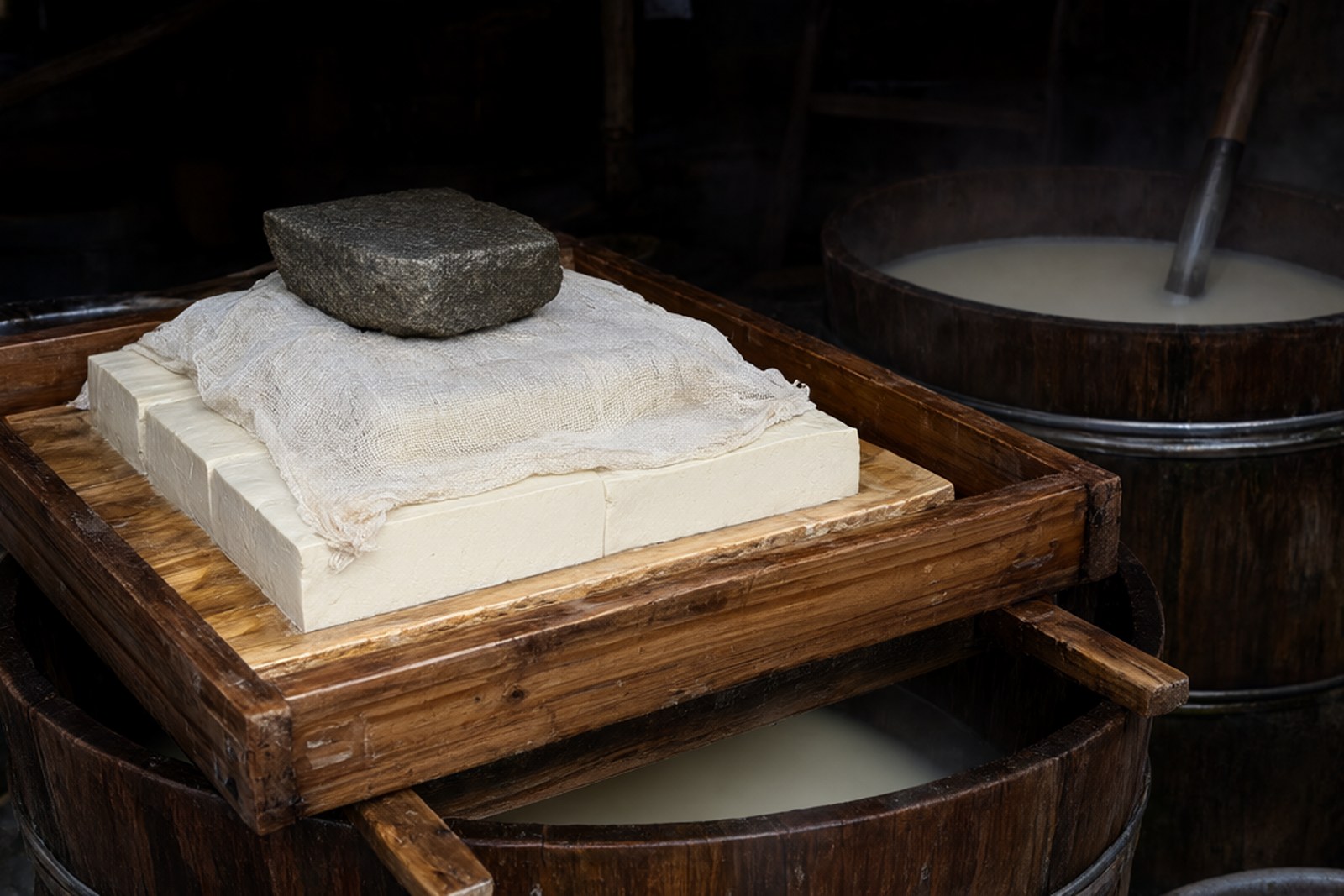
The difference is the pressing and the water. Soybeans are soaked and ground and the milk is boiled and set with a coagulant, which is the ordinary method; what follows is not. The curds are broken up, packed into a wooden frame lined with cloth, and pressed under weights until a good deal more of the water is out than a soft tofu would ever lose, and the block that comes out is firm, springy and slightly darker. The water matters too: 车田 is in hill country with a good spring, and the local claim is that the same recipe made anywhere else does not give the same bean curd. Whether or not that is true, it is the local explanation, and the village trade is built on both.
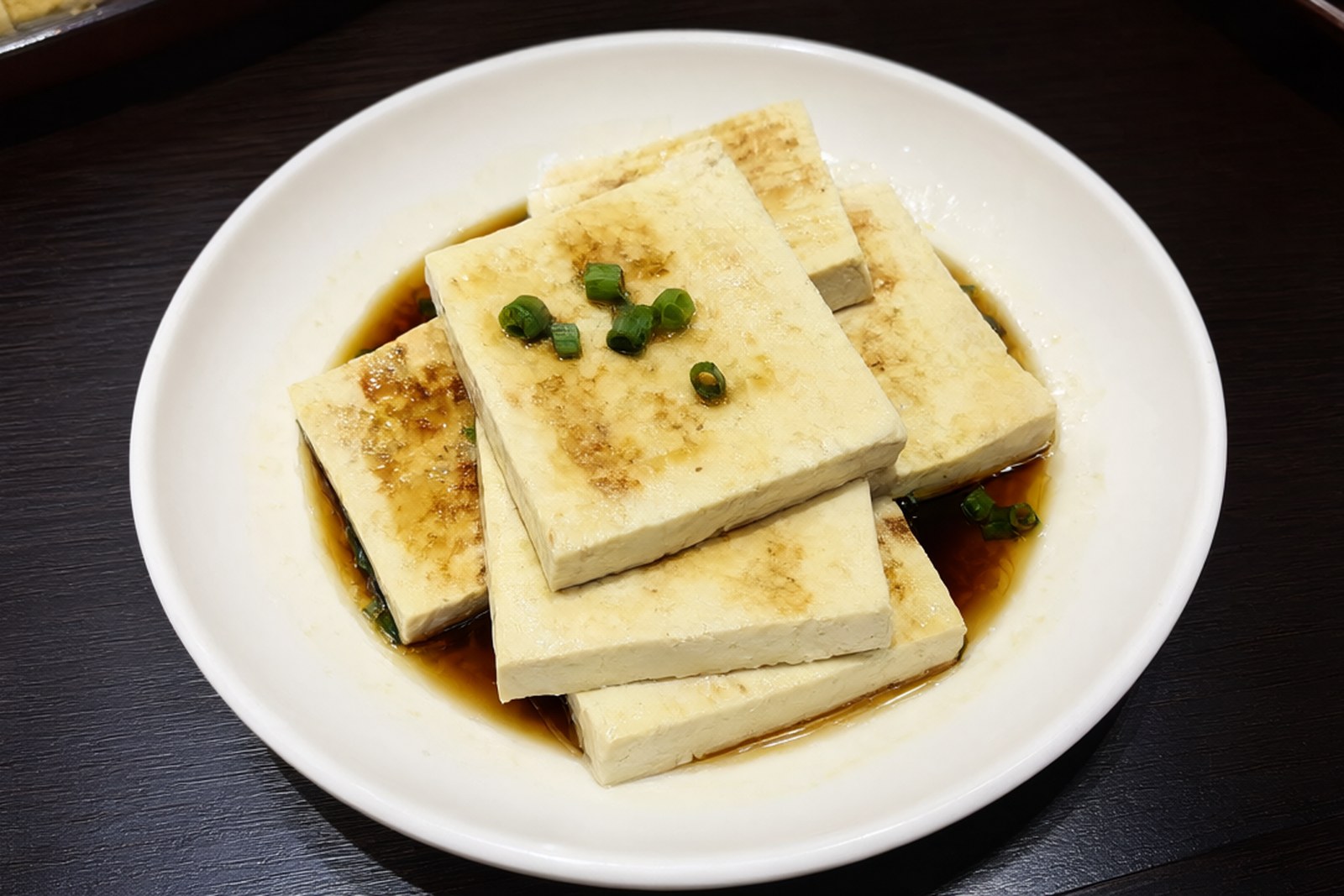
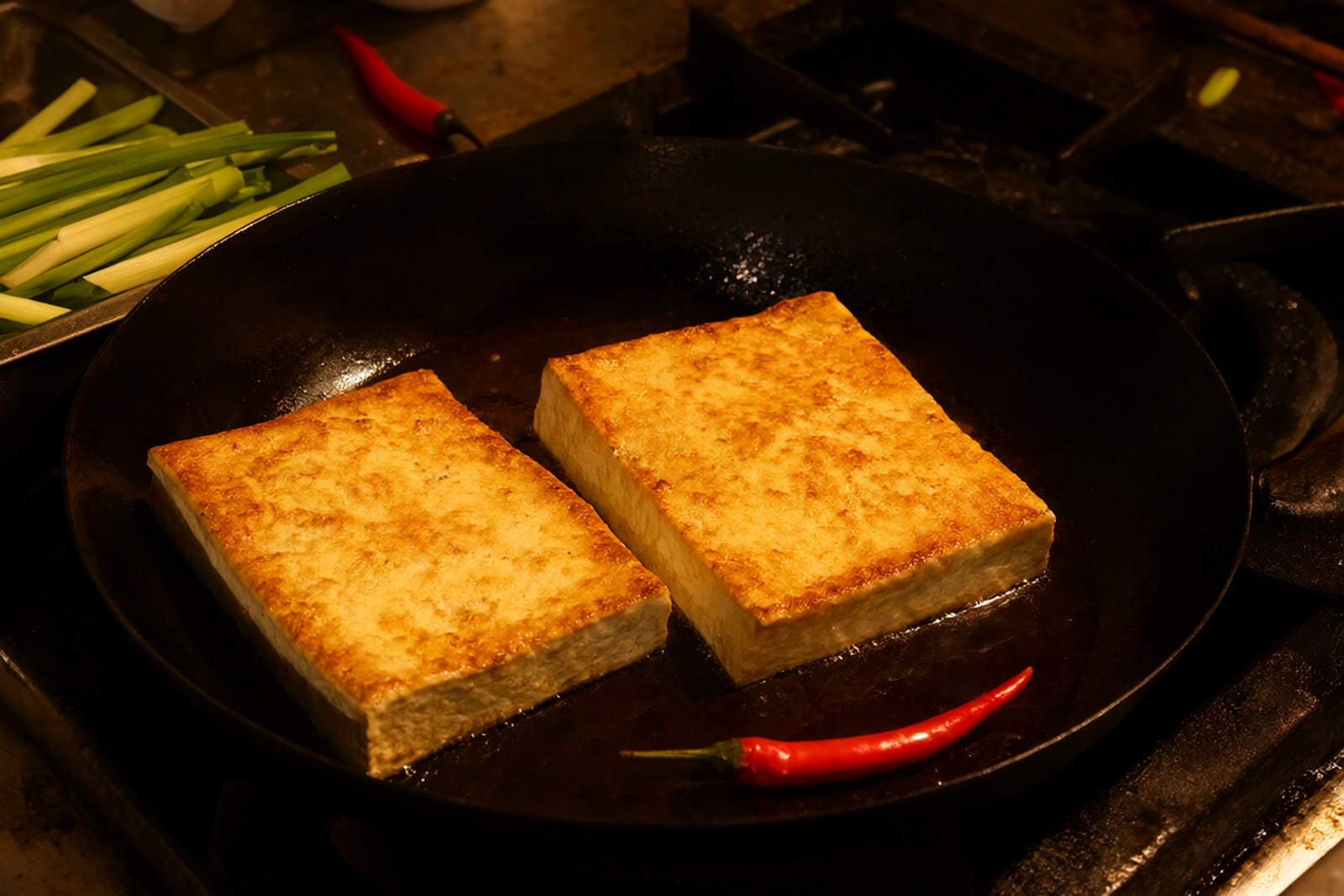
In the kitchen the firmness is the whole point and the cooking follows from it. The slabs are 煎 jiān, shallow-fried until the outside is a pale gold and the middle is still white, and eaten with a dip of soy and a scatter of spring onion; they are 酿 niàng, slit and stuffed with a minced pork filling and then braised, which a soft tofu cannot survive; and they are 焖 mèn, braised in a clay pot with belly pork or with 咸鱼 xián yú, salt fish, so that the bean curd takes on the sauce and the sauce thickens against it. A 车田 kitchen will also dry and smoke some of it, so that it keeps and can be carried out of the county, which is how the name travels.
What the tofu is part of is 龙川县, which is an old and rather distinguished county: it was established under the Qin in the third century BC, its first magistrate was 赵佗 Zhào Tuó, who went on to found the kingdom of 南越 Nányuè, and its county town at 佗城 still has the well and the Confucian hall of that founding. The tofu is the everyday food of that county, sold in the market of 车田 every morning and eaten in the ordinary restaurants of 佗城 and the county seat. If you are going out to 霍山 or to the old town, a plate of 车田豆腐 belongs in the same day.
Words and Names
车田豆腐 Chētián dòu fu is the bean curd of 车田镇, 豆腐 dòu fu meaning tofu and 车田 Chētián the town. 黄豆 huáng dòu are soybeans, 豆浆 dòu jiāng the soy milk and 石膏 shí gāo or 卤水 lǔ shuǐ the coagulants used to set it. 煎 jiān is shallow-frying, 酿 niàng stuffing, 焖 mèn braising and 咸鱼 xián yú salt fish. 龙川县 Lóngchuān xiàn is the county and 赵佗 Zhào Tuó its Qin magistrate, who became the first king of 南越 Nányuè.
What the Locals Know
Buy it from a stall in the 车田 market in the morning, and look at the cut face: a good block is smooth, slightly glossy and springs back when pressed. Ask for it 煎 or 酿 rather than 蒸, because steaming is the one method that does nothing for a tofu that was pressed this hard. If a restaurant offers 车田豆腐 in a clay pot with salt fish, take it; that is the version a 龙川 kitchen is proudest of. And eat it in the county if you can, because the local water is part of the local claim.
flowcloud would say that a village which presses the water out of its bean curd until the block can be sliced, stuffed and braised like meat, and then tells visitors that the spring it uses is half the reason, has made a very old food into a local one simply by refusing to be gentle with it.
Where to find it: the market and the tofu workshops of 车田镇, and the restaurants of 佗城 and the county seat of 龙川县, where it is a standard dish. A slab is ¥3 to ¥8 from a market stall, a plate of 煎豆腐 or 酿豆腐 ¥20 to ¥45, and a clay-pot braise with pork ¥40 to ¥80. 龙川县 is reached by road from 河源市 in about an hour, and by the 京九 rail line at 龙川站 Lóngchuān zhàn.