
Chopped Pepper Fish Head
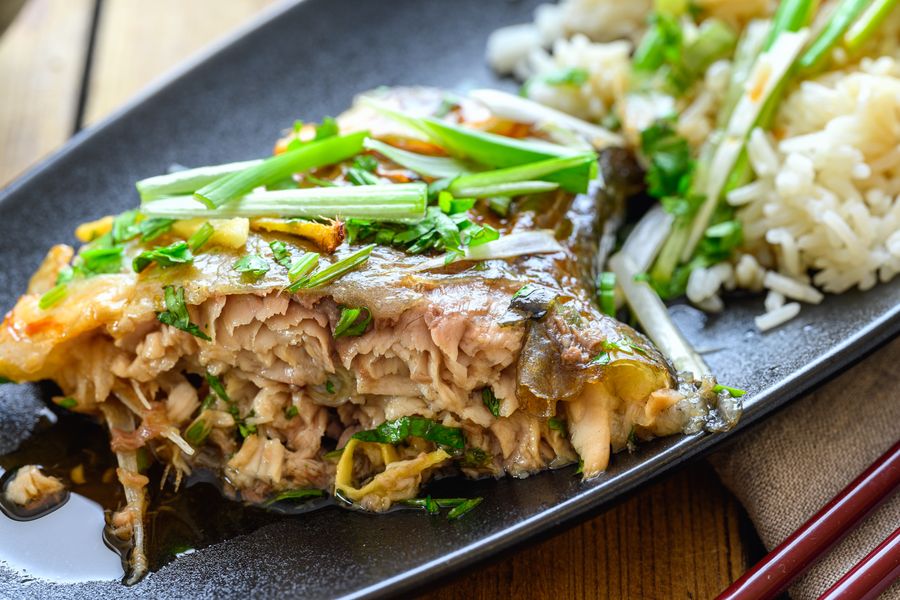
There is a plate that announces itself before you see it. It arrives carried high, like something being brought to a throne, and the whole table stops talking to watch. When the lid lifts, steam pours out carrying a scent that is at once bright and dangerous — citrusy heat, smoked salt, the clean white smell of fish. And there, staring up at you from the dish, is a fish head, split open, covered in a crushed blanket of red chilies. This is 剁椒鱼头 (duo jiao yu tou), chopped pepper fish head, and it is not a dish for the timid. It is a dish for the ones who stay.
A Dish Born from Refusal
The legend of the fish head begins, as the best Hunan legends do, with waste and wit. In the old days, when a fish was served at a banquet, the head was the part nobody wanted — a thing of bone and awkwardness, left to the kitchen. A chef in the Xiang River region, unwilling to let so much flavour go to the table’s embarrassment, decided to treat the head the way Hunanese treat everything: with violence and respect in equal measure.
He split the head open along the spine, scored the flesh, and buried it under a thick paste of pickled, chopped chilies — the small red ones called 朝天椒 (chaotianjiao), “heaven-facing peppers,” that Hunan has been growing, fermenting, and worshipping for generations. Then he steamed it, letting the vapor do what fire never could: carry the chili’s fire deep into the fish without burning it, until the flesh fell away from the bone in perfect white petals.
The Steaming That Makes It Honest
The technique is deceptively simple, which is the Hunanese way of being difficult. A fat carp or grass carp head — some say the heavier the better, because the collar and the cheek hold the sweetest meat — is cleaned, salted, and opened like a book. The chili paste is not simply spread on; it is packed in, pressed into every cut, worked into the flesh with the conviction of someone sealing a letter.
Then comes the steam. Not a quick blast, but a slow, patient bath of ten or fifteen minutes, until the fish’s juices pool in the base of the plate and mingle with the chili oil into a sauce that is the real treasure of the dish. In the best kitchens a handful of fermented black beans (douchi) is scattered in, and a little ginger, and sometimes the chef adds a final flourish — a spoonful of hot oil poured over the top at the end, so the whole plate hisses once, like a held breath released.
Eating the Head, All of It
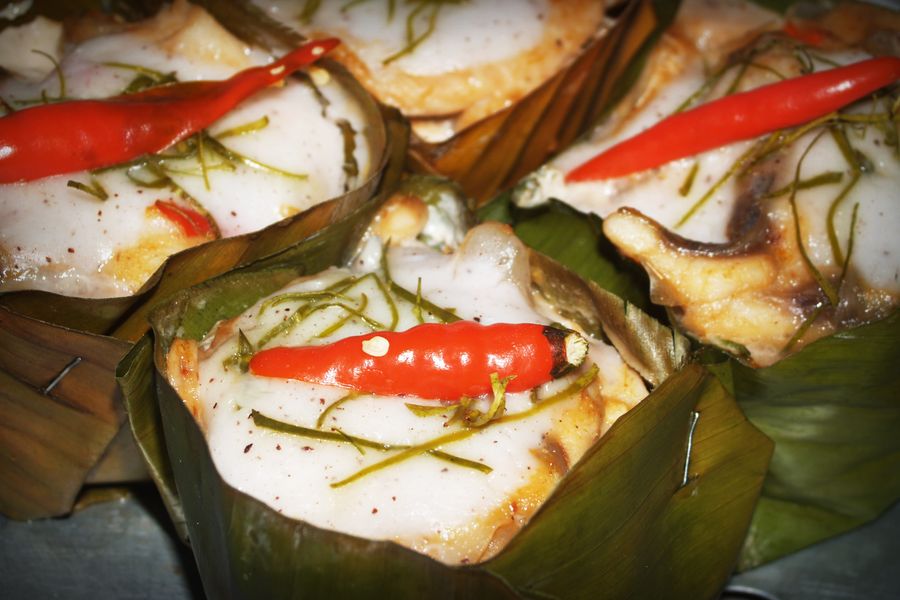
The dish demands a kind of attention that modern meals have forgotten. You start with the cheek, the roundest, most tender piece — the morsel connoisseurs fight over before you have even said “pass the rice.” Then the collar, richer and more yielding. Then the flesh beneath the jaw, and finally the brain, which in Hunan is not a dare but a delicacy, soft and buttery and tasting faintly of the river itself. Each bite is followed by a mouthful of rice, because the chili will not negotiate and the rice is your only refuge.
And when the flesh is gone, when the head is a clean white sculpture of bones, the true eating begins. The sauce — red, glistening, carrying every flavour of the dish at once — is poured over noodles, or dumplings, or simply over more rice, and this second act is often the one people remember best. It is the way Hunan works: the first bowl is the fight, the second is the forgiveness.
Where the Best Heads Are Served
In Changsha you find the dish everywhere, but you find it done well in the old halls of 火宫殿 (Huogongdian), where the waiters move with a practised calm through the steam, and on the busy tables of 坡子街 (Pozijie), where families split the head between them with the focus of surgeons. At 南门口 (Nanmenkou) the smaller shops serve a version that is hotter and more reckless, the way a city’s nightlife should be. Order it with a plate of rice noodles to follow, and do not be surprised if the waitress nods with approval — you have understood the local contract.
A Small Meditation on the Head of Things
flowcloud would tell you that the chopped pepper fish head is a dish about facing the difficult parts of life head-on — literally. Anywhere else, a fish head is waste, the leftover of a meal, the part you turn away from. In Hunan, they found the fire in it, and made it the centre of the table. The head is the seat of thought, after all; it seems right that it should also be the seat of flavour. There is a quiet philosophy there: nothing in this province is so humble that it cannot be made magnificent, and nothing so magnificent that it cannot be made to remember its origins in a muddy river.
Share it. That is the secret of the dish — it is sized for a family, built for a crowd, impossible to finish alone. You will reach across the table, you will pass the spoon, you will laugh at your own burning mouth. And for that hour, with the steam rising and the chilies glowing, you will be part of the city, not just a visitor passing through.
Where to find it: 火宫殿, 坡子街, 南门口. Ask for 剁椒鱼头, order extra rice, and save the sauce for the noodles. The head will teach you the rest.