
彝家坨坨肉,火塘待客情。Yíjiā tuótuó ròu, huǒtáng dàikè qíng – The Yi household’s tuotuo meat; fire-pit hospitality.
坨坨肉 tuótuó ròu tuotuo meat is the 彝家 yíjiā Yi household’s oldest gesture of welcome – chunks of meat so large they look like the cook forgot to cut them smaller, which is exactly the point – and in 楚雄 Chǔxióng Chuxiong, the seat of the 楚雄彝族自治州 Chǔxióng Yízú Zìzhìzhōu Chuxiong Yi Autonomous Prefecture, it is the dish that appears when a 火塘 huǒtáng fire pit is lit and a guest is honoured. The method is deliberately plain: 猪肉 zhūròu pork or 羊肉 yángròu lamb is kept on the 皮 pí skin, cut into rough fist-sized 坨 tuó lumps, and 白煮 báizhǔ plain-boiled in a 大锅 dàguō of water with nothing but 盐 yán salt and maybe a 木姜子 mùjiāngzǐ litse seed until the meat is just done, then served still warm with a 蘸水 zhànshuǐ of 盐 yán salt, 辣椒 làjiāo chili and 花椒 huājiāo – you eat it with your hands, the way the 彝族 Yízú Yi have at the 火塘 huǒtáng for as long as there has been a fire to sit around. The honest shape is that this is a 过年 guònián New Year and 杀猪饭 shāzhūfàn pig-slaughtering-feast dish above all – the time a rural 楚雄 Chǔxióng household kills a 年猪 niánzhū New-Year pig and feeds the village – and a plate runs about 30-60 yuan at a Yi 餐馆 cānguǎn or 农家乐 nóngjiālè (worth confirming – the price tracks whether it is 土猪 tǔzhū free-range pork or 羊肉 yángròu, and a city 彝 Yí themed restaurant marks it up for the costume).
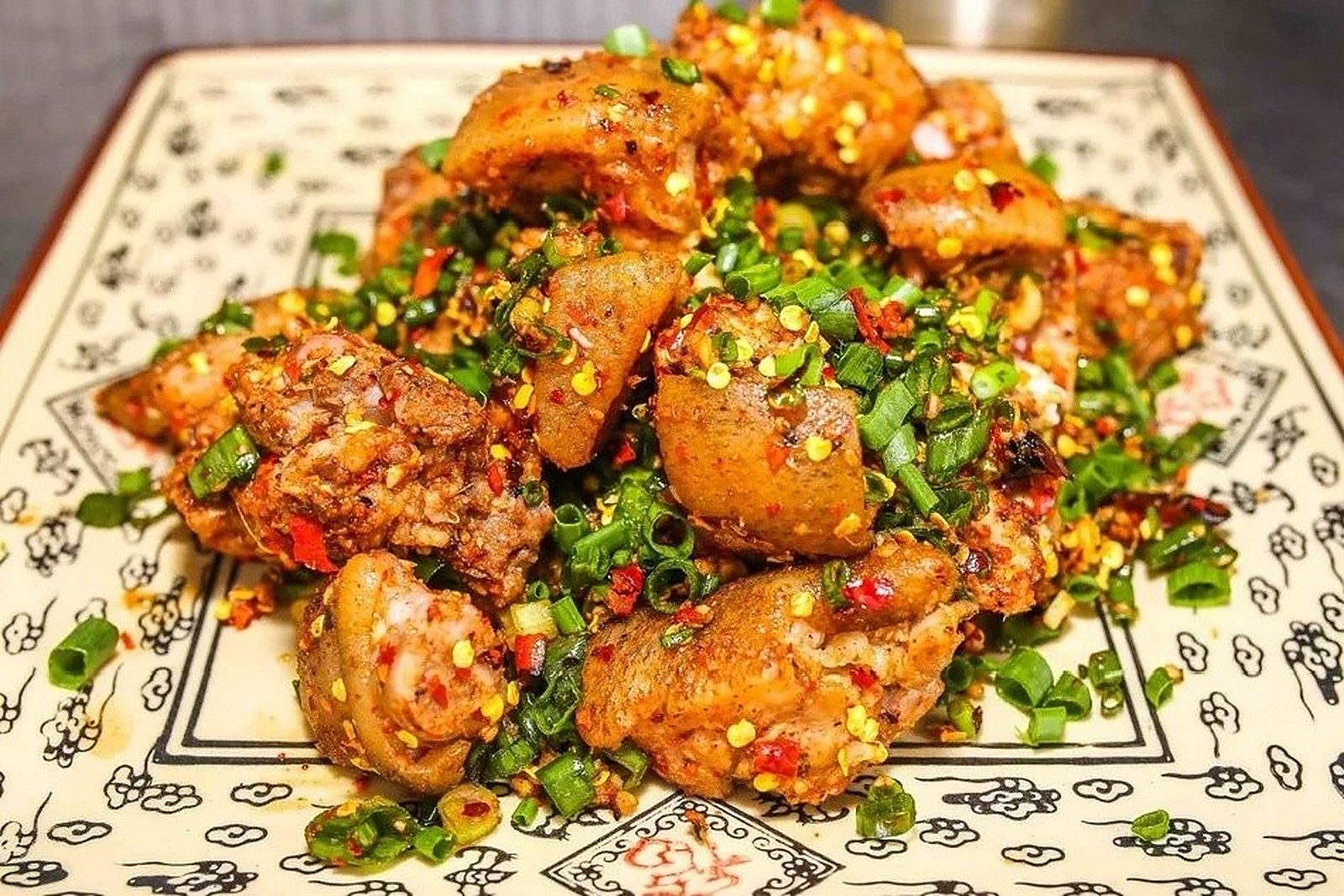
The mechanism is the size and the skin. Where a 汉族 Hànzú Han cook trims and slices, the 坨坨肉 tuótuó ròu cook leaves the 皮 pí skin on and the 肥 féi fat with the 瘦 shòu lean, because the 坨 tuó chunk is the honesty – a piece big enough that you cannot hide a bad cut, and a 白煮 báizhǔ boil that lets the meat taste of meat rather than of a 酱 jiàng sauce. The comparison locals draw is with the 手把肉 shǒubǎròu of the grasslands and the 白切肉 báiqiē ròu of 广东 Guǎngdōng – all are boil-it, salt-it, trust-it cooking – but the 坨坨肉 tuótuó ròu is the chunkiest and the least dressed, a dish whose whole identity is the refusal to fuss, and whose 火塘 huǒtáng setting is the point the restaurant version can only imitate. The honest caveat for a writer is that the 土猪 tǔzhū free-range claim is doing a lot of work – much 楚雄 Chǔxióng 坨坨肉 tuótuó ròu now comes from a normal 养猪场 yǎngzhūchǎng farm pig, and the difference between a real 年猪 niánzhū and a supermarket one is mostly in the fat and the chew, which a tourist menu will not admit (worth confirming whether the pork was actually free-range before you pay the heritage price).
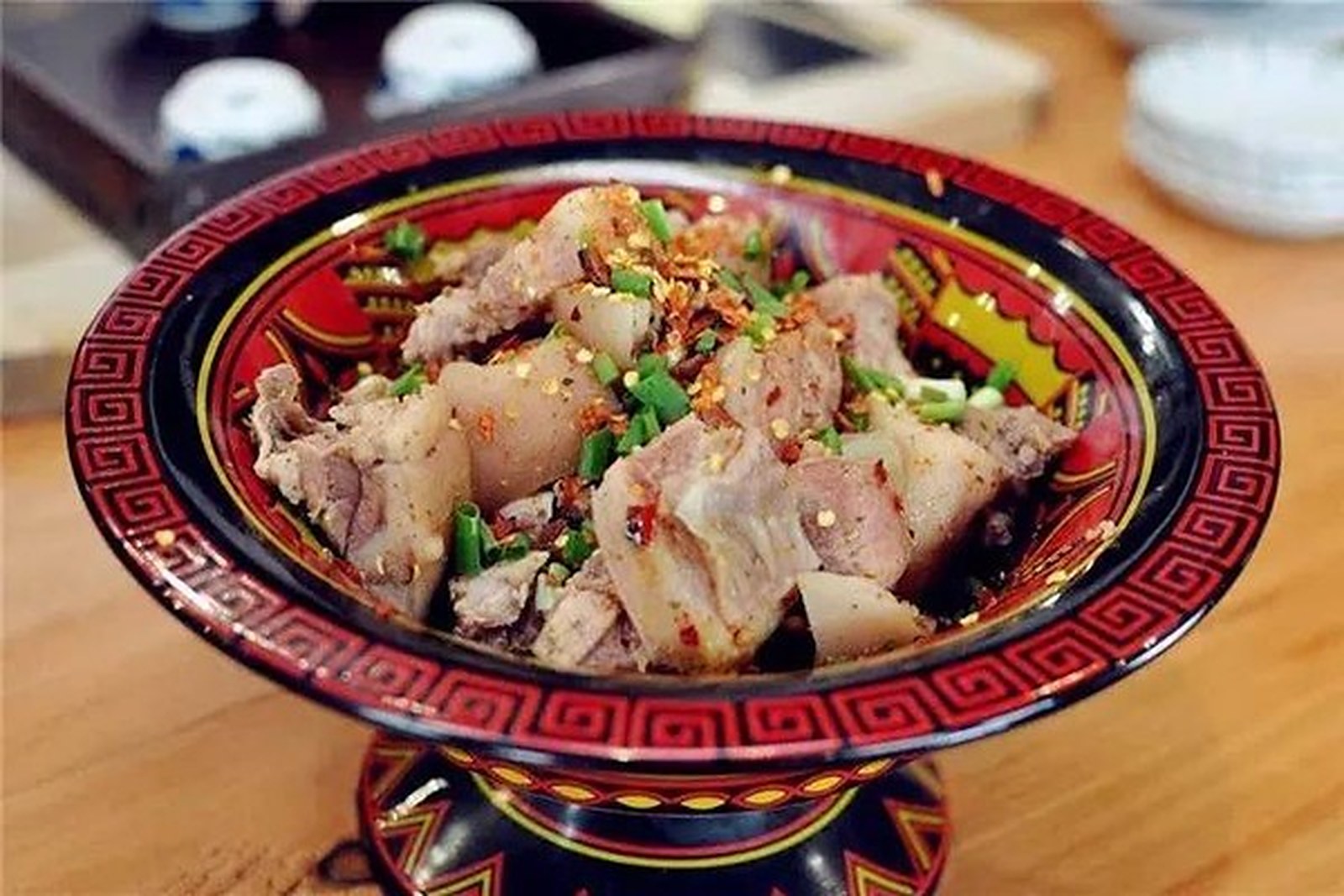
Locals eat it at the 火塘 huǒtáng, by hand, with 苞谷酒 bāogǔ jiǔ corn liquor and a 腊肉 làròu plate, the 坨 tuó chunks passed around rather than plated to order. The move, if you are a visitor, is to eat it where it is genuinely a 待客 dàikè hospitality dish – a rural 楚雄 Chǔxióng 彝 Yí village feast or a 农家乐 nóngjiālè that actually keeps a 火塘 huǒtáng – and to take it with the 皮 pí skin and a bit of 肥 féi fat, because a 坨坨肉 tuótuó ròu trimmed lean is a contradiction the cook would not recognise. The honest truth is that the dish is over-rated as a daily pleasure and under-rated as a ritual: it is plain to the point of boredom if you come expecting 红烧 hóngshāo braised depth, but it is exactly right at a 杀猪饭 shāzhūfàn where the point is the pig, the village and the fire, not the seasoning. The honest test of a 楚雄 Chǔxióng 坨坨肉 tuótuó ròu is the bite: the 皮 pí skin should be yielding not rubbery, the 肥 féi fat should be clean not waxy, and the meat should taste of pork first – a piece that is grey, dry and shy of salt was boiled too long or never respected the 坨 tuó (worth confirming which houses still boil it right rather than steam it for service).
The self-deprecating footnote: a writer will describe 坨坨肉 tuótuó ròu as primal and noble and then quietly wish it had a 酱油 jiàngyóu soy sauce, because the honest grade is that a plain boiled 坨 tuó of pork is mostly a vehicle for the 蘸水 zhànshuǐ and the company – and the dish is better as a story about the 火塘 huǒtáng than as a thing you would order alone on a Tuesday.
Words and Names
楚雄坨坨肉 Chǔxióng Tuótuó Ròu Chuxiong tuotuo meat · 坨坨肉 Tuótuó Ròu chunk meat · 彝族 Yízú Yi ethnic group · 火塘 Huǒtáng fire pit · 白煮 Báizhǔ plain boil · 杀猪饭 Shāzhūfàn pig-slaughtering feast · 年猪 Niánzhū New-Year pig · 土猪 Tǔzhū free-range pig · 蘸水 Zhànshuǐ dipping sauce · 苞谷酒 Bāogǔ Jiǔ corn liquor · 楚雄彝族自治州 Chǔxióng Yízú Zìzhìzhōu Chuxiong Yi Autonomous Prefecture
What the Locals Know
- The 坨 tuó is the honesty: a chunk big enough that you cannot hide a bad cut, so take it with the 皮 pí skin and some 肥 féi fat, because a lean, trimmed 坨坨肉 tuótuó ròu is a contradiction the cook would not recognise.
- The pig claim is doing work: much 楚雄 Chǔxióng 坨坨肉 tuótuó ròu is farm pork, not real 土猪 tǔzhū, so the difference is in the fat and the chew – verify before paying the heritage price (worth confirming the details).
- It is a ritual, not a recipe: plain to the point of boredom if you expect 红烧 hóngshāo depth, but exactly right at a 杀猪饭 shāzhūfàn where the pig, the village and the 火塘 huǒtáng are the point.
- Eat it by hand at the fire: a restaurant that plates it daintily and steams it to order has missed the 待客 dàikè logic – find a house with a real 火塘 huǒtáng (worth confirming which still do).
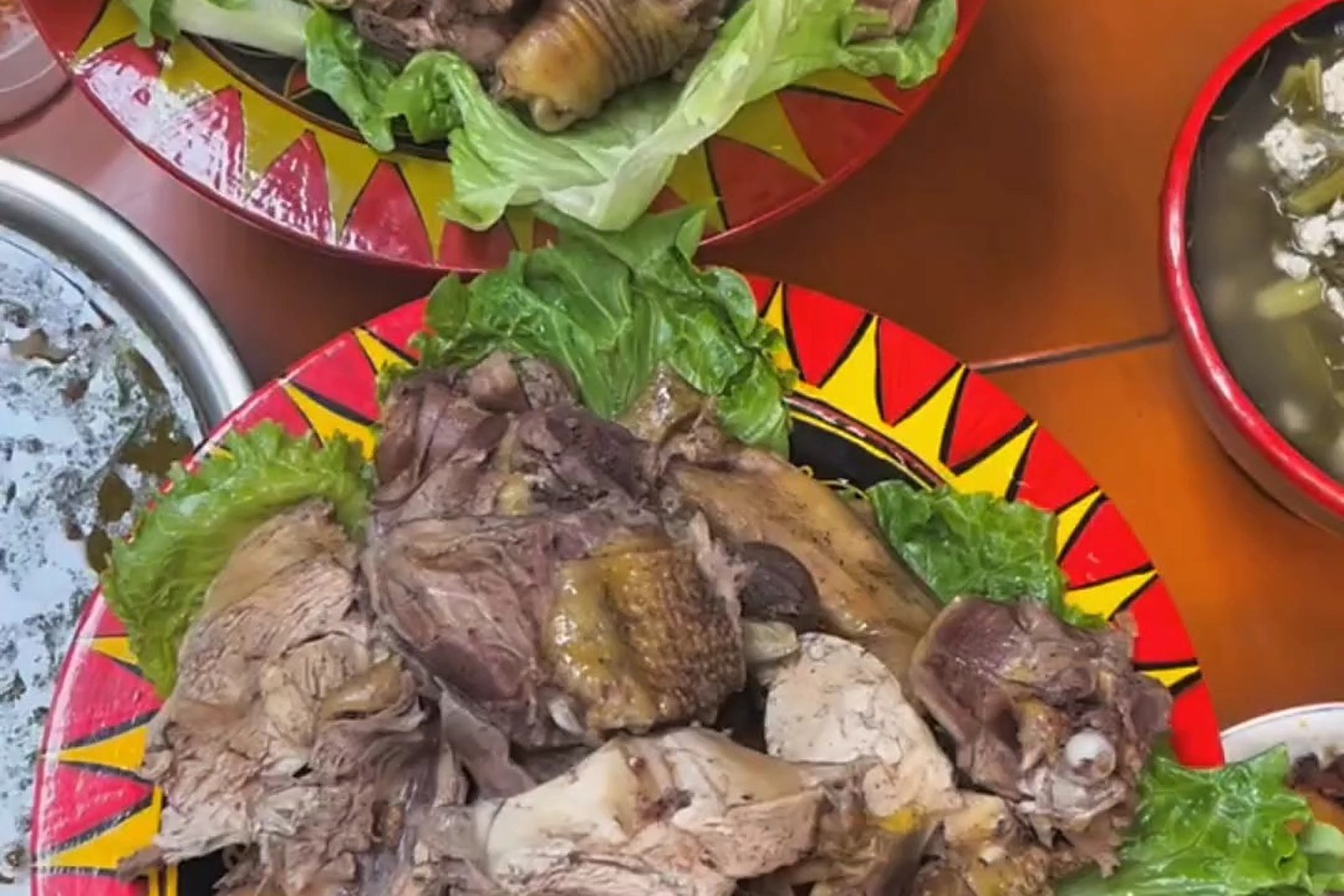
flowcloud would say that the 楚雄坨坨肉 chǔxióng tuótuó ròu is the 彝家 yíjiā Yi fire-pit dish – 猪肉 zhūròu pork or 羊肉 yángròu lamb on the 皮 pí skin, cut in fist-sized 坨 tuó lumps and 白煮 báizhǔ plain-boiled, dipped in salt and chili – and that the honest move is to eat it by hand at a real 火塘 huǒtáng during a 杀猪饭 shāzhūfàn, because the dish is a ritual about the pig and the village, not a flavour you order alone. All checked October 2026.
Where to find it: rural 楚雄 Chǔxióng 彝 Yí villages and 农家乐 nóngjiālè with a 火塘 huǒtáng – a plate about 30-60 yuan (worth confirming the details); eat in winter, by hand, with the skin, and verify the pork was free-range. Chuxiong tuotuo meat is the Yi hospitality chunk, ritual before seasoning. All checked October 2026.