
楚雄全羊锅,冬日补一身。Chǔxióng quányáng guō, dōngrì bǔ yīshēn – Chuxiong’s whole-lamb pot; a winter pot that restores the body.
楚雄 Chǔxióng Chuxiong, the seat of the 楚雄彝族自治州 Chǔxióng Yízú Zìzhìzhōu Chuxiong Yi Autonomous Prefecture in central 云南 Yúnnán Yunnan, does its hospitality with a goat, and the dish is the 全羊汤锅 quányáng tāngguō whole-lamb soup pot – the 彝族 Yízú Yi people’s hard dish for guests, the thing a household puts on the fire when someone has driven a long way and deserves more than a polite bowl of rice. The idea is unhurried and whole: a 黑山羊 hēishānyáng black goat is broken into chunks – 羊排 yángpái ribs, 羊腿 yángtuǐ leg, 羊杂 yángzá offal, sometimes the head – and simmered in a 大锅 dàguō big pot of plain water with a few 草果 cǎoguǒ tsao-ko pods, 花椒 huājiāo Sichuan pepper and 姜 jiāng ginger until the broth turns milky and the meat slides off the bone, then served as a 汤锅 tāngguō soup pot you ladle from at the table, with a 蘸水 zhànshuǐ dipping sauce on the side – often a dry 蘸料 zhānliào of 辣椒面 làjiāo miàn chili powder, 盐 yán salt, 花椒 huājiāo and 味精 wèijīng MSG you mix yourself rather than a wet sauce. The honest shape is that this is a winter 进补 jìnbǔ tonic dish above all – a 楚雄 Chǔxióng street fills with 羊汤锅 yángtāngguō shops in the cold months and the city treats the steaming pot as both medicine and meal – and a shared pot runs roughly 150-300 yuan for a table depending on the size of the goat and whether you take the 羊杂 yángzá too (worth confirming – the number tracks the live-goat rate and the season, and a central 楚雄 Chǔxióng house quotes higher than a county roadside one).
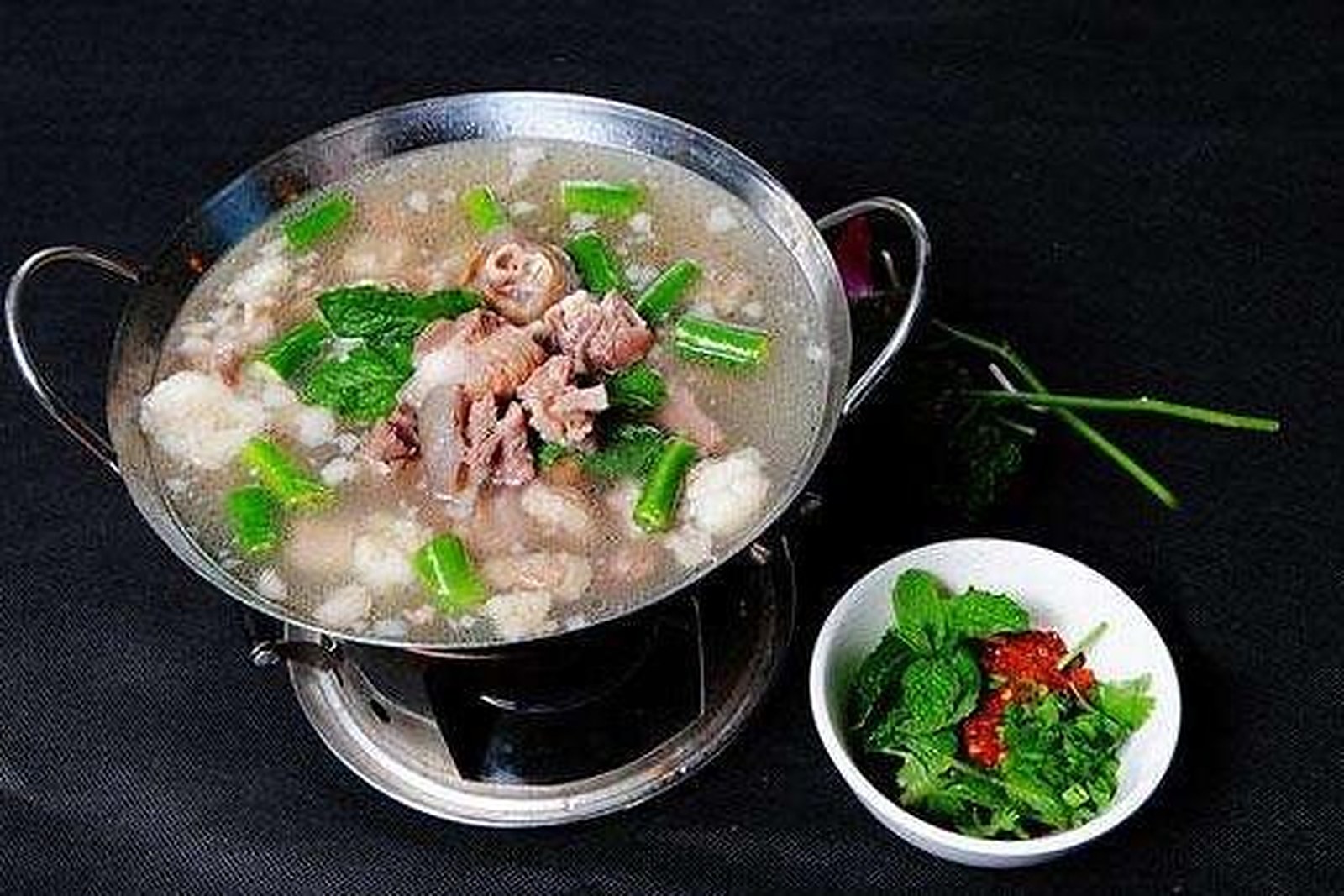
The mechanism is the boil, slow and plain. Unlike the 火锅 huǒguō hotpot of 四川 Sìchuān where a red-oil 底料 dǐliào base does the talking, the 全羊汤锅 quányáng tāngguō lets the goat speak for itself: hours over a low 火 huǒ fire draw the 胶原 jiāoyuán collagen and the bone 髓 suǐ marrow into a clean, faintly gamey, peppery broth that tastes of animal before it tastes of spice, and the 黑山羊 hēishānyáng matters because the mountain breed is lean and muscular and gives a broth that is rich without being greasy. The comparison locals draw is with the 羊肉粉 yángròu fěn mutton-rice-noodle of 贵州 Guìzhōu and the 手把肉 shǒubǎròu hand-held boiled mutton of the 内蒙古 Nèiměnggǔ grasslands – all are boil-the-beast, trust-the-beast cooking – but the 楚雄 Chǔxióng version is the whole-animal, communal-pot, dip-it-yourself one, defined by the dry 蘸料 zhānliào as much as the broth. The honest caveat for a writer is that the 黑山羊 hēishānyáng label is loosely used – many 楚雄 Chǔxióng shops buy whatever goat the market offers and the 山 shān mountain claim is more pride than paperwork – so a visitor should ask whether the goat was local and watch the broth, because a pot built on a pale, watery, farmed import will not carry the pepper-and-bone depth the real thing does (worth confirming the goat’s origin before you pay the mountain premium).
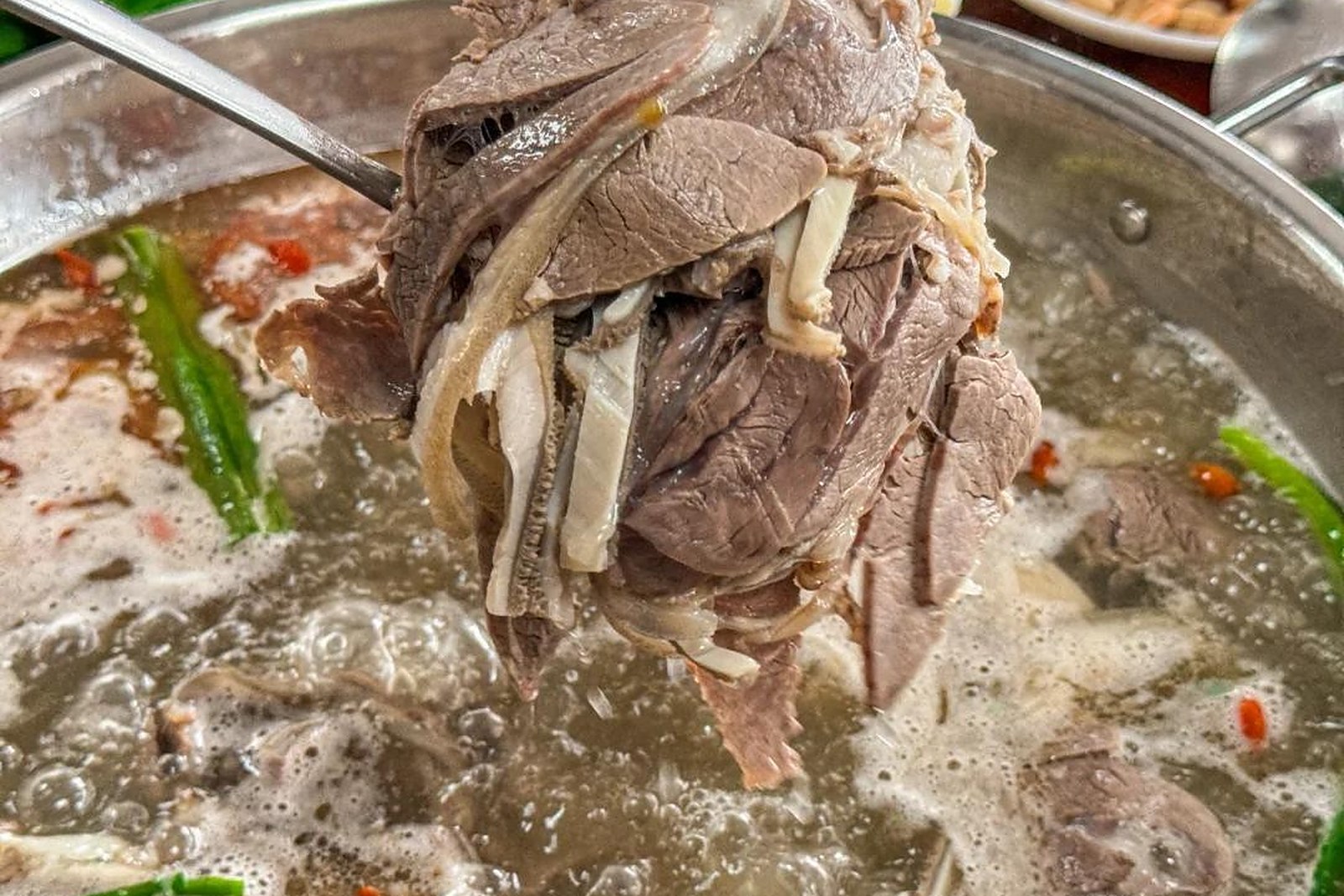
Locals eat it in winter, in a group, seated around the 汤锅 tāngguō with the 蘸水 zhànshuǐ within reach and the 羊汤 yángtāng broth refilled as it drops. The move, if you are a visitor, is to find a 楚雄 Chǔxióng 羊汤锅 yángtāngguō house that is busy with locals in December or January – the cold months are when the goat is fat and the pot is at its most itself – and to order the whole pot for the table rather than a lone bowl, because a single serving misses the point, which is the shared fire. The honest season is deep winter, roughly November through February, when the 进补 jìnbǔ logic makes sense and the city’s 羊汤锅 yángtāngguō row is steaming; the honest test of a 楚雄 Chǔxióng pot is the broth and the 蘸料 zhānliào – the soup should be milky and clean, not cloudy with 味精 wèijīng or greasy with scrap fat, and the dry dip should be sharp enough to wake the meat, because a bland sauce is the house quietly admitting the goat was ordinary. The 楚雄 Chǔxióng city blocks and the 南华 Nánhuá and 武定 Wǔdìng county towns are where the pots sit, though exactly which 羊汤锅 yángtāngguō house currently draws the longest local queue shifts year to year (worth confirming which shops are the real winter gathers).
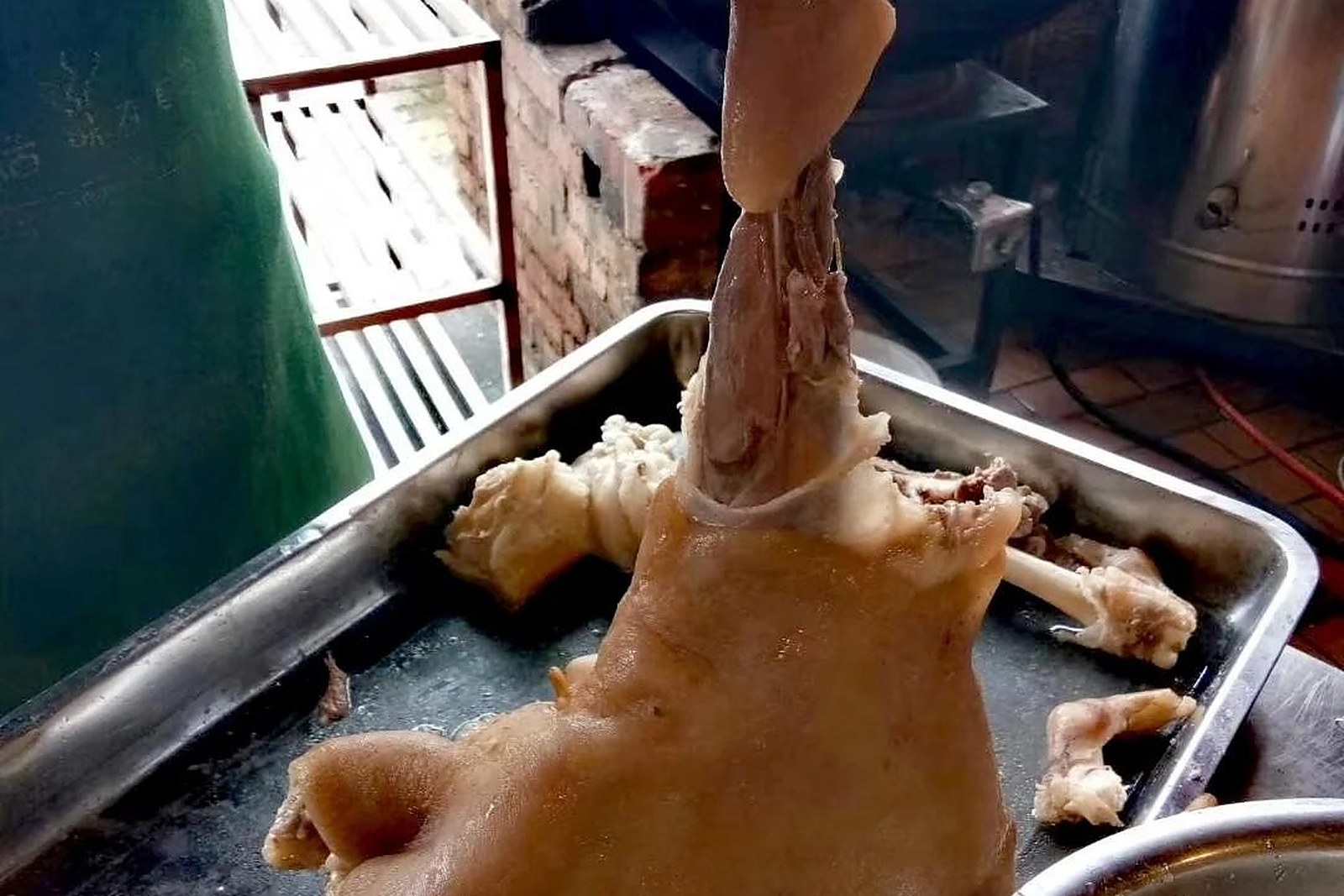
The self-deprecating footnote: a travel writer will call this a 彝族 Yízú cultural experience and photograph the 羊头 yángtóu head in the pot, and then eat mostly the 羊排 yángpái ribs and leave the 羊杂 yángzá to the locals who know which bit is which – which is to say the whole-lamb idea is bigger than the writer’s stomach, and the honest move is to go hungry, go with people, and accept that the 蘸料 zhānliào is doing half the work the goat is not.
Words and Names
楚雄全羊汤锅 Chǔxióng Quányáng Tāngguō Chuxiong whole-lamb soup pot · 楚雄彝族自治州 Chǔxióng Yízú Zìzhìzhōu Chuxiong Yi Autonomous Prefecture · 彝族 Yízú Yi ethnic group · 黑山羊 Hēishānyáng black goat · 汤锅 Tāngguō soup pot · 蘸水 Zhànshuǐ dipping sauce · 蘸料 Zhānliào dry dipping mix · 羊杂 Yángzá goat offal · 进补 Jìnbǔ winter tonic · 南华县 Nánhuá Xiàn Nanhua County · 武定县 Wǔdìng Xiàn Wuding County
What the Locals Know
- The broth is the tell: a real 全羊汤锅 quányáng tāngguō broth is milky and clean, not cloudy with 味精 wèijīng or greasy with scrap fat, so judge the pot before you judge the 蘸料 zhānliào.
- The goat claim is loose: many 楚雄 Chǔxióng shops use whatever goat the market offers, so ask if it was local 黑山羊 hēishānyáng and watch the depth, because a farmed import will not carry the pepper-and-bone richness (worth confirming the details).
- Winter is the season: eat it November to February when the goat is fat and the 羊汤锅 yángtāngguō rows are steaming – a summer pot is a tourist pot.
- It is a group fire, not a solo bowl: order the whole pot for the table, because a single serving misses the communal point and the cook resents it.
flowcloud would say that the 楚雄全羊汤锅 chǔxióng quányáng tāngguō is the 彝族 yízú Yi household’s whole-black-goat pot – ribs, leg and 羊杂 yángzá offal simmered to a milky broth and dipped in a dry 蘸料 zhānliào – and that the honest move is to find a busy winter house, order the whole pot for a group, and judge it by the clean broth, because the goat is the feast and the dip is doing half the work. All checked October 2026.
Where to find it: 楚雄 Chǔxióng city 羊汤锅 yángtāngguō rows and the 南华 Nánhuá / 武定 Wǔdìng county towns – a shared pot about 150-300 yuan (worth confirming the details); eat in deep winter, follow the local queue, and taste the broth before the sauce. Chuxiong whole-lamb soup pot is the Yi hospitality pot, tonic before table manners. All checked October 2026.