
Dawn at the river steps below 磁器口 Cíqìkòu Ciqikou: cargo barges on the grey-gold water, egrets on the shallows, the stone landing wet and empty before the market wakes above it. Chongqing is a municipality of southwest China, and 沙坪坝区 Shāpíngbà Qū Shapingba holds the west bank of the Jialing, where Ciqikou has kept its wharf-town market for a thousand years – and this page follows the one dish the wharf sent out into the world, on the wharf’s own morning clock. The town’s whole snack board keeps a page of its own; this one is a single pot’s genealogy, in three layers: the wharf that needed it, the codification that named it, the journey that carried it off.

Start with the saying every food page of the city quotes: 到磁器口不吃毛血旺,等于没到磁器口 dào Cíqìkòu bù chī máoxuèwàng, děngyú méi dào Cíqìkòu – arrive at Ciqikou and skip the maoxuewang, and you have not arrived. The dish’s logic is the water wharf’s economics: offal was what the slaughterhouses had to spare, the spice was what covered it, and the pot that answered was built for boat crews and porters who wanted value and fire in one bowl. The name explains its own manner: 血旺 xuèwàng xue wang is set blood curd – duck’s blood in the modern pot, a standard ingredient in Chinese cooking – blanched fresh to order rather than boiled tough; 毛 máo mao is Chongqing dialect for rough and ready, the wharf’s word for unrefined, and the dish has never pretended otherwise.
The story goes that the pot has an emperor’s shadow: the fugitive Ming Jianwen emperor reached the town’s temple in flight, and the monastery’s crude pot of pig’s blood and greens that fed him is remembered as a “version one” – kept as legend. The codification tale is plainer, as the chronicles tell it: at the water wharf lived a slaughterhouse family surnamed 王 Wáng Wang, and Wang’s wife, née 张 Zhāng Zhang, could not bear to see each day’s unsold offal discarded, so she set a broth stall on the street – pork-bone and pea broth, old ginger, Sichuan pepper, rice wine, the lungs and intestines simmered long. One day, the tale runs, fresh blood curd went straight into the pot – and it came out tenderer than anything else in the bowl, and stayed there. The dating is told two ways: the version most widely told sets the stall in the 1940s, when the wharf was at its busiest, and older accounts reach back to the early Republic – both kept at arm’s length rather than printed as fact. The customers, at least, are agreed: boatmen and dock labourers first; then, in the war years, students and professors walking down from the universities above the town – as local chronicles like to recall it.
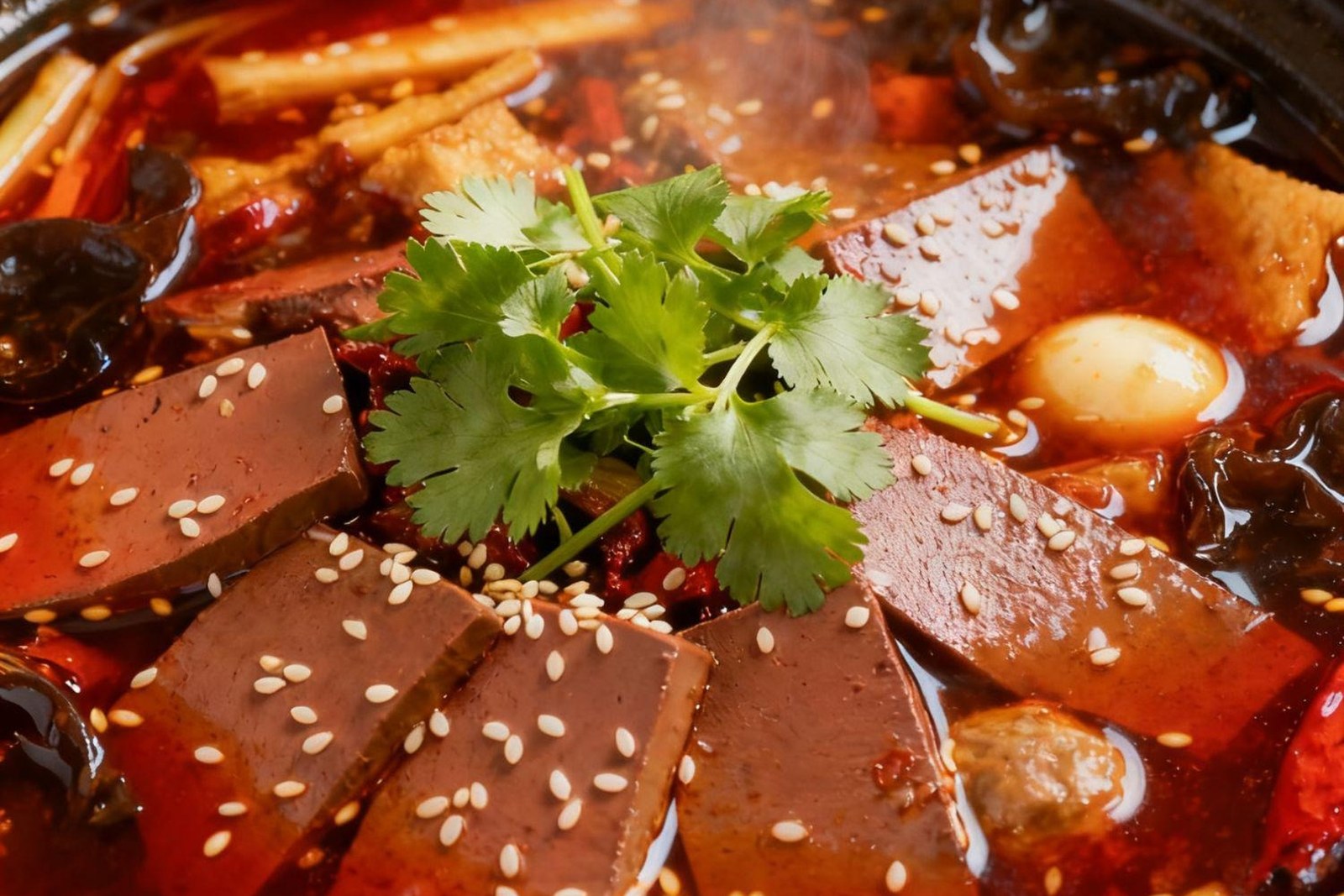
The old-town pot answers to fixed tests. The broth is pork bone and peas, the peas cooked until they dissolve on the tongue – 豌豆化渣 wāndòu huàzhā, the locals’ watershed between wharf-grade and city imitation; the tripe and offal ride a richness the register calls oil without grease, built to be finished with rice. The making runs three stages – fry the spice base, add the broth, warm-simmer each bowl to order – and the vessel moved with the decades from iron pot to claypot to table basin. The record around it is real: collected in the 1962 Chongqing cookbook; named among the city’s famous snacks in 1964; the making technique entered the municipal intangible-heritage register in 2009; folded into the Yu-cuisine standard system, and pushed by the city’s food writers as one of the ancestors of Yu cuisine – the “one of” doing honest work. Some text scholars trace the 旺 wàng to an older character for edible blood, displaced by a luckier-sounding homophone. Then the journey: from the mid-1990s the pot rode Sichuan kitchens across the country, and the national version now runs on a hotpot-style broth base with duck-blood curd and bean sprouts, built for speed – one technical clause owed to that broth. The Chongqing writer who compared the two put the difference in one line: out there you know the dish’s name; here you eat the broth.
Words and Names
毛血旺 máoxuèwàng is maoxuewang; the mao of the name is Chongqing dialect for rough and ready, and xue wang is set blood curd, blanched fresh to order; 毛肚 máodù beef tripe, one of the name-giving offal. 王张氏 Wáng Zhāngshì “Wang’s wife née Zhang”, the stall-keeper of the wharf tale. 豌豆化渣 wāndòu huàzhā the peas cooked until they dissolve, the locals’ test of a wharf-grade pot. 衁 huāng the older character some scholars trace behind the name’s 旺; 渝菜 Yúcài the Chongqing register of Sichuan cooking, whose standard system lists the dish; 老三宝 lǎo sān bǎo the old town’s three treasures, of which this pot is one.
What the Locals Know
The local order of operations: sip the broth first, plain, to read the depth of the spice – then start on the curd, because the tenderness of the blood curd tells you whether the house means it. The peas are the second test: a pot whose peas have gone to mush in the broth belongs to the wharf’s tradition; a pot with firm peas belongs to the city. Winter turns the dish into a set meal – a basin of maoxuewang and a bowl of plain rice, the broth ladled over the grain: the locals’ hidden main course. The wartime walk – students from the universities above the town coming down for a bowl – is told in the old families as household memory: no fame in those days, they say, only hungry bellies.
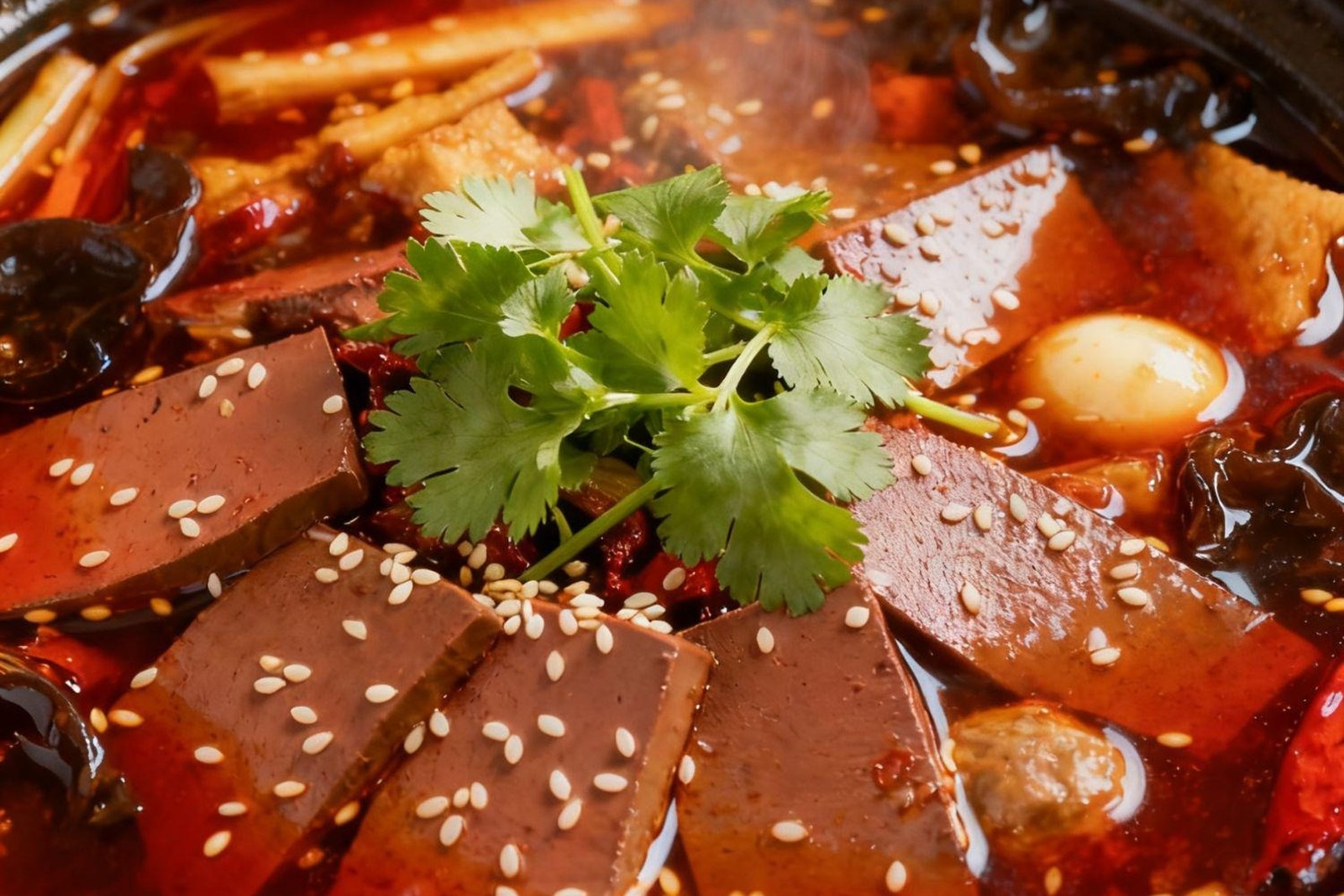
flowcloud would say that maoxuewang is the wharf in a pot – fresh blood curd blanched to order over pork-bone and pea broth, named for the dialect’s rough-and-ready word, codified by a stall-keeper the chronicles place at the busy 1940s wharf, collected in the city’s 1962 cookbook, registered as a municipal craft in 2009, and since the late 1990s travelling the country’s menus in a hotter, quicker form – while the old-town pot still answers to the first rule: sip the broth before judging the house.
Where to find it: maoxuewang is served along 磁器口正街 Cíqìkòu Zhèngjiē Ciqikou Main Street and the cross streets of the old town, 磁器口街道 Cíqìkòu Jiēdào Ciqikou subdistrict, 沙坪坝区 Shāpíngbà Qū Shapingba District, Chongqing Municipality; metro line 1 to Ciqikou station. No single shop is ranked or recommended – the pot here is a category narrative, not a storefront. Order at your own heat level and take the rice; the old-town and national versions are two branches of one dish, told as knowledge, not praise or blame. No claim of any effect on health is made or implied. Prices run at street-food scale and none are quoted; the record dates above – 1962, 1964, 2009, the 1990s spread – come from cookbook records and public reporting, checked October 2026; the wharf-tale details are told as the chronicles tell them.