
Copper Hotpot: The Charcoal-Bellied Winter Rite of Xicheng District, Beijing
铜锅炭火清汤沸,手切羊肉一蘸香。Tóngguō tànhuǒ qīngtāng fèi, shǒuqiē yángròu yī zhàn xiāng – The copper pot boils over charcoal in clear broth; a slice of hand-cut mutton, one dip, and the fragrance.
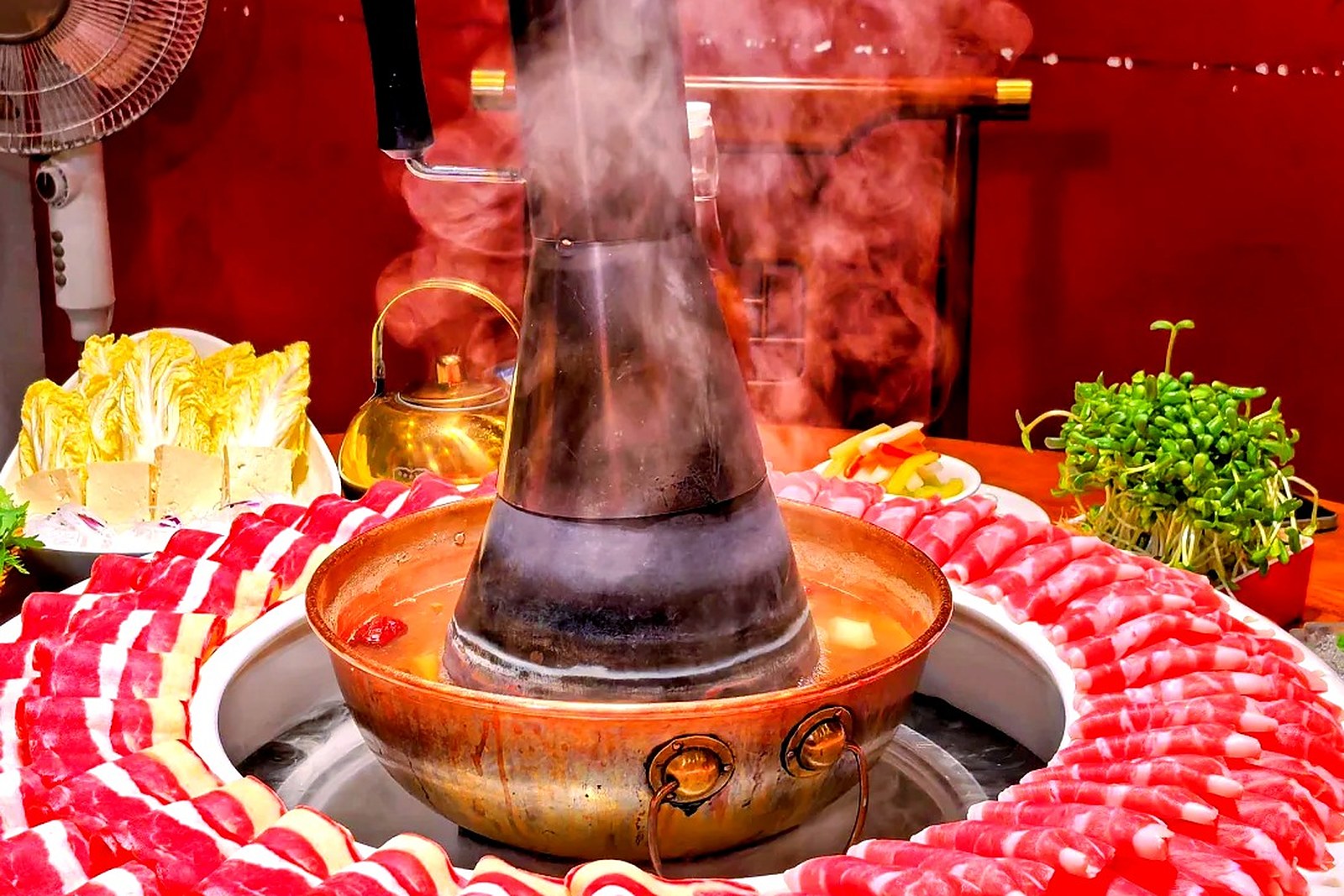
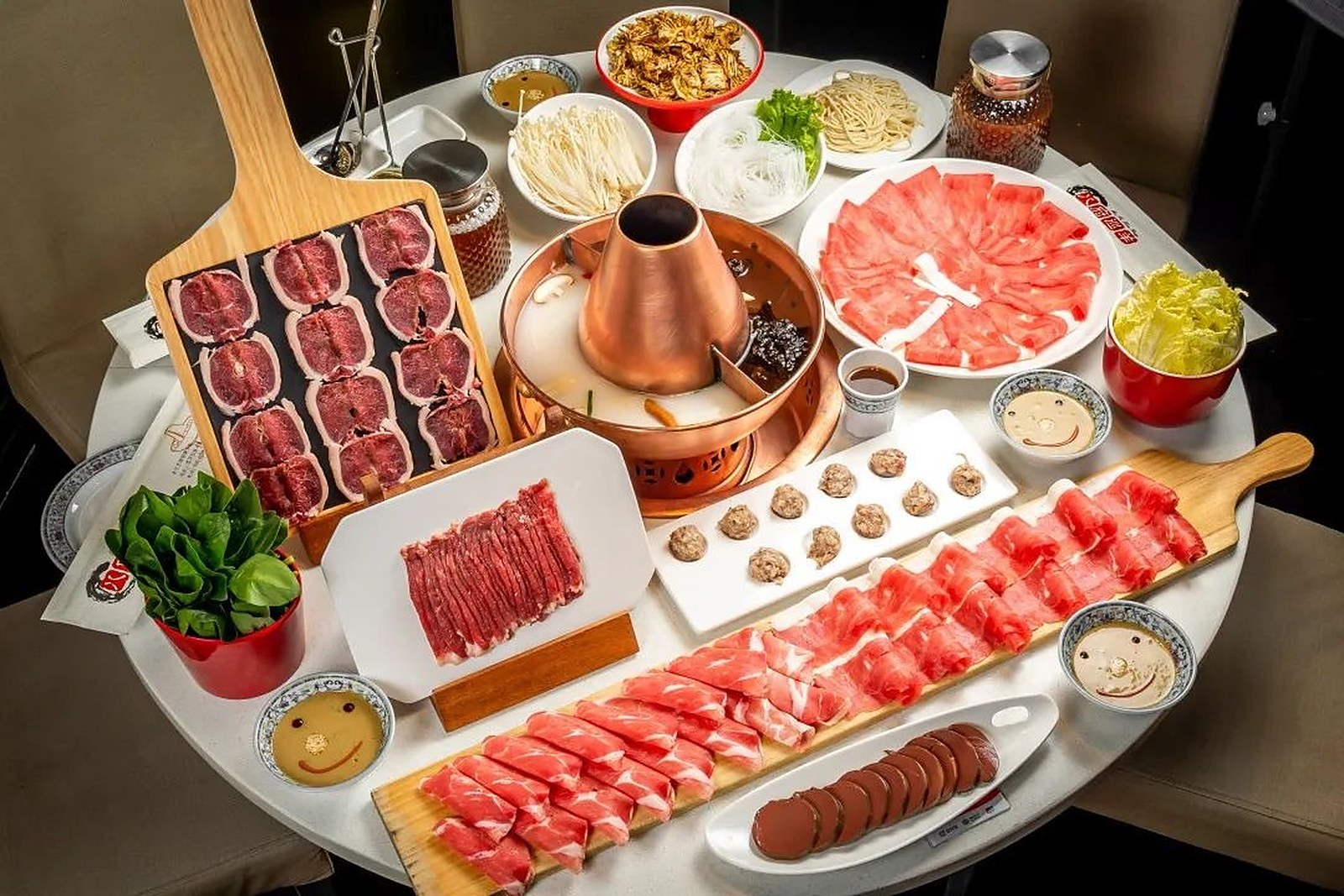
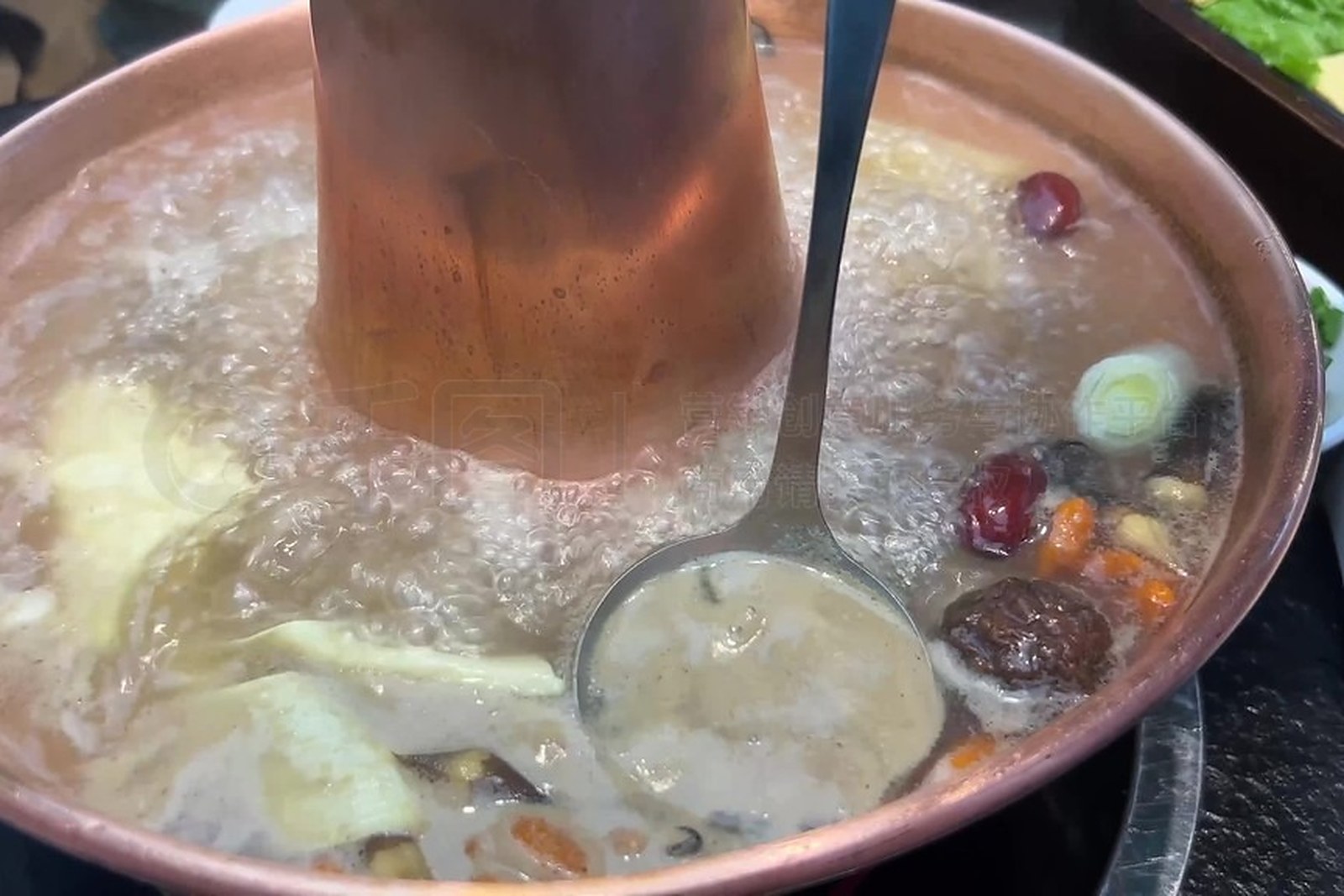
铜锅涮肉 tóngguō shuànròu copper-pot hotpot is the dish Beijingers reach for when the cold turns serious, and its altar is the 涮锅 shuànguō – a brass vessel with a hollow central chimney where 木炭 mùtàn charcoal glows, ringed by a shallow sea of 清汤 qīngtāng clear broth. The broth is the whole argument: a bare simmer of scallion, ginger, a handful of 枸杞 gǒuqǐ goji and sometimes a few 海米 hǎimǐ dried shrimp, deliberately near-flavourless so that nothing stands between the meat and the dip. This is the opposite of the 麻辣 málà numbing-hot Sichuan pot that has colonised China’s tables – here the soup is a clear stage, not a sauce, and the cooking is a do-it-yourself blanch measured in seconds, the slice dropped, swirled, and lifted the moment it turns opaque. The honest version is built on 手切羊肉 shǒuqiē yángròu hand-cut mutton, not the frozen laminated rolls of the hotpot chains: a practised knife separates the animal into named cuts – 黄瓜条 huángguātiáo the tender loin strip, 大三叉 dàsānchā the shoulder trinity, 上脑 shàngnǎo the neck-cap marbling, 磨档 mòdàng the haunch, and 羊尾 yángwěi the fat-tailed richness – each cut rolled thin enough to cook on contact.
The eating is governed by the 蘸料 zhànliào dipping sauce, and the sauce is governed by 麻酱 májiàng sesame paste. A Beijing bowl is not a single condiment but a small assembly: a base of loosened sesame paste sharpened with 韭菜花 jiǔcàihuā chive-blossom sauce, a cube of 腐乳 fǔrǔ fermented bean curd mashed in, a thread of 虾油 xiāyóu shrimp oil, then 葱花 cōnghuā scallion, 香菜 xiāngcài cilantro, a pour of 辣椒油 làjiāoyóu chili oil and – the quiet genius of the table – 糖蒜 tángsuàn sweet-pickled garlic, eaten clove by clove to cut the fat. The carbohydrate close is the 烧饼 shāobǐng sesame cake, split and dunked, and a final slurp of the now-meaty broth. The tell of a serious house is the 立盘 lìpán standing-plate test: a real hand-cut slice is laid on the cold plate and the meat stays stood upright, proof the knife work and the chill are honest; a slice that slumps was machine-cut and half-frozen.
The honest grade is geography plus patience. In Xicheng District Xīchéng Qū the old hotpot houses cluster around the frozen edges of 什刹海 Shíchàhǎi Shichahai and 后海 Hòuhǎi Houhai, with names like 南门涮肉 Nánmén Shuànròu Nanmen, 裕德孚 Yùdéfú Yudefu and 满恒记 Mǎnhéngjì Manhengji holding their own against the famous 东来顺 Dōngláishùn Dōngláishùn banner (worth confirming the details – which doors still hand-cut to order and which have quietly gone laminated). A per-person bill runs on the cuts you pull and the number of 烧饼 shāobǐng you finish, so call it worth confirming the details rather than a fixed number, and book ahead on a winter weekend because the copper pots are finite and the queue is real. The ritual is slow and communal: you cook your own, you blanch by the slice, and the table that races the pot has missed the point.
The wry truth is that 铜锅涮肉 tóngguō shuànròu is over-rated as a tourist photo and under-rated as a knife craft: visitors file in for the brass pot and leave remembering the chimney, while locals grade the house by the 立盘 lìpán and the sesame paste, two things a camera never captures. Season is not optional – this is a 深冬 shēndōng deep-winter dish, when the charcoal and the clear broth justify themselves against minus-five air, and a hotpot in July is a chore the city only tolerates for tourists.
The self-deprecating footnote: a food writer will name all five cuts to a table that ordered “lamb”, photograph the standing slice like a museum specimen, and finally pronounce the broth “restrained” as if restraint were a discovery – which is the honest grade: 铜锅涮肉 tóngguō shuànròu is a winter rite where the brass pot does the talking and the writer, having explained everything, eats exactly like everyone else at the table.
Words and Names
铜锅涮肉 tóngguō shuànròu / copper-pot hotpot · mutton and lamb blanched in a charcoal-bellied brass pot, the winter centrepiece of Beijing tables 涮锅 shuànguō / the brass hotpot · a vessel with a central chimney for charcoal, ringed by shallow clear broth 手切羊肉 shǒuqiē yángròu / hand-cut mutton · knife-separated lamb cuts, judged by the standing-plate test 麻酱 májiàng / sesame-paste dip · the base of the Beijing sauce, loosened and sharpened with chive-flower and fermented bean curd 糖蒜 tángsuàn / sweet-pickled garlic · clove-by-clove palate reset against the fat 烧饼 shāobǐng / sesame cake · the carbohydrate close, split and dunked in broth 立盘 lìpán / standing-plate test · a hand-cut slice held upright to prove honest knife work and chill 西城区 Xīchéng Qū / Xicheng District · the Beijing district holding the Shichahai and Houhai hotpot houses
What the Locals Know
- The broth is deliberately bland: scallion, ginger, goji, nothing more – if a house piles in dates and mushrooms to “add depth”, the meat is doing the talking elsewhere, not here.
- Judge the house by the 立盘 lìpán: a hand-cut slice stands on the cold plate; a slumping slice was machine-cut and half-frozen, and no sesame paste hides it.
- Deep winter is the seasoning: minus-five air is what the copper pot was built for, and a hotpot in July is a tourist concession the city only tolerates.
flowcloud would say that the 铜锅涮肉 tóngguō shuànròu is the charcoal-bellied winter rite of Xicheng District, Beijing – a brass 涮锅 shuànguō of near-flavourless 清汤 qīngtāng broth, hand-cut 手切羊肉 shǒuqiē yángròu mutton blanched by the slice and dragged through a 麻酱 májiàng sesame-paste bowl with 糖蒜 tángsuàn and 烧饼 shāobǐng – and that the honest move is to book a winter table, test the house by the standing plate, and let the broth stay bare, because the pot was never about the soup. All checked October 2026.
Where to find it: Xicheng District Xīchéng Qū – the old hotpot houses around 什刹海 Shíchàhǎi Shichahai and 后海 Hòuhǎi Houhai, names like 南门涮肉 Nánmén Shuànròu, 裕德孚 Yùdéfú and 满恒记 Mǎnhéngjì (worth confirming the details – which doors still hand-cut to order); a per-person bill runs on the cuts you pull, so call it worth confirming the details rather than a fixed number. Copper hotpot is the charcoal-bellied winter rite of Xicheng District, Beijing, pot before pageantry.